

On how to build an onshore 10 megawatt wind power project "twin star"
2025.07.14
Energy Sphere
White mountains and black waters, on the banks of the Mudan River, under the double interweaving of the heavy history of Bohai Kingdom and the landmarks of modern film and television dramas, perhaps no one would have thought that one day it would become a "new landmark" in the era of wind power, and two epoch-making 10 megawatt wind turbine projects took root in this vast black soil.
In Ning'an Fengshui Mountain, Huadian Heilongjiang Ning'an Fengshui Mountain Project (hereinafter referred to as the "Ning'an Project") is in operation to generate electricity. The Ning'an project is the first onshore wind power project in China to use a single capacity of 10MW wind turbines in batches. 20 wind turbines are scattered in the mountains, in the "small wind season" with an average monthly wind speed of only 5-6m/s, the average monthly power generation of a single unit is as high as 2.2 million kWh, and the first batch of grid-connected units has set a record of 60 days of trouble-free operation.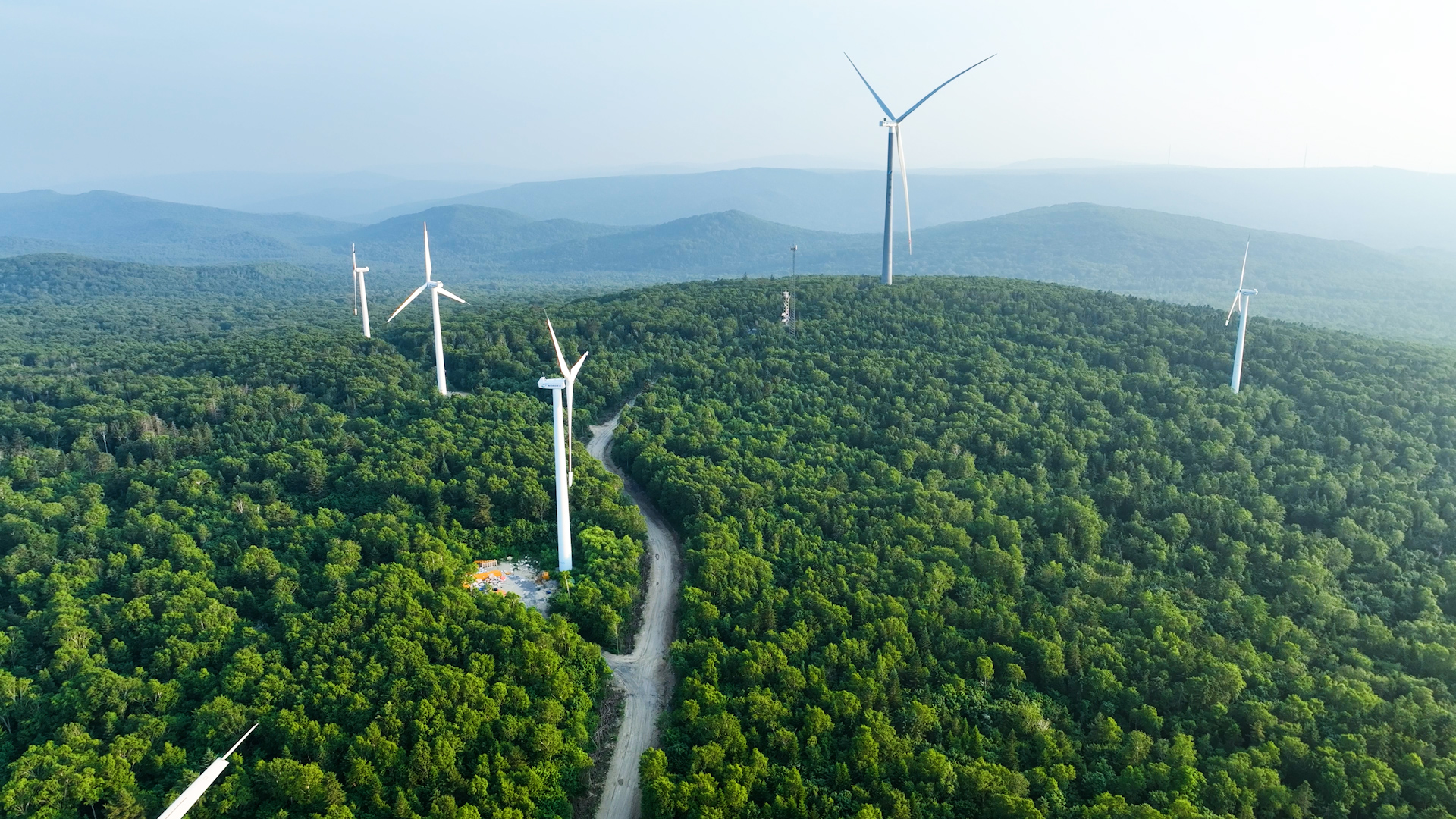
The Muling Ten Characters, more than 200 kilometers away, is another benchmark project with more "background". As Heilongjiang's first 10MW "large instead of small" upgrading project, Huadian Muling Ten Characters Isometric Transformation Project (hereinafter referred to as the "Muling Project") will be connected to the grid at full capacity in late July. Under the premise that the total installed capacity remains unchanged, 8 Sany renewable energy large megawatt wind turbines "took over" 55 old foreign brand units with a single capacity of 1.3-1.5 megawatts, with a single rated power increase of 7 times and the annual power generation of the wind farm quadrupled. The wind farm uses three 9MW and five 10MW hybrid tower models, which is the first batch of large-megawatt projects of Sany Renewable Energy to use self-made hybrid towers.
The Ning'an project has opened the prelude to the era of large-scale application of 10 megawatt units of onshore wind power. The past and present life of Muling Wind Farm condense the glorious changes of China's wind power in the past 20 years. Both projects in Heilongjiang use 10MW units, which makes people curious: what is the charm of 10MW?
Wind power skipping
In 2020, the average single unit capacity of new onshore units was still about 2.6MW, and as of last year, the average single unit capacity was close to 6MW. Obviously, they were increasing "step by step" before, but why did they suddenly cross the three levels of 7, 8, and 9 at this time, and "skip the level" layout of 10MW?
For this question, Wu Baoxin of Sany Renewable Energy took the development of wind power in the Sanbei region as a blueprint and explained in detail the three major sources of power for the development of 10MW.
The first is electricity prices. In the past, low electricity prices in Inner Mongolia, Xinjiang and other places made the mainstream 6. The kWh cost of the XMW model has lost its support in local projects, which has forced project developers to pursue lower kWh costs, further accelerating the large-scale of units. Compared with 6. The XMW model exceeds 0.2 yuan in the northeast region, and the 10MW model can successfully reduce the cost of electricity to less than 0.10 yuan, a reduction of more than 50%, and the investment recovery expectation can also be greatly shortened.
In recent years, due to local constraints, consumption conditions and delivery capacity, the area of project development in the Three North region has become less and less. Whether it is Inner Mongolia, Xinjiang or Northeast China, the scope of project development is limited, and the problem of insufficient number of seats is becoming more and more serious. Of course, this situation is not limited to the Three Norths, but for the south and even the whole country, the scope of developable wind power resources is shrinking rapidly. Therefore, the insufficient number of available units, the urgent need for lower kWh costs, and the explosive growth of the wind power market in recent years have made it more urgent to further increase the capacity of single units, which has become the second driving force for the large-scale of wind turbines.
In this regard, the strategy of "replacing small with large and replacing with equal volume" of Muling Wind Farm reduces the number of wind turbines from 55 to 8 while the total capacity of the wind farm remains unchanged, saving a lot of land resources and effectively reducing the pressure of subsequent operation and maintenance, while leaving sufficient space for subsequent capacity increase projects.
In addition, for the Sanbei region, the impact of the shorter construction window on the large-scale wind turbines cannot be ignored. The northeast region is limited by the natural environment, and the project construction window is short. When the model used in the project starts from 6. Switching XMW to 10MW not only reduces the number of units by more than 40%, but also greatly shortens the construction period of the entire project, greatly advancing the date when the project enters the grid connection stage.
The rigidity and jiu-jitsu that holds up the "big windmill"
Looking closely at the details of the two benchmark wind farm projects, it is not difficult to notice the common keywords of the two: self-developed and hybrid towers.
As the first 10MW commercial winning project in China, the Ning'an project has a total installed capacity of 200MW, installed 20 Sany Renewable Energy 10MW wind turbines, and an impeller diameter of 230 meters, which is the first 10MW project of Sany to adopt self-developed hybrid towers.
Mixed towers are different from traditional steel towers. In terms of stiffness, traditional steel towers can only enhance the stiffness of the tower by thickening the diameter of the tower or thickening the wall thickness of the tower to adapt to the fan with a larger single capacity, but the former will lead to transportation difficulties, and the latter will lead to excessive weight and high cost. And Hunta can solve these pain points very well.
Penetrating the upstream and downstream of the industrial chain and creating parts that are more in line with the design of the whole machine is the original intention of Sany Renewable Energy to enter the field of blades, generators and towers.
Sany Renewable Energy's self-developed hybrid tower can realize the joint optimization and iterative design of the hybrid tower and fan, so as to ensure the optimal performance and cost. At the same time, it adopts horizontal molds with better molding quality and adheres to quality first; In addition, the whole process of high-quality control is carried out for key processes such as design, production, transportation, and hoisting, and potential safety risks are eliminated in the bud.
Although the market of "large instead of small" (i.e., large megawatts instead of small megawatts) has not yet been fully opened at this stage, it is completely reproducible from the perspective of solution adaptability alone.
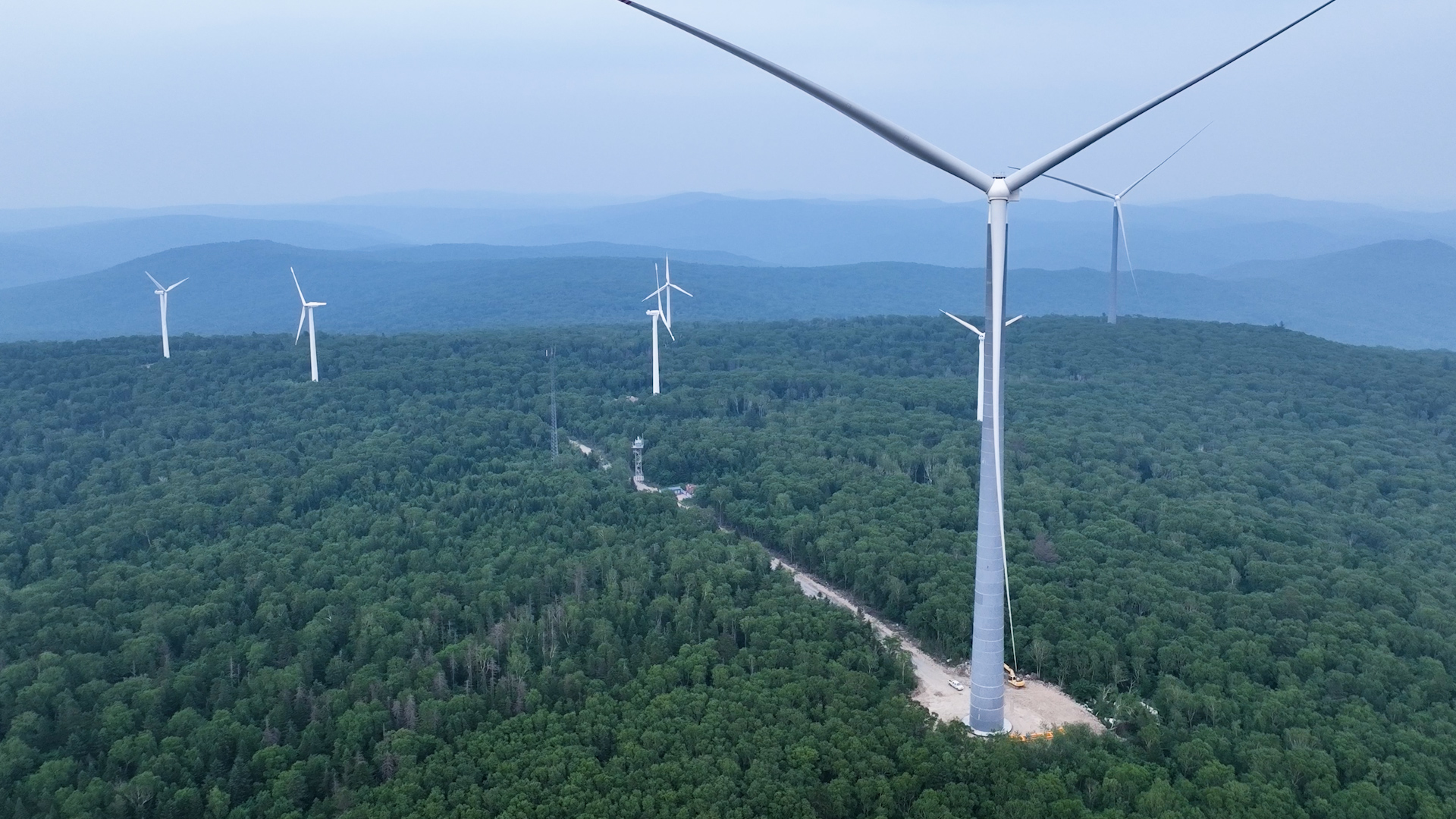 At present, 10MW units have achieved remarkable results in the market. For the whole of 2024, the number of tenders for 10MW models is conservatively estimated to exceed 60GW. In the first half of this year, 10MW model bidding accounted for more than 25%, and it is expected to exceed 60GW throughout the year.
In order to ensure the competitiveness of new projects, the 10MW model with ultra-low kWh cost will definitely be the mainstream model in the future Sanbei region. In the context of the vigorous development of new energy in China, old projects will soon become the main battlefield of the new wind power market in the future, and at that time, 10MW units will have broader prospects.
Related recommendations

Hunan Satellite TV's "Hunan News Network" Hunan Construction Machinery Strengths in the International Market Sany Road Machine Hard Core Strength Attracts Attention
2025.07.22
The first Sany Road Machinery Global Customer Summit Road Surface Machinery Network immersive exhibition
2025.07.22
The answer to time丨 The extreme survival record of the wind turbine in the "forbidden area of life"
2025.07.18




0 comments