Episode 1: The dream of flying from the small countryside
In 1983, Liang Wengen graduated from Zhongnan Institute of Mining and Metallurgy majoring in materials and was assigned to work at Hongyuan Machinery Factory in Lianyuan City, Loudi, Hunan, which was a factory under the former Ministry of Ordnance Industry. Here, he met three like-minded friends: Tang Xiuguo, Yuan Jinhua, and Mao Zhongwu, who had just graduated from university at that time. Outside of work, the four young people often get together to discuss the way out of state-owned enterprises and express their feelings of serving the country.
Many of the equipment in Hongyuan Machinery Factory is second-hand equipment, and when the machine goes wrong, irresponsible workers often throw off their hats and go home happily, which makes Liang Wengen and his partners feel lost. "The country is still so poor, how can it be rich and strong like this?" Therefore, they put forward a series of reform suggestions for the factory. A year later, Liang Wengen was promoted to deputy director of the factory reform committee, and Tang Xiuguo and others were also promoted.
However, in 1985, Liang Wengen and four other young people chose to resign and start a business without hesitation, despite the persuasion and retention of factory leaders. Liang Wengen said to the factory director that it is better to replace an old cell with a new one. After resigning, the factory detained their files and household registration books. In those days, the absence of a household registration book meant that it was difficult for them to even solve the problem of survival. However, Liang Wengen and his partners did not waver, and still made up their minds to set up a factory and start a business, work hard in their careers, and practice their dream of "being a test field for China's economy".
The four proud sons of heaven who jumped out of the "peasant gate" and became state cadres returned to the countryside, which was a sensational event in society at that time and was not understood by society and families.
Without the status of a "cadre", there is not even a city hukou. Liang Wengen's father was furious and chased Liang Wengen with a flat pole to drive him back to the machinery factory. Liang Wengen later recalled, "If I fail in business, I will do two things: one is to write a book - "This Road Is Not Working" to warn impulsive young people like me; The second is to go to backward mountain villages to be teachers and teach and educate people. ”
At the beginning of his business, Liang Wengen put forward the idea of "being familiar with ten industries, coming up with ten plans, and making ten drawings". However, the process of starting a business was far more difficult than imagined, and the four of them sold sheep, sold wine, and produced fiberglass together, but they could never find a way out.
In 1986, when it was about to run out, Liang Wengen finally found a reliable and feasible business opportunity - welding materials were in short supply in the market, and the four of them were all majoring in materials, which was their specialty. So, they pooled 60,000 yuan from relatives and friends to set up a welding material factory in their hometown of Maotang Daotong Village, Lianyuan.
At that time, there was a serious shortage of entrepreneurial funds and very difficult working and living conditions. Liang Wengen and the others lit the first stove in an abandoned country house in Daotong Village. Then, they started building the plant themselves: excavating the foundation, welding the roof trusses, painting equipment...... A few vigorous college students suddenly became masons, welders, and painters.
One day, the director of Hongyuan Machinery Factory came to visit Liang Wengen, and when he saw them working so hard, he asked a little puzzled: "Xiao Liang, people can't do things without a big platform." The Ministry of Machinery Industry is a department, and the canteen is also a department, are you willing to open a 'canteen'?" The implication of the factory director is very clear, without a big platform, the "canteen" is not big, and he hopes that these aspiring young people can return to the factory. However, Liang Wengen declined the factory director's kindness.
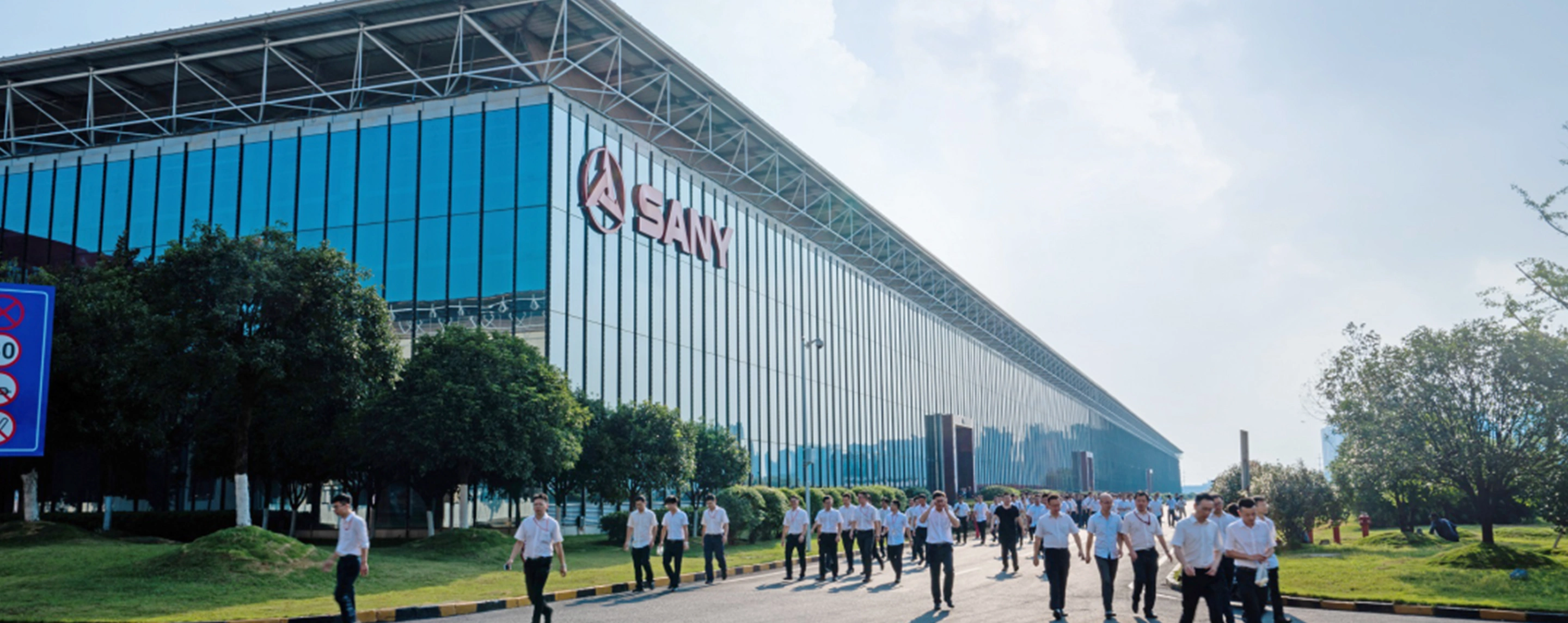
The hard work pays off. Due to the marketability of the products, Lianyuan Maotang Welding Material Factory has achieved rapid development. In 1989, Liang Wengen and others walked out of Maotang Township and established the "Lianyuan Welding Materials General Factory" in Lianyuan City. Xiong Qingquan, then secretary of the Hunan Provincial Party Committee, came to the factory for inspection and saw a couplet posted at the gate of the main factory "Create a first-class enterprise and create a first-class talent", so he suggested adding a horizontal batch to "make first-class contributions". In this way, the "three first-class" finally achieved the name of "Sany".
Postscript:
After the name change, Sany Group is inspired by the "three first-class" goals to go abroad and go to the world. In Liang Wengen's hometown of Lianyuan Daotong Village, the country hut where they lit the first entrepreneurial stove has become old and mottled, but the dream of starting from there is becoming clearer......