

Case interpretation of the National Energy Administration: support the high-quality development of Shagehuang Base and rural revitalization of decentralized wind power
2023.03.29
Wind Energy Committee
This is the first chapter of "Innovative New Energy Development and Utilization Model", including: (1) accelerating the construction of large-scale wind power and photovoltaic bases focusing on deserts, Gobi and desert areas; (2) Promote the integrated development of new energy development and utilization and rural revitalization; (3) Promote the application of new energy in industry and construction; (4) Guide the whole society to consume green electricity such as new energy.
Chapter 1, "Innovating New Energy Development and Utilization Models", points out that during the "14th Five-Year Plan" period, major new energy sources such as wind power and photovoltaic power have entered a new stage of large-scale, high-proportion, market-oriented and high-quality development. Innovating the development and utilization mode of new energy in various aspects is an important guarantee to promote the development of new energy, accelerate the transformation of energy structure, and help achieve the goals of carbon peak and carbon neutrality. The "Implementation Plan" mainly puts forward measures and suggestions in four aspects.
1. Accelerate the construction of large-scale wind power and photovoltaic bases focusing on deserts, Gobi and desert areas.
Main policy point 1: Intensify efforts to plan and build a new energy supply and consumption system based on large-scale wind and photovoltaic bases, supported by clean, efficient, advanced and energy-saving coal-fired power around them, and supported by stable, safe and reliable UHV transmission and transformation lines, and strengthen coordination and guidance in land pre-examination, planning and site selection, environmental protection, etc., and improve the efficiency of examination and approval.
The "Implementation Plan" proposes to accelerate the construction of large-scale wind power and photovoltaic bases focusing on deserts, Gobi and desert areas. In terms of project implementation, in November 2021, the General Office of the National Development and Reform Commission and the General Department of the National Energy Administration issued the "Notice on Printing and Distributing the List of the First Batch of Large-scale Wind Power and Photovoltaic Base Construction Projects Focusing on Deserts, Gobi and Desert Areas", announcing the list of the first batch of large-scale wind power and photovoltaic base construction projects, involving 18 provinces including Inner Mongolia Autonomous Region, Qinghai Province, Gansu Province and the Xinjiang Production and Construction Corps, with a total installed capacity of 97.05 million kilowatts. In December 2021, the National Energy Administration (NEA) issued the Notice on Organizing the Second Batch of Large-scale Wind Power and Photovoltaic Base Projects Focusing on Deserts, Gobi and Desert Areas in the Country. In July 2022, the second batch of project lists was officially issued, mainly in Inner Mongolia, Ningxia, Xinjiang, Qinghai, Gansu and other regions, and has been included in the package of policy measures to stabilize the economy issued by the State Council. All localities are actively promoting the preliminary or construction work of the project. At present, the National Development and Reform Commission, the National Energy Administration and other relevant departments are planning the third batch of projects, and the expansion of coal mining subsidence areas is included in the layout scope.

Main policy point 2: In accordance with the requirements of promoting the optimal combination of coal and new energy, encourage coal-fired power enterprises to carry out substantial joint ventures with new energy。
In order to ensure the efficient utilization of wind power and photovoltaic bases in deserts, Gobi and desertification areas, it is necessary to adhere to the coordinated development of source, grid and load, clarify the direction of project utilization and consumption, promote the coordinated construction of new energy and other power sources and energy storage, and realize the synchronous planning, construction and operation of large-scale wind power and photovoltaic bases focusing on desert, Gobi and desertification areas and supporting power grids, energy storage and distributed condensers.
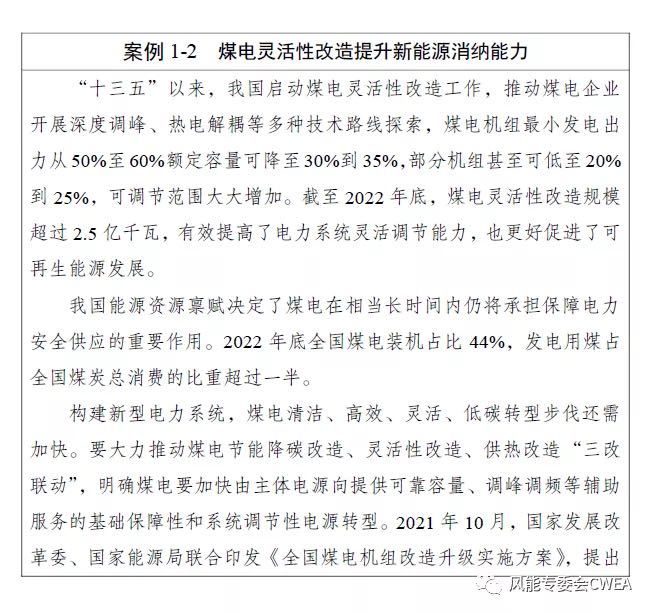
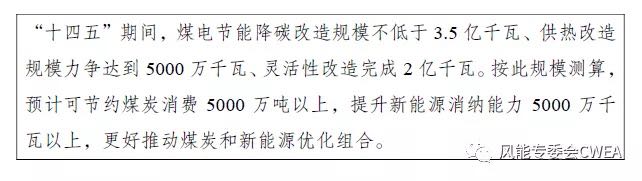
The "Implementation Plan" proposes to encourage coal-fired power enterprises to carry out substantive joint operations with new energy, such as using coal mining subsidence areas, dumps, idle vacant land of power plants, idle vacant land along railway lines and ash yards of power plants and other areas to invest in the construction and operation of new energy power generation projects, and to achieve substantial joint operation with existing coal power projects, so as to solve the problem of cooperation between power support, peak regulation and frequency regulation and new energy production, and avoid poor communication and coordination between market players and imbalance in benefit distribution caused by the separation of new energy production and auxiliary services. Break down the interest barriers and production barriers caused by different market players, promote the construction of a comprehensive energy supply model of wind, solar, thermal and storage, and promote the construction of a new power system.
2. Promote the integrated development of new energy development and utilization and rural revitalization
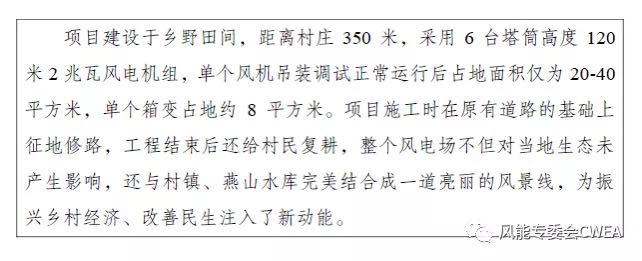
Main policy point 1: Encourage local governments to increase their efforts to support farmers to use the roofs of their own buildings to build household photovoltaics, and actively promote the development of distributed wind power in rural areas. Since 2018, with the support and promotion of national policies, all localities have increased their attention to distributed wind power, and the scale of the distributed wind power market has gradually expanded, and by the end of 2021, the cumulative installed capacity of distributed wind power was close to 10 million kilowatts.
The development of distributed new energy in rural areas has broad prospects, but it also faces many challenges. On the one hand, the architecture of rural power grids is relatively weak, and the bottlenecks and power quality problems of distributed new energy access are more prominent, while the electricity load in rural areas is low, and the space for distributed new energy consumption is limited. On the other hand, for investment and financing, due to the small volume and small scale of investment, distributed photovoltaic has problems such as financing difficulties and high interest rates for enterprise development projects, especially for private enterprises and small and medium-sized enterprises, the phenomenon of poor financing channels and high financing costs is more prominent. The "14th Five-Year Plan for the Development of Renewable Energy" proposes to integrate and develop with rural revitalization in terms of distributed photovoltaic development and rural power grid consolidation and upgrading, and start the implementation of the "Thousands of Towns and Villages Wind Control Action" and "Thousands of Households Muguang Action". The "Implementation Plan" clearly proposes to encourage local governments to increase efforts to promote the development of rural household photovoltaic and rural distributed wind power through the introduction of support policies, which will further promote the development of distributed new energy in rural areas.
Main policy point 2: Coordinate the rural energy revolution and the development of the rural collective economy, cultivate new market entities such as rural energy cooperatives, and encourage village collectives to use the stock of collective land in accordance with the law to participate in the development of new energy projects through mechanisms such as price purchase and revenue sharing.
It is an important way to achieve common prosperity and energy transition for the whole society by developing and improving the rural collective economic system based on the rural collective land ownership system, making full use of local resources and sharing the fruits of economic and social development more fairly.

3. Promote the application of new energy in industry and construction
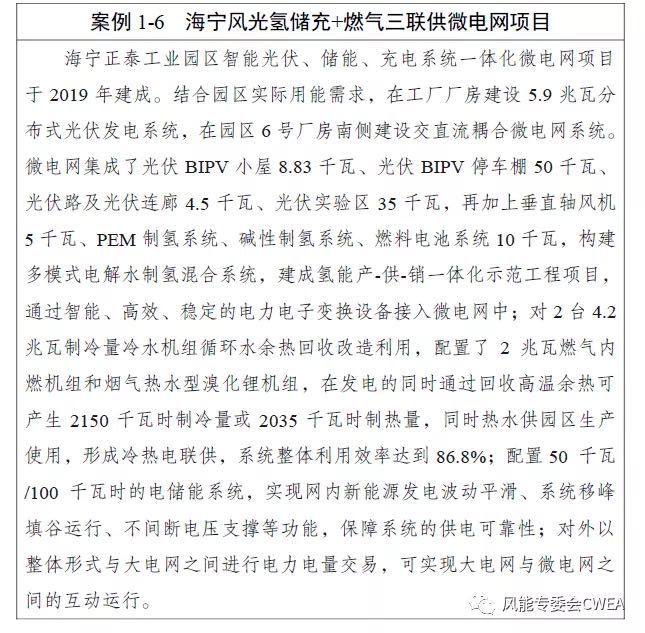
Main policy point 1: Accelerate the development of new energy projects such as distributed photovoltaic and distributed wind power in qualified industrial enterprises and industrial parks, support the construction of industrial green microgrids and source-grid-load-storage integration projects, promote the complementary and efficient use of multi-energy, carry out pilot projects of direct power supply of new energy, and increase the proportion of new energy power for terminal energy.
Case interpretation of the "Implementation Plan for Promoting the High-quality Development of New Energy in the New Era" Original link: http://www.nea.gov.cn/2023-03/28/c_1310706202.htm
http://www.nea.gov.cn/1310706202_16800009398981n.docx
Next article:The 2023 Global Wind Energy Report is released! 680GW will be added in the next five years
Related testimonials
CCTV Finance × Sany Heavy Industry: Transportation construction continues to heat up! In May, the infrastructure was full of bright spots →
2025.06.17
CCTV Finance × Sany Heavy Industry: Infrastructure results are released! Anhui is soaring, and the equipment of the western port has become a "dark horse"
2025.05.19
China's installed wind and solar capacity has historically surpassed that of thermal power
2025.04.28




0 comments