

Start with the Red Sea! Wind power retirement market pains
2025.06.25
Polaris Wind Power Grid
By the end of April 2025, the cumulative installed wind power capacity in China will be 540 million kilowatts. Since the large-scale development of China's wind power industry after 2000, a round of large-scale wind power equipment retirement will be ushered in by the end of the "14th Five-Year Plan". According to a group of research data from the Wind and Solar Equipment Recycling Professional Committee of the China Materials Recycling Association, by the end of 2024, the cumulative decommissioning scale of wind power equipment will be 2.85 million kilowatts; It is estimated that the scale of wind power equipment retirement will reach 3.8 million kilowatts in 2025.
Since the issuance of the State Council's Action Plan for Promoting Large-scale Equipment Renewal and Trade-in of Consumer Goods in March 2024 and the solicitation of opinions on the Ecological Environment Code (Draft) in April 2025, the top-level policy planning has superimposed the retirement of wind power, and the demand for recycling mainly wind and solar power generation equipment has been increasing. However, unlike the industry's full ideal of "huge market space", the enterprises that have come to the wind power cycle market have experienced the "bone" reality that the business model of the wind power cycle market is not mature, the economy is poor, and the profit space is narrow, and they have entered the embarrassing situation of the red sea at the beginning.
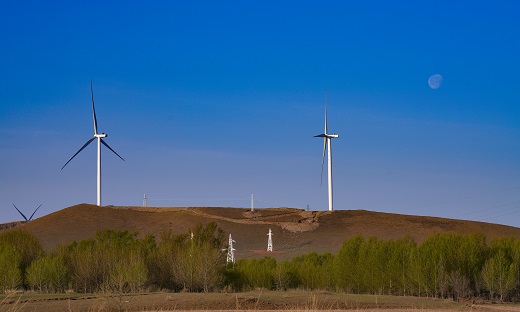
Economic efficiency is the foundation of industrial development, and it is also a driving factor for whether a market can maintain long-term vitality.
In the decommissioning and recycling of wind power equipment, large components such as wind power spindles, gearboxes, and generators can be repaired through remanufacturing and other processes and recycled as spare parts; General solid wastes such as wheels, nacelle frames, towers, and cable metal parts can be recycled.
The recycling of composite materials such as blades is a technical bottleneck in the recycling of wind power. For wind turbine blades, the current mainstream recycling method in the industry is physical recycling, such as dismantling the blades and reusing materials for municipal and other fields; Or the leaves can be broken up, recycled and added to building materials to enhance the properties of the material.
In addition, leaf recovery can also be carried out through thermal deconstruction (pyrolysis of oil and gas) and chemical recovery, i.e. chemical dissolution to recover glass fibers, which are the three main end-of-life treatment routes.
According to the data, it is expected that by 2030, more than 30,000 wind turbines in China will be updated, and the number of blades will reach 1.2 million tons, and by 2035, this number will exceed 90,000 units, and the number of blades is expected to reach 3 million tons. Especially after 2025, after the major wind power development groups start the batch upgrade of wind power projects, the amount of blade scrap will usher in explosive growth.
Although the market growth is spectacular, the real problems faced by the industry are a series of problems such as high equipment dismantling and transportation costs, immature business models, lack of policy standards, and poor economics caused by a variety of comprehensive reasons.
The "2024 China Wind Power and Photovoltaic Equipment Recycling Industry Development Report" (hereinafter referred to as the "Report") published by the Wind and Solar Equipment Recycling Professional Committee of the China Materials Recycling Association describes the current situation of the wind power retirement market as follows: wind power equipment is huge, and the length of a single blade can reach tens of meters or even more than 100 meters, which is difficult to transport and costly. Depending on the geographical location and infrastructure conditions of wind farms, the cost of dismantling and transporting a wind turbine is generally hundreds of thousands of yuan, and the maximum may reach one million yuan or even higher. The high cost of demolition has affected the enthusiasm of relevant parties to participate and hindered the development of recycling and disposal to a certain extent.
In terms of processing efficiency and cost, the current relatively mature dismantling technology, such as the physical method, has a simple method and low cost, but the value of the recovered product is low, and the economic benefits are not obvious; The cost of pyrolysis and chemical methods is relatively high, and the recovery efficiency is low, which leads to limited profit margins and even possible losses, which affects the investment enthusiasm of enterprises.
In terms of the main material composition of wind turbines and supporting facilities, a retired wind turbine contains 86% steel, 10% glass fiber, 3.5% copper and aluminum and 0.5% rare earth elements. According to Greenpeace's "Renewable Energy Zero Waste Future: Research on the Development of Wind Power and Photovoltaic Recycling Industries", a 1.5-megawatt wind turbine uses about 170 tons of steel and 11.55 tons of fiberglass. Combined with the domestic scrap price of about 3,000 yuan/ton in recent years, it is estimated that the value of recyclable metal in towers, nacelles and other components is about 500,000 yuan. Compared with the ex-factory price of wind power units, the recycling value of wind power decommissioning equipment is extremely low, and it is difficult to cover the cost at all.
In the early stage of large-scale development of the industry, the treatment cost of recycling equipment is high and the recycling efficiency is low, but the entry threshold is relatively low. Therefore, in recent years, the wind power retirement market has attracted a large number of small and medium-sized workshop-type enterprises to pour in, these enterprises lack environmental protection investment and technical capabilities, and often use low-cost methods such as open burning and simple landfill to treat blades, which not only leads to secondary pollution, but also forms a situation of "bad money drives out good money".
From the perspective of high-quality and large-scale development of the industry, the construction of wind power equipment recycling projects requires a large amount of initial investment and financing needs, whether it is physical dismantling or chemical recycling. However, a large amount of capital investment has a certain amount of financial pressure for some small and medium-sized enterprises, and the current situation of the industry has not yet been scaled, and it is difficult to attract financing support from financial institutions.
In December 2023, an issue of CCTV's "Focus Interview" "AbandonedPhotovoltaic modulesWhere is the flow", a detailed report was made on the illegal dismantling, incineration, and disposal of waste photovoltaic modules in a place in Henan, resulting in waste of resources and environmental pollution.
According to the content of the program, similar small factories and small workshops are not isolated cases, and there are common problems of environmental pollution and low resource recycling rate. However, in stark contrast, the crystalline silicon photovoltaic module recycling production line of a central enterprise group can achieve 100% recovery of materials such as frames, more than 90% of silver, glass and other materials, and the purity of silicon cells after cleaning and purification can reach 99.93%. However, such a technologically advanced production line is facing the dilemma of "no rice in the pot", and the equipment is idle most of the time.
In the wind power industry, we have not yet found any reports of violations, but it is also an indisputable fact that the recycling market standards are not perfect and the companies are "barbaric production".
At the annual meeting of China's wind and solar equipment recycling industry held a few days ago, some experts pointed out that the future development trend of retired wind power will focus on three major directions: high-value composite materials, closed-loop metal recycling and intelligent life extension repair. Relying on technological breakthroughs such as chemical degradation and AI detection, we will promote the transformation of the industrial chain from "inefficient dismantling" to "high-end recycling". Among them, the policy-driven and the construction of a shared platform will further accelerate the large-scale implementation of technology.
In July 2023, the National Development and Reform Commission and other departments issued the "Guiding Opinions on Promoting the Recycling of Retired Wind Power and Photovoltaic Equipment", which clearly pointed out that a responsible mechanism for the disposal of retired equipment should be established and improved. Centralized wind power and photovoltaic power generation enterprises are required to bear the responsibility for the disposal of decommissioned equipment in accordance with the law, and power generation enterprises will take waste recycling and proper disposal as an important part of wind farm transformation and upgrading projects.
Then, in October 2024, China Resources Recycling Group Co., Ltd. was established. The group specializes in resource recycling, undertakes the important task of building a national and functional resource recycling platform, and will take the lead in establishing a national recycling network and standardizing industry standards.
Judging from the current layout of the wind power retirement and recycling industry, the entry of the national team has undoubtedly given a shot in the arm for the high-quality development of the industry, and brought significant benefits to the recycling market of the "new three wastes" (waste power batteries, waste photovoltaic modules, and waste wind turbine blades).
It is estimated that the total market for wind power and photovoltaic equipment recycling will exceed 150 billion yuan from 2025 to 2030. With the development of the market, related upstream and downstream enterprises such as decommissioned equipment dismantling services, parts refurbishment and remanufacturing, recycled material sales and applications will usher in a broad space for development.
The other side of the market expansion is that the competition is becoming more and more fierce, and the next 3-5 years will also be a critical period for the industry reshuffle. With the addition of 100 billion yuan in the market, the short-term "red ocean" of the wind power decommissioning and recycling market will gradually transform into a long-term "blue ocean".
Related testimonials
CCTV Finance × Sany Heavy Industry: Transportation construction continues to heat up! In May, the infrastructure was full of bright spots →
2025.06.17
CCTV Finance × Sany Heavy Industry: Infrastructure results are released! Anhui is soaring, and the equipment of the western port has become a "dark horse"
2025.05.19




0 comments