
Earth-moving machineryConcrete machinerycraneRoad machineryPiling machineryCoal machineryPort machineryWind power equipmentSany heavy truckTrinity ConstructionPetroleum equipmentTrinity EnvironmentEnvironmental engineeringEmergency rescue equipmentMining dump truckstip truckAerial work machineryLithium battery equipmentWarehousing and logisticsPhotovoltaic productsHydrogen equipmentCrushing equipment
Micro-diggingSmall diggingMedium diggingBig diggingWheeled excavatorsLoaderDiversify your productsAttachments
Pump trucksMixer trucksConcrete batching plantOn-board pumpsElectric vehicle on-board pumpsTow pumpMortar pumpsWet sprayerFilling pumpsNew energy mixer truckDry mix mortar mixing plantMortar/concrete dual-purpose batching plant
Truck cranesAll-terrain cranesTruss boom crawler craneTelescopic crawler craneMultifunctional crawler craneFlat-top tower craneTruck-mounted cranes
Reach stackerContainer empty container handlersforkliftGrab steel (material) machinePure electric port tractorTelehandlersShore-to-shore container cranesRail-mounted container gantry craneRubber-tyred container gantry craneGantry crane
3.X Medium and low wind speed wind turbines4.X Medium and high wind speed / all-weather / customized product platform5.X-6. X MW customized product platform
Smart PC equipmentIntelligent AAC equipmentIntelligent steel processing equipmentMobile crushing and screening equipmentMould fixturesCategory 2 standards3 soft 1 platform
Mechanical fracturingElectric fracturingOil-connected equipmentWellhead automationOilfield machineryFracturing pumps
Pure electric road cleaning vehiclePure electric solid waste collection and transfer vehicleMunicipal maintenance vehicles
Compressed air foam fire truckdroneSpecial-duty fire trucksCombat logistics support fire trucksRaise jet fire trucksAscending platform fire truck
High-speed homogenization systemDouble-layer extrusion coaterRoller pressing and slitting machineZ-type cutting and stacking machineWinding machinePrimary and secondary injection machinesCompound capacity needle bedModule PACK line

Earth-moving machineryConcrete machinerycraneRoad machineryPiling machineryCoal machineryPort machineryWind power equipmentSany heavy truckTrinity ConstructionPetroleum equipmentTrinity EnvironmentEnvironmental engineeringEmergency rescue equipmentMining dump truckstip truckAerial work machineryLithium battery equipmentWarehousing and logisticsPhotovoltaic productsHydrogen equipmentCrushing equipment
Micro-diggingSmall diggingMedium diggingBig diggingWheeled excavatorsLoaderDiversify your productsAttachments
Pump trucksMixer trucksConcrete batching plantOn-board pumpsElectric vehicle on-board pumpsTow pumpMortar pumpsWet sprayerFilling pumpsNew energy mixer truckDry mix mortar mixing plantMortar/concrete dual-purpose batching plant
Truck cranesAll-terrain cranesTruss boom crawler craneTelescopic crawler craneMultifunctional crawler craneFlat-top tower craneTruck-mounted cranes
Reach stackerContainer empty container handlersforkliftGrab steel (material) machinePure electric port tractorTelehandlersShore-to-shore container cranesRail-mounted container gantry craneRubber-tyred container gantry craneGantry crane
3.X Medium and low wind speed wind turbines4.X Medium and high wind speed / all-weather / customized product platform5.X-6. X MW customized product platform
Smart PC equipmentIntelligent AAC equipmentIntelligent steel processing equipmentMobile crushing and screening equipmentMould fixturesCategory 2 standards3 soft 1 platform
Mechanical fracturingElectric fracturingOil-connected equipmentWellhead automationOilfield machineryFracturing pumps
Pure electric road cleaning vehiclePure electric solid waste collection and transfer vehicleMunicipal maintenance vehicles
Compressed air foam fire truckdroneSpecial-duty fire trucksCombat logistics support fire trucksRaise jet fire trucksAscending platform fire truck
High-speed homogenization systemDouble-layer extrusion coaterRoller pressing and slitting machineZ-type cutting and stacking machineWinding machinePrimary and secondary injection machinesCompound capacity needle bedModule PACK line
Sany Heavy Industry Sany Heavy Industry Co., Ltd. (SH:600031)
Trinity International Sany International (HK:00631)
Sany Renewable Energy Sany Renewable Energy (SH:688349)
Home > Media coverage > At Sany, he worked his way up to the management of the "Lighthouse Factory".
At Sany, he worked his way up to the management of the "Lighthouse Factory".
2021.11.02
Interface News
The environment is forcing companies to digitally transform, and at the same time, workers are being forced to transform.

Image source: Visual China
The autumn afternoon is a little cool, and the trees on the outskirts of Beijing are gradually starting to turn yellow.
This is located in the Sany Heavy Industry Nankou Industrial Park in Changping District, Beijing, which is more than 50 kilometers away from the city center, and it takes more than 10 minutes to drive to the nearest living area with a little fireworks.
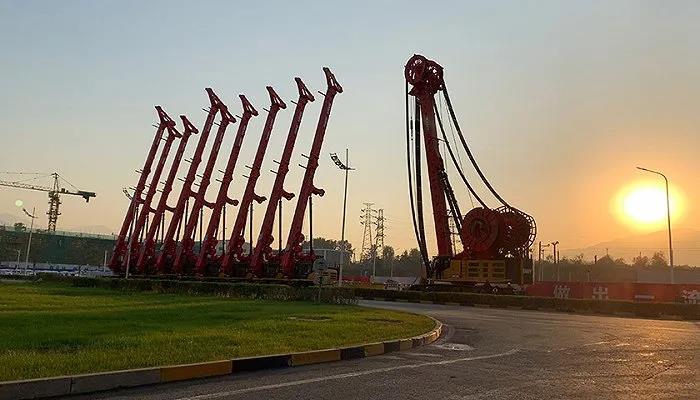
Sany Group Nankou Industrial Park Photo: Ma Yueran
From the corner of a lattice office in the factory office building, Xia Wenshi came up and greeted him warmly. He was dressed in a clean blue overalls, of medium build, and his hair was coolly combed to the side, looking neat. In the standard Mandarin, the Hunan accent can still be heard.
Xia Wenshi is the manufacturing management manager of Sany Heavy Industry's Beijing Pile Driver Factory, managing hundreds of personnel and related machine scheduling. As soon as he walked into the factory, he subconsciously picked up the helmet and skillfully buckled it. When introducing the plant, I was confident and calm, and I felt that everything was familiar with the conversation.
He is 35 years old and has been in the manufacturing industry for 18 years, and has been working at Sany Heavy Industry's Beijing Pile Driver Factory since he started.
On September 27 this year, the World Economic Forum (WEF) officially released a new list of "lighthouse factories" in the global manufacturing field, and Sany Heavy Industry Beijing Pile Driver Factory was selected, becoming the first "lighthouse factory" in the global heavy industry industry.
This also means that Xia Wenshi has officially changed from a traditional ordinary worker to a "new worker" in a "lighthouse factory".
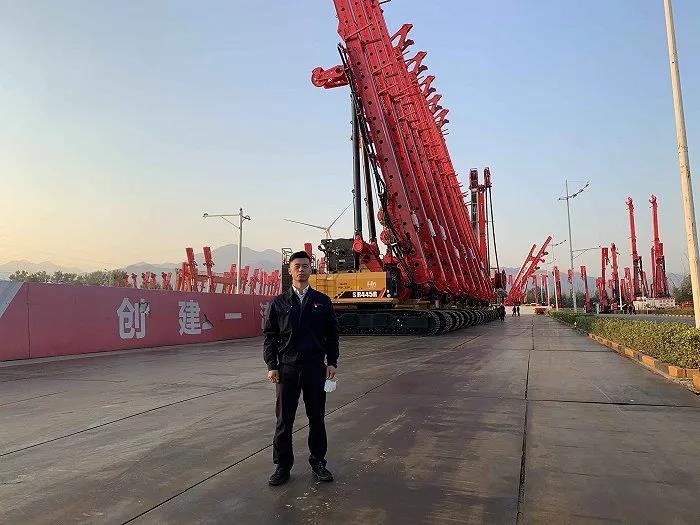
Xia Wenshi and the Trinity Pile Machine behind it Photo: Ma Yueran
Get started
At half past ten o'clock in the evening on October 28th, Xia Wenshi updated a circle of friends: "2003.10.28-2021.10.28, thank you Sany, thank you for having you, we are adults!" ”
In October 18 years ago, with the coolness of early autumn, Xia Wenshi took a green train for more than 20 hours alone and went north to Beijing.
That year, he had just turned 17 years old and graduated from a secondary school in Hunan Province, majoring in mechanical engineering. His hometown is in Yiyang, Hunan. After graduating from junior high school in 2000, he and many of his classmates chose to study in a vocational and technical school.
"At that time, I didn't have any envy for university, but later I realized that if I wanted to participate in more management, I had to learn and improve." He recalled.
Hunan is a major manufacturing province of construction machinery in China, gathering leading construction machinery enterprises such as Sany Heavy Industry, Railway Construction Heavy Industry, and Sunward Intelligence. Founded in 1994, Sany Heavy Industry's main factory is located in Changsha Economic and Technological Development Zone.
After 2000, Sany Heavy Industry's status in the construction machinery industry gradually rose. In 2002, the revenue was about 985 million yuan, and in 2003, it increased to 2.088 billion yuan, and its reputation began to spread.
Approaching the graduation season, Sany Heavy Industry went to the vocational school to recruit workers and gave Xia Wenshi a job, but he had to go to Beijing, 1,500 kilometers away. "At that time, my mind was full of yearning for the capital city." Xia Wenshi readily agreed.
After Xia Wenshi got off the train, he went directly to the factory of Sany Heavy Industry in Huilongguan, Changping District, and started as an assembly intern. At that time, the environment of the Huilongguan factory was much worse than the current Nankou Industrial Park. "While it is fresh and longing, there are also small disappointments." This is a summary of Xia Wenshi's initial impression of Beijing.
It was also in 2003 that Sany Heavy Industry landed on the Shanghai Stock Exchange and became a listed company. In the same year, Sany Group invested in the establishment of Beijing Sany Heavy Machinery Co., Ltd. in Changping District, Beijing, engaged in the research and development and production of rotary drilling rigs.
Sany Heavy Industry's industrial clusters in Beijing include two industrial parks, Nankou and Huilongguan. Nankou Industrial Park mainly producesPiling machinery, wind power equipment, petroleum equipment, etc. The Nankou Industrial Park was put into operation in 2010, and the Huilongguan part gradually assumed administrative functions.
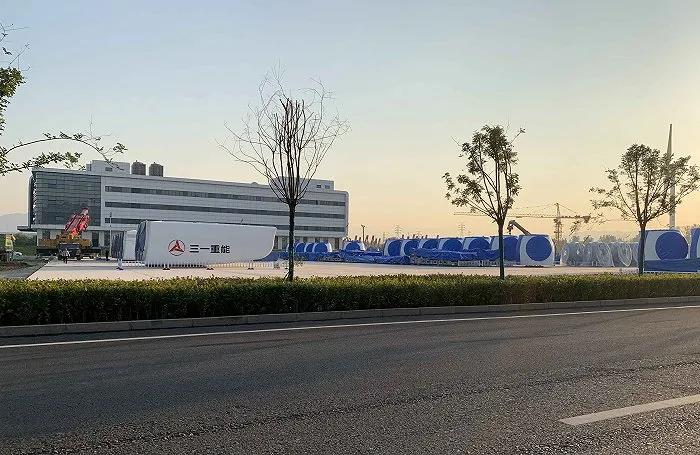
Sany Renewable Energy Equipment in Nankou Industrial Park Photo: Ma Yueran
Xia Wenshi has worked in Huilongguan Industrial Park for seven years, which is typical of traditional heavy industry manufacturing. When he first arrived, he was afraid that his master would not give him the work, and he was afraid that he would not be able to learn the technology.
"Every worker was busy at that time." Xia Wenshi recalled, but ten years ago, the factory's output was only about one-third of the current one, because it was a purely traditional manufacturing model.
The construction machinery industry has a high correlation with social fixed asset investment, and its development has phased characteristics. It is generally believed in the industry that the industry basically takes a five-year cycle.
In the nearly 20 years he has been in the industry, Xia Wenshi has personally experienced four obvious cycles. One of the most impressive was from 2006 to 2011.
According to data from the China Construction Machinery Association, thanks to a large number of infrastructure investment to drive the development of the industry, the total sales of domestic construction machinery increased significantly from 180,000 units in 2006 to 440,000 units in 2011. Especially with the introduction of the "four trillion" stimulus policy in 2008, real estate and infrastructure construction has entered an investment climax, and the construction machinery industry has developed rapidly in 2009-2011.
As a result, Sany Heavy Industry has grown rapidly. In 2011, the company's revenue reached 50.77 billion yuan and net profit was 8.64 billion yuan, both of which increased by about 50% year-on-year.
In that year, Sany Heavy Industry ranked among the top 500 Global Financial Times with a market value of US$21.584 billion (about 150 billion yuan). Chairman Liang Wengen also became the richest man in Chinese mainland by Forbes with a net worth of 50 billion yuan.
But this "scenery" did not last forever. Since 2012, China's construction machinery industry has experienced a continuous decline in the macroeconomic recession and the market imbalance of overcapacity.
In Xia Wenshi's memory, since the second half of 2013, Sany Heavy Industry has obviously gone downhill until 2015.
At the end of 2015, the annual sales of China's construction machinery fell to 120,000 units, less than one-third of the peak. According to the research report data of GF Securities, the proportion of construction machinery used in fixed asset investment decreased from 1.66% in 2011 to 0.67% in 2015.
In 2015, Sany Heavy Industry's revenue has been halved to 23.36 billion yuan, and its net profit has fallen off a cliff to 139 million yuan. The company has also successively reduced its branches in Tianjin and other regions, and the number of workshops has been greatly reduced. By the end of 2016, the number of Sany Heavy Industry had dropped to less than 14,000, a decrease of nearly 70% from 52,000 in 2011.
Meet the robots
Around 2016, the construction machinery industry began to show signs of recovery. "When it's busy, the factory can't keep up with the manpower, and you need to work overtime." Xia Wenshi said.
Since 2017, the industry has ushered in a new round of recovery and growth. At this time, the call for intelligent manufacturing and industrial transformation is getting higher and higher, and the proposal of the "14th Five-Year Plan" for the development of intelligent manufacturing drives China's strategic layout from a manufacturing country to a manufacturing power.
Sany also realizes the importance of transformation. In 2018, the group launched digital transformation within the group, and in 2019, it began to officially build intelligent manufacturing. Beijing and Changsha are the first to start, and other regions are gradually following suit.
"That's when I felt that the real transformation of the manufacturing industry had begun." Xia Wenshi said.
In his view, on the one hand, because of the general environment, the entire manufacturing environment needs to be changed, and on the other hand, because the skilled workers have been cut off at that time, forcing the enterprise to transform.
At the same time, it is also forcing workers to transform.
From traditional heavy industry manufacturing to intelligent manufacturing, workers are facing many tests and changes. The same plant was divided into two areas at that time, one was installed in the traditional mode to ensure production at that time, and the other was used for intelligent manufacturing transformation and installation of robots and other equipment.
"Space is limited and workers are squeezed into very small areas. While accomplishing the set production goals, you also need to learn the knowledge required for the transformation. Xia Wenshi said that it was the peak of production at that time, and there was no room for rest.
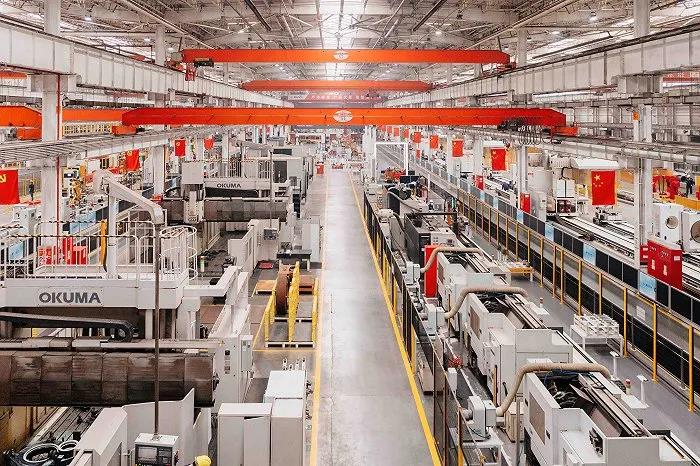
Interior of the Sany Lighthouse factory after completion Image source: Sany Group
For these traditional workers, how to face intelligent manufacturing equipment such as robots is also a big problem.
After the robot is installed, how to operate, debug and manage? Learning the corresponding knowledge, even simple robot programming, has become a "compulsory course".
To this end, Sany Heavy Industry has set up unified training for employees. In addition to studying at the Beijing factory, Xia Wenshi and his co-workers also went to Trinity School in Hunan for a period of time to train, and took the corresponding examination to obtain the grade certificate.
When asked if he would find it difficult to study, Xia Wenshi revealed surprise in his tone, "It's difficult to learn, how can you give up so easily." ”
"The new smart manufacturing is coming, and if you don't change, it will change you." Xia Wenshi feels that if he doesn't make changes, he may be the next to be eliminated, because the wave of robot substitution is coming, and the first to be eliminated are workers with limited acceptance of new technologies.
"The devices all have controllers. At first, I couldn't find the buttons of the controller, but then I slowly got familiar with the buttons one by one, and then to each program, and mastered its regular logic, which I didn't think was so difficult. Xia Wenshi's tone revealed a little pride.
In this way, Sany Heavy Industry has promoted employees to the era of Industry 4.0.
On September 27 this year, Sany Heavy Industry Beijing Pile Driver Factory was selected as a "Lighthouse Factory". "Lighthouse Factory" came into being in the context of intelligent manufacturing, it is a "digital manufacturing" and "globalization 4.0" demonstrator jointly selected by the World Economic Forum in Davos and McKinsey & Company, representing the highest level of intelligent manufacturing and digitalization in the global manufacturing field today.
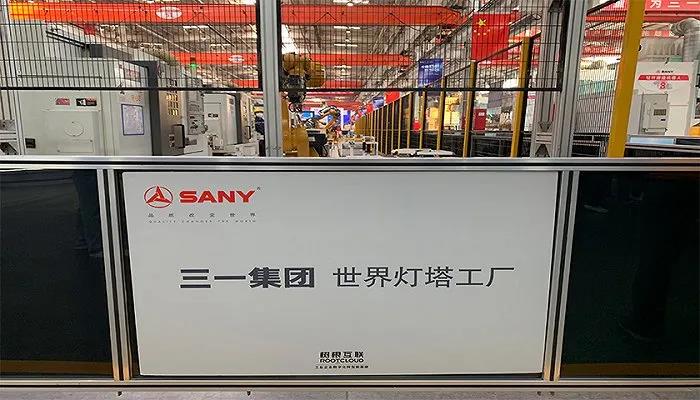
Sany Group World Lighthouse Factory Photo: Ma Yueran
According to Jiemian News, after the intelligent transformation of Sany Beijing Pile Driver Factory, the scale of employees has been reduced by nearly half, and there are currently only more than 400 people. Taking welding as an example, the cost of a worker is about 200,000 yuan a year, and the cost of a robot or a related intelligent machine is comparable to it, which can replace 2-3 people.
At present, some production links of the factory have not been fully unmanned, such as the raw material hoisting and deployment that Zheng Baoli, the warehouse keeper of the material department, is responsible for.
For the time being, only a relatively simple intelligent system is applied to this link, which uses mobile phones to operate inventory management, and the data is directly uploaded to the financial department and the group in the background.
"By the end of the year, this corner will also be made into an engineering system. The outdoor material library should be gradually refined. The production line of the factory in front has been completely intelligent, and we will slowly change in the future. Zheng Baoli is 52 years old, from Northeast China, and has worked outdoors for many years, which has made him dark-skinned.
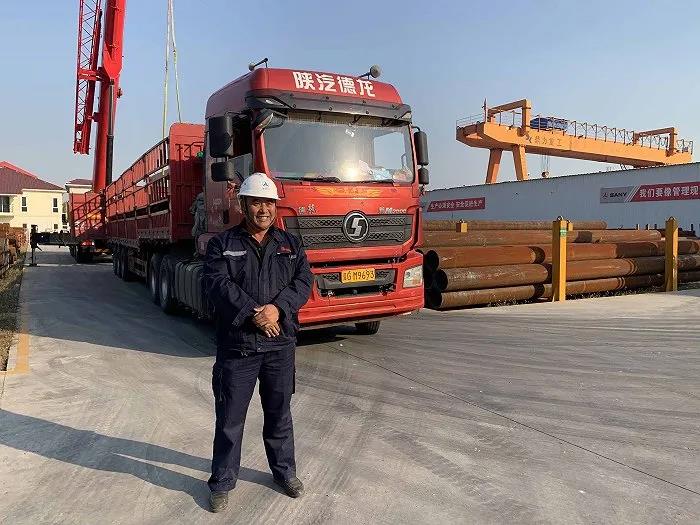
Zheng Baoli and his outdoor workspace Photo: Ma Yueran
"Learning a new system is definitely difficult for older people." Zheng Baoli said, but he still bought books a few days ago and wanted to learn more from young people.
One of Zheng Baoli's learning objects may be Xia Wenshi.
Will not change careers
Xia Wenshi also clearly knows that the heavy industry and machinery industry will not be prosperous forever.
As a barometer of the construction machinery industry excavator, sales reached a peak in March this year after declining month by month, and rebounded in September, but domestic sales have been "six consecutive declines" year-on-year.
The poor sales of excavators have caused people to worry about the development prospects of the construction machinery industry.
Bohai Securities believes that the national IV emission standard for non-road mobile machinery will be implemented at the end of 2022, considering the slowdown in the issuance of special bonds in the first half of the year, the progress of some projects is lower than expected, and the overall industry growth rate is slowing down.
"It's also in a period of adjustment. Intelligent manufacturing is dealing with this 'downhill road'", Xia Wenshi said, "On the other hand, the importance of this industry to the country is self-evident, and I have always been confident." ”
Xia Wenshi plans to do it firmly in this line.
"I have an advantage in this field, and I have become a novice when I change jobs across industries. Although I can learn again, it will definitely be slow, and I will not choose it easily. Having worked in the manufacturing industry for nearly 20 years, Xia Wenshi believes that changing careers is not his best thing.
In his free time over the years, Xia Wenshi was admitted to the bachelor's degree in business administration at North China Electric Power University, and plans to continue to take the postgraduate examination to strive for more development opportunities.
Living apart from his family is the biggest life problem Xia Wenshi is currently facing. When talking about his family, he habitually bows his head and is suddenly shy.
Today, Xia Wenshi lives in a dormitory assigned by the company. Since the industrial park is located in the suburbs of Beijing, there are few residential and entertainment properties in the vicinity. Sany Group has built a community for employees next to the industrial park.
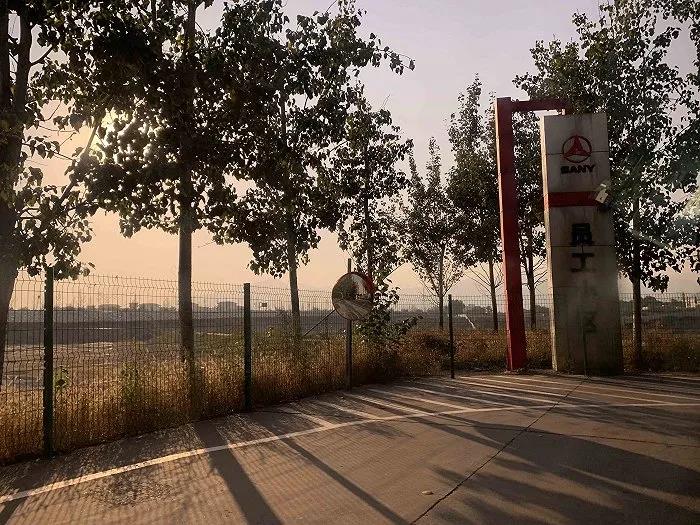
Sany Group Staff Community Photo: Ma Yueran
There are six five-storey dormitory buildings in the community, and a comprehensive building is also set up, which has a gymnasium, restaurant, supermarket, etc., and there are also open basketball courts and badminton courts in the community.
Trinity Staff Community Photography: Ma Yueran In the evening, the setting sun hit the gray-white dormitory building wall. "When you can, you will take your family over." When he said this, Xia Wenshi's eyes were resolute, with a vision for the future.
Recommended products
0 comments
Related testimonials
CCTV Finance × Sany Heavy Industry: Transportation construction continues to heat up! In May, the infrastructure was full of bright spots →
2025.06.17
CCTV Finance × Sany Heavy Industry: Infrastructure results are released! Anhui is soaring, and the equipment of the western port has become a "dark horse"
2025.05.19
Hunan Merchant Lecture Hall! To Wenbo!
2025.05.16




0 comments