
Earth-moving machineryConcrete machinerycraneRoad machineryPiling machineryCoal machineryPort machineryWind power equipmentSany heavy truckTrinity ConstructionPetroleum equipmentTrinity EnvironmentEnvironmental engineeringEmergency rescue equipmentMining dump truckstip truckAerial work machineryLithium battery equipmentWarehousing and logisticsPhotovoltaic productsHydrogen equipmentCrushing equipment
Micro-diggingSmall diggingMedium diggingBig diggingWheeled excavatorsLoaderDiversify your productsAttachments
Pump trucksMixer trucksConcrete batching plantOn-board pumpsElectric vehicle on-board pumpsTow pumpMortar pumpsWet sprayerFilling pumpsNew energy mixer truckDry mix mortar mixing plantMortar/concrete dual-purpose batching plant
Truck cranesAll-terrain cranesTruss boom crawler craneTelescopic crawler craneMultifunctional crawler craneFlat-top tower craneTruck-mounted cranes
Reach stackerContainer empty container handlersforkliftGrab steel (material) machinePure electric port tractorTelehandlersShore-to-shore container cranesRail-mounted container gantry craneRubber-tyred container gantry craneGantry crane
3.X Medium and low wind speed wind turbines4.X Medium and high wind speed / all-weather / customized product platform5.X-6. X MW customized product platform
Smart PC equipmentIntelligent AAC equipmentIntelligent steel processing equipmentMobile crushing and screening equipmentMould fixturesCategory 2 standards3 soft 1 platform
Mechanical fracturingElectric fracturingOil-connected equipmentWellhead automationOilfield machineryFracturing pumps
Pure electric road cleaning vehiclePure electric solid waste collection and transfer vehicleMunicipal maintenance vehicles
Compressed air foam fire truckdroneSpecial-duty fire trucksCombat logistics support fire trucksRaise jet fire trucksAscending platform fire truck
High-speed homogenization systemDouble-layer extrusion coaterRoller pressing and slitting machineZ-type cutting and stacking machineWinding machinePrimary and secondary injection machinesCompound capacity needle bedModule PACK line

Earth-moving machineryConcrete machinerycraneRoad machineryPiling machineryCoal machineryPort machineryWind power equipmentSany heavy truckTrinity ConstructionPetroleum equipmentTrinity EnvironmentEnvironmental engineeringEmergency rescue equipmentMining dump truckstip truckAerial work machineryLithium battery equipmentWarehousing and logisticsPhotovoltaic productsHydrogen equipmentCrushing equipment
Micro-diggingSmall diggingMedium diggingBig diggingWheeled excavatorsLoaderDiversify your productsAttachments
Pump trucksMixer trucksConcrete batching plantOn-board pumpsElectric vehicle on-board pumpsTow pumpMortar pumpsWet sprayerFilling pumpsNew energy mixer truckDry mix mortar mixing plantMortar/concrete dual-purpose batching plant
Truck cranesAll-terrain cranesTruss boom crawler craneTelescopic crawler craneMultifunctional crawler craneFlat-top tower craneTruck-mounted cranes
Reach stackerContainer empty container handlersforkliftGrab steel (material) machinePure electric port tractorTelehandlersShore-to-shore container cranesRail-mounted container gantry craneRubber-tyred container gantry craneGantry crane
3.X Medium and low wind speed wind turbines4.X Medium and high wind speed / all-weather / customized product platform5.X-6. X MW customized product platform
Smart PC equipmentIntelligent AAC equipmentIntelligent steel processing equipmentMobile crushing and screening equipmentMould fixturesCategory 2 standards3 soft 1 platform
Mechanical fracturingElectric fracturingOil-connected equipmentWellhead automationOilfield machineryFracturing pumps
Pure electric road cleaning vehiclePure electric solid waste collection and transfer vehicleMunicipal maintenance vehicles
Compressed air foam fire truckdroneSpecial-duty fire trucksCombat logistics support fire trucksRaise jet fire trucksAscending platform fire truck
High-speed homogenization systemDouble-layer extrusion coaterRoller pressing and slitting machineZ-type cutting and stacking machineWinding machinePrimary and secondary injection machinesCompound capacity needle bedModule PACK line
Sany Heavy Industry Sany Heavy Industry Co., Ltd. (SH:600031)
Trinity International Sany International (HK:00631)
Sany Renewable Energy Sany Renewable Energy (SH:688349)
Home > Media coverage > The Economic Observer praised the whole page of Trinity: Machines are used to produce machines
The Economic Observer praised the whole page of Trinity: Machines are used to produce machines
2021.10.20
The Economic Observer
On October 18, the Economic Observer published a full-page article "A Black Light Factory in Changping, Beijing: Chinese Enterprises Are Using Machines to Produce Machines", which made an in-depth report on the Sany Pile Crane Factory being rated as a world lighthouse factory. According to the report: in China, the black light factory is no longer in the concept, and the role of technology is resetting the role of people and machines in the workshop, the factory has been transformed at an unexpected speed in more than two years, becoming one of the most intelligent workshops among China's hundreds of millions of manufacturing enterprises, and will serve as the starting point and benchmark for the intelligent transformation of Sany's follow-up factories.
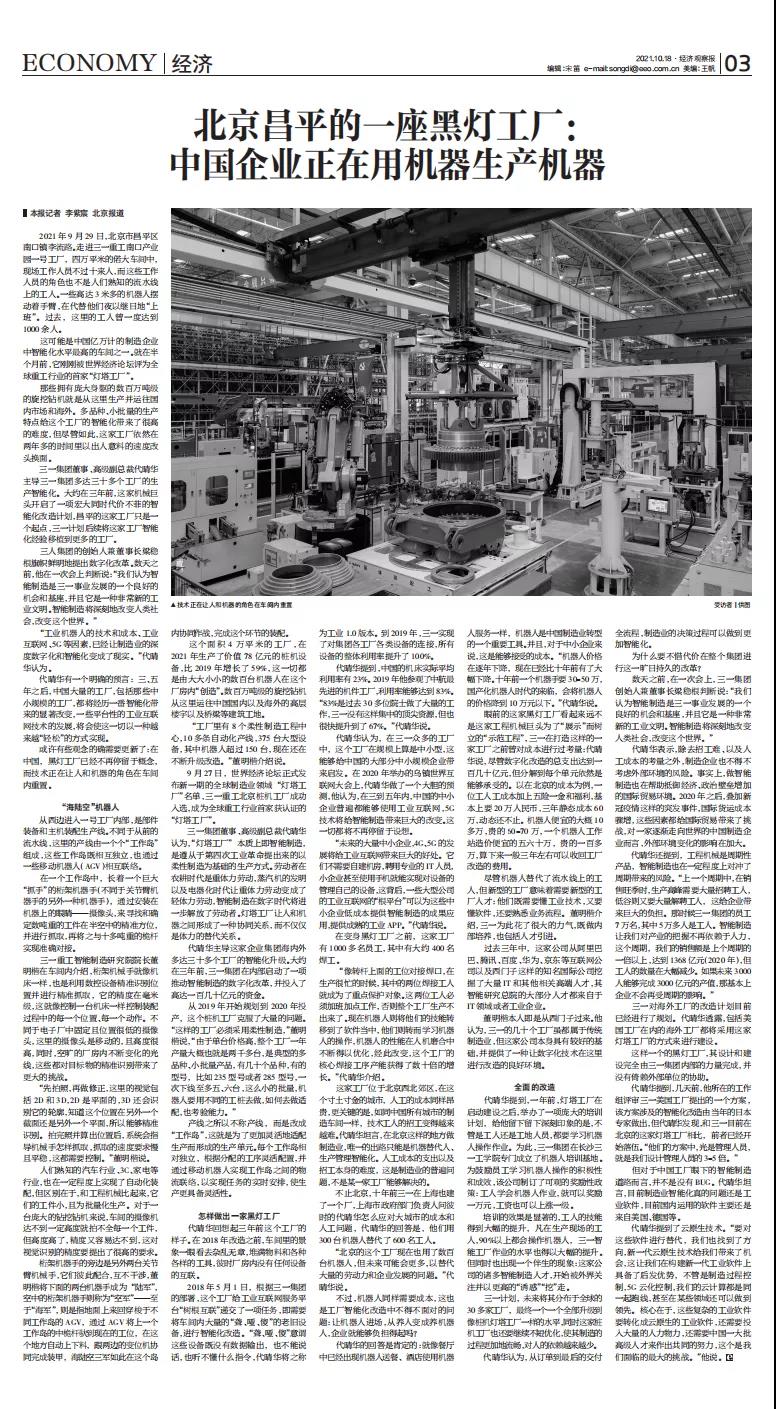
The full text of the report is as follows:
September 29, 2021, Li Liu Road, Nankou Town, Changping District, Beijing. Walking into the No. 1 factory of Sany Heavy Industry Nankou Industrial Park, in the huge workshop of 40,000 square meters, there are only about a dozen on-site staff, and the role of these staff is not the well-known assembly line workers. Some robots, more than 3 meters tall, swing their arms and "go to work" day and night in their place. In the past, there were more than 1,000 workers here.
This is probably one of the most intelligent workshops among China's hundreds of millions of manufacturing enterprises. Just half a month ago, it was named the first "lighthouse factory" in the global heavy industry by the World Economic Forum.
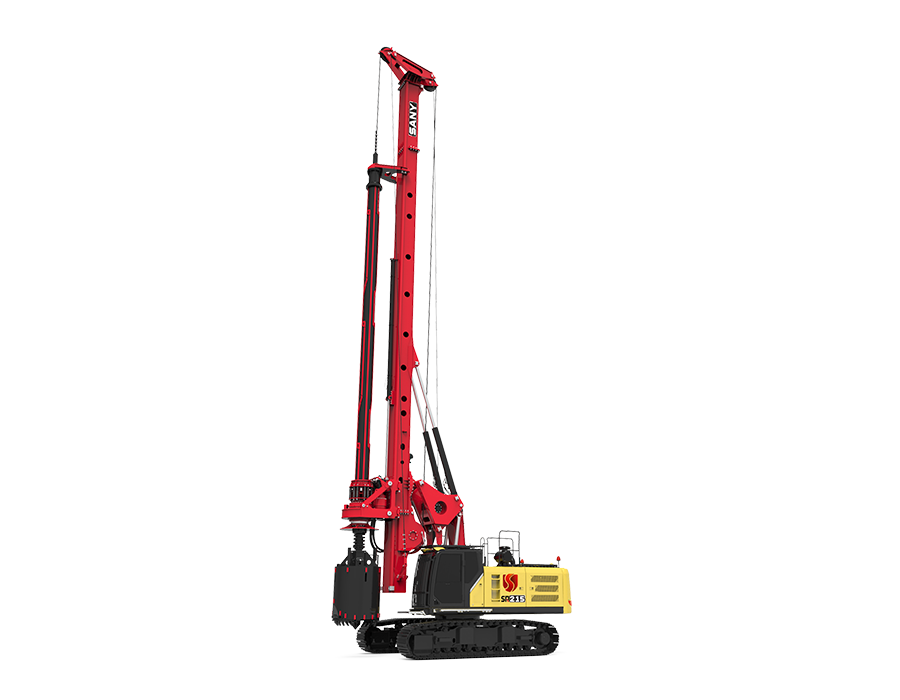
Those with huge bodies of millions of tonsRotary drilling rigsIt is produced from here and shipped to the domestic market and overseas. The high-mix, low-volume production made it difficult for the plant to become intelligent, but despite this, the plant was transformed at an unexpected pace in just over two years.
Dai Qinghua, director and senior vice president of Sany Group, leads the production intelligence of more than 30 factories of Sany Group. About three years ago, the machinery giant embarked on a grand and costly intelligent transformation plan, and this factory in Changping is just a starting point, and Sany plans to transplant the intelligent experience of this factory to more factories in the future.
Liang Wengen, the founder and chairman of Sany Group, has clearly proposed digital reform. A few days ago, he judged at a meeting: "We believe that intelligent manufacturing is a good opportunity and foundation for the development of Sany's cause, and it is a very new industrial civilization." Intelligent manufacturing will profoundly change human society and change the world. "The technology and cost of industrial robots, industrial Internet, 5G and other factors have made the deep digitalization and intelligence of the manufacturing industry a reality." Dai Qinghua thinks.
Dai Qinghua has a clear prediction: in three or five years, a large number of factories in China, including those small and medium-sized factories, will experience a significant change brought about by intelligence, and the development of some platform industrial Internet technology will make all this more and more "easy" to achieve.
Perhaps some notions do need to be updated: in China, the black-light factory is no longer a concept, and technology is resetting the roles of people and machines on the shop floor.
"Land, sea and air" robots
Entering the No. 1 factory from the west, there is a production line for component equipment and main engine assembly. Unlike the previous assembly lines, the production line here consists of "working islands", which are independent of each other and are connected to each other by some mobile robots (AGVs).
In a working island, a truss robot with a huge "gripper" (another kind of robot hand different from the articulated arm manipulator) uses the eye - camera installed on the machine to find and determine the precise orientation of the workpiece weighing several tons in mid-air, and grasps it, and then realizes accurate docking with the mast weighing more than ten tons.
Dong Mingkai, president of Sany Heavy Industry Intelligent Manufacturing Research Institute, introduced in the workshop that the truss manipulator is like a machine tool, and it also uses CNC equipment to accurately identify the position and accurately grasp, and its accuracy is at the millimeter level, which is like controlling every position and every action in the assembly process like controlling a machine tool. Unlike the fixed and low-positioned cameras in electronics factories, the cameras here are mobile and high, and the changing light in the empty factory building makes it more challenging to accurately identify the target.
"Take a picture first, and then make corrections, the vision here includes 2D and 3D, 2D is flat, 3D will also recognize its outline, know whether this position is in another section or another plane, so it can be accurately identified. After taking a photo and calculating the position, the system will instruct the manipulator how to grasp, and the speed of grasping is required to be slow and smooth, which needs to be controlled. Dong Mingkai said.
The well-known automotive industry, 3C, home appliances and other industries have also realized automated assembly to a certain extent, but the difference is that compared with construction machinery, their workpieces are small and mass-produced. For a huge drilling rig, the camera in the workshop cannot shoot every workpiece if it does not reach a certain height, but the height is high, and the accuracy is easy to reach, which puts forward high requirements for the accuracy of visual recognition.
Next to the truss manipulator are two other articulated arm manipulators, they cooperate with each other and do not interfere with each other, Dong Mingkai will become the following two manipulators as the "army", and the truss manipulator in the air is called the "air force" - as for the "navy", it refers to the AGV that shuttles back and forth on the ground on different working islands, and through the AGV, the mast of the previous working island is carried to the current station, and the materials are automatically loaded and unloaded in this place, and the positioners on both sides cooperate to complete the armor, and the navy, land and air forces work together on this island. Complete the assembly of this link.
The 40,000-square-meter factory produced pile driver equipment worth 7.8 billion yuan in 2021, an increase of 59% over 2019, all of which were "created" by hundreds of robots of all sizes in this plant. Millions of tons of rotary drilling rigs are shipped from here to construction sites such as high-rise buildings and bridges in China and abroad.
"The factory has 8 flexible manufacturing engineering centers, more than 10 automated production lines, and 375 large-scale equipment, including more than 150 robots, which are still being upgraded." Dong Mingkai said.
On September 27, the World Economic Forum officially released a new list of "lighthouse factories" in the global manufacturing field, and Sany Heavy Industry Beijing Pile Driver Factory was successfully selected, becoming the first certified "lighthouse factory" in the global heavy industry industry.
Dai Qinghua, director and senior vice president of Sany Group, believes that the "lighthouse factory" is essentially intelligent manufacturing, which is a production method based on flexible manufacturing proposed by the fourth industrial revolution. The invention of the steam engine and the era of electrification have turned heavy physical labor into light manual labor, and intelligent manufacturing will further liberate workers in the digital age. The lighthouse factory creates a synergistic relationship between people and machines, not just a substitute for physical strength.
Dai Qinghua led the intelligent upgrade of more than 30 factories at home and abroad of this enterprise group. About three years ago, Sany Group launched a digital reform to promote intelligent manufacturing internally, and invested up to 10 billion yuan.
From the start of planning in 2019 to the start of production in 2020, this pile driver factory has overcome a large number of problems. "Such a factory must adopt flexible manufacturing," Dong Mingkai said, "due to the high price of a single unit, the annual output of the entire factory is about more than 2,000 units, which is a typical multi-variety, small-batch products, there are dozens of varieties, some models, such as 235 models or 285 models, at most five or six units off the assembly line at a time, such a small batch, the robot has to use different piles to do, how to do adaptation, but also test the ability." ”
The reason why the production line is not called a production line, but is changed to a "working island", is that the production unit formed in order to adapt to production more flexibly. Each working island is relatively independent, flexibly configured according to the assigned process, and the logistics communication between the working islands is realized through mobile robots to realize real-time scheduling of tasks, making production more flexible.
How to make a black light factory
Dai Qinghua recalled what this factory looked like three years ago. Before the renovation in 2018, the scene in the workshop was chaotic at first glance, full of materials and various tools, and there was no interconnection of equipment in the factory at that time.
On May 1, 2018, according to the deployment of Sany Group, the factory submitted a task to the industrial Internet service platform "Tree Root Interconnection", that is, it was necessary to intelligently transform a large number of "deaf, dumb and stupid" old equipment in the workshop. "Deaf, dumb, and stupid" means that these devices have no data output, cannot speak, and cannot understand any instructions, which Dai Qinghua refers to as Industry 1.0 version. By 2019, Sany has realized the connection of various types of equipment in the group's factories, and the overall utilization rate of all equipment has increased by 100%.
Dai Qinghua mentioned that the actual average utilization rate of machine tools in China is 23%. In 2019, he visited AVIC's state-of-the-art machine parts factory, which was able to achieve a utilization rate of 83%. "83% is a lot of work done by more than 30 academicians in the past, and Sany does not have such concentrated top resources, but it has quickly increased to 67%." Dai Qinghua said.
Dai Qinghua believes that among Sany's many factories, this factory is small and medium-sized in terms of scale, which can bring inspiration to most of China's small and medium-sized enterprises. At the 2020 Wuzhen World Internet Conference, Dai Qinghua made a bold prediction, he believes that in three to five years, China's small and medium-sized enterprises will generally be able to use the industrial Internet, and 5G technology will bring great changes to intelligent manufacturing. None of this will remain a mere assumption.
"In the future, a large number of small and medium-sized enterprises, the development of 4G and 5G will bring huge benefits to the industrial Internet. They do not need to build their own computer rooms, hire professional IT personnel, small enterprises can even use mobile phones to manage their own equipment, behind this, some large companies of the industrial Internet "root platform" can provide these small and medium-sized enterprises with low-cost intelligent manufacturing results, provide mature industrial APP. Dai Qinghua said.
Before it turned into a black light factory, the plant had more than 1,000 employees, including about 400 welders.
"For example, the butt weld of the station on the rotating rod, when the production is very busy, two of the welders have become the key protection object. These two workers had to work overtime, otherwise the whole factory would not be able to produce. Now the robots have transferred their skills to the software, and they have switched to learning the operation of the robot, and the performance of the robot has been continuously optimized in the run-in of man and machine, and the production capacity of the core welding process of this factory has increased dozens of times. Dai Qinghua introduced.
The factory is located on the northwestern outskirts of Beijing, a city where labor is at a premium, and more importantly, as in all manufacturing workshops in China, it is becoming increasingly difficult to recruit skilled workers. Dai Qinghua said frankly that the only way out for manufacturing in a place like Beijing can only be to replace people with machines and intelligent production management. The cost of labor and the difficulty of recruiting workers themselves are common problems in the manufacturing industry, and they cannot be solved by a single factory.
Not only in Beijing, Sany also built a factory in Shanghai ten years ago, and the head of the Shanghai government department asked Dai Qinghua how to deal with the cost and labor problems in the big city at that time, and Dai Qinghua replied that they replaced 600 workers with 300 robots.
"This factory in Beijing is also using hundreds of robots now, but there may be more in the future to replace the large number of labor and enterprise development problems." Dai Qinghua said.
However, robots also need costs, which is also a problem that has to be faced in the intelligent transformation of factories: let robots enter the field, from raising people to raising robots, can enterprises afford it?
Dai Qinghua's answer is yes: just like the emergence of robot food delivery in restaurants and the use of robot services in hotels, robots are an important tool for the transformation of China's manufacturing industry. And, for small and medium-sized businesses, this is an acceptable cost. "The price of robots is declining year by year, and now it is significantly lower than it was ten years ago. Ten years ago, a robot cost 30-500,000 yuan, and the advent of the era of localized robots will reduce the price of robots to less than 100,000 yuan. Dai Qinghua said.
The black-light factory in front of us looks far from being a "demonstration project" set up by the construction machinery giant for "display", and Sany had considered the cost before building such a factory: Dai Qinghua said that although the total expenditure on digital transformation reached 10 billion yuan, it was still affordable to break it down to each unit. Taking the cost in Beijing as an example, the cost of a worker, plus five insurances and one housing fund and benefits, is basically 200,000 yuan, and the static cost for three years is 600,000 yuan, and the dynamics are not enough. The robot is about 100,000 cheap, 60-700,000 expensive, a robot workstation is cheaper than 500,000 or 600,000, and more than 1 million is expensive.
While robots are replacing workers on the assembly line, a new type of factory means a new type of factory talent that understands both industrial technology, software, and business processes. Dong Mingkai introduced that Sany has spent a lot of effort on this purpose, not only for internal training, but also for talent introduction.
In the past three years, the company has tapped a large number of IT and other related high-end talents from Internet companies such as Alibaba, Tencent, Baidu, Huawei, JD.com, and well-known international companies such as Siemens.
Dong Mingkai himself came from Siemens. He believes that although Sany's dozens of factories belong to the traditional manufacturing industry, the company itself has a good foundation and provides a good environment for digital technology to transform here.
A complete makeover
Dai Qinghua mentioned that a year ago, after the construction of the lighthouse factory started, a huge training program was held, and he was impressed by the fact that both workers and site personnel had to learn how to operate robots. To this end, Sany Group has set up a robot training base in Changsha Sany Institute of Technology. In order to encourage employees to learn the enthusiasm and effectiveness of robot operation, the company has formulated a considerable incentive policy: workers can be rewarded with 10,000 yuan when they learn to operate robots, and their wages can also be increased by one level.
The effect of the training is significant, the skills of workers have been greatly improved, more than 90% of the workers in the production site will operate robots, and the level of Sany intelligent factory operations has also been greatly improved. But at the same time, there is also a companion phenomenon: many intelligent manufacturing talents of this company have begun to be noticed by the outside world and "poached" with a higher "temptation".
Sany plans to distribute more than 30 factories around the world in the future, and eventually upgrade them all to the same level as the pile driver lighthouse factory, and at the same time, the pile driver factory will continue to optimize to make its manufacturing process smoother and less dependent on people.
Dai Qinghua believes that the whole process from order to final delivery, the decision-making process of the manufacturing industry can be more intelligent.
Why should this protracted reform be undertaken throughout the Group at any cost?
A few days ago, at a meeting, Liang Wengen, founder and chairman of Sany Group, judged: "We believe that intelligent manufacturing is a good opportunity and foundation for the development of Sany's cause, and it is a very new industrial civilization." Intelligent manufacturing will profoundly change human society and change the world. ”
Dai Qinghua said that in addition to the difficulty of recruiting workers and the consideration of labor costs, manufacturing companies also have to consider the risks of the external environment. In fact, doing smart manufacturing is also helping to resist the international trade environment with increasing economic and political barriers. After 2020, the sudden increase in international freight costs due to emergencies such as the new crown epidemic has brought challenges to international trade, and the impact of changes in the external environment is increasing for a Chinese manufacturing company that is gradually going global.
Dai Qinghua also mentioned that construction machinery is a cyclical product, and intelligent manufacturing also hedges the risks brought by the cycle to a certain extent. "In the last cycle, during the peak sales season, a large number of workers were recruited at the peak of production, and a large number of workers were laid off at the trough, which put a huge burden on the company. At that time, Sany Group had 70,000 employees, of which more than 50,000 were workers. Intelligent manufacturing allows us to grasp the industry no longer rely on manpower, this cycle, our sales are more than double the previous cycle, reaching 136.8 billion yuan (2020), but the number of workers is greatly reduced. If 3,000 people can complete the output value of 300 billion yuan in the future, then basically the enterprise will no longer be affected by the cycle. ”
Sany's renovation plan for overseas factories is currently being planned. Dai Qinghua revealed that overseas factories, including the U.S. factory, will be built in the form of this lighthouse factory.
The design and construction of such a black light factory was carried out entirely by the internal forces of Sany Group, and did not rely on the assistance of external units.
Dai Qinghua mentioned that a few days ago, his working group reviewed a plan proposed by Sany's American factory, which involved intelligent transformation made by Japanese experts at the time, but Dai Qinghua found that compared with Sany's current lighthouse factory in Beijing, the former has begun to fall behind. "In their plan, the management personnel alone are 3-5 times that of our design management personnel."
But for the current intelligent manufacturing road of Chinese factories, it is not without bugs. Dai Qinghua said frankly that the real problem of intelligent manufacturing industry is industrial software, and the software currently used in China is mainly from the United States, Germany, etc.
Dai Qinghua mentioned cloud native technology. "To replace these software, we have also found a direction, the new generation of cloud native technology has brought us opportunities, which allows us to have a late-mover advantage in building a new generation of industrial software, whether it is manufacturing process control, 5G cloud control, our cloud computing is the same running line, and even in some areas can be leading. The core lies in the fact that in order to transform these complex industrial software into cloud-native industrial software, a lot of manpower and material resources need to be invested, and a large number of senior talents in China need to make joint efforts, which is the biggest challenge we face. He said.
Recommended products
Related testimonials
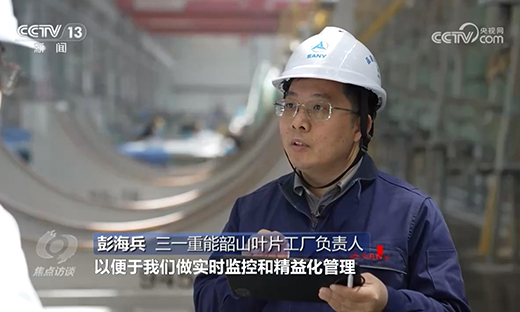
CCTV "Focus Interview": Reveal the technical code of Sany Shaoshan Lighthouse Factory
2024.11.02
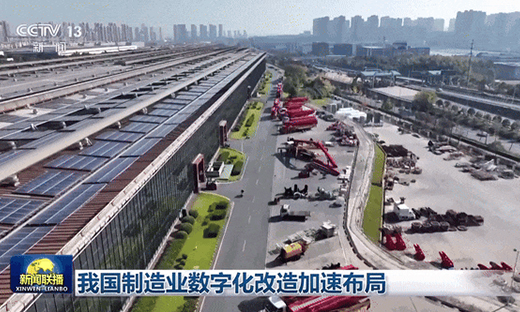
Sany has repeatedly appeared on "News Network"! Digital transformation accelerates the layout!
2024.10.22
Securities Times|The flexible manufacturing of "Big Mac", Sany counterattacks the world!
2024.10.10




0 comments