

Zou Cai: The unconventional oil and gas revolution may boost the development of the world's oil and gas industry for more than 150 years!
2022.08.08
Think Tank Center of PetroChina Economic Research Institute
In recent years, extreme weather events have occurred frequently around the world, which have had a profound impact on human beings. It has become a global consensus to jointly respond to global environmental problems such as natural disasters and frequent extreme weather and achieve carbon neutrality through carbon emission reduction, and is advancing towards global action. At present, the world's energy industry is experiencing "three revolutions" - the low-carbon revolution of fossil energy, the large-scale revolution of new energy and the intelligent revolution of energy management.
The consumption structure of fossil energy continues to adjust, and the proportion of new energy consumption continues to rise, forming a new pattern of coal, oil, natural gas, and new energy. Among them, the petroleum industry is experiencing a leapfrog development from conventional oil and gas to unconventional oil and gas, and China's unconventional oil and gas has made a strategic breakthrough to ensure the supply of oil and gas resources. Countries around the world have accelerated the transformation and adjustment of the energy structure dominated by new energy, and built a green, low-carbon, safe and efficient new energy supply system. The energy science and technology revolution has boosted the "three revolutions" and provided inexhaustible new impetus for human development.
The world's energy structure has formed a new pattern of "four parts of the world".
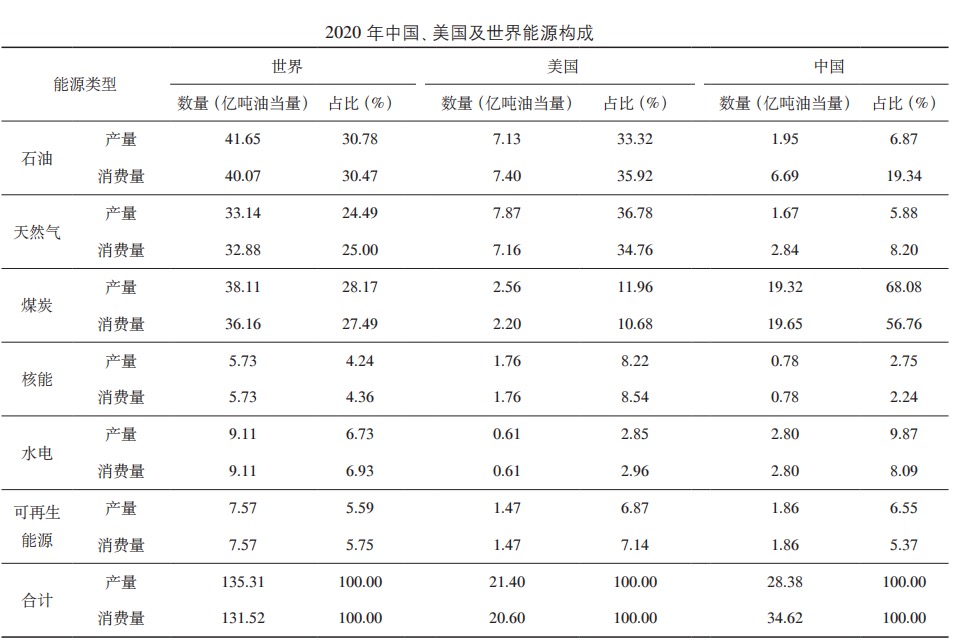
In 2020, oil accounted for about 31% of global energy consumption, natural gas accounted for about 25%, coal accounted for about 27%, and new energy accounted for about 17%, forming a new pattern of coal, oil, natural gas, and new energy. China's underground resource endowment determines that the energy supply is dominated by coal, accounting for about 56% of energy consumption, oil consumption accounting for 20%, natural gas consumption 8%, and new energy consumption accounting for 16%, forming a "one large and three small" pattern dominated by coal.
At present, the four major energy sources have entered their own new development periods. Coal development has entered a "transition period", oil development has entered a "stable period", natural gas development has entered a "heyday", and new energy development has entered a "golden period". According to the current production level, the world's proven coal reserves can be mined for 139 years, and the proven reserves of oil and gas can be mined for about 50 years, and fossil energy resources are still relatively sufficient.
The world's oil and gas industry is leapfrogging from conventional to unconventional
The world's oil and gas industry has a history of more than 160 years, and for more than 150 years since the world's first oil well was born in 1859, the global oil and gas industry has mainly focused on finding conventional "trap" oil and gas reservoirs.
In the past ten years, with the continuous innovation of exploration and development technology, oil and gas exploration has been transformed into the search for unconventional "continuous" sweet spot areas in the source rock strata, and large-scale commercial development of shale oil and gas has been realized. The world's oil and gas industry is leaping from conventional oil and gas to unconventional oil and gas, forming two major oil and gas industry systems of "conventional + unconventional" simultaneously.
Global Oil & Gas Production:In recent years, the growth of global oil and gas production has been dominated by unconventional and offshore areas, while onshore conventional oil and gas production has declined, and the proportion of unconventional oil and gas production has been increasing. In 2020, global onshore conventional oil and gas production was 3.524 billion tonnes of oil equivalent, offshore oil and gas production was 2.217 billion tonnes of oil equivalent, and unconventional oil and gas production was 1.885 billion tonnes of oil equivalent, accounting for 46%, 29% and 25% of the total production, respectively. Especially represented by the United States and China, tight gas, coalbed methane, shale gas and tight oil have developed rapidly, pushing the oil and gas industries of both countries into an unconventional era. In 2021, the United States produced 80 billion cubic meters of tight gas, 18 billion cubic meters of coalbed methane, and 757.2 billion cubic meters of shale gas. China produces 50 billion cubic meters of tight gas, 8.3 billion cubic meters of coalbed methane, 22.4 billion cubic meters of shale gas, and 3 million tons of tight oil.
Oil & Gas Production in China:China's oil and gas exploration is developing to ultra-deep and unconventional, and primary oil reservoirs and high-quality reservoir cap assemplification are still developing in the Tarim Basin at depths of 8,200 meters. Well Luntan 1 is currently the world's deepest Paleozoic oil and gas reservoir, with a drilling depth of 8,882 meters and a daily production of 133.46 cubic meters of crude oil and 48,700 cubic meters of natural gas. PetroChina is the promoter, practitioner and tackler of the global ultra-deep oil and gas revolution.
In 2020, China's oil production was 195 million tons, including 2.7 million tons of tight oil, 1.5 million tons of shale oil, 15 million tons of heavy oil, and 2 million tons of oil sands; Natural gas production was 192.5 billion cubic meters, including 47 billion cubic meters of tight gas, 20 billion cubic meters of shale gas, and 6.7 billion cubic meters of coalbed methane. The proportion of unconventional oil and gas has gradually increased, reaching 80 million tons of oil equivalent in 2020, accounting for 23% of total oil and gas production, of which unconventional gas accounts for 38% of total oil and gas production, and unconventional oil accounts for 11%. Unconventional oil and gas will become a strategic resource for China's "stable oil and gas increase", of which unconventional oil will become a "weight" with stable production, accounting for 20% in 2030; Unconventional gas has become the "main force" of production growth, accounting for more than 50% in 2030. The unconventional oil and gas revolution could boost the world's oil and gas industry for more than another 150 years.
Major countries and regions around the world are accelerating the transformation of energy structure
Europe is short of fossil energy, vigorously develop new energy:Europe's energy supply is insufficient, and total consumption has peaked. In 1981, Europe's energy production was 990 million tons of oil equivalent, and its consumption was 1.66 billion tons of oil equivalent, with a dependence of 40% on foreign countries. In 2020, the total energy production was 1.00 billion tons of oil equivalent, and the consumption was 1.86 billion tons of oil equivalent, with a dependence of 46%. In 1997, Europe's total energy output peaked at 1.31 billion tonnes of oil equivalent, of which 200 million, 180 million and 140 million tonnes of oil equivalent were produced from renewable, nuclear and hydro energy respectively, accounting for 40% of the total.
Europe's new energy consumption accounts for 28% of the world's total new energy consumption, the highest in the world. From 1965 to 1985, natural gas consumption increased rapidly, from 32 million tons of oil equivalent to 760 million tons of oil equivalent, an increase of 22.8 times. From 1975 to 1985, nuclear power consumption increased rapidly, from 17 million tons of oil equivalent to 166 million tons of oil equivalent, an increase of 8.8 times. From 2000 to 2020, renewable energy consumption increased rapidly, from 16 million tons of oil equivalent to 197 million tons of oil equivalent, an increase of 11.3 times.
In terms of hydrogen energy development, on July 8, 2020, the European Union officially announced the "European Hydrogen Energy Strategy", planning to invest 575 billion euros (about 4.6 trillion yuan) in the hydrogen energy industry in the next ten years, of which 145 billion euros will benefit relevant hydrogen energy enterprises in the form of tax incentives, carbon license incentives, financial subsidies, etc., and the remaining 430 billion euros will be directly invested in the construction of hydrogen energy infrastructure. It is planned that by 2030, 24 billion ~ 42 billion euros will be invested in the construction of green hydrogen electrolysis facilities, and 220 billion ~ 340 billion euros will be invested in the construction of 80 ~ 120 GW of wind and solar power generation. EU Vice President Timomemans said: "Hydrogen is the rock star of clean energy and Europe must establish a leading position. ”
The United States vigorously develops unconventional oil and gas and new energy sources to achieve energy independence:As a developed country with high energy consumption and high output, the United States has sufficient fossil energy resources and balanced energy supply and demand. In 1973, the United States produced 1.43 billion tons of oil equivalent and consumed 1.76 billion tons of oil equivalent, with a foreign dependence of 19%. In that year, then-President Richard Nixon proposed the strategy of "energy independence", focusing on the layout and vigorous development of unconventional oil and gas and new energy. In 2019, the U.S. produced 2.26 billion tonnes of oil equivalent and consumed 2.22 billion tonnes of oil equivalent, producing more than it consumed, relying on unconventional oil and gas production growth, and achieving energy independence in less than half a century. In 2020, the U.S. produced 2.14 billion tons of oil equivalent and consumed 2.06 billion tons of oil equivalent, with a self-sufficiency rate of 104%.
Unconventional oil and gas theoretical innovations and technological breakthroughs have driven a significant increase in oil and gas production and helped the United States achieve energy independence. In 2019, the United States produced 714 billion cubic meters of shale gas and 380 million tons of tight oil, and in 2020, shale gas production increased to 733 billion cubic meters and tight oil production fell back to 350 million tons. According to the EIA's forecast, under the base scenario, the U.S. will produce 850 billion cubic meters of shale gas and 430 million tons of tight oil by 2025, and by 2050, shale gas production can exceed 1 trillion cubic meters, and tight oil production can be stable until 2044. The exploitation of unconventional oil and gas resources in the United States has been sustainable for decades.
The medium- and long-term strategy of the U.S. energy transition is to reduce raw coal, stabilize crude oil, accelerate natural gas, and expand new energy.
In 1992, the Clinton administration first proposed energy independence by relying on renewable energy and energy conservation; In 2001, the Bush administration proposed the development of hydrogen energy as the main energy source in the United States, and the following year issued the "National Hydrogen Energy Development Roadmap Research Report", setting off a "hydrogen economy" revolution; In 2019, the Trump administration made every effort to promote the development of renewable energy, carried out research and development of new energy technologies, and released the U.S. "Hydrogen Economy Roadmap - Reducing Emissions and Driving Hydrogen Energy Growth in the United States", planning to make hydrogen energy account for 14% of U.S. energy demand by 2050, and continue to consolidate the U.S. energy leadership. In 2020, U.S. Secretary of Energy Dan Bluyet proposed to focus on promoting "next-generation energy innovation" and leading the world with a "new energy independence" strategy; In 2021, U.S. Secretary of State Antony Blinken called on the U.S. to catch up with China in the field of new energy. In 2021, President Biden signed an executive order to rejoin the Paris Agreement on his first day in office, followed by an executive order prohibiting new oil and gas permits on all public lands and waters, and declaring the U.S. to achieve zero carbon emissions by 2035 and "net zero" emissions by 2050.
Japan and South Korea are vigorously developing hydrogen energy:Japan and South Korea are short of fossil fuel resources, and their energy dependence on foreign countries is as high as 87% and 84%. Japan has formulated a three-stage development blueprint for building a "hydrogen society", and South Korea is committed to building a "hydrogen economy". Japan is a developed country with high energy consumption and very low output, with stable energy demand, serious shortage of fossil energy, long-term dependence on imports for energy consumption, and rapid development of new energy. In 2020, Japan produced 500 million tons of oil equivalent and consumed 400 million tons of oil equivalent, with a self-sufficiency rate of only 13%. After the Fukushima nuclear accident in 2011, the Japanese government was forced to "abandon nuclear and switch to hydrogen", vigorously develop hydrogen energy, and formulate a three-stage development blueprint for building a "hydrogen society": the first stage is from 2014 to 2025, expanding the use of hydrogen energy and increasing the installed capacity of fuel cells, planning to install 1.4 million units by 2020 and 5.3 million units by 2030; In the second phase, from 2026 to 2040, the hydrogen power generation industry will be comprehensively developed, a large-scale hydrogen energy supply system will be established, and hydrogen energy will be produced, stored and transported overseas in an all-round way. The third stage is to establish a zero-carbon hydrogen supply system from 2040 onwards to fully realize zero-emission hydrogen production, hydrogen storage, and hydrogen transportation. At the same time, fuel cell vehicles in Japan will accelerate the application of hydrogen energy, and Toyota's hydrogen fuel cell vehicles have been mass-produced, and the number of hydrogen fuel cell vehicles is planned to increase to 800,000 by 2030 and fully popularize by 2050.
As a developed country, South Korea's energy demand is growing rapidly, and its supply has been dependent on imports for a long time. In 2020, energy production was 44 million tons of oil equivalent, and consumption was 280 million tons of oil equivalent, with a self-sufficiency rate of only 16%. In 2019, South Korea ranked first in the world in terms of sales of hydrogen vehicles (5,000 units in Japan and 1,724 units exported), ranked first in the world in terms of installed hydrogen power generation capacity, and ranked third in the world in terms of new hydrogen refueling stations (30 in China, 22 in Germany, and 18 in South Korea). In 2020, the National Assembly of the Republic of Korea passed the world's first "Hydrogen Economy Promotion and Hydrogen Safety Management Act", formulating a "hydrogen economy" plan, including the establishment of a national hydrogen economy committee, the cultivation of hydrogen energy professional companies, the deployment of hydrogen energy supply facilities, the development of human resources, the establishment of standards, the compilation of statistical data, support for international cooperation, overseas expansion, hydrogen safety management, equipment inspection, import inspection, safety education, etc. South Korea focuses on cultivating the hydrogen energy industry through three aspects: first, strengthening scientific and technological research, planning to invest 300 billion won (about 1.8 billion yuan) to improve the research and development capacity of hydrogen energy parts technology and build a hydrogen energy research and development ecosystem; In 2022, the government and enterprises will invest US$2.3 billion to promote 16,000 fuel cell vehicles, build 310 hydrogen refueling stations, and implement the transformation of oil-hydrogen mixed hydrogen refueling stations. The third is the implementation of financial subsidies, the implementation of vehicle purchase subsidies, tax reductions and exemptions, highway fees, parking fee reductions and exemptions.
The energy and technological revolution has provided inexhaustible new impetus for human development
Global energy development has undergone a transition from fuelwood to coal to oil and gas, and is now evolving from fossil energy to new energy. Artificial fire is the earliest "technological revolution" of human beings, bringing human beings into the era of light and civilization, and firewood as the first generation of main energy has promoted the development of human beings and agriculture. From the 60s of the 18th century to the middle of the 20th century, due to the increasing maturity of coal production and use technology, the wide application of steam engines was promoted, making coal the world's main energy source and "industrial food", promoting the rapid development of manufacturing, metallurgy, mining, transportation, textiles, etc., and accelerating the development of social industrialization. In 1859, American Edwin Drake drilled the world's first oil well in Pennsylvania, with a depth of 21.69 meters and a daily production of 20 barrels of oil, opening the prelude to the world's oil industry. At present, the world has fully entered the era of oil and gas, and revolutionary technological progress such as electric power, internal combustion engine, and electronic information has promoted human society to enter the era of electrification, informatization, and intelligence, and oil has become the main energy source of the third generation.
It is expected that in the middle and late 21st century, the world will fully enter the new energy era. Since the discovery of hydrogen energy in Cavendish in England in 1766, mankind's exploration of new energy has gone through a long process. Ultra-high voltage power transmission, super energy storage, artificial solar and other technologies have promoted the world's energy development into a new energy era of multi-energy complementarity, intelligent coordination, and green and low-carbon. New energy sources such as solar energy, hydropower, wind energy, nuclear energy, marine energy, geothermal energy, and biomass energy will be the cornerstone of clean energy and future energy in harmony with the earth's ecological environment on which human beings depend.
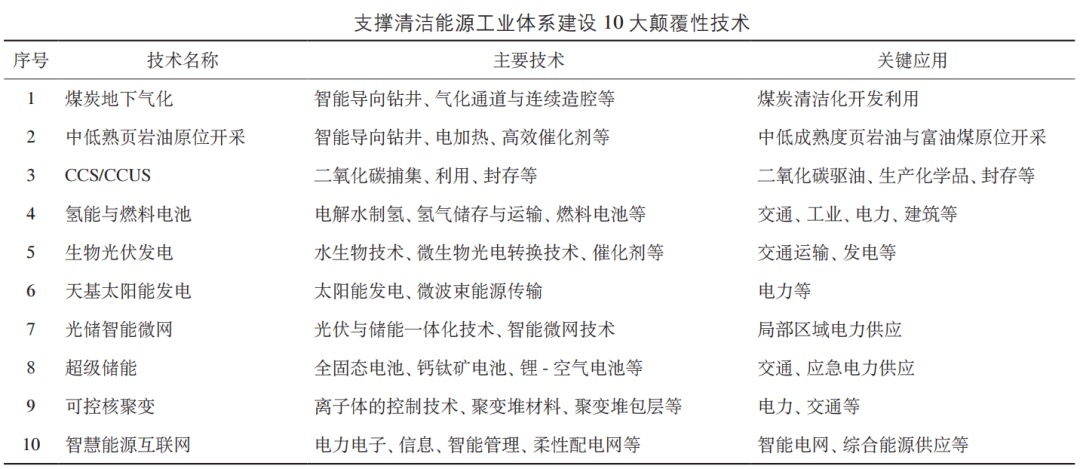
To achieve the goal of carbon neutrality, it is necessary to accelerate the construction of a clean energy industrial system and promote the revolutionary transformation of energy production and consumption structure. The key technologies of the clean energy industrial system mainly include:
(1) Geothermal industrial system. Build a geothermal industrial technology system with heating and power generation as the core, including geothermal heating, geothermal cooling, geothermal power generation, and heat substitution for oilfield production.
(2) Hydrogen energy industrial system. Build a hydrogen industrial technology system with green hydrogen as the core, including hydrogen preparation, hydrogen storage, hydrogen transportation, hydrogen filling, hydrogen utilization, hydrogen testing and hydrogen safety, etc.; The main fields involved are hydrogen transportation, hydrogen energy storage, hydrogen chemical industry, hydrogen metallurgy, etc.
(3) Carbon industrial system. The carbon industry technology system with CCS/CCUS (carbon capture and storage/carbon capture, utilization and storage) as the core, including carbon capture, carbon transportation, carbon oil flooding, carbon sequestration, carbon products, carbon finance and other new industries.
(4) Controlled nuclear fusion. Nuclear fusion energy has the outstanding advantages of abundant resources, no carbon emissions, clean and safe, and is an ideal clean energy for mankind, which can make a significant contribution to the realization of carbon neutrality.
At present, we can focus on the layout and research of 10 disruptive technologies, and effectively help the construction of a clean energy industrial system by accelerating scientific and technological innovation.
China relies on the development of new energy sources to accelerate the energy transition
China is rich in fossil energy, and its energy consumption structure is dominated by coal, forming an energy consumption structure of "one large and three small". In 2020, coal accounted for 56.8% of primary energy consumption, oil, natural gas and new energy accounted for a relatively small amount, oil and gas accounted for the smallest proportion of China's energy production, but the pressure in energy security is the greatest, mainly because China's coal basically does not need to be imported, new energy is a renewable resource, only oil and natural gas resources need to be imported. In 2021, China's primary energy consumption was 3.64 billion tons of oil equivalent, and energy production was 2.97 billion tons of oil equivalent, with a gap of 670 million tons of oil equivalent between energy production and consumption. Of this, the oil and gas shortfall is around 660 million tonnes of oil equivalent. China's overall dependence on foreign energy is 18.4%, and the external dependence on oil and natural gas has reached 72.2% and 44.0% respectively.
Under the goal of carbon neutrality, China's oil and gas industry still needs to adhere to exploration and development, maintain sustainable development, and ensure energy security. It is estimated that in 2060, China's oil consumption will reach about 300 million tons, and natural gas consumption will reach about 400 billion cubic meters. In the future, when achieving the goal of carbon neutrality, China's energy development will focus on new energy and strive to achieve China's "energy independence". Oil and gas will continue to play its due role in the process of carbon neutrality, fossil energy has irreplaceable material properties, and natural gas, as the cleanest fossil energy, will continue to play a supporting role as a low-carbon energy.
Under the goal of carbon neutrality, China's different energy sources have a new positioning: coal plays a role in ensuring the "reserve" and "bottom-up" guarantee of the national long-term energy strategy; Petroleum returns to the attributes of raw materials and plays a cornerstone role in ensuring the "urgent need" of national energy security and the "raw materials" of people's livelihood; Natural gas plays the role of the best "partner" to ensure national energy security and new energy; New energy plays the role of "succession" and "main force" to ensure the national energy strategy, and can plan energy independence through "clean coal, stable oil, gas increase, and strong new". Rely on the new energy security strategy of "Four Revolutions, One Cooperation" to promote the energy transition. Through the energy transition, from the current fossil energy proportion of more than 80%, strive to form a "three small and one large" structure with more than 80% of new energy and a low proportion of fossil energy such as coal, oil and natural gas by 2060, and realize the historic transformation of two "80%".
Rely on "clean coal, stable oil, gas increase, and strong new" to promote energy transformation, and establish new industrial systems such as wind energy, solar energy, geothermal energy, hydrogen energy, marine energy, energy storage, carbon industry (CCS/CCUS), and smart (smart energy). Build a whole industry chain hydrogen industry system similar to the coal industry and petroleum industry, with green hydrogen as the core, covering hydrogen preparation, hydrogen storage, hydrogen transportation, hydrogen filling, hydrogen utilization, hydrogen testing and hydrogen safety and other industries, involving hydrogen transportation, hydrogen energy storage, hydrogen chemical industry, hydrogen metallurgy and other fields. The construction of a whole industry chain geothermal industry system similar to traditional fossil energy, with the efficient utilization of geothermal resources as the core, the geothermal industry system covers three aspects: geothermal resource exploration and evaluation, equipment supply and engineering construction, and geothermal utilization. It is a strategic measure to achieve the goal of carbon neutrality to build a carbon industrial system with CCS/CCUS as the core, covering carbon capture, carbon transportation, carbon flooding, carbon sequestration, carbon products, carbon finance and other businesses, and to build a low-cost and energy-efficient carbon industrial system based on CCS/CCUS.
Founded in 2013, Sany Petroleum is a professional company engaged in the R&D and manufacturing of oil and gas cementing and fracturing equipment, drilling and production automation equipment, EPC general contracting and oilfield technical services.
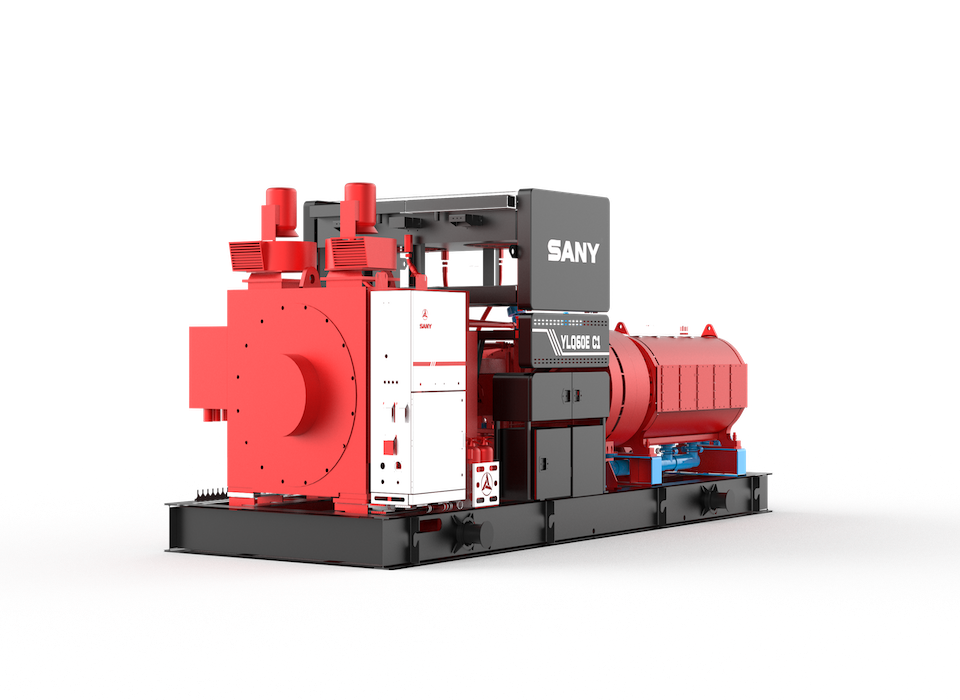
The company has developed fracturing trucks,Electrically driven fracturing skids, sand mixing trucks, mixing vehicles, intelligent instrument vehicles, liquid nitrogen pump trucks and other complete sets of fracturing equipment, coiled tubing operation vehicles, coiled tubing drums and other coiled tubing equipment, as well as drilling (workover) two-layer manipulators, drilling platform manipulators, automated remote operation platforms, centralized control systems and other complete sets of drilling and workover wellhead automation equipment, is committed to providing customers with safe, efficient, intelligent, IoT complete sets of petroleum equipment and comprehensive solutions and integrated services.
Recommended products
Next article:IRENA: Updated Renewable Energy Statistical Yearbook 2022, Wind Energy Accounts for 21%
Related testimonials

CCTV Finance × Sany Heavy Industry: Transportation construction continues to heat up! In May, the infrastructure was full of bright spots →
2025.06.17
CCTV Finance × Sany Heavy Industry: Infrastructure results are released! Anhui is soaring, and the equipment of the western port has become a "dark horse"
2025.05.19
China's installed wind and solar capacity has historically surpassed that of thermal power
2025.04.28




0 comments