

2 million kilowatts of wind power have been put into operation! Hainan Announces Implementation Plan for Carbon Peaking (Enclosure)
2022.08.25
Polaris Wind Power Grid
The plan points out that Hainan will build a safe and efficient clean energy island, vigorously develop renewable energy such as wind, solar, and biomass, and develop nuclear power in an efficient, safe, active and orderly manner, with the proportion of non-fossil energy power generation capacity reaching 55% and 75% respectively in 2025 and 2030. By 2025, 4 million kilowatts of new photovoltaic power generation capacity will be added, about 2 million kilowatts of wind power will be put into operation, and the proportion of non-fossil energy power generation capacity will reach 55%. By 2030, non-fossil energy resources will be fully developed and utilized, and the proportion of installed power generation capacity will reach 75%, and the low-carbon energy ecosystem will begin to take shape.
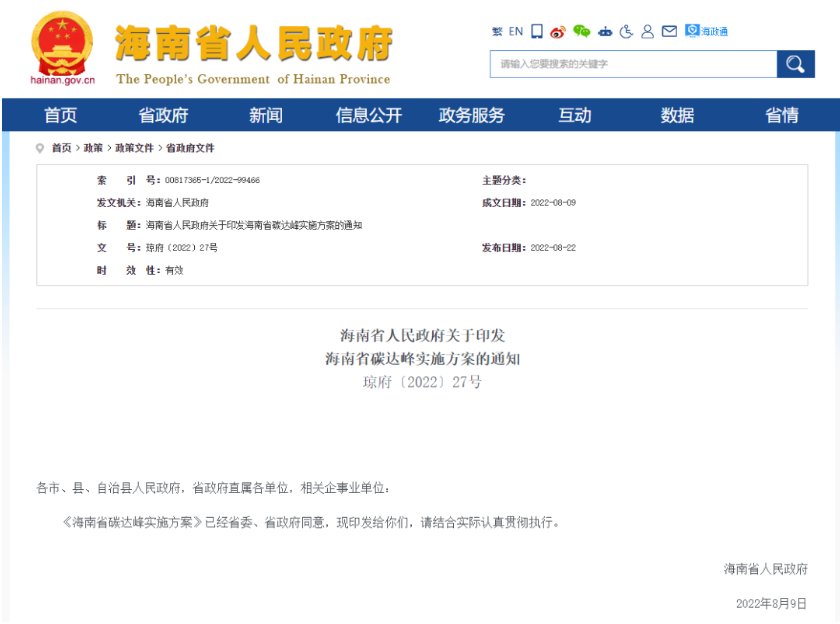
Hainan Province Carbon Peak Implementation Plan
In order to implement the "Opinions on Completely, Accurately and Comprehensively Implementing the New Development Concept and Doing a Good Job in Carbon Peak and Carbon Neutrality" (Zhong Fa [2021] No. 36) and the "Action Plan for Carbon Peak Before 2030" (Guo Fa [2021] No. 23), and promote the work of carbon peak and carbon neutrality in our province to be at the forefront of the country, this implementation plan is hereby formulated.
1. General requirements
(1) Guiding ideology.
Guided by Xi Jinping Thought on Socialism with Chinese Characteristics for a New Era, fully implement the spirit of the 19th National Congress of the Communist Party of China and the previous plenary sessions of the 19th National Congress of the Communist Party of China, thoroughly implement Xi Jinping Thought on Ecological Civilization and General Secretary Xi Jinping's series of important instructions and instructions on the development of Hainan, based on the new stage of development, completely, accurately and comprehensively implement the new development concept, serve and integrate into the new development pattern, focus on the strategic positioning of "three districts and one center", take the green transformation of economic and social development as the guide, and take the green and low-carbon development of energy as the key, and coordinate the promotion of energy, industry, Energy conservation and carbon reduction in the four major areas of transportation and urban-rural construction, accelerate the formation of industrial structure, production methods, lifestyles and spatial patterns that conserve resources and protect the environment, and steadily promote the construction of national ecological civilization pilot zones to ensure that carbon peaking is achieved as scheduled, and strive to be "top students" in carbon peak and carbon neutrality.
(2) Strategic path.
reduce carbon emissions at the source and reshape the clean energy structure; The process is less carbon, and the level of quality and efficiency improvement is improved; ecological carbon sequestration to promote the greening of land and sea; technology to store carbon, strengthen the research and development and application of science and technology; low-carbon for all, and establish a mechanism for the participation of the whole people; We will work together to control carbon emissions and actively guide international cooperation. Through precise carbon control throughout the process, we will promote energy conservation and carbon reduction for all people, and help improve the quality and upgrade of the carbon peak and carbon neutrality work of the Hainan Free Trade Port.
(3) Basic principles.
-- Provincial overall planning and scientific planning. Incorporate carbon peaking and carbon neutrality into the overall layout of the province's ecological civilization construction, and strive to explore new models and new paths for low-carbon and green development with tropical island characteristics. Scientifically plan and deploy key tasks, promote low-carbon transformation and development in key areas, establish scientific, accurate, detailed and quantitative hard indicators, hard plans, and hard measures, consolidate the main responsibilities of various departments, industries, and localities, and strive to be the "top student" in carbon peak and carbon neutrality with the momentum of grasping iron marks and stepping stones.
——Two-wheel drive, improve quality and efficiency. Adhere to the "two-wheel drive" of the government and the market, accelerate the construction of systems and mechanisms conducive to innovation, green and high-quality development, realize the government is promising, the market is effective, and form an effective incentive and restraint mechanism for Hainan to achieve carbon peak and carbon neutrality. Promote mechanism innovation and form a strong work force; promote scientific and technological innovation, and fully mobilize the endogenous power of green and low-carbon scientific and technological innovation; Promote management innovation, systematically plan a collaborative research system, and promote the integrated allocation of projects, bases, talents, funds, and elements.
-- Giving priority to conservation and the participation of the whole people. Adhere to the implementation of the conservation priority strategy, establish a mechanism for the participation of the whole society, guide the whole people to establish a strong awareness of conservation, environmental protection and ecology, and strive to create a strong atmosphere of energy conservation and emission reduction in the whole society. In the field of production, we will promote the comprehensive conservation, intensification and recycling of resources, continue to promote industrial transformation and upgrading, and reduce resource consumption; In the field of consumption, we advocate a simple, moderate, green and low-carbon lifestyle, and promote the value-added of the ecological environment and the optimization of people's livelihood and well-being.
-- Reducing carbon emissions in an orderly manner and preventing risks. Adhere to the coordinated promotion of carbon reduction, pollution reduction, green expansion and growth, correctly handle the relationship between development and emission reduction, overall and partial, long-term and short-term goals, and the government and the market, seek truth from facts, advance in a steady and orderly manner, and achieve multi-dimensional and multi-goal co-ordination, and do not turn carbon peaking into "climbing peaks". Adhere to the principle of establishing first and then breaking down, making overall plans, improving early warning mechanisms, and effectively preventing various risks that may be associated with the green and low-carbon transformation of the economy and society.
Second, the overall goal
In terms of clean and low-carbon energy structure, high-quality modernization of industrial structure, de-oiling of transportation structure, low energy consumption of urban and rural buildings, contribution of marine and forest carbon sinks, promotion and application of low-carbon technologies, and integrated innovation of low-carbon policy system and system, we will accelerate the formation of a number of landmark achievements, walk in the forefront of the country, strive to be an "excellent student" in carbon peak and carbon neutrality, and show Hainan's beautiful business card in international exchanges on climate change.
By 2025, an economic system of green, low-carbon and circular development and a clean, low-carbon, safe and efficient energy system will be initially established, and carbon emission intensity will be reasonably controlled, laying a solid foundation for achieving the goal of carbon peaking. The proportion of non-fossil energy consumption has increased to more than 22%, the proportion of renewable energy consumption has reached more than 10%, the reduction of energy consumption and carbon dioxide emissions per unit of GDP has ensured the completion of the national targets, and the energy consumption and carbon dioxide emissions per unit of GDP have continued to decline.
By 2030, the construction of a modern economic system will be accelerated, a green and low-carbon development model in key areas will be basically formed, the construction of clean energy islands will be deepened, and the policy system for green, low-carbon and circular development will be continuously improved. The proportion of non-fossil energy consumption will be increased to about 54%, and carbon dioxide emissions per unit of GDP will be reduced by more than 65% compared with 2005, so as to successfully achieve the goal of carbon peak before 2030.
3. Key tasks
(1) Build a safe and efficient clean energy island.
1. Develop a high proportion of non-fossil energy.
Efforts will be made to optimize the energy structure, vigorously develop renewable energy sources such as wind, solar, and biomass, develop nuclear power in an efficient, safe, active and orderly manner, and continuously increase the proportion of non-fossil energy in energy consumption. Adhere to the simultaneous development of distributed and centralized, increase the application of distributed photovoltaics, promote the application of photovoltaic building integration, develop centralized photovoltaics in an orderly manner in accordance with the complementary models of agriculture and light, fishery and light, and forest and light, and build energy storage facilities. Actively develop offshore wind power. Promote the construction of biomass power generation such as municipal waste and agricultural and forestry waste. Establish a whole industrial chain of hydrogen production, hydrogen storage, transportation and hydrogen use, and create a hydrogen energy development path of one zone (hydrogen energy industry pilot demonstration zone), one ring (island-wide scene application demonstration ring), and multiple points (hydrogen energy industry development landing platform). Explore and promote the development and application of new marine energy such as wave energy and temperature difference energy, and carry out demonstrations of the integrated utilization of various types of new energy on islands. Accelerate the construction of the second phase of Changjiang nuclear power plant and the Changjiang multi-functional modular small reactor science and technology demonstration project, and promote the demonstration construction of floating reactors and the site selection of new nuclear power projects in a timely manner. Explore and solve the energy supply problem of offshore islands and large-scale offshore facilities, build island microgrids, and improve the energy self-sufficiency of islands and reefs and the level of clean energy use. We will continue to carry out technical research and engineering applications in the fields of medium and deep geothermal energy and natural gas hydrates. By 2025, 4 million kilowatts of new photovoltaic power generation capacity will be added, about 2 million kilowatts of wind power will be put into operation, and the proportion of non-fossil energy power generation capacity will reach 55%. By 2030, non-fossil energy resources will be fully developed and utilized, and the proportion of installed power generation capacity will reach 75%, and the low-carbon energy ecosystem will begin to take shape.
2. Clean and efficient use of fossil energy.
We will continue to promote "coal reduction and oil reduction", gradually reduce the proportion of coal consumption, and reasonably control the total consumption of fossil energy. Through central heating, comprehensive utilization of energy and other ways, vigorously promote the management of scattered coal, and completely eliminate scattered coal-fired small boilers. In key industries such as electric power and cement, we will promote the clean transformation of coal, and promote the "coal-to-electricity" and "coal-to-gas" conversion of coal-fired boilers, industrial furnaces and agricultural and sideline products processing. Deeply tap the peak regulation potential of various types of units, and vigorously support the flexible transformation of coal-fired power units. Orderly development of natural gas power generation projects, encourage the development of natural gas cooling, heating and power trigeneration distributed energy projects, focus on the construction of Yangpu thermal power, Haikou gas power, Sanya West gas power, Haikou gas power phase II, Sanya East gas power and other gas power projects, in key parks to build distributed natural gas integrated energy stations in a timely manner. By 2025, the proportion of coal and oil consumption will further decline, and the level of energy governance and energy structure will be significantly improved. By 2030, the energy consumption structure will be cleaner and more efficient, and the clean energy transition will be basically realized.
3. Comprehensively improve the capacity of green electricity consumption.
Based on the modern power energy network and the new generation of information network, relying on advanced cutting-edge technologies such as digitalization and intelligence, we will continuously improve the level of digitalization, networking and intelligence of the power grid, optimize and integrate the resources of the power supply side, the grid side, the load side and the energy storage side, adhere to the bottom line of safety, and explore the construction of a new power system with the characteristics of green and efficient, flexible and open, and digital empowerment. Carry out the construction of microgrids in places with better resource endowments, promote the coordinated development of microgrids, local power grids and large power grids, promote microgrids to participate in the frequency/voltage regulation of large power grids and peak shaving and valley filling, and expand the application of energy storage technology in power systems. Promote the demonstration and application of orderly charging of electric vehicles and vehicle-to-network interaction (V2G) technology. Guide users to optimize electricity consumption patterns and unleash the power elasticity of residential, commercial and general industrial loads. We will further improve the construction of the electricity market-oriented system, actively participate in the construction of a unified electricity market in the southern region, accelerate the construction of the electricity spot market and ancillary service market, and expand the scale of electricity market-oriented transactions. Improve the transmission and distribution price pricing mechanism and energy conservation and environmental protection electricity price policies, and promote and improve the price formation and cost guidance mechanism of the upstream and downstream links of energy and electricity。 By 2025, the capacity to absorb renewable energy will be significantly improved, and a demonstration province for new power systems will be initially established, becoming a pioneer in the construction of new power systems. By 2030, the power grid regulation capacity will be further enhanced, and the digital grid will be fully built, and the new power system demonstration province will be built in an all-round way.
4. Optimize the energy security supply system.
Adhere to the focus on energy security and supply, take safety as the premise, and take stability as the foundation, take into account the smooth energy transition, safety transition, and low-cost transformation, and insist on settling the demand account, reliability supply account, and demand-side management account. Starting from the whole chain of energy supply, establish and improve the early warning mechanism for energy security and supply, and take digital empowerment as the starting point to build a comprehensive, observable, accurate and highly controllable energy security supervision system with the participation of power grid enterprises, energy supply enterprises, energy equipment enterprises, energy service enterprises, Internet enterprises and other entities. In view of the uncertainties, volatility, and relative vulnerability to extreme weather of new energy sources such as wind and solar, we will further strengthen the coordinated planning and development of various power sources, support the construction of main power transmission projects, and ensure the safe and stable supply of electricity. In view of possible risks such as large-scale power outages, extreme weather, coal supply, especially thermal coal supply, and oil and gas pipeline safety, we will plan countermeasures, formulate emergency plans, and do a solid job in ensuring energy security and supply in the context of the goal of carbon peak and carbon neutrality. Accelerate the all-round intelligent development and intelligent transformation of energy terminal equipment, and build a hierarchical and hierarchical intelligent comprehensive management and control platform relying on the primary and secondary energy pipeline networks and various energy data collection, transmission and communication networks. By 2025, a clean, low-carbon, safe and efficient energy system will be initially established in Hainan, with an energy self-sufficiency rate of 24%. By 2030, energy self-sufficiency will reach 54%.
(2) Build a characteristic industrial system of Hainan Free Trade Port.
1. Continue to optimize the green and low-carbon industrial structure.
Give full play to the advantages of green, ecology, service and openness, promote the realization of a new model of "two wings" driving the green economy and digital economy in Hainan, promote the formation of an industrial structure dominated by the service-oriented economy, and establish an open, ecological and service-oriented industrial system. Promote the green and low-carbon transformation of traditional industries, implement comprehensive utilization and cascade utilization of energy resources, and promote the transformation of the existing manufacturing industry to intelligent, green and service-oriented. Resolutely curb the blind development of high-energy-consumption, high-emission and low-level projects, strictly implement the energy-saving review system for fixed asset investment projects, formulate low-carbon guidelines for projects, and create conditions to promote the transformation from dual control of energy consumption to dual control of total carbon emissions and intensity. Complete the energy-saving transformation of key energy-using enterprises in petrochemical, chemical, cement, glass and other industries, and realize the energy efficiency of products to move closer to the benchmark level. We will continue to promote the comprehensive remediation of volatile organic compounds in key industries such as petrochemicals, chemicals, coating, packaging and printing, and oil storage, transportation and marketing, and promote the implementation of source substitution of products with low volatile organic content content. Strengthen the construction of energy-saving supervision capacity to ensure that key energy-using enterprises fully implement energy efficiency standards and energy-saving requirements。 Comprehensively implement cleaner production and energy audits in key industries and key areas, and improve the overall energy efficiency of the industry. By 2025, the added value of tourism, modern service industry and high-tech industry will account for 12%, 35% and 15% of the regional GDP respectively, and the level of industrial development and green infrastructure will continue to improve, and the level of cleaner production will continue to improve. By 2030, the proportion of green industries will be further increased, the level of green industrial development will be raised to a higher level, and the green industrial system of Hainan Free Trade Port will be more sound.
2. Innovate a new model of low-carbon tourism development.
Strictly abide by the ecological bottom line and ensure that Hainan's tourism industry follows a high-quality development path that prioritizes ecology and is green and low-carbon. Create pilot zero-carbon and low-carbon tourist attractions, innovate low-carbon tourism forms, and develop diversified low-carbon tourism projects. Relying on the Hainan Tropical Rainforest National Park Nature Reserve, we will build low-carbon recreational RV campsites, plan low-carbon campsites, configure low-carbon tourism facilities, and build ecological parking lots, ecological toilets, and ecological garbage cans. Promote the low-carbon development of tourism and transportation, and carry out demonstration pilots for the application of hydrogen fuel vehicles in Wanning, Qionghai, Lingshui, Wenchang and other cities and counties. To develop low-carbon tourism hotels, by the end of 2022, star-rated hotels, hotels and other places in the province will no longer take the initiative to provide disposable plastic products, and can provide related services by setting up self-service purchase machines and providing refillable detergents; By the end of 2025, the scope of implementation will be expanded to all guesthouses, hotels, and homestays.
3. Accelerate the development of green and modern service industries.
Enhance the level of green development of the modern service industry, focus on modern logistics, medical and health care, modern finance and business services, benchmark against the international advanced level, promote the green and low-carbon development of the service industry, and build a modern service industry system in the Hainan Free Trade Port. Promote the national logistics hubs of Haikou commercial and trade services, Sanya Airport and Yangpu ports, and accelerate the construction of logistics parks such as Hainan Wanling and Chengmai Jinma. Fully release the dividends of the old and new "National Nine Measures" policy in the Boao Lecheng International Medical Tourism Pilot Zone, and build a high-level medical service industry cluster integrating medical research, clinical trials, clinical treatment, and health recuperation. Actively attract domestic and foreign banks, securities, insurance and other financial institutions to settle in Qiong, and promote the development of trade finance, consumer finance, green finance, science and technology finance and other characteristic financial businesses. Promote the green and high-quality development of the convention and exhibition industry, and encourage the recycling of exhibition facilities. Orderly develop the sharing economy in areas such as takeaway delivery, online car-hailing, instant delivery, and accommodation sharing, and standardize the development of idle resource transactions. Accelerate the green transformation of the information service industry, do a good job in the green construction and transformation of data centers and network computer rooms, and establish a green operation and maintenance system. Accelerate the construction of an "international design island" focusing on creative design, architectural design, industrial design and integrated circuits. By 2025, the added value of the modern service industry will account for 54% of the service industry and more than 35% of the regional GDP.
4. Focus on cultivating low-carbon and high-tech industries.
Guided by scientific and technological innovation, supported by major industrial platforms, with high-tech enterprises as the main body, and with key industrial parks as the carrier, we will expand the scale of green and low-carbon high-tech industries. Optimize the structure of the petrochemical industry, deepen the three industrial chains of aromatics, olefins and new materials, encourage the application of new energy-saving technologies and processes, reduce energy consumption and reduce carbon emissions. Encourage parks and enterprises to actively participate in the identification of green parks, green enterprises, and green process standard systems, promote the intelligent upgrading and transformation of the integration of "5G + Industrial Internet" in the petrochemical industry, and accelerate the construction of smart factories. Accelerate the development of new energy vehicles and intelligent vehicle manufacturing industries, and realize clean energy for automobiles in stages. Through the combination of green electricity hydrogen production and carbon dioxide capture, we will explore and carry out engineering research on carbon dioxide to methanol, and trace the industrial chain of technology research and development, design and manufacturing of new high-end equipment manufacturing industry, and extend the industries of carbon-based new materials, methanol fuel cells, new green chemicals, and multi-power intelligent regulation and control, supplemented by microalgae biological carbon sequestration and other technologies for the manufacture of high value-added economic products. Expand the integration and application of digital technology and high-tech industries, and promote green development in the process of digital transformation. Encourage the development of energy conservation and environmental protection consulting services, energy conservation and environmental protection facilities and equipment construction and operation management, environmental pollution third-party governance and contract environmental services, energy conservation and environmental protection trade and financial services. By 2025, the output value of high-tech industries will exceed 800 billion yuan, and 80 billion yuan will be invested in the clean energy industry, with an output value of more than 33 billion yuan; The output value of energy conservation and environmental protection industry reached 35 billion yuan. By 2030, we will promote the construction of 1-2 green new material bases in Danzhou City, Dongfang City and Changjiang Li Autonomous County.
5. Vigorously promote the green and low-carbon development of agriculture.
The province will promote the national agricultural green development pilot zone and improve the level of ecological recycling agriculture demonstration province. Moderately promote large-scale agricultural operations, and support the popularization of the use of modern agricultural mechanization equipment. Vigorously promote water conservation in agriculture and popularize high-efficiency water-saving technologies. In the direction of "going to the shore, going to the deep sea, and going to the recreational fishery", we will guide the development of green ecological and healthy fisheries and promote healthy aquaculture of aquatic products. Accelerate the construction of a new modern agricultural industry integration system that is park-based, industrialized, branded, and digitalized. Support the development of new business formats such as tourism agriculture, experience agriculture, creative agriculture, smart agriculture, leisure fisheries, beautiful villages, and homestays. Promote the project of improving the ability of animal and plant protection, the improvement of the ecological environment, and the quality and safety of agricultural products. Encourage the promotion of ecological planting and ecological breeding, and strengthen the management of green food and organic agricultural products. Strengthen the protection and improvement of cultivated land quality, promote the comprehensive management of degraded cultivated land, and strengthen the control of agricultural film pollution. Implement the reduction of the use of pesticides and veterinary antimicrobials and the environmental purification of the production area.
(3) Promote the construction of green and livable urban and rural areas.
1. Promote the green and low-carbon layout of urban and rural areas.
Promote the transformation of urban renewal from the traditional "large-scale demolition and construction" model to a gradual and adaptive comprehensive environmental improvement and renewal model, explore the formation of a "Hainan model" with a high degree of "recycling" of spatial resources in areas where conditions permit, and create a green and low-carbon development path with the characteristics of tropical coastal islands. Optimize the spatial layout of urban and rural areas, rationally plan the scale of urban buildings, make overall arrangements for the construction land indicators in various regions, control the excessive growth of new construction land, and incorporate the concept of low-carbon development into territorial spatial planning and urban-rural construction planning at all levels. Optimize the urban spatial form and promote the development of urban clusters. Rational planning and construction of urban green space, first-class ventilation corridors, green belts around the city, and green passages in transportation corridors will be rationally planned and constructed, so as to improve the level of urban greening and actively promote the construction of sponge cities. Promote the protection of ecological shore sections and ecological sea areas in coastal areas, and build high-quality forest cities in the central region. Promote the establishment of a green and low-carbon urban and rural construction management mechanism, and strengthen the control of building demolition. Strengthen the green and low-carbon construction of county seats, accelerate the modernization of rural houses and villages, and promote the integrated development of county seats, small towns and villages. Carry out actions to create green communities, build an urban and rural public service system with convenient services, perfect configuration and reasonable layout, and shorten the travel distance and time of urban and rural residents. Promote the high-quality development of prefabricated buildings, and the proportion of new prefabricated buildings will reach more than 60% in 2022, driving the transformation and upgrading of the construction industry.
2. Build ecological towns with harmonious development.
With the construction of harmonious development of ecological towns and regions as the starting point, we will accelerate the creation of a demonstration model of high-quality economic development and high-level protection of the ecological environment. We will further promote the construction of "zero-waste cities", drive the transformation of the emission reduction and disposal methods of industrial, agricultural, domestic and other types of solid waste, reduce the generation and emission of solid waste, and reduce greenhouse gas emissions. Accelerate the construction of national low-carbon pilot cities in Sanya and Qiongzhong Li and Miao Autonomous County, and Haikou as climate-resilient cities. Strengthen the green and low-carbon construction of the county, combined with the construction of a major open platform of the Hainan Free Trade Port, support Wenchang City, Lingshui Li Autonomous County, Dongfang City, Lingao County, and Qionghai City to build low-carbon towns with industry-city integration, and explore the creation of a number of distinctive ecological demonstration villages and towns. Support Haikou Jiangdong New Area, Haikou National High-tech Industrial Development Zone, Sanya Yazhou Bay Science and Technology City, Sanya Central Business District, Boao Lecheng International Medical Tourism Pilot Zone, Hainan Ecological Software Park and other parks to explore and carry out different types of low-carbon park pilot construction according to industrial development orientation and resource endowment. Promote cities and counties to create a number of low-carbon cities, low-carbon parks, low-carbon communities, low-carbon campuses, low-carbon scenic spots, and low-carbon building pilots. By 2025, cities and counties will complete the creation of at least three near-zero carbon emission community pilots. By 2030, the province will build a number of low-carbon demonstration areas that can be promoted, replicated and used for reference.
3. Effectively reduce the energy consumption of the whole life cycle of the building.
Explore the mode and technical path of energy-saving renovation of existing residential buildings in areas suitable for hot summer and warm winter, and gradually incorporate energy-saving renovation of buildings into basic transformation. Taking the renovation of old residential areas and shantytowns as an opportunity, focusing on the application of energy-saving and low-carbon technologies such as climate-adapted and efficient refrigeration, heat pumps, and LEDs on tropical islands, we will promote the green and energy-saving transformation of existing residential buildings, carry out electrification transformation at the same time, reserve appropriate distribution network capacity, and create convenient conditions for accessing more zero-carbon electricity. Strengthen the supervision of energy consumption in public buildings, promote the energy-saving renovation of public buildings that exceed the energy consumption limit, and promote the construction and operation management of energy consumption and carbon emission monitoring and supervision systems for public buildings. Improve the formulation of technical standards related to the green renovation of existing buildings, and increase the research and promotion of key technologies for the green transformation of existing buildings. Improve the energy-saving design standards of new urban buildings, accelerate the promotion of new green buildings integrating photovoltaic power generation, energy storage, and smart electricity, and explore and study the trial implementation of "light, storage, direct and flexible" buildings and ultra-low energy consumption buildings.
4. Promote the green transformation of urban operation.
Accelerate the construction of major platforms such as urban operation and management services, realize the digitization, virtualization, real-time visualization and controllability of various elements, and help the green transformation of cities through the improvement of the level of urban management informatization. Accelerate the integration and innovative application of the CIM platform, improve data quality, and empower diversified applications in the industry. Actively promote the application of advanced energy-saving and environmental protection technologies and products such as warm-mix asphalt, intelligent ventilation, auxiliary power substitution, energy-saving lamps and lanterns, and sound barriers. Increase the comprehensive utilization of waste resources in engineering construction, and promote the resource utilization of waste pavement, asphalt, dredged soil and other materials, as well as construction waste. Promote the intelligent transformation of municipal public facilities such as urban roads and bridges, public lighting, etc. By 2025, the urban management and operation system will become more and more refined, and the level of green, intelligent, coordinated and safe infrastructure will be gradually improved. By 2030, Haikou, Sanya, Danzhou, Qionghai and other places will basically build a comprehensive urban management service platform.
5. In-depth implementation of clean energy use in rural areas.
Implement the action of rural clean energy construction, promote clean energy production, electrification of consumption, intelligent allocation, and build a modern rural energy system. Accelerate the application of renewable energy such as biomass energy and solar energy in agricultural production and rural life, carry out the construction of demonstration projects, implement whole-village pilot projects in areas where conditions permit, and explore new models suitable for rural electrification and zero-carbon energy use on islands. Develop energy-saving and low-carbon agricultural greenhouses, promote energy-saving and environmentally friendly stoves, electric agricultural vehicles, energy-saving and environmentally friendly agricultural machinery and fishing boats, continue to promote the transformation and upgrading of rural power grids, basically realize the equalization of urban and rural power supply services, improve the level of rural energy electrification, actively promote agricultural production, villagers' lives and other fields of electric energy substitution, and encourage residents to replace gas with electricity for cooking, sanitary hot water, etc. Demonstration projects such as Calvary Village, Huishan Town, Qionghai City and Yanyuan Village, Qiongzhong City, will be built. Guide the implementation of energy-saving and green building standards for new farmhouses, encourage energy-saving renovation of farmhouses, promote the use of green building materials, and encourage the selection of new construction methods such as prefabricated steel structures. By 2030, electric energy will become the main way of energy consumption in rural areas, and the proportion will further increase.
(4) Build a low-carbon island transportation system.
1. Accelerate the clean energy transition of transportation.
Establish a green, smart and efficient new transportation network system in the province, accelerate the process of transportation electrification, and promote the low-carbon development of aviation, railways, highways and shipping. We will further promote the conversion of road to rail and road to water, and significantly increase the proportion of railway freight. Make full use of the existing high-speed railway around the island, orderly promote the intercity railway planning of the "Haikou Economic Circle" and "Sanya Economic Circle", and build a passenger and freight transportation system on the island with the railway as the framework. Gradually increase the proportion of clean energy in the energy consumption of airports, and reduce the empty rate of cargo transportation. Promote the reconstruction of shore power facilities such as wharves, promote the use of shore power by ships calling at ports, and promote the recovery of oil and gas from port crude oil and refined oil loading operations. Construct charging piles and charging stations covering public areas such as expressway service areas, transportation hubs, bus stations, and logistics centers, and form expressways and urban and rural charging networks. Build a unified intelligent supervision service platform for charging and swapping infrastructure in the province, and promote the operation and development of "one network" for new energy vehicle charging and swapping islands. Liquefied natural gas (LNG) is the mainstay, supplemented by compressed natural gas (CNG) and charging, and the original gas filling stations will be upgraded and upgraded.
2. Vigorously promote the application of new energy vehicles and ships.
Implement the preferential policies and related support policies for the purchase tax of new energy vehicles, gradually promote the clean energy of various types of vehicles in the province in stages and fields, and build a world new energy vehicle experience center. Accelerate the promotion of clean energy in the field of social operation and transportation, focus on light logistics and distribution, urban sanitation, rental cars, online car-hailing and other fields, promote the substitution of new energy vehicles, and encourage the new energy of private vehicles. Accelerate the elimination of old ships with high energy consumption, high emissions and low efficiency, accelerate the application of new energy sources such as electricity and hydrogen in the field of ships, promote the work of "oil to gas" for ships, and focus on the construction of marine LNG filling stations in Haikou, Qionghai, Sanya, Sansha and Yangpu Economic Development Zone, and develop natural gas vehicles and ships. By 2025, 100% of new and replaced vehicles in public services and social operations will use clean energy. By 2030, the sale of gasoline vehicles will be banned island-wide. In addition to special purposes, the province's public service and social operation vehicles have fully realized clean energy, and the proportion of new energy vehicles added and replaced in the private vehicle field has reached 100%.
3. Build a low-carbon intelligent transportation and logistics system.
Accelerate the development of multimodal transport of goods, promote the development of various forms of multimodal transport such as road and rail, public water, air and land according to local conditions, and explore the "one single system" for multimodal transport. Actively promote the development of urban green freight distribution, and promote the application of new energy and clean energy vehicles and ships in urban light logistics distribution, postal express, railway freight yards, port and airport services and other fields. Introduce logistics enterprises to strengthen smart operation, optimize the layout of logistics routes, integrate transportation resources, improve utilization efficiency, and promote systematic energy conservation and carbon reduction. Continue to improve the cold chain food credible traceability platform system, encourage large enterprises to build a digital platform for the cold chain logistics supply chain, and improve the level of logistics information services. During the "14th Five-Year Plan" period, the proportion of road-water intermodal containers in the province increased by more than 15% annually. By 2030, we will strive to build and improve the rural logistics network node system at the county, township and village levels, and actively build a rural logistics service brand.
4. Create a green and friendly environment for the whole island.
Accelerate the promotion of an island-wide smart transportation network and build a green travel system. We will further implement the strategy of prioritizing the development of public transportation, promote the extension of public transportation to rural areas, build an efficient and convenient public transportation system, improve the quality and attractiveness of public transportation, and increase the proportion of public transportation trips. Develop a slow traffic service system such as walking and cycling in key cities in the province, strengthen the connection between public transportation and slow traffic in the province, enhance the public's awareness of green travel, and create a green travel friendly environment for the whole island. By 2025, we will increase the share rate of green transportation modes, increase the attractiveness of green travel modes, further improve the level of green travel, and accelerate the construction of a green travel service system with reasonable layout, ecological friendliness, clean and low-carbon, intensive and efficient. By 2030, the proportion of green travel in cities such as Sanya will reach more than 70%, creating green ecological transportation, and striving to become a national example of green transportation.
(5) Consolidate and enhance the carbon sink capacity of ecosystems.
1. Take multiple measures to promote the increase of blue carbon sequestration.
We will build a high-standard blue carbon research center, build a platform for scientific research and innovation exchanges, and carry out research on blue carbon accounting and monitoring technologies, plans to increase sinks, and investment and financing mechanisms. Actively participate in the formulation of blue carbon standards, develop various carbon sink methodologies, carry out pilot demonstrations, and tap the potential of blue carbon in our province. Relying on universities and scientific research institutions in key parks, we will explore and carry out research on the evaluation index system of geological carbon sequestration and carbon sequestration suitability in the South China Sea, and actively promote the standard specification and monitoring technology system of geological carbon sequestration. Carry out blue carbon ecosystem improvement projects, implement wetland ecological restoration projects, and promote ecosystem-based integrated coastal zone management. By 2025, 25,500 mu of mangrove forests will be added, and 48,000 mu of degraded mangrove wetlands will be restored. 2. Steadily promote forestry carbon sequestration and increase sequestration.
Implement the national park system, take the construction of Hainan tropical rainforest national park as the top priority of ecological province, and fully tap the carbon sink potential of Hainan's forestry resources. We will continue to carry out research on the accounting of ecological product value realization indicators, promote the pilot work of forest resource value accounting, and provide support for government decision-making. Implement major ecosystem restoration projects, focusing on the key marine ecological zones around Hainan Island and the national key ecological function areas of tropical rainforests in the mountainous areas of central Hainan Island, and promote the ecological restoration of four types of land and space ecological restoration zones, including the central mountain ecological protection and restoration area, the coastal ecological protection and restoration area, the platform plain ecological restoration area, and the river basin ecological corridor ecological protection and restoration area. We will continue to carry out land greening actions to expand and optimize the space and quality of urban and rural green space. By strengthening the cultivation of forest resources, efforts should be made to increase forest carbon storage; Transform low-quality and inefficient old residual forests to improve forest land productivity, forest management benefits and forest carbon sinks. Study the establishment of Hainan Forestry Carbon Sequestration Research Center.
3. Tap the potential of agricultural carbon sequestration and increase sequestration.
Carry out actions to improve the quality of cultivated land and improve soil organic carbon storage. The use of conservation tillage measures, the expansion of paddy field planting area, straw returning, organic fertilizer application, crop rotation system and land use methods have produced significant differences in soil organic carbon pools, and transformed farmland soil from carbon sources to carbon sinks. Increase the promotion of conservation tillage according to local conditions, adhere to the combined application of organic and inorganic fertilizers, and carry out crop rotation and diversified planting. Promote low-carbon agriculture models such as agriculture and fishery complementation. R&D and application of sink-enhancing agricultural technologies, promote pilot demonstration projects of agricultural carbon sequestration by region and type, and improve the increase of carbon sinks in the agricultural system.
(6) Strengthen the support for low-carbon scientific and technological innovation.
1. Strengthen the research and development of key low-carbon core technologies.
Support enterprises, universities and other institutions and scientific research institutes inside and outside the province to establish green technology bases, innovation and entrepreneurship bases, encourage all kinds of venture capital funds to support the transformation of green and low-carbon technology innovation achievements, cultivate innovative enterprise echelons, and jointly undertake various green and low-carbon technology research and development projects through cooperative development and technology shareholding. Focusing on key areas such as clean energy substitution, energy conservation and emission reduction, based on application orientation, we will strengthen research on low-carbon, zero-carbon, and carbon-negative technologies, and strengthen cutting-edge exploration and innovative practices in key areas such as fossil energy, renewable energy, hydrogen energy, energy storage, industrial process reengineering, carbon capture, utilization and storage (CCUS), and ecological carbon sinks. The research on low-carbon technologies will be included in the focus of the provincial scientific and technological innovation plan, and a number of scientific and technological innovation research projects in the field of green and low-carbon will be carried out, and major key core technical problems restricting the development of low-carbon industries will be promoted.
2. Build a platform for scientific and technological innovation in the low-carbon field.
Build a low-carbon technology innovation platform, deeply integrate industry and scientific research, explore key scientific and technological projects, and jointly promote the transformation of achievements and pilot application projects. Improve the mechanism for the transfer and transformation of the whole chain of green technology, promote the trading and application of green technology, and establish a service platform for green technology transfer, trading and industrialization. Strengthen the protection of intellectual property rights, and improve the testing, evaluation and certification system for green and low-carbon technologies and products. Support first-class scientific research institutions at home and abroad to set up branches, key research institutes or incubation centers for low-carbon technology. Unite domestic universities and scientific research institutions to build a low-carbon think tank platform.
3. Promote the application and demonstration of low-carbon technology achievements.
Promote advanced and mature green and low-carbon technologies at home and abroad, and carry out demonstration applications in the province. Based on the advantages of renewable energy resources in our province, we will apply low-carbon technologies at home and abroad, build a renewable energy production system, and expand application scenarios. Carry out demonstration of renewable energy substitution in key emission areas such as cement and petrochemical industry in the province, and increase the proportion of electric energy in final energy consumption。 Relying on the National Meteorological Observatory, a network of greenhouse gas meteorological observation stations will be built to carry out simulation, analysis and evaluation of regional ecological carbon sinks. Actively explore the use of scientific monitoring data such as the National Carbon Dioxide Monitoring Scientific Experiment Satellite to monitor and analyze the carbon emissions of the province. Carry out carbon capture, storage and utilization (CCUS) demonstrations, take the Fushan Oilfield CCUS project as an example, and promote the pilot work of carbon dioxide capture, storage and utilization technologies in the cement, petrochemical and chemical fields, so as to provide more reliable and powerful technical support for greenhouse gas control and carbon peak and carbon neutrality in the Hainan Free Trade Port. By 2030, technologies such as CCUS will be more widely used, with a carbon sequestration capacity of 500,000 tonnes per year.
(7) Create a high-level green and low-carbon society.
1. Promote green and low-carbon lifestyles in the province.
Strictly practice economy, strive to break the unhealthy habits of extravagance and extravagance, and resolutely curb extravagant waste and unreasonable consumption behaviors such as food and beverage waste. We will further promote the creation of energy-saving institutions, green families, green schools, green communities, green travel, and green shopping malls, and create a new fashion of green and low-carbon life. Priority will be given to creating green consumption scenes in various large shopping malls, and gradually promoting it to shopping malls, supermarkets, franchise stores, etc., in the province, so as to improve the level of green consumption of tourists on the island. Encourage residents to green consumption, promote green and low-carbon products, and strictly implement the green product certification and labeling system. Intensify government green procurement, expand the scope of green product procurement, and state-owned enterprises take the lead in fully implementing the green procurement guidelines for enterprises. Do a good job of garbage sorting and recycling of renewable resources. In Haikou City, Sanya City, Wenchang City, Qionghai City to create domestic waste classification demonstration model cities, in other cities and counties to create no less than 70 domestic waste classification demonstration model towns. On the basis of fully summarizing and promoting the pilot work experience, the implementation of domestic waste classification management in the whole province. By 2025, the comprehensive utilization rate of new bulk solid waste will reach 60%. By 2030, a basic and complete recycling system for waste materials will be initially established.
2. Actively play the role of the carbon inclusive mechanism.
Research and formulate a carbon inclusive mechanism that is systematic, scientific, open and integrated, and in line with the characteristics of Hainan's ecological products. Priority will be given to the selection of products closely related to tourism consumption, such as food, clothing, housing, use, and transportation, and the implementation rules and certification marks for carbon inclusive certification will be formulated in a unified manner, and a positive guidance mechanism combining commercial incentives, policy incentives, and carbon emission reductions will be established. Take the lead in carrying out carbon neutrality practice activities in party and government organs and other public institutions, and neutralize their own carbon emissions through afforestation, coral adoption, purchase of green electricity, driving new energy vehicles, etc., so as to drive more social entities to participate in carbon inclusive activities; Give full play to the existing platform functions and data resources of the "Haiyiban" APP, develop a "carbon account" management system, establish a data collection and analysis platform related to green and low-carbon behaviors, and explore and carry out carbon inclusive application practices. By 2025, the province's carbon inclusive application platform will be initially established, and a carbon inclusive system with rich application scenarios, perfect system platforms, and clear rules and processes will be basically built. By 2030, the carbon inclusive mechanism will be more sound, and a good atmosphere of low carbon will be formed for everyone.
3. Promote enterprises to implement green development responsibilities.
Promote enterprises to assume the social responsibility of green development, and stimulate the internal motivation of enterprises to consciously take the path of green development. Through policy guidance, the implementation of cleaner production evaluation, energy audits, etc., encourage enterprises to increase investment in environmental protection, the environmental cost into the production and operation costs of enterprises, and force enterprises to reduce the negative impact of their business activities on the ecological environment. Continue to implement the "one network for the whole province" of dual compulsory green procurement, guide enterprises to carry out high-end quality certification of green products and organic products, and encourage e-commerce enterprises, markets, shopping malls and supermarkets to set up green product sales areas. Establish an evaluation system for enterprises to assume green development responsibilities, evaluate the performance and performance of enterprises in fulfilling their ecological and environmental protection responsibilities, and notify enterprises that do not meet the requirements.
(8) Develop new models of international exchanges and cooperation.
1. Deepen international cooperation on climate change.
Actively align with international rules, actively hold various forums, exchange meetings, and build display platforms, deepen international cooperation and exchanges on green products, technologies, and economies, promote the innovation of green international cooperation mechanisms, and form Hainan's experience in the construction of an international low-carbon island. Make good use of external publicity platforms such as the Marine Cooperation and Governance Forum, the Jeju Forum on Ecological Civilization with Lucid Waters and Lush Mountains, the Hainan-California Climate Change Cooperation Dialogue, and the Macao International Environmental Protection Exhibition, give full play to Hainan's geographical advantages in the Belt and Road Initiative, deepen international practical cooperation on climate change in the fields of climate change response and new pollutant control, and explore emission reduction projects and mutual recognition of quotas with countries along the Belt and Road, so as to serve the construction of the Green Silk Road. We will make full use of the resources of the Boao Forum for Asia and cooperate with scientific research institutions in ASEAN countries to focus on climate change cooperation projects such as "Low-carbon Construction of Free Trade Port - Regional Climate Messenger Action", "Nature-based Solutions", "Action on Climate Change and Mangrove Protection", "Energy and Climate (Air Pollution Prevention and Control Synergy) Action", and "Blue Carbon Cities and Ocean Plastic Reduction Action". Encourage institutions of higher learning, scientific research institutions, and high-tech enterprises to carry out foreign cooperation and exchanges in technology research and development and personnel training. Plan for the demonstration of Hainan's sustainable development, strive for national support for Hainan to become a model for the United Nations Sustainable Development Agenda, and carry out a demonstration of the comprehensive application of SDG big data.
2. Strengthen exchanges and cooperation on green economy, trade and technology.
We will give full play to the cutting-edge advantages of the Hainan Free Trade Port in opening up to the outside world, actively introduce high-quality resources from around the world, and encourage the import of knowledge- and technology-intensive services such as R&D and design, energy conservation and environmental protection, and environmental services. Vigorously develop high-quality, high-value-added green product trade, increase the cultivation of independent brands, support enterprises to carry out international certification, enhance the added value of export goods, and encourage enterprises to fully integrate into the green and low-carbon industrial chain. Take advantage of the tariff reduction and exemption policy for imported raw and auxiliary materials in the Hainan Free Trade Port, form a cost advantage, build an export manufacturing center for offshore wind power equipment, and encourage relevant enterprises to actively explore the Southeast Asian market. Support scientific research institutions and enterprises to collaborate in the research and development of key technologies of advanced biodegradable materials, achievement transformation and industrialization, and encourage cooperation and promotion in potential markets such as Southeast Asia. Strengthen international exchanges and cooperation in green technology, green equipment, clean energy, etc., and actively promote supply chain management, consulting, law, accounting and other professional services and manufacturing industry to go global. Effectively promote international cooperation and exchanges in carbon finance in Hainan Free Trade Port, establish and deepen exchanges and cooperation mechanisms with the world's leading carbon financial institutions and talents, and strive to build Hainan into a fulcrum and window for international exchanges and cooperation in China's carbon finance, promote the transformation of the carbon finance industry in the province, and fully promote the "going out" of carbon finance enterprises in the province.
3. Explore the joint construction of a green development alliance for free trade ports.
We will give full play to the cutting-edge advantages of opening up to the outside world, comprehensively align with international standards, continue to promote international cooperation on the ecological environment, actively build an ecological and low-carbon cooperation platform, carry out exchanges and cooperation on green and low-carbon technologies, and promote the joint construction of a green Belt and Road. Strengthen cooperation and exchanges with other free trade ports in the fields of green infrastructure construction, green investment and trade, build information sharing platforms, technology exchange platforms and high-end think tank platforms, share green development responsibilities, develop green development models, and explore the joint construction of a green development alliance for free trade ports.
Fourth, green and low-carbon demonstration leads special projects
Focus on key tasks and related fields, plan and promote a number of characteristic and highlight projects, as an important starting point and entry point for carbon peak and carbon neutrality work, provide solid support for carbon peak work, and lead the in-depth implementation and systematic advancement of carbon peak and carbon neutrality work.
(1) Demonstration construction projects of new power systems.
Accelerate the construction of key projects of "source-grid-load-storage integration", optimize and integrate the resource elements of the power supply side, the power grid side and the load side, improve the interactive response ability of the power grid and all sides, and realize the deep coordination of source, grid, load and storage. In terms of intelligent power transmission construction, we will continue to optimize the main grid, build a 500 kV main grid with a high starting point and high standards, accelerate the completion and commissioning of a 500 kV mouth-shaped ring network covering the whole island, and further form a "day" shaped target grid structure covering the whole island. In terms of intelligent power distribution construction, we will comprehensively promote the construction of power distribution automation in the direction of fault self-healing. In terms of intelligent electricity consumption, we will accelerate the process of "new electrification", promote the continuous improvement of the proportion of electric energy in final energy consumption and energy utilization efficiency, actively promote power demand response, strengthen the power demand-side management in the industrial field, improve the level of industrial electrification, and continue to improve the energy efficiency per unit of industrial added value. In terms of digitalization, we will give full play to the superposition and multiplication effect of "production factors" and "computing power + algorithms" of energy and power big data, and empower the construction of new power systems with digital grids. By 2025, we will strive to achieve about 85% and 75% of the installed capacity and electricity proportion of clean energy power generation respectively, scientifically and reasonably control the scale of peak loads, and explore the construction of a source-grid-load-storage system and market mechanism with the construction of smart distribution network and smart microgrid as a breakthrough, and basically build a new power system demonstration province. By 2030, we will strive to account for about 75% of the installed capacity of non-fossil energy and about 92% of the installed capacity of clean energy.
(2) Low-carbon and circular development projects in key parks.
Promote the recycling, energy-saving and low-carbon transformation of existing parks. Efforts will be made to build a recycling-oriented industrial chain in industrial parks, and focus on reducing resource consumption of key enterprises such as petrochemical, chemical, and papermaking. Focusing on improving the input-output efficiency of resources and energy, focusing on the three links of resource input, utilization and output, we should pay close attention to the construction of the circular economy industrial chain in the park, and the upstream and downstream connections of various industrial systems and enterprise development will be closer, forming a pattern of large-cycle development between enterprises and industries. Carry out the integration of chemical parks and green energy consumption, and focus on promoting the construction of green hydrogen chemical demonstration projects. By 2025, Haikou National High-tech Industrial Park, Oriental Lingang Industrial Park, and Sanya Yalong Bay National Tourism Resort will complete the recycling transformation. By 2030, the recycling transformation of key parks in the province will be basically completed.
(3) Leading projects for the creation of zero-carbon demonstration areas.
Relying on ecological energy, driven by scientific and technological innovation, and taking "zero carbon, wisdom, and recycling" as the direction, and in accordance with the principles of ecological priority, low-carbon intensification, and quantitative control, in Haikou, Sanya, Boao and other cities and towns, combined with the industrial development orientation and resource endowment of various places, and give full play to the characteristic elements of regional development such as scientific and technological innovation, tourism and health care, conference and training, sports, agriculture and fishery, etc., according to local conditions, and differentiate to create a number of high-quality near-zero carbon and zero-carbon demonstration areas. Through the formulation of the overall route of the demonstration zone, the comprehensive promotion of renewable energy substitution, digital empowerment to achieve smart carbon control, green building full support, low-carbon transportation mode transformation and carbon neutral technology application, etc., explore and carry out zero-carbon pilot work. We will increase policy and financial support for zero-carbon pilots, strengthen work guidance and tracking management, and optimize the path to zero-carbon implementation. In three years, in accordance with the goal of "world-class, domestic leading, and comprehensive benchmarking", multi-dimensional benchmarking and benchmarking of world-class indicators, through institutional integration innovation and technology integration application, the Boao Zero-carbon Demonstration Zone will be built into a national demonstration project jointly built by the province and the ministry and a zero-carbon green development benchmark with an international leading demonstration role. By 2030, it will take the lead in building zero-carbon pilot demonstration zones such as Wuzhizhou Island in Sanya, Jialuo Village, Huishan Town, Qionghai City, and Qiongzhong Li and Miao Autonomous County, as well as zero-carbon energy pilot demonstration zones for microgrids in Wuzhishan City.
(4) Exploration project of green buildings on tropical islands.
Based on the climatic characteristics of Hainan, such as high temperature and humidity, strong winds and thunderstorms, research and establish a standard system for the design, construction technology, testing technology and evaluation technology of ultra-low energy consumption buildings that adapt to the application characteristics of Hainan, so as to help the high-quality development of low-energy buildings. Actively explore new models for the application of renewable energy suitable for Hainan, make use of the advantages of wind energy, biomass energy, hydropower, natural gas and other resource combinations, study and promote the application of air source heat pumps, solar air conditioning and other technologies in buildings, actively promote the research and development and application of energy storage and other technologies, and expand the application system of renewable energy buildings. Select qualified cities and counties to carry out green building development demonstration projects, guided by perfect green building promotion policies, standards, supervision and financial systems, supported by green building technology, product research and development technology and green building information management system suitable for the climate of Hainan tropical island, and guaranteed by a unified green building identification identification, management and revocation system, so as to realize the whole process management of green buildings and establish a replicable and promotable green building life cycle construction and operation system. By 2022, the proportion of green construction area in new urban buildings in the province will reach 70%, of which Haikou City and Sanya City will account for 80%, and other cities and counties will account for 60%. By 2025, we will strive to complete the "Technical Guidelines for Ultra-low Energy Consumption Buildings in Hainan Province" and "Technical Standards for the Design of Ultra-low Energy Consumption Buildings in Hainan Province", and the proportion of green buildings in the province will reach 80%, and new buildings in cities and towns will fully implement green building standards. By 2030, 100% of new buildings in the province will comply with green building codes.
(E) prohibit the sale of fuel vehicles foundation projects.
Efforts are made to solve the problem of inconvenient charging and optimize the experience of using new energy vehicles. With the goal of building a charging infrastructure service network covering Hainan and promoting the development and application of new energy vehicles, pile stations will take the lead and appropriately advance the construction of charging infrastructure in Hainan. By 2025, the overall ratio of charging infrastructure in the province will be less than 2.5:1, less than 7:1 in terms of public charging piles, and the average service radius of the charging network in key pilot areas will strive to be less than 1 km, the priority development area will be less than 3 km, and the active promotion area will be less than 5 km. Strengthen policy guidance and promote the accelerated withdrawal of fuel vehicles. Through the implementation of differentiated traffic management measures such as licensing, driving, and parking, we will gradually guide the use of new energy vehicles, study and formulate fiscal and tax support policies and measures to encourage the accelerated withdrawal of fuel vehicles, and realize the clean energy of vehicles in the whole region in stages. Prefecture-level cities are encouraged to take the lead in building zero-emission zones for motor vehicles. According to the state of atmospheric environmental quality and road traffic development, low-emission areas and zero-emission areas shall be delineated and announced. Accelerate the construction of a unified Hainan Provincial Charging and Swapping Network Service and Supervision Platform, and by 2022, establish a Hainan New Energy Vehicle Charging and Swapping Infrastructure Operation Company to build a Hainan Charging and Swapping Infrastructure Operation Platform. By 2025, the proportion of new energy vehicles in the province's existing vehicles and new vehicles will increase significantly, the withdrawal speed of fuel vehicles will be significantly accelerated, and the scale of new vehicles will be significantly reduced. By 2030, the sale of fuel vehicles will be completely banned on the whole island, new energy vehicles will account for more than 45%, and cities and counties will basically build a zero-emission zone for motor vehicles.
(6) Construction projects of marine blue carbon ecosystems.
Relying on the research work of blue carbon trading that has been carried out, we will build a national blue carbon science and technology innovation management platform, comprehensively carry out the investigation and statistics of blue carbon resources, carbon storage investigation and methodology development in Hainan Province, and find out the background of blue carbon resources. The construction of blue carbon research and practice bases, focusing on mangroves, salt marshes, seagrasses and other algae, comprehensively considering external factors such as water quality and landform, to build a blue carbon ecosystem with Hainan characteristics, and combined with artificial intervention and monitoring management, focusing on Haikou Dongzhai Port mangrove forest, Lingshui New Village and Li'an Port seagrass beds, Wenchang and Qionghai unicorn vegetables, as well as Sanya Bay, Wanning Xiaohai and Laoyehai and other ecological governance and restoration projects, the construction of a number of observable, verifiable, replicable, The blue carbon model project that can be promoted will strive to build a national blue carbon demonstration zone and provide a practical base and development foundation for a series of blue carbon theories. Promote the overall management of marine litter, comprehensively strengthen the protection and restoration of blue carbon ecosystems in coastal zones, improve the marine ecological compensation mechanism and the sustainable development of the ocean, and fully tap the blue carbon potential of the province. By 2025, a platform for knowledge sharing and international exchange of academic achievements will be basically established, and efforts will be made to build high-level blue carbon research institutions and actively serve the national climate change strategy. By 2030, we will strive to become a beautiful business card for the international community to showcase China's achievements in actively participating in the response to global climate change and the construction of ecological civilization.
(7) Comprehensive and in-depth implementation of the province's plastic ban project.
Implement the national plastic pollution control policy, advocate the consumption of green products, revise and improve the "Regulations on the Prohibition of Disposable Non-degradable Plastic Products in the Hainan Special Economic Zone" in a timely manner, and formulate the "Hainan Province" 14th Five-Year Plan "Plastic Pollution Control Action Plan". Strengthen the source management of the import of disposable plastic products, and prohibit the import of disposable plastic products in the list to the island through ports, mail, e-commerce and other channels. Continue to promote the classification of domestic waste and the ban on plastics in the whole society, establish a mechanism for case exposure and news release, and include information on administrative penalties into the national enterprise credit information publicity system and the credit information sharing platform of the Hainan Free Trade Port. Implement the requirements of the "Implementation Opinions on Accelerating the Establishment and Improvement of a Green, Low-Carbon and Circular Development Economic System" and the "Hainan Province Express Packaging Green Transformation Action Plan (2021-2025)", continuously improve the systematic governance level and ability of express packaging, and establish and improve a green, low-carbon and circular development economic system. By 2025, the province's comprehensive ban on the production, sale and use of plastic products listed in the catalogue will be further improved, and a complete industrial chain of biodegradable materials will be built in industrial parks in Haikou City, Chengmai County, Dongfang City and other places. By 2030, the plastic ban system will be more sound, the cost of alternative products will be further reduced, the quality will be further improved, substitutes will be fully promoted, and the reduction of disposable plastic products will maintain the leading level in the country.
Fifth, policy guarantees
(1) Optimize the system of accounting rules.
Organize and carry out centralized study, discussion and exchange activities on the national carbon emission accounting rule system, promote in-depth application, clarify accounting boundaries, strengthen the tracking and analysis of carbon emissions, and accelerate the establishment of a unified release system for carbon emission data in line with the conditions of Hainan Province. Support key industries and enterprises to carry out carbon emission methodology research based on their own characteristics and advantages, and use it as a supporting basis for the release of carbon emission data in Hainan Province after further verification.
(2) Complete and improve laws and regulations.
Explore innovative systems and specific measures for mitigating and responding to climate change in line with the development of the Hainan Free Trade Port, and explore the formulation of advocacy provisions to promote the realization of carbon peak and carbon neutrality while revising existing environmental protection laws and regulations. For key areas such as adaptation to climate change, energy conservation and carbon reduction, explore the formulation of special regulations or government regulations. Establish and improve the renewable energy standard system in line with the climate characteristics of tropical islands, and accelerate the formulation and revision of standards in technical fields such as the integration of new energy into the grid and the safety and stability of the power system. Improve the carbon labeling system, formulate carbon labeling management measures, and clarify the "carbon footprint" of products. Implement the management measures for the certification of energy-saving and green and low-carbon products, and do a good job in the release of certification catalogs and the acceptance of certification results. Improve the labeling system for green buildings and green building materials. Formulate regulations on the development of green buildings in Hainan Province. Formulate and revise the evaluation methods for green services such as green shopping malls, green hotels, green restaurants, and green tourism. Encourage and support relevant units and institutions to actively participate in the formulation and revision of international energy efficiency, low-carbon and other related standards.
(3) Promote the implementation of support policies.
Make full use of the policies delegated by the state to the Hainan Free Trade Port, focus on improving the energy conservation and environmental protection electricity price policy, and strictly implement the tiered electricity price policy for residents and high-energy-consuming industries. We will continue to increase financial investment and support for basic and applied research in green and low-carbon fields, and support efficient use of energy, resource recycling, carbon emission reduction technologies, and ecosystem sink enhancement projects. We will continue to implement preferential policies such as income tax and value-added tax for energy conservation, water conservation, environmental protection, comprehensive utilization of resources, contract energy management, and third-party treatment of environmental pollution. Relying on the Hainan Provincial Smart Finance Comprehensive Service Platform, establish a green financial information sharing mechanism, and explore the construction of a green financial service system integrating green credit services, green financial services, green enterprises, and project ratings. Improve the green credit system, increase credit support for key areas such as clean energy, energy conservation and environmental protection, and carbon emission reduction technologies, innovate green credit products based on pledges such as energy use rights, emission rights, and carbon emission rights, and introduce scientific and effective comprehensive green credit solutions. Encourage the exploration of green and low-carbon areas to issue infrastructure real estate investment trusts (REITs), and actively revitalize existing assets. Actively carry out green project bond financing, focusing on supporting the issuance of green bonds by eligible enterprises in green industries such as energy conservation and environmental protection, clean production, renewable energy, ecological environment, green infrastructure upgrading and green services. Develop green insurance, implement a compulsory liability insurance system for environmental pollution, and support insurance institutions to carry out meteorological index insurance. Encourage social capital to set up various green development industry funds, promote the establishment of government-funded carbon peak and carbon neutrality funds, and support the development of green industries and technological innovation. We will further improve the Qualified Foreign Limited Partner (QFLP) system in Hainan and attract international capital and foreign investors to participate in climate investment and financing activities. Encourage banking financial institutions to collect customer information on green transformation and upgrading needs and green projects, explore the establishment of a green project library, increase support for the storage enterprises, and on this basis, establish a major green project library in the province.
(4) Give play to the role of market mechanisms.
Actively participate in the trading of carbon emission rights and energy use rights across the country, give full play to the role of market mechanisms in optimizing the allocation of carbon emission resources, effectively guide the flow of funds to low-carbon development fields, and force low-carbon energy consumption and industrial structure. Support user-side energy storage, virtual power plants and other resources to participate in market-oriented transactions, encourage innovation in renewable electricity consumption mechanisms, and improve green electricity consumption certification mechanisms。 Actively promote the carbon inclusive mechanism, build a unified carbon inclusive application platform in the province, and gradually establish a sustainable carbon inclusive business model.
6. Organization and implementation
(1) Strengthen organizational leadership.
The Provincial Leading Group for Carbon Peak and Carbon Neutrality coordinates and guides all cities and counties, departments and industries to implement the work of carbon peak and carbon neutrality, and coordinates and solves major problems in the work. The office of the leading group is set up in the Provincial Development and Reform Commission, which is responsible for the specific organization and implementation, strengthening the connection with the national program, and tracking and scheduling the overall progress of the peaking work of all cities and counties, departments and industries. Establish a provincial green and low-carbon development service center, deepen policy research, design and scenario analysis, strengthen the planning and implementation of key projects, and promote the transformation of low-carbon scientific and technological achievements and technology application. Strengthen the construction of a talent team for carbon peak and carbon neutrality, allocate full-time personnel, and implement financial support for special work on carbon peak and carbon neutrality.
(2) Consolidate the responsibilities of all parties.
In accordance with the requirements of the "1+N" policy system of our province, the relevant departments directly under the provincial government should formulate a special implementation plan for carbon peaking in this field, and clarify the timetable and roadmap for carbon peaking. Cities and counties should adhere to classified policies according to resource endowments and development orientations, carry out research on carbon peak roadmaps according to local conditions, and formulate active, feasible and realistic implementation measures. Encourage qualified cities, counties, parks, industries and enterprises to carry out relevant pilot demonstrations, and actively explore effective models and beneficial experiences. All cities, counties and departments should strengthen risk prevention, handle the relationship between carbon peak and energy security, industrial and supply chain security, food security, and people's daily life, and ensure safe carbon reduction.
(3) Strengthen training and publicity.
Strengthen training, carry out domestic and foreign exchanges and cooperation, training inspections, exchanges and seminars and other activities, and continuously improve the ability and level of leading cadres at all levels to promote carbon peak and carbon neutrality. Combined with the actual situation in Hainan, relevant characteristic courses will be added to party schools (administrative colleges), cadre colleges, and various schools at all levels, and leading cadres at all levels and students will be trained to thoroughly implement the central government's major decisions and deployments on carbon peak and carbon neutrality, and understand and grasp the progress of Hainan's carbon peak and carbon neutrality work. Adopt various forms to strengthen education, publicity, and public opinion guidance, and popularize relevant laws, regulations, standards, and scientific knowledge. In-depth publicity of Xi Jinping Thought on Ecological Civilization, innovative publicity carriers, enrich the content of activities, continue to carry out "65 Environment Day", "Energy Conservation Publicity Week" and "Low Carbon Day" and other theme publicity activities, and integrate the concept of green and low-carbon into the daily work, study and life of the people.
(4) Strengthen supervision and evaluation.
In accordance with relevant regulations, the relevant indicators of carbon peak and carbon neutrality should be included in the comprehensive evaluation system for high-quality development, and be an important part of the evaluation of party and government leadership groups and leading cadres. All cities, counties and departments will report to the provincial party committee and the provincial government every year on the implementation of carbon peak and carbon neutrality. Carry out an assessment of the implementation of carbon peaking, and scientifically assess the progress and effectiveness of the work. Prepare an assessment plan for the evaluation and assessment of carbon peak target responsibility, and include the implementation of carbon peak in key industries and regions in the supervision of ecological and environmental protection in accordance with relevant regulations, and establish a strong and effective supervision and implementation mechanism.
Adhering to the concept of "Intelligent Manufacturing Leads the Future" and the vision of "Promoting the Efficient Use of Clean Energy by Human Beings", Sany Renewable Energy is committed to building Sany Renewable Energy into the "Sany Heavy Industry" of the wind power industry, and contributing to China's realization of "carbon peaking and carbon neutrality" and the world's clean energy transformation.
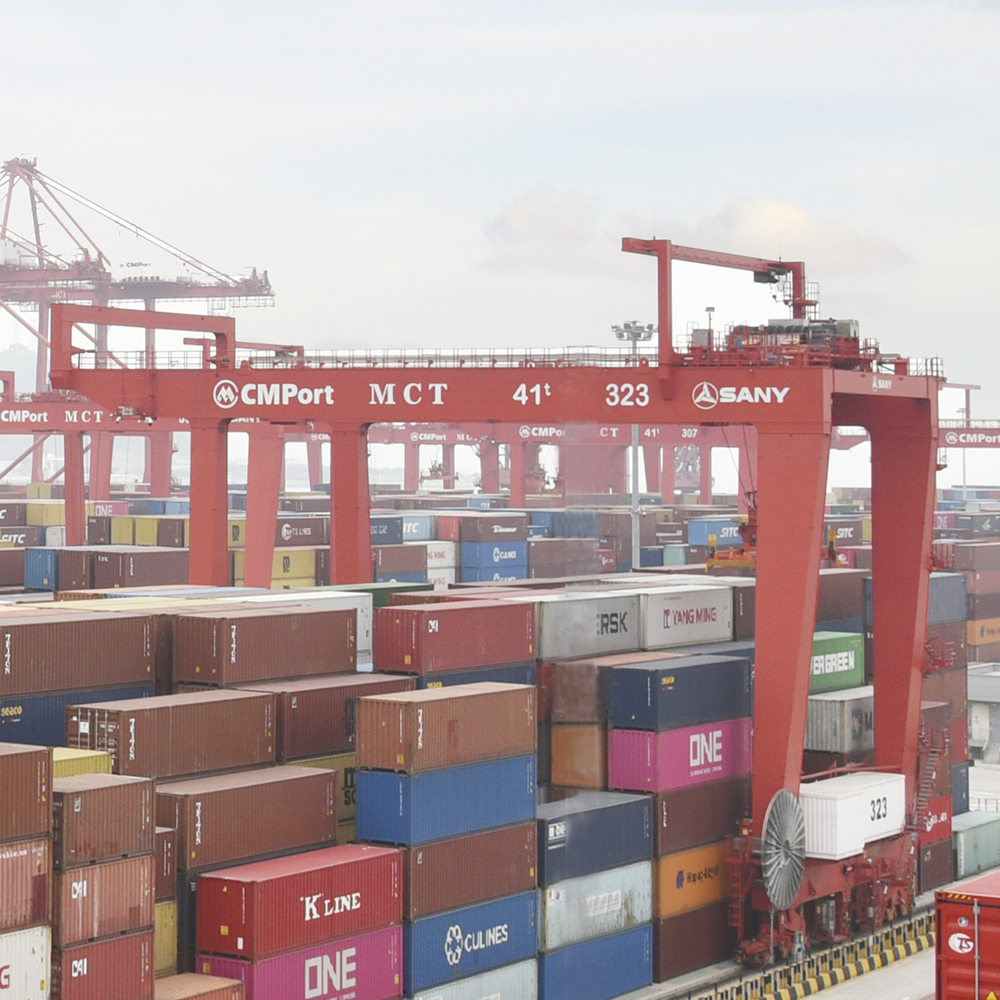
Rail-mounted container gantry crane automation
Rail-mounted container gantry craneRecommended products
automation
Rail-mounted container gantry crane automationRelated testimonials
CCTV Finance × Sany Heavy Industry: Transportation construction continues to heat up! In May, the infrastructure was full of bright spots →
2025.06.17
CCTV Finance × Sany Heavy Industry: Infrastructure results are released! Anhui is soaring, and the equipment of the western port has become a "dark horse"
2025.05.19
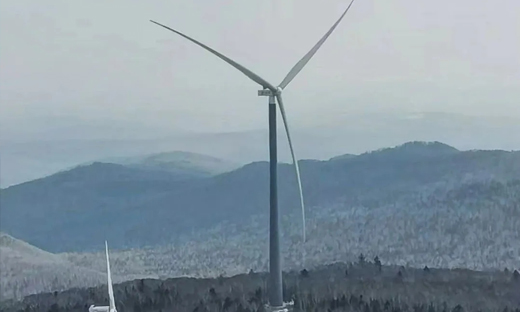
China's installed wind and solar capacity has historically surpassed that of thermal power
2025.04.28




0 comments