

The implementation of the China VIB standard for oil products is imminent
2023.05.21
China Petroleum News Network
Since July 1, the national VI emission standard 6b stage has been fully implemented nationwide, prohibiting the production, import, and sale of vehicles that do not meet the 6b stage of the national VI emission standard.
A few days ago, the Ministry of Industry and Information Technology and other five departments issued the "Announcement on Matters Related to the Implementation of National VI Emission Standards for Automobiles" (hereinafter referred to as the "Announcement"), saying that in order to implement the relevant requirements of the "Pollutant Emission Limits and Measurement Methods for Light Vehicles (China Sixth Stage)" (GB18352.6-2016) and the "Pollutant Emission Limits and Measurement Methods for Heavy-duty Diesel Vehicles (China Sixth Stage)" (GB17691-2018), the relevant policies to help enterprises bail out, stabilize and expand automobile consumption will be implemented. From July 1, 2023, the China VI emission standard phase 6b will be fully implemented nationwide, prohibiting the production, import, and sale of vehicles that do not meet the China VI emission standard stage 6b.
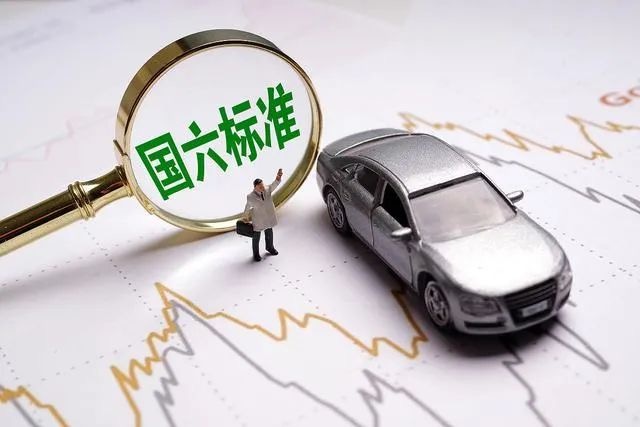
The deadline is clear, and the car companies say that they are quite calm
Cui Dongshu, secretary general of the passenger association, said that since March, domestic automobile production and sales have gradually recovered, but in the context of the imminent implementation of the China VIB emission standard, some car companies are indeed selling cars at lower prices to alleviate some inventory pressure.Previously, the "2022 New Energy Work Guidance" issued by the National Energy Administration clearly stated that from January 1, 2023, China will fully supply China VIB standard vehicle gasoline. In fact, since January 1, 2019, China has implemented the China VIA standard for nearly 4 years."However, it is precisely because of the implementation of the National VIA standard for 4 years that the most difficult and stressful moment for car companies has actually passed." Cui Dongshu said.According to the China Association of Automobile Manufacturers (hereinafter referred to as the "China Association of Automobile Manufacturers"), since the release of the National VI standard, most enterprises have directly carried out product development and production in accordance with the requirements of the National VI B standard, which is equivalent to the implementation of the National VI B standard in advance, and the vehicles that meet the National VIB standard occupy a major share of the market. At present, China VIB light vehicles account for more than 95% of the market and more than 90% of the vehicle market.Taking into account the pressure of car companies and the market, the policy also grants a six-month sales transition period for some light vehicle China VIB models with the result of the actual driving pollutant emission test (i.e., RDE test) reported as "monitoring only", and allows sales until December 31, 2023."At present, this buffer period is sufficient, leaving enough time for car companies to release inventory and enter the 'high-standard market'. As far as I know, car companies are still relatively calm and not too anxious. Cui Dongshu said, "The introduction of policies can benefit the industry, and it is expected that automobile production will recover in the future and further stabilize the market." ”
Reduced emissions, making blue skies and white clouds "more regular"
According to the reporter's understanding, the China VI gasoline and diesel standard is currently one of the most stringent emission standards in the world, and some indicators even exceed the EU standard. Compared with the previous China VIA gasoline, after upgrading to China VI B, the olefin content in the gasoline has been reduced from the previous 18% to 15%, and the oil performance is better and the quality is higher. Among them, the reduction of olefin content can further reduce pollutant emissions and reduce air pollution.In fact, China VIA is a transitional product, and China VIB is the real sense of China VI standard gasoline. According to the reporter's understanding, previously, in Heilongjiang, Sichuan, Shanghai, Zhejiang, Jiangsu and other regions, Sinopec and PetroChina's gas station gasoline has been upgraded to the National VI B standard, and some areas in Guangxi have subsequently carried out a comprehensive upgrade of oil products, and the current National VIB gasoline has basically covered the whole country.The core purpose of oil upgrading is to control air pollution. Data shows that motor vehicle emissions account for 20% to 30% of PM2.5 sources, which is an important cause of haze and photochemical smog. "Oil quality is an important factor affecting vehicle exhaust emissions, and oil upgrading is also to reduce pollutant emissions from the source, so that blue sky and white clouds become 'frequent customers'." A senior practitioner in the refining and chemical industry said.
Since 2003, China began to make "national standard" oil, from "national one" to "national two" in 2005 and "national three" in 2010, at that time some areas have reached the "national four" and "national five" level. It took only more than 10 years for China's oil refining enterprises to complete the road of upgrading the oil quality of Western countries in 20 or 30 years.Will oil upgrades put more pressure on refineries? The above-mentioned senior practitioners in the refining and chemical industry said that the upgrade of China VI A to China VI B is only a fine-tuning of the process formula, and does not involve a major upgrade of production equipment. "Many refineries have the basic conditions for upgrading to China VIB when gasoline is upgraded from China V to China VIA, and the pressure will not be very great."
Fully upgraded, no price increase for oil quality
Does the upgrade of oil products mean that prices will also "go up"?The person in charge of a gas station told reporters, "In fact, the small cost changes caused by the upgrade of China VIA to China VIB will not make the price of gasoline batch zero fluctuate." ”At the beginning of this year, the executive meeting of the State Council clarified the timetable for upgrading the quality of oil products, and pointed out that the price of refined oil should be reasonably determined in accordance with the principles of reasonable compensation costs, high quality and high prices, and polluter pays.In accordance with this requirement, gasoline prices have been raised when upgrading to China IV and China V standards. When it is upgraded to the China VI stage, there is no nationwide price adjustment standard for upgrading China V to China VI because the improvement of the main indicators will not significantly increase the processing cost of refining enterprises.The reporter learned that at present, the retail price of China VIB gasoline is still implemented according to the original quality standard price, and has not changed because of the upgrading of oil quality, and petrochemical enterprises have borne the pressure of rising costs brought about by quality upgrades."Under the high standard of oil, the car can drink environmentally friendly fuel, which can effectively improve the performance of the vehicle, reduce the carbon deposit and gum deposition of the engine, further extend the service life of the engine, and reduce the maintenance cost of the vehicle." said the person in charge of the above-mentioned gas station.
Energy is the lifeblood of the country's industrial development, and the oil and gas industry is of great strategic significance to the national economy and people's livelihood. As a global leader in high-end energy equipment solutions, Sany Petroleum will continue to deepen the oil and gas market, continuously promote the innovation of oil and gas development methods, help the domestic oil and gas market reduce costs and increase efficiency, low-carbon and environmental protection, and contribute to the development of China's unconventional oil and gas resources and the green and sustainable development of the oil and gas industry!
Related testimonials
Start with the Red Sea! Wind power retirement market pains
2025.06.25
CCTV Finance × Sany Heavy Industry: Transportation construction continues to heat up! In May, the infrastructure was full of bright spots →
2025.06.17
CCTV Finance × Sany Heavy Industry: Infrastructure results are released! Anhui is soaring, and the equipment of the western port has become a "dark horse"
2025.05.19




0 comments