

Involving the retirement of wind power! The National Development and Reform Commission and other six departments jointly issued a document
2023.08.18
National Development and Reform Commission
On August 17, the National Development and Reform Commission and other departments issued guidance on promoting the recycling of retired wind power and photovoltaic equipment. The document states the main objectives:
By 2025, the responsibility mechanism for the disposal of decommissioned equipment of centralized wind farms and photovoltaic power stations will be basically established, the relevant standards and specifications for the recycling of retired wind power and photovoltaic equipment will be further improved, and breakthroughs will be made in key technologies for resource recycling.
By 2030, the whole-process recycling technology system of wind power and photovoltaic equipment will be basically mature, the resource recycling mode will be more sound, the resource recycling capacity will be effectively matched with the scale of decommissioning, the standards and specifications will be more perfect, and the level of resource recycling in the wind power and photovoltaic industry will be significantly improved, forming a number of retired wind power and photovoltaic equipment recycling industry clusters.
The original text is as follows:
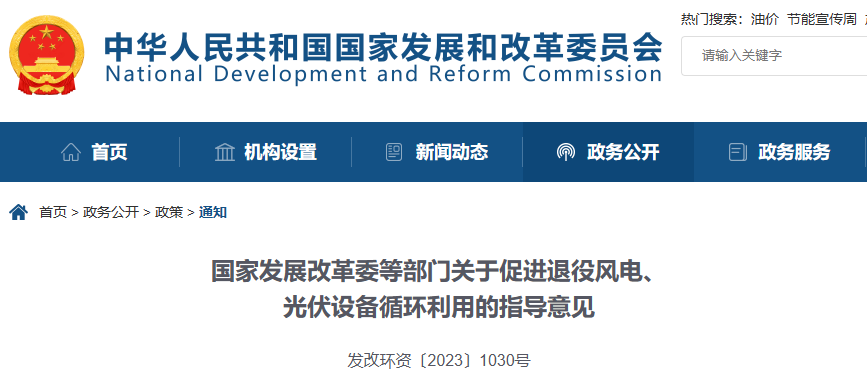
Guiding Opinions of the National Development and Reform Commission and other departments on promoting the recycling of retired wind power and photovoltaic equipment
Development and Reform Environmental Resources [2023] No. 1030
To all provinces, autonomous regions, municipalities directly under the Central Government and cities specifically designated in the state plan, the Development and Reform Commission of the Xinjiang Production and Construction Corps, the Energy Administration, the competent departments of industry and information technology, the Department of Ecology and Environment (Bureau), the competent departments of commerce, and the State-owned Assets Supervision and Administration Commission:
In recent years, China's new energy industry has developed rapidly, and a large number of new energy equipment such as wind power and photovoltaic have been used, and the installed capacity ranks first in the world. With the acceleration of industrial upgrading and equipment upgrading, new energy equipment will face the problem of batch retirement. In order to fully implement the spirit of the 20th National Congress of the Communist Party of China, thoroughly implement the relevant deployment of the "Action Plan for Carbon Peaking Before 2030", accelerate the construction of a waste recycling system, and promote the recycling of retired wind power and photovoltaic equipment, the following opinions are hereby put forward.
1. General requirements
(1) Guiding ideology
Guided by Xi Jinping Thought on Socialism with Chinese Characteristics for a New Era, we will fully implement the spirit of the 20th National Congress of the Communist Party of China, thoroughly implement Xi Jinping Thought on Ecological Civilization, completely, accurately and comprehensively implement the new development concept, accelerate the construction of a new development pattern, strive to promote high-quality development, accelerate the green transformation of development mode, deeply implement the comprehensive conservation strategy, and actively build a wind power and photovoltaic equipment recycling system covering green design, standardized recycling, high-value utilization, and harmless disposal. The last link in the green, low-carbon and circular development of the photovoltaic industry chain will help achieve carbon peak and carbon neutrality.
(2) Basic principles
-- Adhere to the system concept. Insist on considering the retirement of wind power and photovoltaic equipment from the perspective of the whole life cycle of equipment, strengthen the upstream and downstream coordination of the industrial chain, promote the recycling of retired wind power and photovoltaic equipment, and maximize the efficiency of resource utilization.
——Adhere to innovation-driven. Efforts will be made to promote technological innovation and model innovation in the recycling of retired wind power and photovoltaic equipment, and promote the progress of recycling technology, cost reduction and efficiency improvement. Encourage qualified localities and enterprises to take the lead in cultivating advanced technologies and business models.
-- Persist in categorical policies. Comprehensively considering the stage of industrial development, equipment type and decommissioning, we should combine far and near, moderately advance, accelerate the standardization of centralized wind farms and photovoltaic power station equipment recycling, and gradually improve the responsibility mechanism for distributed photovoltaic equipment processing.
-- Adhere to regional overall planning. Combined with the production and decommissioning of wind power and photovoltaic equipment in various places, the layout of retired equipment recycling industry clusters according to local conditions, support the collaborative utilization of retired wind power and photovoltaic equipment between regions, and accelerate the cultivation of resource recycling industries.
(3) Main objectives
By 2025, the responsibility mechanism for the disposal of decommissioned equipment of centralized wind farms and photovoltaic power stations will be basically established, the relevant standards and specifications for the recycling of retired wind power and photovoltaic equipment will be further improved, and breakthroughs will be made in key technologies for resource recycling. By 2030, the whole-process recycling technology system of wind power and photovoltaic equipment will be basically mature, the resource recycling mode will be more sound, the resource recycling capacity will be effectively matched with the scale of decommissioning, the standards and specifications will be more perfect, and the level of resource recycling in the wind power and photovoltaic industry will be significantly improved, forming a number of retired wind power and photovoltaic equipment recycling industry clusters.
Second, key tasks
(1) Vigorously promote green design. Guide manufacturing enterprises to carry out green design in the product design and production stage with the goal of lightweight, easy dismantling, easy transportation and easy recycling. Actively implement the "Photovoltaic Manufacturing Industry Standard Conditions" and other normative requirements, and carry out the creation of "Green Design Demonstration Enterprises" in depth. Encourage manufacturing enterprises to give priority to the selection of recycled materials in the product design and production process under the premise of ensuring product quality, performance and use safety. Guide manufacturing enterprises to strengthen information disclosure, and disclose detailed information such as parts and raw materials, product structure, and resource recycling technical suggestions for equipment recycling and resource utilization. (The Ministry of Industry and Information Technology and the National Development and Reform Commission are responsible in accordance with their duties and division of labor)
(2) Establish and improve the responsibility mechanism for the disposal of decommissioned equipment. Supervise and guide centralized wind power and photovoltaic power generation enterprises to assume the responsibility for the disposal of retired new energy equipment (including parts, the same below) in accordance with the law, and shall not illegally dispose of retired equipment by landfill, discard, etc., without authorization, and shall not put industrial solid waste into domestic waste collection facilities. Supervise and guide power generation enterprises to take waste recycling and proper disposal as an important part of wind farm transformation and upgrading projects. (The National Energy Administration and the Ministry of Ecology and Environment are responsible for the division of labor according to their duties) to supervise and guide power generation enterprises to do a good job of restoring the surrounding ecological environment in a timely manner after dismantling wind power and photovoltaic equipment. (The National Energy Administration and the Ministry of Natural Resources are responsible for the division of labor according to their duties) to guide power generation enterprises to improve the scrapping management system of retired wind power and photovoltaic equipment, and improve the efficiency of disposal of scrapped assets。 Implement the relevant requirements for the transaction and circulation of state-owned assets, further optimize the treatment and disposal system of state-owned retired wind power and photovoltaic equipment, and promote the efficient and standardized disposal of relevant assets by enterprises. (The State-owned Assets Supervision and Administration Commission of the State Council and the National Energy Administration are responsible for the division of labor according to their duties)
(3) Improve the equipment recycling system. Support photovoltaic equipment manufacturing enterprises to establish a distributed photovoltaic recycling system through independent recycling, joint recycling or entrusted recycling. Encourage wind power and photovoltaic equipment manufacturing enterprises to take the initiative to provide recycling services. Support third-party professional recycling enterprises to carry out recycling business of retired wind power and photovoltaic equipment. Support the development of a "one-stop" service model for the dismantling, transportation, recycling, dismantling and utilization of retired new energy equipment. Encourage manufacturing enterprises, power generation enterprises, operating enterprises, recycling enterprises, and utilization enterprises to establish long-term cooperation mechanisms, smooth recycling channels, and strengthen the connection and coordination of upstream and downstream industries. Guide the wind turbine to be dismantled locally, nearby, and centrally dismantled. Guide renewable resource recycling enterprises to standardize and orderly recycle renewable resources such as scrap iron and steel, waste non-ferrous metals. (The National Development and Reform Commission, the Ministry of Industry and Information Technology, and the Ministry of Commerce are responsible in accordance with their duties and division of labor)
13:09
(4) Strengthen the ability to recycle resources. Encourage recycling enterprises to carry out refined dismantling and high-level recycling of retired wind power and photovoltaic equipment, focusing on the foundation, tower, blades, nacelles, generators, gearboxes, electric control cabinets and other components in wind turbines, as well asPhotovoltaic modulesThe photovoltaic laminates, frames, junction boxes and other components in China are recycled at a high level. Support leading enterprises to accelerate the formation of recycling industrialization capabilities for complex materials, focusing on fiber composite materials for wind turbine blades, as well as semiconductor materials, metal materials, polymers, etc. in photovoltaic modules, and explore advanced recycling technologies and business models that take into account economy and environmental protection. (The Ministry of Industry and Information Technology and the National Development and Reform Commission are responsible in accordance with their duties and division of labor)
(5) Steadily promote equipment remanufacturing. Strictly control the quality of remanufacturing products purchased by user units. Steadily promote the development of wind turbines and photovoltaic module remanufacturing industry, and take the lead in developing high-value components such as generators, gearboxes, and main bearings in wind power equipment, as well as the remanufacturing of key components such as photovoltaic inverters. Explore the application of remanufactured components in the field of new energy operation and maintenance in a prudent and orderly manner, and support wind power, photovoltaic equipment manufacturing enterprises and operation and maintenance enterprises to expand their remanufacturing business. Encourage research institutions, industry organizations and backbone enterprises to jointly build a platform for remanufacturing, testing and verification of wind turbines and photovoltaic module parts. Cultivate third-party appraisal and evaluation institutions for wind power and photovoltaic remanufacturing equipment, and promote the standardized development of the industry. (The National Development and Reform Commission, the Ministry of Industry and Information Technology, and the State Administration for Market Regulation are responsible in accordance with their duties and division of labor)
(6) Regulate the harmless disposal of solid waste. Strengthen the supervision of the prevention and control of environmental pollution in the whole process of recycling and disposal of retired wind power and photovoltaic equipment, strictly enforce the pollution control requirements for the harmless disposal of retired equipment, ensure compliance with national environmental protection standards, and reduce the risk of environmental pollution caused by terminal solid waste. (Ministry of Ecology and Environment is responsible)
3. Strengthen safeguard measures
(1) Intensify technology research and development. The research and development of recycling technology for retired wind power and photovoltaic equipment will be included in the relevant key projects of the national key research and development plan. Develop residual life assessment technology for wind power and photovoltaic equipment, build equipment life assessment methodology and technical system, and promote the continuous utilization and cascade utilization of equipment and key components. Carry out key and difficult technical research such as high-purity separation of photovoltaic modules, recycling and extraction of rare metals, recycling and utilization of composite materials, high-value utilization of renewable resources, and remanufacturing of wind power equipment parts, break through core technologies and equipment, and study and establish a whole-material recycling process. Accelerate the construction of public service platforms for industrial technology foundations such as photovoltaic module recycling. Accelerate the demonstration of the integration of the utilization of technology systems, and promote the formation of a number of "government, industry, academia, research and application" integration of scientific and technological achievements transformation model. (The Ministry of Science and Technology and the Ministry of Industry and Information Technology are responsible for the division of labor according to their duties)
(2) Strengthen financial and policy support. Use the existing funding channels within the central budget to invest in strengthen support for recycling projects of retired wind power and photovoltaic equipment. Implement relevant preferential tax policies such as energy conservation and water saving, accelerated depreciation of fixed assets, and value-added tax refund for comprehensive utilization of resources in accordance with the law. Study the inclusion of retired wind power and photovoltaic equipment recycling industries in the green industry guidance catalog. Enrich green financial products and services, and provide financing facilitation for eligible retired wind power and photovoltaic equipment recycling projects. Encourage qualified localities to formulate special support policies for the recycling of retired wind power and photovoltaic equipment. (The National Development and Reform Commission, the Ministry of Finance, the State Administration of Taxation, the People's Bank of China and other departments are responsible in accordance with their duties and division of labor)
(3) Improve the system of standards and norms. Research and formulate standards and specifications for green design and comprehensive utilization of wind power and photovoltaic equipment. Support industry associations, leading enterprises, third-party research institutions, etc. to research and formulate technical standards related to retired wind power and photovoltaic equipment. (The Ministry of Industry and Information Technology, the National Energy Administration, the National Development and Reform Commission, the State Administration for Market Regulation and other departments are responsible for the division of labor according to their duties) to study and formulate standards for the green dismantling of retired wind power and photovoltaic equipment in special environments and the recycling of parts and components of different materials (including metals and composite materials). Improve the operation evaluation standards for wind power equipment, photovoltaic modules and related components during the life cycle, make the recyclability and recyclability of equipment and parts an important part of the evaluation, and promote the development of green certification. (The State Administration for Market Regulation is responsible) to accelerate the study of the environmental impact of disposing of waste wind turbine blades, photovoltaic modules and parts by landfill, incineration, recycling, etc., and to study and formulate technical specifications for the pollution prevention and control of waste wind power and photovoltaic equipment in the process of recycling, utilization, and disposal of waste wind power and photovoltaic equipment. (Ministry of Ecology and Environment is responsible)
(4) Cultivate key areas and enterprises. Combined with the production and decommissioning of wind power and photovoltaic equipment in various places, guide and support the construction of industrial agglomeration areas for the recycling of decommissioned new energy equipment in some key areas. (The National Development and Reform Commission, the Ministry of Industry and Information Technology, and the National Energy Administration, in conjunction with relevant departments, are responsible) to support central enterprises to play a leading role in demonstration, take the lead in strengthening the recycling of retired wind power and photovoltaic equipment, and build a number of key projects. (The State-owned Assets Supervision and Administration Commission of the State Council, the National Development and Reform Commission, and relevant departments are responsible)
Fourth, strengthen the organization and implementation
(1) Strengthen organizational leadership. The National Development and Reform Commission has strengthened overall planning and coordination, and increased the promotion of the recycling of retired wind power and photovoltaic equipment. All relevant departments shall formulate relevant supporting policies in accordance with their responsibilities and division of labor, and form a joint force for coordinated promotion. All localities should fully understand the importance of recycling retired wind power and photovoltaic equipment, and take effective measures to strengthen the implementation of policies.
(2) Strengthen publicity and guidance. All localities and relevant departments should increase the publicity and introduction of outstanding projects and typical cases of recycling of retired wind power and photovoltaic equipment, and promote a number of advanced experiences that can be used for reference and replication. Encourage localities, industry associations and relevant institutions to organize and carry out activities such as technical product docking and exchange meetings, application demonstration on-site meetings, etc., to promote the exchange and promotion of advanced technology product models. Support industry associations and third-party research institutions to sort out technology trends and development practices, promote the latest technology models, publicize typical cases, and guide the healthy development of the industry in the form of compiling industry development reports.
National Development and Reform Commission
National Energy Agency
Ministry of Industry and Information Technology
Ministry of Ecology and Environment
Ministry of Commerce
State-owned Assets Supervision and Administration Commission of the State
July 21, 2023
Source: National Development and Reform Commission
Related testimonials
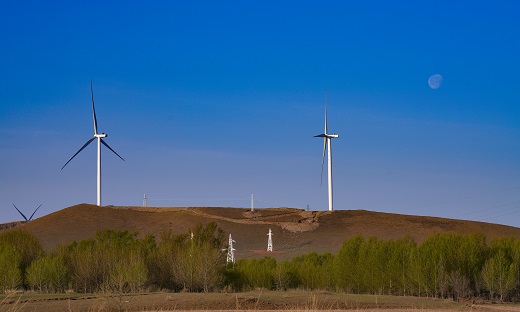
Start with the Red Sea! Wind power retirement market pains
2025.06.25
CCTV Finance × Sany Heavy Industry: Transportation construction continues to heat up! In May, the infrastructure was full of bright spots →
2025.06.17
CCTV Finance × Sany Heavy Industry: Infrastructure results are released! Anhui is soaring, and the equipment of the western port has become a "dark horse"
2025.05.19




0 comments