

Digital oilfield construction enters the "deepwater area"
2023.11.20
Sinopec News Network
In the context of intensifying the exploration and development of oil and gas resources, accelerating the planning and construction of a new energy system, and ensuring energy security, the high-quality development of China's oil and gas industry is facing the opportunities and challenges of digital transformation and intelligent development.
At the 8th International Academic Conference on Digital Oilfield held recently, well-known experts and scholars, industry associations and enterprise leaders from home and abroad discussed and exchanged views on the digital construction of oilfield, especially the emerging technologies, realization paths and development visions of smart oil and gas fields, with the theme of "Digital Transformation and Intelligent Development".
Since the beginning of the industrial society, technology has increasingly become the core driving force of human development. Since the beginning of the 21st century, the most active and fastest-growing scientific and technological innovation achievements have been concentrated in the field of information and communication technology, and new technologies such as big data, Internet of Things, blockchain, and artificial intelligence have been emerging to promote the leapfrog development of social economy, and the petroleum and petrochemical industry cannot miss the opportunity.
In the development process of the oil and gas industry, milestone major technological achievements have appeared in different periods, such as the electrically driven drilling rig in the 80s of the 20th century, the automatic drilling rig, reservoir numerical simulation, rotary directional drilling, logging-while-drilling technology in the 90s, and the 3D imaging, intelligent completion, digital oilfield, and digital pipeline technology in the early 21st century, which have brought the automation and informatization development of the oil and gas industry at home and abroad into a new stage. Nowadays, the rapid development of a new generation of information technology such as artificial intelligence, metaverse, and large models has brought new opportunities to oil and gas exploration and development.
Zhu Jiejun, vice president of Chang'an University, said that in recent years, with the continuous development of global petroleum information technology, upgrading from digital oilfield to smart oilfield has become an inevitable trend in the development of information technology in the world's petroleum industry. In the context of intensifying the exploration and development of oil and gas resources, accelerating the planning and construction of a new energy system, and ensuring energy security, China's digital oilfield construction has entered the "deepwater area", facing the opportunities and challenges of digital transformation and intelligent development.
Digital technology has become a strategic focus
At present, digital technology has become the strategic focus of all countries, and the global information layout is characterized by promoting digital transformation. For example, the UK has strengthened its strategic leadership role to build a digital powerhouse; The U.S. focuses on cutting-edge technologies and high-end manufacturing, leading the global digital transformation; Japan is building a super-smart society with innovation and "connected industry" as a breakthrough; Russia focuses on independent research and development of technology, and strives to consolidate the foundation of digital transformation; Germany is actively practicing "Industry 4.0" and has identified five major areas of action; The EU will build a unified digital market and build a community of industrial transformation.
Xie Huafeng, senior engineer of the Oil and Gas Resources Survey Center of the China Geological Survey, said that with the strengthening of the global industrial information base and the continuous generation of massive data, from a macro point of view, the current industrial digital transformation has achieved three major transformations: from passive to active, from fragment to continuous, and from vertical to collaborative.
At the same time, the digital transformation of the industry has shown new characteristics of platformization and sharing. The characteristics of platform are mainly reflected in the construction of major platforms with unique core advantages and eclectic operation systems, which realizes the transformation and reshaping of organizational structure and business model, and promotes the cross-border integration of all links of the industry and different industrial chains. The characteristics of sharing are mainly reflected in the rapid advancement of digital transformation, which provides a solid foundation for real-time calculation and matching of supply and demand, and forms a low-cost sharing channel for effective allocation of resources through the application of online social networking and credit evaluation system.
The era of digital economy has put forward new requirements for civic literacy. The European Union updated its digital literacy framework in 2017 to adapt to the new requirements of technological advancements for citizens' digital literacy; In March 2017, the Australian National Council for Educational Research was commissioned by UNESCO to develop a globally applicable digital literacy assessment methodology; The UK has launched the UK Digital Strategy, one of which is to promote digital literacy and digital skills training for all; In 2018, the Singapore government plans to launch digital literacy training for civil servants across the country. The emergence of a large number of new digital products, applications and services must effectively guide consumers to improve their digital skills and literacy, and better explore the value of digitalization and enjoy digital convenience.
The digital transformation of industries reshapes the open and collaborative innovation system. Group, chain, and cross-field innovation achievements are common, and the cost of innovation and R&D has been greatly reduced; Disruptive and revolutionary innovation is parallel to iterative and progressive innovation, and the speed of creation and invention is significantly accelerated; The cross-regional, diversified, and efficient innovation model is no longer bound by established organizational boundaries; Crowdfunding, crowdsourcing, crowd-creation, and crowd-intelligence models are constantly emerging, relying on the network to carry out online.
From a technical point of view, promoting the innovation and development of big data and artificial intelligence technology has become a common strategic choice. The competition for underlying technologies, standards, and intellectual property rights has become more intense, and organizational structure optimization and business model transformation have become the focus of digital transformation, focusing on cultivating application scenarios that adapt to the characteristics of the new generation of information technology.
With the continuous development of petroleum information technology, upgrading from digital oilfield to smart oilfield has become an inevitable trend in the development of the world's petroleum industry, and it is urgent to deeply integrate oil and gas field business and digital intelligent technology to improve production and operation efficiency, and increase the exploration and development of oil and gas resources.
The oil and gas industry can strengthen technological innovation, actively adopt digitalization, cloud computing and artificial intelligence technologies to improve oilfield efficiency and production capacity, and actively cooperate with international oilfield service companies to learn from their experience and accelerate the construction of digital oilfields. Invest in training and recruiting professionals in the digital oilfield field to ensure the success of the industry's digital transformation. In the construction of digital oilfields, data security and privacy must be fully considered and protected to avoid potential risks.
ChatGPT has sparked a technological revolution
Developed by OpenAI, ChatGPT is a generative natural language model based on the GPT (Generative Pre-trained Transformer) model. By learning and understanding human language, it can have high-quality conversations with users, and has the functions of generating articles, copywriting, code, video scripts, essays, novels, machine translation, email writing, and various knowledge and skill Q&A, which has triggered an unprecedented technological revolution in the field of artificial intelligence in the world.
Dou Hongen, a senior engineer at the Artificial Intelligence Research Center of PetroChina Research Institute of Petroleum Exploration and Development, believes that ChatGPT can integrate a large amount of data generated by equipment sensors and monitoring systems in various fields of the oil and gas industry, improve the operational efficiency of the industry and emergency management capabilities in harsh environments, and enter the intelligent era of perception, self-perception, self-repair and self-decision-making through human-machine friendly interaction and autonomous control, making revolutionary changes to the traditional oil and gas industry.
Cheng Guojian, a professor at the School of Computer Science at Xi'an Shiyou University, believes that the application of GPT in oil and gas exploration and production includes data analysis and interpretation, assisted decision-making and optimization, natural language processing and document summarization, learning and training, etc., which can be integrated into intelligent systems to achieve automation and intelligent operation.
First, improve the operational efficiency of the oil and gas industry.ChatGPT can integrate a large amount of data in various fields of the oil and gas industry, including geology, seismic, drilling and completion, logging, well testing, oil production, pipelines, oil refining, and chemical industry, etc., and can be integrated with various databases, knowledge bases, and data lakes to process and analyze complex cross-domain data sets, identify abnormal working conditions and patterns that are difficult to detect manually, and achieve accurate production prediction.The application of ChatGPT in data analysis and visualization in the oil and gas industry has the potential to revolutionize the decision-making methods of industry professionals and achieve the optimization of operations and management. Enables operators to process and analyze data so scientists and engineers across the oil and gas industry can make more informed decisions.It can also integrate the real-time monitoring system of the oil and gas industry, continuously collect and process the data of various oil and gas industry control systems, identify potential equipment failures or maintenance needs patterns, and give early warning of equipment problems, minimize the impact on production and reduce maintenance costs.
In addition, ChatGPT can use advanced natural language processing capabilities to interact with the system in a simple language conversation, request specific data or seek solutions, so that the oil and gas industry can truly achieve real-time monitoring and decision-making optimization, provide valuable industry solutions, and improve the operational efficiency of the oil and gas industry.
Secondly, improve the level of safety and environmental protection management
ChatGPT can integrate various sensors and systems to monitor air quality, water quality, and soil pollution, collect and process large amounts of environmental data, and participate in ecological environmental protection processes. By analyzing these data sets, anomalies and risks that affect the environment or violate industry regulations can be identified, which can be used to analyze the potential environmental impact of the project and propose solutions. At the same time, ChatGPT can also be programmed in the data thresholds of the oil and gas environmental ecological supervision system and the design of best environmental practices to generate real-time warnings and forecasts to reduce potential environmental risks. In addition, it can be used to update environmental regulations, train employees on environmental regulations, communicate with stakeholders, and other areas to help the industry achieve environmental goals.
Third, promote knowledge transfer and sharing
ChatGPT can automatically generate reports and documents, changing the way compliance information is exchanged and resource management in the oil and gas industry. Its advanced natural language processing capabilities and multi-language translation capabilities can be customized to the different technical details or complexities of the oil and gas industry, and converted into clear and concise reports as required, making them easier for operators to understand. At the same time, ChatGPT can serve as a centralized platform to process data, automatically generate reports, store and share them in a format that meets regulatory standards.
Much of the expertise in the oil and gas industry is in the hands of experienced employees. ChatGPT facilitates valuable knowledge transfer by capturing expert experience and sharing it with employees, ensuring that valuable expertise is not lost with the retirement or departure of employees. ChatGPT can also be used as a virtual assistant to help train new employees in various areas of the oil and gas industry, helping employees gain experience in specific environments and adapt to changing environments by creating employee training simulation training scenarios.
The industrial metaverse redefines the oil and gas industry
Li Jianfeng, deputy general manager of Sinopec's information and digital management department, said that ChatGPT has set off a boom in generative pre-trained GPT large models, opening a new stage in the development of artificial intelligence, and it has changed the AI application model of small models, from small sample data, small models, and single application scenarios to the era of large data volume, large models, and multiple application scenarios, while generating new productivity.In June 2023, the consulting agency McKinsey released a research report entitled "The Economic Potential of Generative Artificial Intelligence", which found that the time for AI to replace human jobs is 10 years ahead of schedule, and in 2030~2060, 50% of occupations will be gradually replaced, which can bring 2.6 trillion ~ 4.4 trillion US dollars of growth to the global economy every year.
The oil and gas industry should take advantage of the mature technology of large models and give full play to the advantages of free data to build large industry training models.Based on the massive unlabeled general corpus and professional data and knowledge of the oil and gas industry, a multimodal large prediction model for the oil and gas industry is trained through "general model training + professional data fine-tuning + reinforcement learning feedback", and continues to evolve iteratively. On the basis of the large model of the oil and gas industry, basic services such as natural language processing, intelligent dialogue, document generation, and knowledge extraction are built, and industrial applications based on the large model are gradually formed according to the needs of the oil and gas business.
In addition, from decentralized intelligent application scenarios to the digital twin of oilfield enterprises as a whole, a rich and colorful oil and gas industry metaverse can be built with the support of generative pre-trained AI industry large model technology.
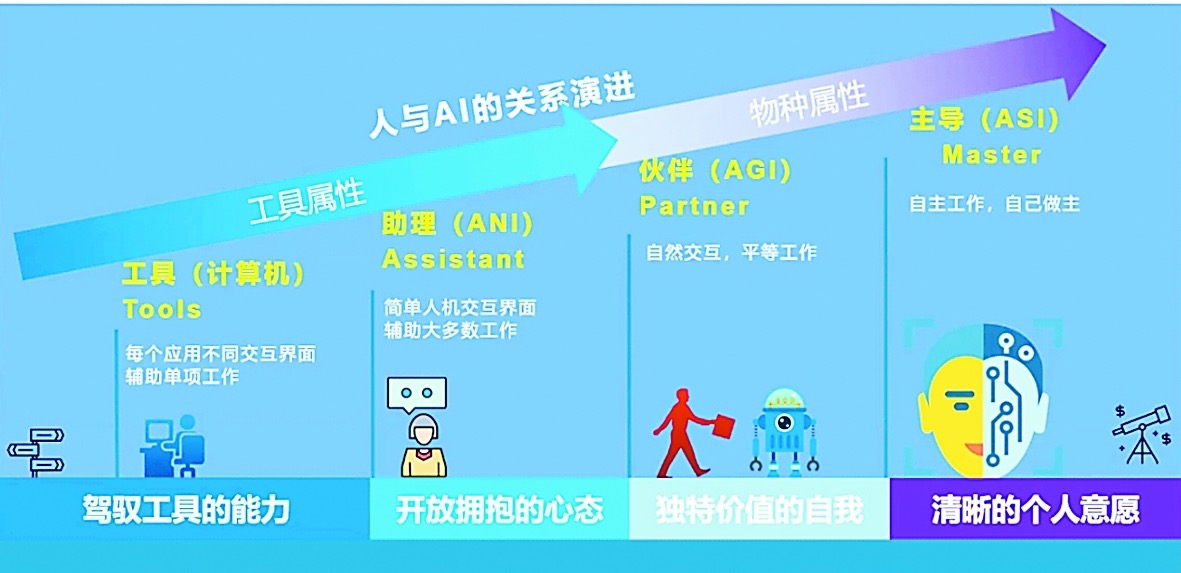
There are three major evolution directions of the oil and gas industry metaverse: first, unmanned, intelligent manufacturing should gradually reduce the proportion of human participation in the manufacturing system, and gradually solidify the accumulated knowledge and experience of people into the manufacturing system, and the vision of intelligent manufacturing is to achieve a high degree of unmanned autonomous operation; Second, AI has become a "partner" of human beings, from a tool attribute to a species attribute, from a tool and a helper to a partner and leader. Third, the large model is automatically generated, and the construction of the digital universe is accelerated.
The virtual and real interaction of the oil and gas industry metaverse will redefine the oil and gas industry. The construction of the industrial metaverse will change the way human beings understand the world and interact with the world, redefine people, enterprises and society, make the virtual world dominant, and realize the progress of civilization.
Rail-mounted container gantry crane automation
Rail-mounted container gantry craneRecommended products
automation
Rail-mounted container gantry crane automationNext article:CCTV Finance X Sany Heavy Industry: This data hit a new high in the second half of the year!
Related testimonials
CCTV Finance × Sany Heavy Industry: Transportation construction continues to heat up! In May, the infrastructure was full of bright spots →
2025.06.17
CCTV Finance × Sany Heavy Industry: Infrastructure results are released! Anhui is soaring, and the equipment of the western port has become a "dark horse"
2025.05.19
China's installed wind and solar capacity has historically surpassed that of thermal power
2025.04.28




0 comments