

EMBER: Carbon emissions in the global power sector are approaching a tipping point
2023.12.28
CWEA Wind Energy Committee
According to an analysis by Ember, a global power think tank, carbon emissions from the global power sector are approaching a tipping point where they have stopped growing and are beginning to decline. The power sector is currently the world's largest single source of carbon emissions, and the sector needs to be the first to decarbonize before the entire economy reaches net-zero emissions. The peak of carbon emissions is the first key turning point in a new era of emission reduction.
At COP28 in December, countries negotiated a "decision text" for the global assessment, a key outcome of the COP, which represents the way forward that all countries agreed on. In the draft text, there is an option for countries to agree to peak global carbon emissions on an economic scale by 2025, and the proposed wording to phase out fossil fuels (or "phase down" fossil fuels "without abating") leaves room in practice.
The good news is that the latest evidence from the power sector suggests that a peak in power sector emissions is imminent, or perhaps has already been, giving governments more confidence when setting targets for overall carbon emissions peaking in the next few years.
A new era of declining carbon emissions in the power sector is coming
The world is approaching a tipping point, with the rapid growth of wind and solar energy driving the world into a new era of declining fossil fuel generation, which is also driving down carbon emissions in the power sector. When clean energy grows fast enough to meet the growing demand for electricity, replacing fossil fuels, for example, will bring carbon peaking to a tipping point.
EMBER's data in the Global Power Review 2023 indicates that the world is approaching this goal. In 2022, the growth in wind and solar power generation (an increase of 557 TWh) met 80% of the growth in global electricity demand (694 TWh). This figure has significantly slowed the growth of carbon emissions in the power sector. Without wind and solar power, fossil fuels would generate 20% more electricity than in 2022.
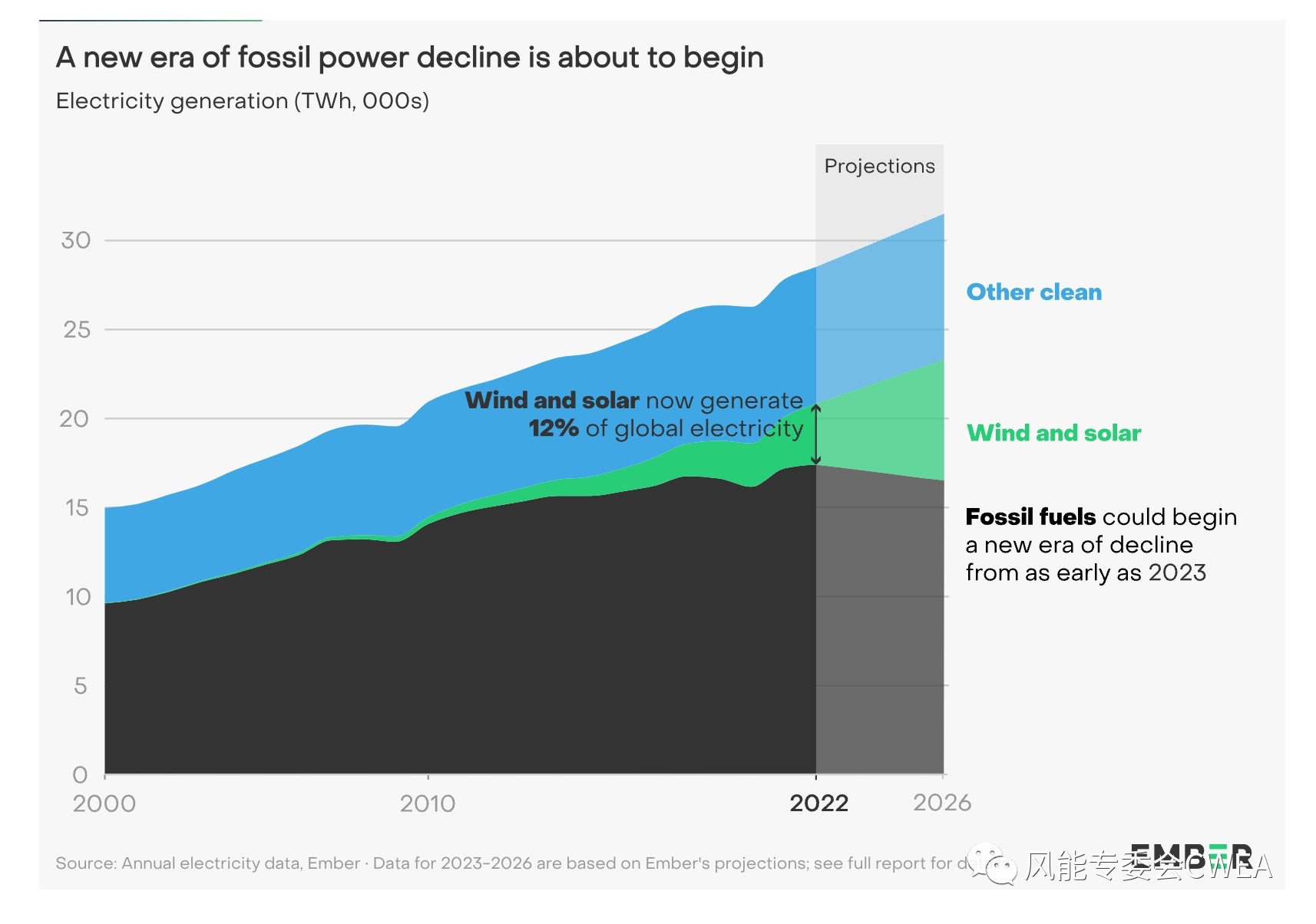
Fossil fuel generation is forecast to decline slightly in 2023 (-47 TWh, -0.3%) with an average increase in electricity demand and clean power, and even more so in subsequent years as wind and solar power grow further. This means that 2022 should have peaked carbon emissions. But the decline in hydropower generation in 2023 makes this possibility uncertain.
Related testimonials

CCTV Finance × Sany Heavy Industry: Infrastructure results are released! Anhui is soaring, and the equipment of the western port has become a "dark horse"
2025.05.19
China's installed wind and solar capacity has historically surpassed that of thermal power
2025.04.28
Breakthroughs have been made in the challenges of customization and high precision, and new progress has been made in the intelligent production of high-end equipment
2025.03.24




0 comments