

"Difficult" China's new energy, Western countries move stones
2024.04.15
China Energy News
In recent years, Western countries have repeatedly "challenged" China's new energy industry, but they have never been able to disturb the pace of China's development, and China's new energy industries such as solar energy and wind energy have made steady progress. International public opinion generally believes that the politicization, instrumentalization and weaponization of economic and trade issues by the Western economies led by the United States and Europe, and trade protectionism, will not only disrupt bilateral and multilateral mutually beneficial cooperation, but also drag down global climate action and energy transition.
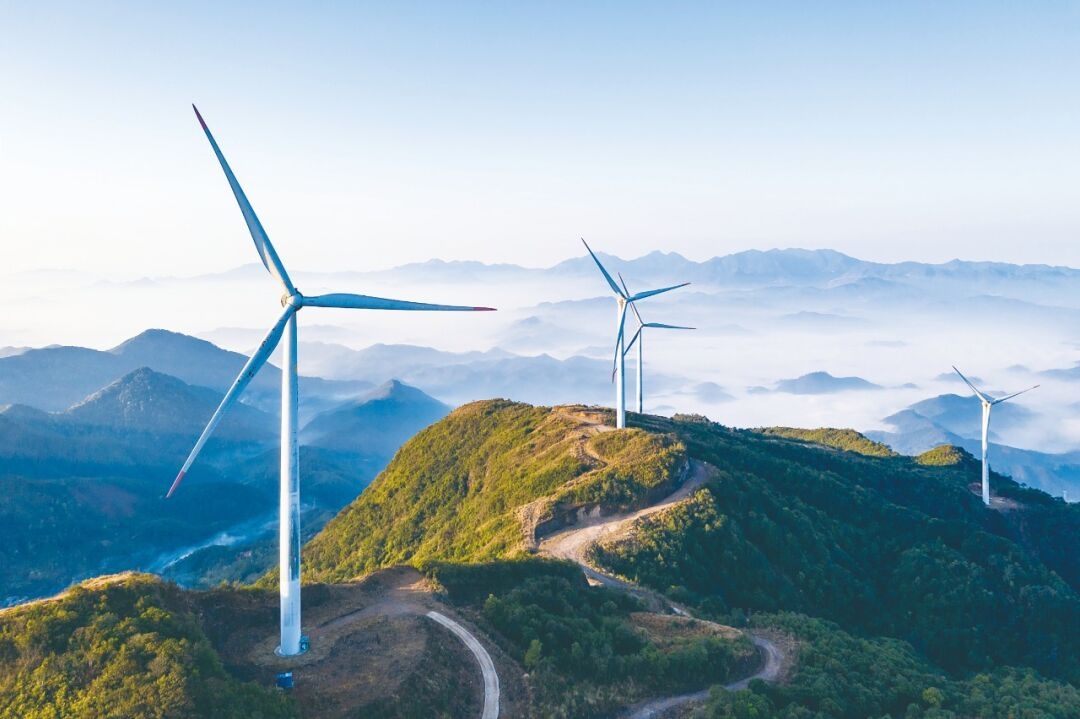
"Chinese products to the world have never relied on the so-called subsidies, but the diligence, innovation and competitiveness of generations of Chinese entrepreneurs." Peng Gang, Minister of the Economic and Commercial Office of the Chinese Mission to the European Union, said in a signed article in the EU media on April 8. This is a strong counterattack against the latest investigation launched by the European Union against China's photovoltaic enterprises and wind turbine manufacturers.
In recent years, Western countries have repeatedly "challenged" China's new energy industry, but they have never been able to disturb the pace of China's development, and China's new energy industries such as solar energy and wind energy have made steady progress. International public opinion generally believes that the politicization, instrumentalization and weaponization of economic and trade issues by the Western economies led by the United States and Europe, and trade protectionism, will not only disrupt bilateral and multilateral mutually beneficial cooperation, but also drag down global climate action and energy transition.
In the name of fair play
Harm the level playing field
On April 3, the European Commission announced that it would launch a countervailing investigation into LONGi Solar Technology Co., Ltd., a German subsidiary of LONGi Green Energy, and two subsidiaries of Shanghai Electric, Shanghai Electric UK, and Shanghai Electric Hong Kong International Engineering Company, which participated in a public tender for a 110MW solar park in Romania, to assess whether they violated the EU's Foreign Subsidies Regulation in the public tender.
The Foreign Subsidies Regulation, which came into force on July 12 last year, is designed to help the European Commission tackle unfair competition caused by foreign subsidies. According to the Regulation, the company is obliged to notify its bidder for public procurement in the EU when the value of the tender contract exceeds 250 million euros and the bidder receives a financial contribution of more than 4 million euros from another country within 3 years prior to the issuance of the notification.
In this regard, the relevant person in charge of LONGi Green Energy told the reporter of China Energy News that it has noticed the investigation and the company is actively following up and responding. The European Commission's investigation aims to assess whether LONGi Green Energy has foreign financial subsidies in public procurement tenders and their impact. It is expected that during the survey period, LONGi's business operations and delivery capabilities in the European market will not be materially affected, and all businesses will remain normal.
Six days after announcing that it would launch an investigation into China's photovoltaic companies, the European Union's investigation into China's wind power industry also came. On April 9, the European Commission announced that it had launched an investigation into Chinese wind turbine suppliers in Spain, Greece, France, Romania and Bulgaria.
On April 10, the head of the Trade Remedies Bureau of the Ministry of Commerce of China met with Martin Lucas, director of the European Commission's Trade Defense Department, in Brussels, to make solemn representations on the EU's subsidy investigation into Chinese wind turbine suppliers and the re-release of a report on "serious distortions" in China's economy.
China believes that the investigations on the Foreign Subsidies Regulation initiated by the EU so far are all aimed at Chinese new energy-related enterprises, which will not only seriously damage the confidence of Chinese enterprises in carrying out investment and trade cooperation in the EU, interfere with the mutually beneficial industrial cooperation between China and the EU, but also affect the global efforts to combat climate change and the process of green transformation. In the course of the investigation, the EU wantonly distorted the definition of subsidies, and the procedural standards were not open and transparent, which is a protectionist act that harms the level playing field in the name of fair competition. China expresses strong dissatisfaction and resolute opposition to this, and urges the EU to immediately stop and correct its erroneous practices.
It is worth noting that the United States also seems to be brewing a new round of "new actions" for China's new energy products. CNBC News reported on April 8 that U.S. Treasury Secretary Janet Yellen hinted that measures will be taken to protect the U.S. solar manufacturing industry, and did not rule out measures against China's exports of green energy products such as photovoltaics, including tariffs.
On April 8, Chinese Vice Finance Minister Liao Min briefed the media on Yellen's visit to China and answered questions from reporters. He said that China has clearly expressed its grave concern over the US sanctions restricting Chinese companies, imposing tariffs on China, and restricting investment in China, pointing out that these measures harm the legitimate rights and interests of Chinese companies and people, and are not conducive to the well-being of US companies and people. China welcomes the U.S. statement that it has no intention of seeking decoupling from China, and hopes that the U.S. side will take concrete actions to stop sanctions and restrictions on Chinese companies.
It is understood that since November 2011, China's photovoltaic products have been subject to 15 trade remedy investigations in the United States, the European Union, India, Australia, Canada, Turkey and other countries and regions. Among them, the United States launched the "anti-dumping" investigation in November 2011 and January 2014, and the "201 investigation" in May 2017.
Protectionism will not solve the problem
own problems
In response to the EU's recent announcement of an investigation into China's "wind and solar" energy sector, Foreign Ministry spokesperson Mao Ning responded that the development of China's new energy-related industries is the embodiment of multiple advantages such as technology, market and industrial chain, and the export of related products has made an important contribution to the global fight against inflation and climate change. It is hoped that the EU will not undermine efforts to combat climate change while singing high tales about climate change. Protectionism cannot solve its own problems.
The EU-China Chamber of Commerce noted that the Foreign Subsidies Regulation gives the European Commission undue discretion and is extremely vague in defining key concepts such as "foreign subsidies". "We understand that the European side has expanded the concept of 'foreign financial assistance' in the investigation of the Foreign Subsidies Regulation, and many elements that do not constitute subsidies are also considered subsidies, and require enterprises to provide a large number of materials in a short period of time, many of which involve trade secrets and data security. Many of its practices have seriously affected the defense rights of Chinese enterprises and harmed the interests of Chinese enterprises. Fang Dongkui, secretary general of the Chinese Chamber of Commerce in the European Union, said in an interview with China Energy News, "The relevant investigation is suspected of discriminating against Chinese companies, and the concept of subsidies has been expanded in the preliminary investigation, which has damaged the interests of Chinese enterprises." The Foreign Subsidies Regulation is becoming a tool of economic coercion on Chinese companies in the clean energy sector. ”
Dong Yifan, an assistant researcher at the Institute of European Studies at the China Institute of Contemporary International Relations, believes that at present, there is a "temperature difference" between the EU's demand to use new energy products to promote energy transition and the commercial interests of the European new energy manufacturing industry. "On the one hand, the EU wants to accelerate the implementation of renewable energy installation targets and seek cheaper prices for products and equipment; On the other hand, for the purpose of protecting the domestic market and obtaining profits, the EU considers Chinese products to be a challenge and threat to its commercial interests, so it is moving closer to the pan-politicization and pan-security of imported products. ”
In this context, the EU has taken action on the basis of the "subsidy problem" and "excess capacity" created by itself, especially the issuance of the Foreign Subsidies Regulation, which does not adopt traditional anti-dumping and countervailing investigations, but focuses more on the enterprises participating in the bidding of energy projects in the EU, and implements the so-called "industrial protection" and "trade protection" practices for specific projects.
Enhance industrial resilience
Overcoming barriers in international markets
At present, the international economic and technological competition is intensifying, and the new energy industry, as China's advantageous industry, may face more challenges. For Chinese new energy companies, how to overcome the barriers of the international market? The interviewed experts generally believe that in response to changes in the business environment, enterprises should be prepared, and continuously promote technological innovation and enhance their core competitiveness and the resilience of the entire industrial system by adjusting the market direction and realizing their own transformation and upgrading, so as to avoid potential trade friction risks as much as possible and protect their own interests.
"On the one hand, we should closely follow the relevant policies and market development trends, do a good job in forward-looking research and judgment, and 'go overseas' in an orderly manner; on the other hand, we will interact with local enterprises to form a community of interests, and take product and innovation as a priority factor, continuously improve product competitiveness, and improve risk awareness." Fang Dongkui put forward his own suggestions.
In fact, the cost advantage of China's new energy industry chain has brought high-quality and low-cost solutions to the global new energy development, even if the costs of transportation and import tariffs are added, they are still price competitive in the EU. Therefore, even if the EU starts to impose restrictions on China's new energy industry, it will be difficult to change the market supply pattern.
Peng Peng, secretary-general of the China New Energy Power Investment and Financing Alliance, told China Energy News: "From a global perspective, China's photovoltaic products are very competitive, and they have obvious advantages in product quality, efficiency and cost. At the same time, European properPhotovoltaic modulesIn fact, the competitiveness of the business has regressed, and it is gradually withdrawing from the market in the past ten years, resulting in the current large photovoltaic manufacturers in the EU There are few left. ”
For potential international trade risks in the future, Peng Peng suggested that, on the one hand, Chinese photovoltaic companies should try to understand the relevant legal and institutional risks in advance and avoid potential trade frictions as much as possible; On the other hand, we should open up new markets, especially emerging markets such as South America and Africa, and "don't put all your eggs in one basket".
Lv Jinbiao, a consulting expert of the China Photovoltaic Industry Association, stressed that all the restrictions imposed by the United States and Europe on China's photovoltaic industry are to curb China's global leading photovoltaic advantages, and second, to protect and cultivate local industries. "Therefore, Chinese photovoltaic companies should increase investment, strengthen technology, and strengthen the chain, so as to enhance the resilience of the industrial chain, and then promote the continuous upgrading of the international competitiveness of products."
In the wind power equipment market, the advantages of the whole industry chain of Chinese products should not be underestimated. Dong Yifan said: "The gap between Chinese wind power enterprises and traditional European wind power equipment companies is narrowing in terms of technical level and market size. The EU's move to impose trade restrictions on Chinese companies is actually to protect the domestic market and leave more room for European companies. ”
According to Bloomberg New Energy Finance data, in 2023, Chinese wind turbine manufacturers will add 1.7 GW of new installed capacity in overseas markets, with projects in 20 markets around the world, including five EU member states. Last year, the number of overseas markets installed by Chinese machine manufacturers was nearly three times that of 2018.
Related testimonials
CCTV Finance × Sany Heavy Industry: Transportation construction continues to heat up! In May, the infrastructure was full of bright spots →
2025.06.17
CCTV Finance × Sany Heavy Industry: Infrastructure results are released! Anhui is soaring, and the equipment of the western port has become a "dark horse"
2025.05.19
China's installed wind and solar capacity has historically surpassed that of thermal power
2025.04.28




0 comments