

The Ministry of Ecology and Environment's "carbon market" future deployment!
2024.09.29
Wind Energy Committee CWEA
On September 25, the Information Office of the State Council held a series of press conferences on the theme of "Promoting High-quality Development". Huang Runqiu, Minister of Ecology and Environment, Zhao Yingmin, Vice Minister of Ecology and Environment, Guo Fang, Vice Minister of Ecology and Environment, and Dong Baotong, Vice Minister of Ecology and Environment and Director of the National Nuclear Safety Administration, attended the briefing and answered questions from reporters.
What has the Ministry of Ecology and Environment done in the operation and management of the carbon market? In the future, how can we give better play to the function of the carbon market, promote green and low-carbon transformation, and help achieve the "dual carbon" goal? In addition, how is statistical accounting progressing as a basic system for carbon emission management? Zhao Yingmin, Vice Minister of the Ministry of Ecology and Environment, pointed out that in the future, the coverage of the carbon market will be further expanded, and more methodologies will be released to include more participants.
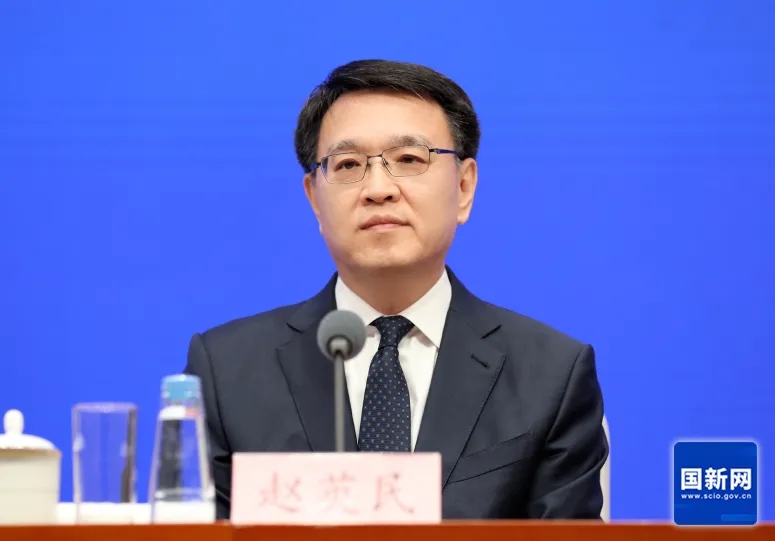
The content of the questions answered by the reporter is as follows:
Zhao Yingmin: Thank you for your question. The carbon market is an important measure to use market mechanisms to control greenhouse gas emissions and achieve the goal of carbon peak and carbon neutrality, and it is also an internationally accepted climate governance policy tool. The CPC Central Committee and the State Council attach great importance to the construction of the carbon market, and in July 2021 and January 2024, the national carbon emission trading market and the national greenhouse gas voluntary emission reduction trading market were launched successively, which together constitute China's national carbon market system, and the construction of the carbon market has made positive progress and results. To sum up, it can be said from four aspects:
First, the legal and regulatory system has been basically completed. The State Council promulgated the Interim Regulations on the Administration of Carbon Emission Trading, and the Ministry of Ecology and Environment, together with relevant departments, formulated 33 rules and regulations for carbon emission accounting verification, registration, and transaction settlement, initially forming a multi-level and relatively complete system of laws and regulations.
Second, the infrastructure support system has been basically completed. The "National Carbon Market Information Network" has been established, a national carbon emission allowance and greenhouse gas voluntary emission reduction registration and trading institution has been established, and infrastructure such as registration, trading settlement and management platforms has been built and stably operated.
Third, the data quality and management capacity of the carbon market have been greatly improved. Establish a normalized supervision mechanism for the quality of carbon emission data. Using big data and other technologies, a complete set of data quality supervision system has been explored, which has greatly improved the efficiency of supervision and significantly improved the quality of carbon emission data. In addition, the scientific and standardized data accounting standards and methods of the national carbon market also lay a solid foundation for carbon footprint management.
Fourth, the national carbon market has achieved a steady start and operation, and the market vitality has been steadily improved. As of the end of August this year, the cumulative trading volume of the carbon emission trading market reached 476 million tons, with a turnover of 27.9 billion yuan, and the carbon price fluctuated at about 90 yuan per ton, which was generally at a reasonable level. At the beginning of this year, the national voluntary greenhouse gas emission reduction trading market was launched, which attracted the attention of all parties at home and abroad, fully demonstrating the effectiveness and importance of mobilizing the whole society to actively participate in carbon reduction, pollution reduction, green expansion and growth through market means.
Statistical accounting of carbon emissions is the basis for managing and controlling greenhouse gas emissions. In recent years, we have continued to organize the compilation of national and provincial greenhouse gas inventories, regularly publish unified and authoritative emission factors at all levels and types, and continue to improve the carbon emission statistical accounting system for energy activities and industrial processes, providing basic support services to meet the multi-purpose carbon emission accounting needs of all sectors of society. In May this year, we jointly issued the "Implementation Plan on the Establishment of a Carbon Footprint Management System" with 14 ministries and commissions, clarifying 22 key tasks in 4 aspects.
In the next step, in accordance with the decisions and arrangements of the CPC Central Committee and the State Council, we will improve the carbon emission statistical accounting system, further expand the coverage of the carbon market, release more methodologies, include more participants, strictly supervise the quality of carbon market data, and strive to build a more effective, dynamic and internationally influential carbon market.
Next article:CCTV Finance × Sany Heavy Industry: Infrastructure construction continued to speed up in August!
Related testimonials
CCTV Finance × Sany Heavy Industry: Transportation construction continues to heat up! In May, the infrastructure was full of bright spots →
2025.06.17
CCTV Finance × Sany Heavy Industry: Infrastructure results are released! Anhui is soaring, and the equipment of the western port has become a "dark horse"
2025.05.19
China's installed wind and solar capacity has historically surpassed that of thermal power
2025.04.28




0 comments