

Qin Haiyan: Break the "technology lock-in", accelerate the development of green power fuels, and help the goal of carbon neutrality
2024.10.24
Polaris Wind Power Grid
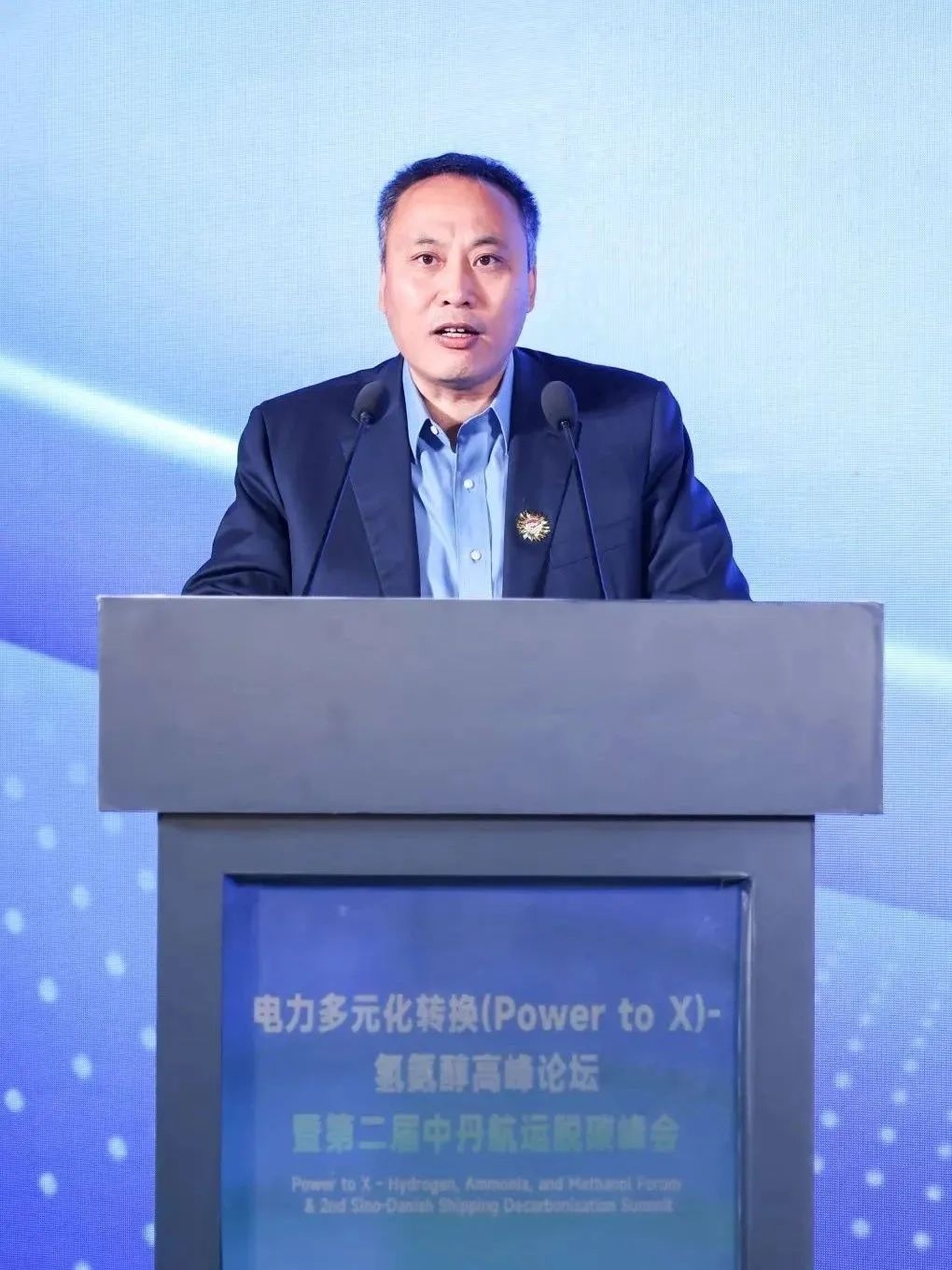
At present, achieving carbon neutrality has become a mainstream value of the international community. Electrification of end-use energy, with electricity from renewable energy sources such as wind and solar, is a realistic path to achieve carbon neutrality. Zero-carbon power system is the foundation for other sectors and society as a whole to achieve carbon neutrality. In this context, the power system is ushering in a huge change, and wind power and photovoltaic power generation will account for more than 80% or even 100% in the future power system. According to Zhang Shuwei's book Power Systems in Transition: Ontology and Epistemology, this will be a highly diverse, flexible, low-carbon (to zero-carbon) power system, with a huge amount of local wind and photovoltaic capacity many times more than the maximum load to meet most of the electricity needs. Relevant studies show that the installed capacity of wind power and photovoltaic power needs to reach 3~8 times of the maximum load to meet the power demand at all times, and at the same time realize that more than 80% of the electricity comes from renewable energy, so as to achieve the goal of decarbonization of the power system. In this power system, there will inevitably be a large amount of excess power during the trough of the system and during the peak period, and their marginal cost will be zero. In order to make full use of these zero-carbon and cheap electricity, "Power to X" is a realistic and feasible pathway, that is, through a system with electricity to hydrogen as the core, renewable energy power generation is converted into hydrogen, and then combined with subsequent chemical processes to produce green ammonia, green methanol, etc.
However, there are always many obstacles to the diffusion of an innovative technology, and the first obstacle to be overcome is the "technology lock-in effect". The so-called technology lock-in refers to the promotion obstacles caused by the high cost of introducing advanced technology into the market and the low awareness compared with traditional technology. For a long time after the invention of new technologies, they faced the problems of high cost, poor performance, and lack of competitive advantage compared with existing technologies. If the technology cannot be translated into a concrete product in the market, bring economic value to the inventor, and gradually build a business ecosystem that attracts more people to improve the technology and reduce the cost low enough, then it will be difficult for the technology to be promoted and used, no matter how much future potential the technology has. One way to break the "technology lock-in" is to allow entrepreneurs to continuously improve the technology in specific application scenarios. At the beginning of the birth of technology, it is up to entrepreneurs with a keen sense of the market to find the right application scenarios, so that the technology can make money, so that the technology can continue to polish, so that it gradually matures, the cost continues to decrease, and then realizes larger-scale application until it is universalized. In his book Industry and Civilization, Zhang Xiaoyu called this process the "funnel-horn" model, and breaking the "technology lock-in" was to get through the "embarrassing period" of technology. Examples of this abound throughout human history. The first steam engines were very heavy and rudimentary, and could not be rotated, only running piston movements, and could not be used in the transportation industry. But it found a suitable scenario for itself in the coal mine, as a pumping machine for mine drainage. Entrepreneurs also earn money from it, so that they can continuously improve the technology. It was not until more than 60 years later that Watt introduced a new practical steam engine, and the steam engine was increasingly used as a power machine in industry, transportation and other fields, which had a significant impact on the development process of human society. The early steam locomotive was frequent, slow, and inefficient, but it also had a place in coal mines for coal transportation. This is due to the fact that the transport route from the pit to the warehouse is fixed, making it ideal for rail traffic. And coal mines can provide fuel for steam locomotives, which will hardly increase the cost for coal mines, and can also save a lot of labor costs. After more than 20 years of testing and improvement, steam locomotives began to be used for long-distance railway transportation. At the beginning of the development of the oil industry, no one could have imagined that it would one day become a major fuel in the transportation sector, but oil has found its own specific application - lighting, and has generated income from the lighting market, creating conditions for the oil industry to continuously improve its extraction and smelting processes. More than 20 years later, with the advent of internal combustion engine vehicles, oil was quickly used on a large scale in the transportation sector.
Breaking the "technology lock-in" can also be achieved through the introduction of government policies. The government creates a certain market space through institutional arrangements, and relies on the market to drive technological progress and cost reduction. For example, in China, the reason why wind power and photovoltaic can achieve today's development achievements and become the cheapest electricity is to rely on a series of industrial policies such as the "Renewable Energy Law" issued by the state in the past 20 years to provide an appropriate market scale. At present, the cost of green electricity fuel is still high, the technology is not mature enough, and it is also facing the risk of "technology lock-in effect". This obstacle can also be overcome through the introduction of mandatory policies to create a market for green electricity fuels.
Internationally, the International Maritime Organization (IMO) adopted the internationally binding "2023 Ship Greenhouse Gas Emission Reduction Strategy" in July 2023, which clarifies that international maritime greenhouse gas emissions will peak as soon as possible, and take into account different national conditions to achieve net zero emissions around 2050. The European Union issued Directive 2023/1805 in September 2023, which requires the use of renewable and low-carbon fuels in shipping. According to Directive 2023/959 issued by the European Union, the shipping industry will be included in the European Union's Emissions Trading System (EU ETS) from January 1, 2024. This has forced shipping companies to accelerate the replacement of traditional fuels with green electric fuels, thus opening up the market space for green electric fuels on a global scale. The global shipping industry is expected to demand 137 million tonnes of green methanol by 2040. The expansion of the market will help to promote technological progress and improve the economics of green electric fuels.
China should seize such an opportunity to promote the development of green power fuels from application demonstration to commercialization and industrialization through policy means. China has a significant advantage in the development of green power fuels, and the three northeastern provinces of China and the eastern region of Inner Mongolia are rich in scenery, biomass and water resources. Excellent port conditions are conducive to the construction of a green marine fuel transshipment base.At present, the cost of wind power in these areas has dropped to 0.15~0.20 yuan/kWh, and it is expected to be further reduced to 0.12~0.15 yuan/kWh by 2025.It is hoped that the state will start from the top-level design and introduce policies to include the shipping industry in the carbon emission trading market, open up a certain market space for green power fuels, promote technological progress through market pull, and reduce its costs. It is suggested that local governments, shipping companies, new energy enterprises, methanol enterprises, equipment manufacturing enterprises and engineering companies should form a consortium to jointly promote green power fuel to pass the "embarrassing period" as soon as possible. Among them, local governments should coordinate all kinds of resources to support the construction of equipment manufacturing, new energy project development, and electric fuel production projects, so as to ensure the stable supply of new energy power and biomass. Shipping companies should sign long-term agreements to purchase the right amount of green methanol at an affordable price in the early stage, and gradually expand the market size to support technological progress and reduce costs, so as to lock in low prices in the future. Equipment manufacturing enterprises and engineering companies should make full use of the window period formed by policy support and market pull, start from the application demonstration, increase technology research and development efforts, and gradually realize large-scale construction. Set up an industrial development fund to support the industry to carry out technology research and development, demonstration project construction, etc. All parties will work together to promote the commercialization and industrial application of green electric fuels to break the "technology lock-in effect", and create a "new Middle East" that produces green electric fuels in the three northeastern provinces of China and the eastern region of Inner Mongolia in the next decade. Relying on this, renewable energy resource-rich areas will be able to make full use of the advantages of zero-carbon and cheap renewable energy, form a new model of regional economic and social development based on the development and utilization of renewable energy (ROD model), and promote regional economic development by vigorously developing new energy industries, building strategic emerging industrial clusters, building zero-carbon industrial parks, and building zero-carbon industrial systems.
Related testimonials
CCTV Finance × Sany Heavy Industry: Transportation construction continues to heat up! In May, the infrastructure was full of bright spots →
2025.06.17
CCTV Finance × Sany Heavy Industry: Infrastructure results are released! Anhui is soaring, and the equipment of the western port has become a "dark horse"
2025.05.19
China's installed wind and solar capacity has historically surpassed that of thermal power
2025.04.28




0 comments