

In 2016, the intensive release of infrastructure planning drove the steady recovery of construction machinery
2017.01.21
2016, the first year of the "13th Five-Year Plan", is also a year of new ideas, new measures and new business formats. Looking back on this year, the development of China's construction machinery industry has been ups and downs, from the continuous decline in the first half of the year to the recovery after the third quarter, showing an unusual growth curve, which makes the industry excited while also thinking about the changing factors of the market.
According to the analysis of industry insiders, the main reasons for the recovery of construction machinery are the following three aspects: the growth of downstream fixed asset investment, the low base effect of last year's sales, and the mandatory implementation of the national three standards. Among them, the growth of fixed asset investment has become the main factor in this round of recovery. According to the Bureau of Statistics, from January to November 2016, the national investment in fixed assets (excluding rural households) was 538548 billion yuan, a nominal increase of 8.3% year-on-year.
The entire development of the construction machinery industry is inseparable from the support of national policies and the stimulation of economic policies. China's construction machinery industry is an important part of China's equipment manufacturing industry, an important force in China's infrastructure construction, and plays an important and positive role in the construction of railways, highways, electric power, water conservancy, nuclear energy, chemical industry and urbanization. Below, I will review the results of infrastructure investment in 2016 and the release of various plans and policies to prepare for the development in 2017.

In 2016, the growth of infrastructure investment had a significant driving effect
In 2016, the growth of infrastructure investment had a significant driving effect
National Development and Reform Commission: In 2016, a total of 1,704.4 billion yuan of fixed asset investment was reviewed
The National Development and Reform Commission held a press conference on January 12 to release the macroeconomic operation and respond to hot issues. In December 2016, the National Development and Reform Commission approved a total of 23 fixed asset investment projects, with a total investment of 184 billion yuan. In 2016, a total of 227 fixed asset investment projects were approved and approved, with a total investment of 1,704.4 billion yuan.
As for the progress of 12 major national project packages, as of the end of November 2016, the total investment of 12 major project packages in 12 categories has been 7,656.5 billion yuan. 48 special projects and 502 projects have been started.
The investment in fixed assets in transportation increased year-on-year
In 2016, the national railway industry fixed asset investment completed 801.5 billion yuan, put into operation 3,281 kilometers of new lines, 46 new projects, new investment scale of 550 billion yuan, by the end of 2016, the national railway operating mileage reached 124,000 kilometers, including more than 22,000 kilometers of high-speed railways.

The investment in fixed assets in the national railway industry reached 801.5 billion yuan
From January to November, the fixed asset investment in railways, highways, waterways and civil aviation totaled 2.57 trillion yuan, a year-on-year increase of 7.7%. Among them, the investment in highways was 1.64 trillion yuan, a year-on-year increase of 9.2 percent, and it is expected to complete 1.78 trillion yuan for the whole year, exceeding the target of 1.65 trillion yuan, and the investment in waterways and other construction was 170.3 billion yuan, a year-on-year increase of 9.3 percent, and it is expected to complete 189.4 billion yuan for the whole year. Civil aviation completed an investment of 65.5 billion yuan, a year-on-year increase of 3.1%, and is expected to complete 77 billion yuan for the whole year.
Rail transit investment ushered in a "blowout"
Since the beginning of this year, the National Development and Reform Commission has approved the recent construction or adjustment plans of rail transit in 11 cities, including Jinan, Nanning, Chengdu, Hohhot, Nanchang, Nanjing, Changchun, Wuhan, Beijing, Tianjin and Shenzhen, with a total investment of 953.09 billion yuan. Among them, Jinan and Hohhot are the first cities approved to build subways, and a total of 39 cities across the country have been approved to build subways.

Rail transit investment ushered in a blowout
The 40th city to build a metro will also be created soon. According to the information disclosed by the National Development and Reform Commission, new urban rail transit plans for Wuhu, Anhui Province and Luoyang, Henan Province will be approved in the near future. Whether it is Wuhu or Luoyang, it will change the history of non-provincial capitals in inland provinces without subways. It is expected that by 2020, the number of cities that meet the national standards for building subways will also increase from the 39 that have been approved to about 50.
The investment in real estate development was 9,338.7 billion yuan
From January to November 2016, the national real estate development investment was 9,338.7 billion yuan, a nominal increase of 6.5% year-on-year, and the growth rate was 0.1 percentage points lower than that from January to October. Among them, residential investment was 6,258.8 billion yuan, an increase of 6.0 percent, and the growth rate increased by 0.1 percentage points. Residential investment accounted for 67.0% of real estate development investment.
The Belt and Road InitiativeThe results have been remarkable
By the end of November, more than 70 countries and international organizations had actively participated in the Belt and Road Initiative, more than 30 countries had signed cooperation agreements on the Belt and Road Initiative, and more than 20 countries had already cooperated in production capacity. Some analysts estimate that the total output value of the construction industry in countries along the "Belt and Road" can reach 5.91 trillion US dollars, which is 1.72 times that of China.
In terms of foreign contracted projects, from January to November, Chinese enterprises signed 7,367 new contracts for foreign contracted projects in 61 countries related to the "Belt and Road", with a new contract value of 100.36 billion US dollars, a year-on-year increase of 40.1%, accounting for 52.1% of the new contract value of China's foreign contracted projects in the same period; The turnover was US$61.63 billion, a year-on-year increase of 7.5%, accounting for 46.6% of the total in the same period.

Investment in road construction increased
Judging from the current focus on the "Belt and Road" cooperation countries, infrastructure construction such as highways and railways will be developed first, and related supporting industries, such as steel, cement, and construction machinery and equipment, will also usher in development opportunities. Among them, the China-Pakistan Economic Corridor has launched a package of major projects, and major progress has been made in the construction of the Jakarta-Bandung high-speed railway, the China-Laos railway, the Gwadar port, the second phase of the China-Pakistan-Karakoram Highway, the double-track project of the China-Russia crude oil pipeline, the China-Russia and Central Asia oil and gas pipelines, and the port of Piraeus in Greece.
With the deepening of the "Belt and Road" strategy at the national level, it has provided a strong boost for the overseas export and production capacity cooperation of construction machinery, compared with the current "over-developed" domestic market, covering more than 60 countries and regions, with a total population of 4.5 billion along the "Belt and Road", there are more opportunities. Among them, led by Sany Heavy Industry, they have overseas layout, set up factories, and deeply cultivated internationalization, and have achieved gratifying results, and the proportion of overseas in the main revenue has continued to increase, opening up new space for performance improvement.
Planning and policy release to stimulate infrastructure investment
The 13th Five-Year Plan for transportation investment was introduced
In the first half of this year, the "13th Five-Year Plan" for infrastructure investment such as transportation has become the main theme, and the national and local infrastructure investment plans have been intensively introduced.
In terms of railways, the "13th Five-Year Plan" period will accelerate the construction of major projects such as trunk railways, high-speed railways, intercity railways, and interconnected railways in the central and western regions, with 30,000 kilometers of new railways in five years, including 11,000 kilometers of high-speed railways, and it is expected that at the end of the "13th Five-Year Plan", the total mileage of the national railway business will reach 150,000 kilometers.
In terms of highways, the "13th Five-Year Plan" period will focus on the implementation of highway networking projects, national and provincial trunk line upgrading projects, rural highway smooth safety projects, 430,000 kilometers of new highways in five years, 30,000 kilometers of new and reconstructed highways, it is expected that at the end of the "13th Five-Year Plan", the total mileage of highways in the country will exceed 5 million kilometers, of which the total mileage of highways will reach 150,000 kilometers.

Civil aviation is expected to complete an investment of 77 billion yuan throughout the year
In terms of water transportation, during the "13th Five-Year Plan" period, we will accelerate the construction of a maritime power, build a golden waterway of the Yangtze River, and promote the transformation and upgrading of ports. 500 new deep-water berths will be added to coastal ports in five years, and it is expected to reach 2,610 in 2020. In five years, 4,500 kilometers of new and improved waterways have been added, and 19,000 kilometers of high-grade inland waterways have been basically completed.
In terms of civil aviation, during the "13th Five-Year Plan" period, the airport layout system will be further improved, the coverage will be expanded, the network structure will be optimized, and the national comprehensive airport system will be built. More than 50 new airports will be added in five years, and the total number of civil transport airports in the country is expected to exceed 260 in 2020.
The Beijing-Tianjin-Hebei "13th Five-Year Plan" was issued
In February 2016, the "13th Five-Year Plan" period of the Beijing-Tianjin-Hebei National Economic and Social Development Plan (hereinafter referred to as the "Plan") was issued and implemented, which is the national * 5656 cross-provincial and municipal regional "13th Five-Year Plan", which is of great significance for breaking the "one acre and three points of land" mindset of the three provinces and cities, and further enhancing the integrity and synergy of development. It is understood that Beijing, Tianjin, and Hebei Province have deliberated and approved their respective "13th Five-Year Plan" national economic and social development plans under the guidance of planning.

The Beijing-Tianjin-Hebei "13th Five-Year Plan" was issued
The "Medium and Long-term Railway Network Plan" was promulgated, and the project was accelerated
In July 2016, the National Development and Reform Commission, the Ministry of Transport and the China Railway Corporation jointly issued the Medium and Long-Term Railway Network Plan. According to the plan, by 2020, the scale of China's railway network will reach 150,000 kilometers, including 30,000 kilometers of high-speed railways, covering more than 80% of large cities. The principle of new projects in the planning of the main corridor of high-speed railway adopts the standard of 250 kilometers per hour and above. By 2025, the scale of the railway network will reach about 175,000 kilometers, including about 38,000 kilometers of high-speed railways. By 2030, China will basically realize internal and external interconnection, inter-regional multi-road unimpeded, provincial capital high-speed rail connectivity, rapid access to prefectures and cities, and basic county coverage.
A three-year action plan for transportation was issued
In May 2016, the National Development and Reform Commission and the Ministry of Transport jointly issued the Three-Year Action Plan for the Construction of Major Transportation Infrastructure Projects. The Action Plan pointed out that from 2016 to 2018, it is planned to focus on promoting 303 railway, highway, waterway, airport and urban rail transit projects, involving a total investment of about 4.7 trillion yuan, of which 2.1/1.3/1.3 trillion yuan in 2016/2017/2018 respectively.

A three-year action plan for transportation was issued
"13th Five-Year Plan" just started, domestic investment will be "heavy" to the construction of transportation infrastructure, which is closely linked to the infrastructure of the construction machinery industry, can be described as a great news. The "Action Plan" launched this time covers a total of 303 projects of railways, highways, waterways, airports and rail transit, of which urban rail transit is the highlight of *5655 and is ushering in intensive construction. In the next three years, the number of new urban rail transit projects will be 51/33/19 (23 new projects in 2015), with a new mileage of 1274/695/416 kilometers, involving a total investment of 9098/4804/257.6 billion yuan (the explosive growth of new construction in 2016 is mainly due to the failure of some projects originally scheduled to start in 2015 on time, and some projects originally scheduled to start in 2017 were advanced to 2016), totaling 1,647.8 billion yuan. Considering that the unfinished investment in projects under construction is about 1.2 trillion yuan, investment is expected to grow rapidly in the next three years.
The Belt and Road Initiative was officially announced
On March 28, 2016, the National Development and Reform Commission, the Ministry of Foreign Affairs and the Ministry of Commerce jointly issued the Vision and Actions for Jointly Building the Silk Road Economic Belt and the 21st Century Maritime Silk Road. The plan proposes that China will follow the direction of the "Belt and Road", rely on the international corridor on land, take the central cities along the route as the support, and take the key economic and trade industrial parks as the cooperation platform to jointly build the new Eurasian land bridge, China-Mongolia-Russia, China-Central Asia-West Asia, China-Indochina Peninsula and other international economic cooperation corridors; At sea, key ports are used as nodes to jointly build smooth, safe and efficient transportation channels.
The Outline of the Development Plan for the Yangtze River Economic Belt was issued
In June 2016, the Outline of the Development Plan for the Yangtze River Economic Belt (hereinafter referred to as the "Outline") was distributed to 11 provinces and cities along the Yangtze River. At present, the specific content of the "Outline" has not been officially announced, but according to the news from all parties, the "Outline" has some new proposals for the development of the Yangtze River Economic Belt, and has set two strategic goals for 2020 and 2030, and the negative list system and ecological compensation will likely receive more attention.

The Outline Development Plan for the Yangtze River Economic Belt was released
The construction plan for underground pipelines and sponge cities was launched
Since 2015, the sponge city pilot has been launched. Last year, 16 places, including Qian'an, Baicheng, Zhenjiang, Jiaxing, Chizhou, Xiamen, Pingxiang, Jinan, Hebi, Wuhan, Changde, Nanning, Chongqing, Suining, Gui'an New Area and Xixian New Area, entered the list of 5,656 sponge city pilot projects. On April 27, 2016, 14 cities, including Beijing, Tianjin and Dalian, entered the second batch of pilot lists. Up to now, a total of 30 cities in two batches have entered the pilot list, and more than 130 cities have formulated sponge city construction plans.

The sponge city construction pilot was launched
It is estimated that the investment cost of sponge city construction is about 100 million yuan ~ 150 million yuan per square kilometer. In order to support the construction of sponge cities, it is understood that for the selected pilot cities, the central government special reward and subsidy standards are: 600 million yuan per year for municipalities directly under the central government, 500 million yuan per year for provincial capitals, and 400 million yuan per year for other cities.
Related testimonials
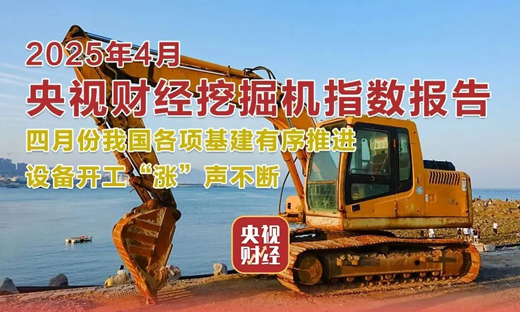
CCTV Finance × Sany Heavy Industry: Infrastructure results are released! Anhui is soaring, and the equipment of the western port has become a "dark horse"
2025.05.19
China's installed wind and solar capacity has historically surpassed that of thermal power
2025.04.28
Breakthroughs have been made in the challenges of customization and high precision, and new progress has been made in the intelligent production of high-end equipment
2025.03.24




0 comments