

What are the factors for the recovery of downstream demand + structural adjustment of construction machinery in 2017
2017.03.03
At the beginning of 2017, a good news came, whether it was excavators, loaders and other types of construction machinery sales in January, or the country's large-scale infrastructure investment planning, have added a strong fire to the construction machinery industry in winter, and with the arrival of large orders from major enterprises, the recovery trend of China's construction machinery industry has been unstoppable.
According to the industry website, since the beginning of this year, Sany Group's sales orders have come one after another, and the market demand situation is gratifying. Road Machinery,Motor gradersOrders exploded in January, doubling over the same period last year; HAECO orders have been scheduled for the second half of the year.
The development of China's construction machinery industry is inseparable from the support of national policies and the stimulation of economic policies. In 2016, the policies and measures related to China's construction machinery industry, "The Belt and Road" and "supply-side reform", "iron foundation" and "real estate", "13th Five-Year Plan", "new rural construction", "urbanization" and "Made in China 2025" were frequently mentioned, and these policies benefiting the industry also brought strong support for the development of the construction machinery industry. However, while rejoicing in the recovery of the industry, we should also look at market changes rationally and fully understand the recovery factors, so as to prepare for future market control. The following is the editor's analysis of the remarks of all parties, and sorted out the factors for the recovery of China's construction machinery industry in 2017.

Both winter and warming have cause and effect
To understand the factors behind the industry's recovery, we must first review the reasons for the industry's downturn, because the two complement each other and have cause and effect. Since 2011, China's construction machinery industry has begun to enter the downhill road, entering the "painful period" of industry adjustment, the main reasons include the following aspects: with the fall of 4 trillion investment, the reduction of engineering volume, insufficient start caused by lack of demand, overcapacity, excessive ownership and over-development of the market caused by the imbalance between supply and demand, under the joint effect of the two aspects, China's construction machinery inevitably encountered the industry "winter".
In the face of weak demand, China's construction machinery industry began a five-year adjustment, and the industry is also suffering from worries and expectations. In this situation, the transformation has become an effective strategy to break through the predicament, and construction machinery enterprises have begun to work hard to adjust their own structure and accumulate strength for future development. Nowadays, with the elimination of backward and excessive production capacity and the application of energy-saving and environmental protection, intelligent high-tech and other technologies, with the improvement of supply-side reform and user demand, China's construction machinery industry has gradually been liberated from the pattern of structural lesions, which has become an important foundation for this recovery.
Factor 1: The recovery of domestic downstream infrastructure
Since 2016, the growth rate of China's various economic indicators has rebounded, and major infrastructure construction projects such as the Belt and Road Initiative and the Yangtze River Economic Belt have been implemented one after another, promoting the demand of the infrastructure industry to continue to stabilize, and the construction machinery industry has also shown signs of recovery.
In 2016, fiscal and monetary infrastructure investment remained high, with an annual growth rate of 15.7%, becoming an important support for stimulating investment and steady economic growth, of which the annual growth rate of new construction and construction projects reached 20.9% and 10%, a significant increase of 15.4 and 5.7 percentage points compared with 2015; After five consecutive years of decline and contraction, industry demand has begun to come out of the trough and continue to pick up.
Entering 2017, infrastructure investment continued the investment tone of growth in 2016, and a new round of major project investment across the country has started one after another, and the amount of proposed investment projects is larger, ranging from 100 billion to trillions at every turn. For example, the total investment in major projects in Hubei, Shaanxi, Henan and other places has reached more than 100 billion yuan, the total investment of the first batch of major projects in Jiangsu is as high as 1.33 trillion yuan, and Shaanxi will arrange 600 provincial key projects in 2017, with a total investment of 3.7 trillion yuan and an annual investment of 482 billion yuan.
According to the data released by the provinces, 23 provinces have announced the 2017 fixed asset investment target, with a cumulative investment of more than 40 trillion yuan, plus the provinces that have not yet been announced, it is estimated that the total investment in various places this year is not less than 45 trillion. Such a large amount of investment has provided a confident environment for the recovery of China's construction machinery industry, and has become one of the most important factors.
Factor 2: PPP injects vitality into infrastructure investment
After talking about infrastructure investment planning, let's talk about funding. In the past few years, China's infrastructure investment has also been a lot, but the construction machinery industry has continued to stay in the "cold winter", the main reason is the problem of funds. The actual start of construction is insufficient, and the implementation of funds is not in place, which has led to the lack of infrastructure investment, so how to solve the financial problem will become the top priority of whether the industry can recover. PPP began to enter the harvest period in 2016, and it reached its peak in 2017, injecting vitality into future infrastructure investment.
In 2016, PPP will account for more than 25% of infrastructure investment, which will significantly boost the demand for construction machinery products in the next three years. In 2016, the scale of PPP projects exceeded 4 trillion yuan, and the investment amount in the procurement and implementation stage reached 2-3 trillion yuan, accounting for 15% of infrastructure investment, and the average order growth rate of many central enterprises exceeded 20%.
Users concerned said that it can be seen from the data that in less than three years, China has become the world's *5655 PPP market. It is estimated that the scale of PPP projects in 2017 may reach 3.8 trillion yuan, which will usher in the peak period of landing. In 2017, the NDRC's approval and promotion of PPP projects will be further strengthened. Judging from the division of labor and recent policies issued by the NDRC in the PPP field, traditional infrastructure fields such as energy, agriculture, forestry, highways, and major municipal projects will become the focus of the NDRC's PPP project work in 2017.
With the increase of national financial funds and policy banks to support infrastructure, the enthusiasm of state-owned enterprises to participate, and the PPP model of local governments through the industrial fund to attract a large inflow of social capital, the financial pressure on infrastructure investment will be greatly eased, because the construction cycle of infrastructure construction projects is generally in 3-5 years, will have a significant supporting role in the next 2-3 years of demand for construction machinery products, especially excavators, concrete machinery, cranes and other projects related to infrastructure projects are expected to maintain rapid growth in orders.
Factor 3: Huge opportunities for overseas engineering and infrastructure investment
The Asian Development Bank (ADB) released a report on February 28 highlighting the need for large-scale public infrastructure construction and upgrading, as well as a significant increase in private investment, to invest up to $26 trillion by 2030 in emerging economies in Asia, from transportation networks to clean water.
Together with countries along the Belt and Road, China is actively planning the construction of six major economic corridors. As the global infrastructure construction has entered a new accelerated cycle, the upward cycle of the construction machinery industry has come. In 2016, China's Belt and Road Initiative accelerated significantly, with Chinese enterprises signing new contracts worth US$126.03 billion, up 36% year-on-year, and direct investment in countries along the Belt and Road reaching US$14.53 billion.
In 2016, China's core infrastructure projects and transactions in 66 countries along the "Belt and Road" exceeded 493 billion US dollars, involving seven major industries, including public utilities, transportation, telecommunications, society, construction, energy and environment. Among them, China accounted for one-third of the total amount of investment. Due to the low level of economic development and backward infrastructure of countries along the Belt and Road, but the advantages of population and land resources are obvious, and the infrastructure investment opportunities are huge. The 65 countries along the Belt and Road cover nearly 70% of the world's population, but the general level of economic development is low, and 49 of them are developing countries, with a large need for infrastructure reconstruction. Benefiting from international competitiveness such as policy stimulus, product cost performance, and strong EPC capacity, the overseas export sales performance of the construction machinery industry is expected to grow rapidly.
Warming factor four: the elimination of old and backward construction machinery
The elimination cycle of construction machinery and equipment is generally 8-10 years, from the peak of the industry in 2007-2009 to the present, a large number of construction machinery and equipment are facing the demand for scrapping and upgrading. Bureau of China Construction Machinery Industry Association statistics, the current construction machinery industry market ownership of more than 7 million units, and the old equipment accounted for more than 1/3, about 2.4 million units facing elimination, which will provide market space for the sales of new machines, is conducive to further stimulating industry demand.
Warming factor five: China III. emission standards are mandatory
The Ministry of Environmental Protection officially implemented the "National Three Standards" on April 1, 2016, which provides policy support for alleviating the pressure on the production capacity of the construction machinery industry. This mandatory environmental protection requirement for the construction machinery industry, means higher pollution emission control standards and higher production costs, but also means that a number of production enterprises that do not meet this requirement will be forced to withdraw from the market. With the implementation of the mandatory emission standards of the Ministry of Environmental Protection for construction machinery in China III, an inventory plan for 7 million construction machinery and equipment in use is kicking off. This is the 5656 steps taken by the China Construction Machinery Industry Association to withdraw 2.4 million old construction machinery and equipment from the market. The survival of the fittest will surely bring new opportunities for construction machinery.
In 2017, the investment curtain has been opened, after 5 years of adjustment, China's construction machinery industry is tending to be healthy, in the face of many benefits and industry recovery, in the face of rapid growth orders, we still need to be rational, do not take the detour in the past, advocate the concept of healthy development to jointly promote the development of China's construction machinery industry better and faster.
Related testimonials
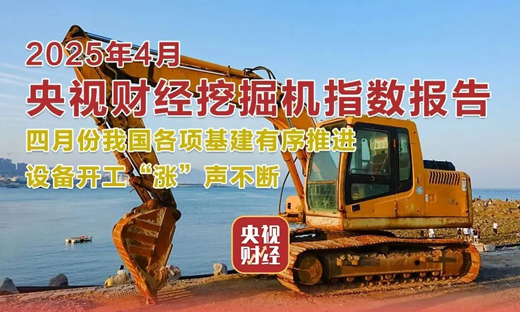
CCTV Finance × Sany Heavy Industry: Infrastructure results are released! Anhui is soaring, and the equipment of the western port has become a "dark horse"
2025.05.19
China's installed wind and solar capacity has historically surpassed that of thermal power
2025.04.28
Breakthroughs have been made in the challenges of customization and high precision, and new progress has been made in the intelligent production of high-end equipment
2025.03.24




0 comments