

Warming thermometer to understand China's economic development from the side of the excavator market
2017.03.14
Through big data and Internet of Things technology, the index formed around the excavator can become one of the important references for the State Council to formulate economic policies, and the downward can observe China's cold and hot in infrastructure construction, especially in the field of PPP infrastructure.
Before September 2016, excavator machinery manufacturers encountered a freezing point in sales performance; After that, there were signs of stabilization and "rejuvenation". In the first two months of 2017, sales were booming, and the production task of Sany Heavy Industry excavators reached 70 units in a single day. But even with this production intensity, it still can't keep up with the speed of sales, so that "it's hard to find a machine". What is the reason behind this?
Xiao Youliang, secretary of the board of directors of Sany Heavy Industry, said, "These are obvious signals of the start of infrastructure construction. He said that from the analysis of sales, in Yunnan, Guizhou, Guangxi, Guangdong, Chongqing and other regions, infrastructure construction is mainly roads and bridges, and this mainly benefits from the country's PPP construction investment.
Sales are booming
On February 24, the official website of Sany Heavy Industry posted a message of "orders have doubled, customers come to urge orders: Sany workshop is busy": "Now, the sales of Sany excavators across the country can be described in two words - out of stock. At present, only the company's February data shows a year-on-year sales growth rate of almost 300%.
According to the data of the China Machinery Industry Union, the cumulative sales of excavators in the industry in 2016 were 70,320 units, a year-on-year increase of 24.8%. The growth rate of excavator sales turned positive for the first time since 2013, and 11,354 units were sold in 2015, of which the year-on-year growth in December was as high as 75.0%.
Data show that in 2016, the growth rate of the added value of the national machinery industry showed a trend of rising month by month, with a year-on-year increase of 9.6% from January to December, an increase of 4.1 percentage points over the growth rate of the previous year, and 3.6 percentage points higher than the national industrial growth rate in the same period.
According to the above data, in 2016, the national machinery industry achieved a total of 24.55 trillion yuan in main business income, a year-on-year increase of 7.44%, an increase of 4.12 percentage points over the same period last year, and 2.53 percentage points higher than that of the national industry in the same period. Judging from the trend of the whole year, the growth rate has increased month by month and has always been higher than the national industrial average in the same period.
Excavator sales got off to a good start in 2017. According to the data recently released by China Machinery Federation, in January 2017, 25 excavator companies included in the statistics sold more than 4,500 excavators, a year-on-year increase of 54%.
February's sales data was even more surprising, with a total of 14,530 domestic excavator sales that month, a year-on-year increase of 297.65%. Among them, Sany Heavy Industry's excavator sales exceeded 3,600 units, a year-on-year increase of more than 360%.
Sany Heavy Industry said that judging from the "busyness" of the current production lines and distributors, in 2017, the company's product sales are expected to hit a new high in five years, from a "good start" to a "red year".
Where is the main sales flow of excavators?
According to the research report of Soochow Securities, in January 2017, according to the sales analysis, 1,436 units were sold in the eastern region, 1,033 units were sold in the central region, and 1,478 units were sold in the western region. The sales volume in the east grew faster than the same period last year, with a year-on-year increase of 77%, a year-on-year increase of 49% in the central region, and a year-on-year increase of 51% in the west.
According to the data from the online network of China Machine, from the perspective of sales area, in January 2017, Jiangsu, Shandong, and Yunnan sales were in the top three, all exceeding 300 units, and the top three provinces in 2016 were also these three provinces.
"The leader urges production, the manager urges the transfer of goods, and some customers in Jiangsu even come directly to the workshop to see the equipment urging orders." Yang Shaoyong, deputy manager of the assembly department of Sany Heavy Industry, said that in order to ensure supply, the workers in the factory have been busy recently.
The motivation behind it
As we all know, excavators are mainly used in municipal construction such as real estate, rail transit construction, highways, mining, and infrastructure construction such as water conservancy and hydropower. At present, a model that is consistent with the main use of excavators is being vigorously promoted across the country is PPP. The so-called Public-Private-Partnership (PPP), that is, the joint public-private partnership, is a project operation mode in public infrastructure.
The excavator is not only a "thermometer" to observe the popularity of the PPP model, but also one of the important reference indicators for the State Council to formulate infrastructure construction policies.
At first, in order to solve problems such as excavator failure, Sany Heavy Industry used Internet of Things technology to count whether the equipment was started, how long the operation time was, how much work was done, how much the parts were worn and how much fuel consumption was, and so on. In the continuous technological update, each machine is connected to a huge network through on-board controllers, sensors and wireless communication modules, and finally forms a huge database. These are the core data of the bottom layer, which are closely related to the construction volume of infrastructure construction.
After visiting the big data platform of Sany Heavy Industry, the relevant leaders of the State Council are required to submit the relevant construction machinery operation data every month, and at present, the submission cycle has been shortened to half a month. It can be said that the State Council and relevant departments of the PPP model of understanding and the introduction of relevant policies are not unrelated to the index of excavators.
After the Third Plenary Session of the 18th Central Committee of the Communist Party of China proposed to "allow social capital to participate in the investment and operation of urban infrastructure through franchising and other means", the PPP model began to be popularized. However, "PPP reform is still facing problems and challenges that need to be solved urgently, such as the lack of conceptual change, unbalanced reform and development, low participation rate of private capital, non-standard implementation of some projects, and imperfect legal guarantee and policy convergence." Shi Yaobin, head of the PPP leading group and vice minister of the Ministry of Finance, once bluntly said that there are five major problems in PPP. This has led to a lot of chaos in the promotion of the PPP model.
In 2016, Premier Li Keqiang repeatedly emphasized the issue of PPP at executive meetings. At the executive meeting on July 7 of that year, four contents were deployed, all of which were related to PPP.
According to the fifth quarterly report recently released by the PPP Center of the Ministry of Finance, at the beginning of 2016, the number of PPP projects and the amount of investment were 6,997 and 8.1 trillion yuan, respectively, and by the end of December, the two figures were 11,260 and 13.5 trillion yuan, respectively, and the number of projects and investment have increased significantly, increasing by 61% and 66% respectively.
According to the above-mentioned 5th quarterly report of the PPP Center of the Ministry of Finance, from the perspective of the geographical distribution of landing projects, there are 222 in Shandong, accounting for 16.4% of the total number of landing projects; Xinjiang 146, accounting for 10.8%, ranked second; It was followed by 88 in Zhejiang, 81 in Sichuan, and 77 in Henan.
In the sorting according to the number of warehousing projects, Shandong ranks second with 1,087, and Guizhou is ahead of Shandong, with a total of 1,788. The rest, while Xinjiang, Sichuan, and Inner Mongolia ranked behind Shandong with 852, 848, and 828 respectively.
Yunnan's PPP project investment is the third largest in the country. According to the above-mentioned quarterly report, Guizhou, Shandong, Yunnan, Henan and Sichuan ranked among the top five in terms of investment in warehousing projects, with 1,603.4 billion yuan, 1,222.9 billion yuan, 1,030.2 billion yuan, 953.8 billion yuan and 918 billion yuan respectively, accounting for 42.4% of the total investment in warehousing projects.
Spring River Plumbing Duck Prophet. This "duck" is the excavator.
Since the second half of 2016, many companies, especially social capital, have clearly felt the recovery in the field of infrastructure construction. This sign of recovery is first manifested in the sales of excavators.
Wang Jinxing, deputy secretary-general of China Construction Machinery Industry Association, said that excavators in 2016 showed a growth trend, a reason for the excavator from 2011 to decline for four or five years, through several years of digestion, as well as the elimination of some excavators, so that excavator sales have increased.
Another reason is that from the end of 2014 to the beginning of 2015, the State Council and the National Development and Reform Commission successively announced documents on the construction of PPP and other infrastructure and began to vigorously promote it, and by July 2016, this trend was transmitted to excavators and other manufacturing enterprises.
According to the analysis of Haitong Securities, the popularity of China's urban infrastructure and PPP has mainly promoted the rapid sales of excavators. One of the reasons for the sharp increase in excavator sales since the second half of 2016 is that PPP projects including municipal engineering and rail transit have been started.
According to the analysis of Soochow Securities, Sany Heavy Industry has benefited from the recovery of the industry, and is expected to be more optimistic in 2017, mainly because the government investment has not yet ended, the demand for excavator renewal is about to explode, and the government supports PPP projects.
At the beginning of 2016, China Merchants Securities upgraded the investment rating of Sany Heavy Industry to "highly recommended", due to the steady recovery of the operating rate of construction machinery stock equipment after the Spring Festival in 2016. Due to the sudden increase in sales of excavators in the second half of 2016, China Merchants Securities said in the research report, "Excavators began to sell out in August." ”
According to the above information on the official website of the Yunnan Provincial Department of Finance, at the "2017 Yunnan PPP Project Promotion Conference" held on February 14, a total of 106 projects with a total investment of 399.6 billion yuan were displayed, covering 14 fields such as transportation infrastructure, municipal public facilities, medical and health care, water conservancy projects, affordable housing projects, and ecological environmental protection. Therefore, Yunnan has also become one of the main sales areas of excavators.
Related testimonials
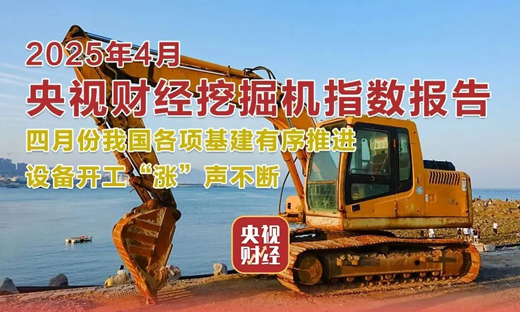
CCTV Finance × Sany Heavy Industry: Infrastructure results are released! Anhui is soaring, and the equipment of the western port has become a "dark horse"
2025.05.19
China's installed wind and solar capacity has historically surpassed that of thermal power
2025.04.28
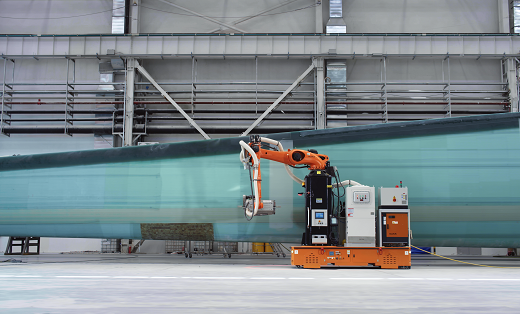
Breakthroughs have been made in the challenges of customization and high precision, and new progress has been made in the intelligent production of high-end equipment
2025.03.24




0 comments