

China Securities Network: Sany Heavy Industry set up a factory in Germany, and made in China to go to Germany
2011.10.13
Transferred from: China Securities Network Source: Caixin "New Century" Reporter: Cao Haili
How to upgrade Made in China? Changing "Made in China" to "Made in Germany", and then opening up the entire European and surrounding markets, Sany Heavy Industry tried to find a way out for Chinese machinery manufacturing enterprises to enhance their brands
Frank Weidtmann's impression of *5656 is grim and unsmiling. His voice was deep, but there was no lack of German humor. "We attach great importance to the Sany Heavy Industry project, in addition to its large investment scale, and I will not allow my competitors to get this project." He laughed that this has slowly become a personal ambition of his, "Sany must find a better place to invest, and this is here." ”
Weidmann is the project manager for the China project at the Investment Agency of Nordrhein-Westphalen (NRW). One day four and a half years ago, the Investment Promotion Agency received an e-mail from Sany Heavy Industry Group, based in Changsha, Hunan Province, China, expressing its desire to find a vacant land in Germany to invest in a factory.
This e-mail became the starting point for the marriage between NRW and Sany Heavy Industry. North Rhine-Westphalia, and even Germany, is not the only choice for Sany at this time. Sany has also visited other European countries, such as Spain, but it has ended up in Germany.
"In the whole of Europe, the capital of construction machinery should be said to be in Germany, where it is easier to find talent. Secondly, Germany itself is also one of the markets for *5655. He Dongdong, Vice President of Sany Heavy Industry Group and Managing Director of Sany Heavy Industry Germany, explained the reasons for choosing Germany.
The reason for Sany to choose NRW was the service. "We were comparing several states at the time." "NRW's strategy is to use Chinese investors as the main source of investors, so it has spent a lot of effort to attract Chinese investors, and relatively speaking, we have a lot of service and support," He said. ”
Weidmann is all too clear about the efforts of NRW in this process. As the project manager, he has always been in close contact with Sany Heavy Industry, and tried his best to meet any investment-related requirements put forward by the other party, including helping to suggest the location of the factory, and accompanying him everywhere to see the land; Full assistance and assistance are also provided in terms of visas for Chinese employees. In order to win Sany Heavy Industry, Weidmann and the mayor of Bedburg, a subsidiary of North Rhine-Westphalia, flew to Shanghai in person, just for a conversation; Ms. Hua Pei, General Manager of the North Rhine-Westphalia Investment Promotion Agency, flew to Changsha twice with a local politician to visit the headquarters of Sany Heavy Industry, hoping that they would come to NRW to invest in the state......
This series of efforts has come to fruition.
In May 2008, Sany Heavy Industry Co., Ltd. (600031. SH) has registered a German subsidiary in Cologne, the economic and cultural center of North Rhine-Westphalia, and plans to invest 100 million euros to build a factory and set up a research and development center in Bedburg, an old and quiet town, about 40 kilometers from Cologne, covering an area of 24.8 hectares.
On January 29, 2009, Chinese Premier Wen Jiabao and German Chancellor Angela Merkel attended the signing ceremony between the Sany Group and North Rhine-Westphalia in Berlin during his visit to Germany. On June 20 this year, Sany Heavy Industry Bedburg Industrial Park, Germany, which had been in preparation for three years, chose to hold an official opening ceremony before Premier Wen Jiabao's visit to Germany.
For Weidmann, the personal ambition not to let competitors succeed is not without principle. "The important thing is that Sany has created a lot of jobs because it is a manufacturing company, and once it is established, it will create a lot of jobs." Weidmann explains the fundamental reason why NRW is putting so much effort into attracting Sany Heavy Industry.
At the beginning of September this year, Caixin "New Century" learned in an on-site interview in Germany that Sany Heavy Industry Germany has about 160 employees, of which more than 80% are German employees. He Dongdong revealed that by the end of this year, the number of employees should reach at least about 200. The plan for the future is to create as many as 600 local jobs within five years. This is very attractive to the local area.
Sany Heavy Industry is not a *5656 Chinese company that has invested and built factories in Germany, but it is a manufacturing project of *5655 so far. To some extent, Sany may provide an example for Chinese machinery manufacturers to enter the European market and improve brand quality.
■ Investment in Germany has surged
Germany has not traditionally been a place to attract Chinese to do small business, as Germany is one of the countries with strictest immigration policies in European countries. Not even a single city here has a Chinatown, unlike Paris or Venice, where immigrants from Chinese traders gathered decades ago.
However, Germany, as the locomotive of the European economy and the export power of the global machinery manufacturing industry, cannot be ignored by Chinese enterprises.
Until 10 years ago, Germany attracted the most investment from China in the sales departments of foreign trade enterprises and manufacturing enterprises. They usually have one or two sales offices in Germany, and their main task is to help domestic companies sell their products. Occasionally, they would hire Germans for sales and marketing, but they didn't create much local employment. Even though the Hamburg Economic Promotion Agency claims to have 400 Chinese companies in Hamburg, most of them are still trading and sales companies, including the European headquarters of the Baosteel Group.
With the sustained rapid growth of China's economy, the increasing volatility of the world economy, and the active implementation of the "going out" strategy of Chinese enterprises, the trend of China's outbound investment has been unstoppable. The laws and regulations here are also quite perfect, and there are few loopholes to exploit – and the status of Chinese companies is starting to change.
Ten years ago, Shenzhen Huawei entered Germany and has established three German subsidiaries, including Huawei Düsseldorf GmbH, which was established in Düsseldorf, North Rhine-Westphalia, which is Huawei's R&D headquarters in Western Europe and covers nine Western European countries. At present, the number of Huawei employees in Germany has reached 1,500, and many middle and senior managers are foreigners.
In November 2009, the Governor of North Rhine-Westphalia and the President of British Telecommunications Vodafone, also a Huawei customer, visited China and visited Huawei's Shanghai subsidiary. During this period, a letter of intent was signed to establish a joint innovation center in Düsseldorf. Ralf Kreikamp, Huawei's European marketing director, joined Huawei three years ago as an employee of Vodafone Europe.
Compared with Huawei's repeated political obstacles in other important markets, such as India and the United States, Huawei's entry into Germany seems to be very smooth. Gerlind Heckmann, head of the East Asia Economic and Trade Division at the German Federal Ministry of Economics and Technology, told Caixin that the German government understands Huawei's "military background" and has "monitoring", but it will not hinder investment. In general, the German government does not set any political threshold for Chinese companies to invest in Germany.
As more and more countries compete for Chinese investment, Germany's federal and local governments have stepped up their efforts to attract Chinese investment. Ms. He Ling admits that Germany is under "competitive pressure" from other countries to attract Chinese investment to a certain extent, and even different states compete fiercely with each other.
According to the Bundesbank statistics in 2011, as of 2009, direct investment in Germany from China amounted to 629 million euros. This is not a large amount, especially since compared to other countries, China ranks only 28th in terms of cumulative direct investment in Germany. However, the number of Chinese direct investment projects in Germany has been on the rise in recent years. According to the statistics of the fDi Markets database in 2010, before 2008, the number of Chinese direct investment projects in Germany did not exceed double digits every year, and in 2008 it reached 21 at once. In 2009 and 2010, it grew linearly at 66 and 78 respectively, second only to the United States (excluding acquisitions and acquisitions). In addition to Sany Heavy Industry, there are also larger enterprises such as ZTE, Haier, and Greatview Packaging. As a result, Chinese direct investment in Germany accounted for 23 percent of the total global investment in 2010. Germany has become the country with the largest number of Chinese direct investment projects in the world.
According to information provided by Trade & Invest – the official investment promotion agency of the German federal government – Chinese direct investment in Germany is mainly concentrated in the fields of machinery manufacturing and electronics, information and communication technology, and renewable energy.
Cao Yi, senior public relations manager in charge of China business at the German Federal Trade and Invest Agency, said that Chinese companies choose to invest in Germany due to several factors: Germany is the market of Europe's 5655, and its GDP accounts for 20% of the total of the 27 EU countries; Germany is the world's leading exporter, once at the top of the list; Germany's workforce is well-trained and motivated; Germany has a fast and convenient transport infrastructure, from Berlin, you can fly to almost all places in Europe in three hours; Germany is also one of the R&D talent pools in Europe's high-tech sector*5655; Chinese companies can improve their product quality and brand by using "Made in Germany".
This is the main reason why Sany chose Germany. "'Made in Germany' is not a brand, but a strength." He Dongdong said in an interview with a group of Chinese journalists, including Caixin's "New Century" reporters.
■ The challenge of fusion
However, making it in Germany does not mean that a Chinese brand will be immediately accepted by the market. Sany's main market has always been China, and in the past few exports to Europe. Although the European market accounts for nearly a quarter of the global market in the field of heavy machinery, it is difficult to sell locally if it does not meet the standards due to the high technical barriers in Europe. This is also the reason why Sany chose to build a factory in Germany.
He Dongdong admits that the *5655 challenge faced by Sany Germany in the early days was discrimination and prejudice against Chinese manufacturing brands – low cost and low quality. But he expressed confidence that he could meet this challenge, that is, he hoped that by building a factory in Germany, doing R&D in Germany, manufacturing by German workers, and managed by German managers, he could break brand discrimination. At the beginning of production, they will let customers try it first, and after they are satisfied with the product and service, they will gradually expand. "We're completely fighting positional warfare here, pushing forward step by step." He Dongdong said.
At present, the Sany Germany*5656 project has been launched, with an investment of more than 40 million euros; The second phase is already in the bidding process and is expected to start by the end of the year, when the 100 million euro investment will be exhausted; The third installment may be added.
*Phase 5656 will be the main productionConcrete machineryequipment, which is the advantage of Sany Heavy Industry. In 2009, Sany became the world's largest concrete pump manufacturer with a sales volume of 5,655 – of course, the main sales contribution came from China. Next, Sany Heavy Labor Union develops different products according to the European market.
Sany Group's earnings expectation for German companies is to break even in three years. Regarding this goal, He Dongdong said that although there is pressure, he is also confident, because German companies are expected to maintain the same gross profit as domestic companies. In the 22 years since its establishment, Sany Group's sales revenue has grown at an average annual rate of 50%, reaching 50.2 billion yuan in 2010.
When he came to invest in Germany, He Dongdong was asked a lot of questions, how to deal with the challenge of high costs. Among them, the labor cost is 7 to 10 times that of China, and the total cost is about 30% higher than that of China. Many foreign manufacturers have invested in China, but Sany has "gone the other way". To this, He Dongdong replied, "They don't assume a premise, that is, whether you sell here as Chinese products or German products here." Because we are developing here, I completely achieve German quality, then I can sell at the price of German products, and the price is high. ”
If sold in German quality, the price can be up to 50% higher than the domestic sales price. As a result, the gross profit can be maintained at the same level as in Japan. Of course, the number of sales by German companies will certainly be much smaller than in the Chinese market. But for Sany Heavy Industry, it is important to establish its own brand image through "Made in Germany", and to open up the entire European and surrounding markets, such as North Africa, the Middle East and other markets.
Most of the mainstream economic media in Germany have given positive reports and evaluations to Sany Heavy Industry in Germany, except for one time - a German newspaper said that Sany Heavy Industry's funds were not in place and were false investments. Sany Heavy Industry invited the reporter to the factory to take a look around the field, and afterwards the newspaper posted a correction in an inconspicuous place. Despite this, He Dongdong was still quite pleased. "It should be said that we are still welcomed and accepted by the local government and local people, including the industry, which means that we now feel integrated into the local society here."
However, it will take time to truly integrate. As Weidmann said, for Chinese companies, the difficulties and problems faced by *5655 are to readjust to a new culture and a new economic model. Of course, it's not impossible to adjust well, but it takes some time and a certain amount of patience.
He Dongdong has a deep understanding of this. In 2006, Sany Heavy Industry invested in the establishment of *5,656 overseas production bases in Punai, India, specifically for the production of low-end products for the Indian market, which was built from scratch by He Dongdong. In his view, cultural differences exist in any country, but whether it is the cultural difference between China and India, or the cultural difference between China and Germany, the important thing is to strengthen communication and mutual understanding.
He Dongdong pointed out that Chinese enterprises emphasize execution, and there will be monitoring of the work process, including the completion time. However, European companies don't like this kind of excessive intervention in the process, "you discuss this goal in detail first, don't interfere with me in the process, we just hand over the results, this is a big cultural difference." ”
Another difference is that in China, it is usually a parallel project, because basically all enterprises are start-ups, so they are engaged in development while recruiting people, and promote them in parallel; But in Europe, enterprises are very mature and accustomed to tandem, that is, to do it step by step.
Taking recruitment as an example, He Dongdong said that he would recruit all positions at the same time, because he knew that there would be this demand. However, if you think according to German standards, you should first recruit the marketing boss, and then the marketing boss will recruit the department manager, and then the department manager will pick people. It is difficult to say whether these two modes of operation are good or bad, the parallel efficiency is high, and the series fusion force is strong, but it needs to sacrifice time. "However, you have to constantly weigh this matter, so it often becomes a synthesis, a fusion of things."
■Avoid Handan toddlers
He Dongdong used to work as an interviewer every day, but it often became him "being interviewed".
"The other person will ask a lot of questions, and they will ask them in great detail – your strategy, your brand strategy, how you want to do it." He Dongdong said, "He thinks you are still feasible, the strategy is still clear, and he thinks that he can pass his pass, so he thinks about whether to join Sany." I always joke about 'being interviewed'. ”
Just like when an airplane starts, it was difficult at first, and the candidate kept watching Trinity. "Including in the process of building our factory, almost all the candidates will run around in advance to take a turn. He goes on a field trip to see your performance, which is *5656 points. Secondly, they do a lot of research to gather our background and get to know our clients. Until he was convinced that Sany had really invested here, the speed was fast. ”
"You have to be kind to the people recruited in front of you, and there will be an exemplary effect, and the people in the back will have many channels to ask." He Dongdong said.
Christiane Linkenback, Marketing Director at Sany Germany, joined the company in December 2010 after 10 years of experience in the field of construction machinery in Germany. She told the Caixin New Century reporter that she came to apply for the job after seeing a job advertisement in the newspaper, and she also asked a lot of questions during the interview. After *5656 interviews, she decided to work at Sany.
Lincoln Buck recalled to Caixin's New Century reporter that after the interview, she was thinking that Sany was preparing to create 600 jobs, and the company she worked for at the time was preparing to lay off 600 people.
In order to allow foreign employees to better understand Sany's corporate culture and Chinese culture, Sany will arrange for all senior executives and key employees to go on a trip to China and take them to visit the company's headquarters. "Through the trip to China, I think we were able to gain a basic respect from our employees." He Dongdong said.
Ms. Lincolnbacker remembers her trip to China vividly, and when she visited Trinity's headquarters, she found 100 mechanical equipment vehicles parked outside – Sany sells 1,200 units a month. In a large manufacturing company in Germany, only one such car is usually parked outside.
Lincolnbacker was unimpressed by the cultural differences in work processes between China and Germany, and from her personal point of view, she found it more difficult to adapt to the "spontaneous" of the Chinese. The day before the Friday we met, before leaving work, she received instructions from He Dongdong to prepare some banners, slogans, and huge curtains for the Mid-Autumn Festival next Monday. "If he could have told me a week in advance, I would have been much more relaxed." Lincoln Buck said that the cost of buying materials could also be lower.
Still, at least for now, Lincolnback is happy with her new job because Trinity has given her plenty of autonomy. She believes that Sany Germany uses local suppliers and the factory is built by German companies, breaking the inherent prejudice of Germans against Chinese, such as Chinese love to buy cheap goods. She said that many German engineers have tried the prototype made in Germany by Sany and feel that it is very good, and there are orders from Italy.
Chinese enterprises have invested in Germany, from the original trade-oriented, to the current Sany-represented factory production. He Dongdong believes that this is the need for China's industrial upgrading. In fact, China has long been a big manufacturing country, and what is lacking is only the brand, and this is where the added value lies. "Actually, what really matters to me is not this factory, but the brand of Sany. The fact that I sell Sany products here to customers in Germany is actually part of the strategy to support the brand. In He Dongdong's view, the real way out for Made in China is to boldly develop its own brand, rather than blindly relying on temporary cost advantages to do OEM.
Sany Germany got off to a good start, but He remained cautious. He said that the more successful manufacturers in the world are now counted as one in Germany and one in China, "but it is like two schools, one is Shaolin boxing and the other is Wudang school; One is the inner boxing and the other is the outer boxing. For example, the introduction to these two boxing techniques is different, and if you can integrate it well, you will be invincible in the world; If the fusion is not good, it will be a toddler in Handan, and the four are not like it. It's also possible. ”
Next article:Hunan Daily: Fortune (Chinese Edition)*New Release, Sany Awarded "*Appreciated Chinese Company"
Related testimonials
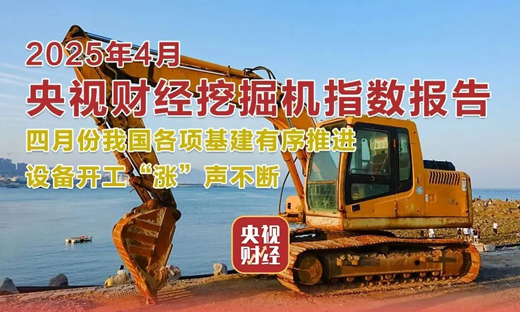
CCTV Finance × Sany Heavy Industry: Infrastructure results are released! Anhui is soaring, and the equipment of the western port has become a "dark horse"
2025.05.19
China's installed wind and solar capacity has historically surpassed that of thermal power
2025.04.28
Breakthroughs have been made in the challenges of customization and high precision, and new progress has been made in the intelligent production of high-end equipment
2025.03.24



0 comments