

Sany Heavy Industry has set up a factory in Germany to reflect the interaction between China and Europe
2011.08.02
The Globe and Mail website article on July 1: How did China "take over Europe"? (Reporter David Rowe from Berlin)
Last week, Mr. Liang celebrated the completion of a $140 million factory.
This construction machinery factory is located in Bedburg, near the Rhine, not far west of Cologne, the industrial center of Germany.
Liang told reporters that around the world, Chinese products are seen as cheap and inferior, "and I am determined to change that." ”
In this way, China came to Germany, which is known for its first-class manufacturing, because it itself fully intends to become first-class. Government officials celebrated China's foray into Germany.
This week, the pomp and circumstance resurfaced, as Chancellor Wen Jiabao arrived in Berlin by plane and was greeted by Chancellor Angela Merkel. Wen Jiabao brought 13 ministers. Together, these leaders signed 14 new agreements. China has struck a new business deal worth $15 billion, including the purchase of 62 new Airbus A320 jets.
Both leaders used the term "new chapter" to describe their deepening relationship. The relationship comes at a time when some observers fear that the emerging Asian power is preparing to make inroads into Europe.
Germany's renowned economic prosperity owes much to China. China is now Germany's third largest trading partner, after France and the United States.
Today, almost 1 in 4 Volkswagen cars is sold in China. As an emerging economy, China has a huge demand for precision machine tools made in Germany to equip its production plants.
Germany is very grateful to China. But as the new Sany Group plant on the Rhine demonstrates, China is also ambitiously involved in German and European affairs – and not just as a trading partner.
In the forecast of a major paper on Sino-European relations to be published this month, the European Council on Foreign Relations wrote: "China is taking over Europe. ”
If Europe were more united now, it would be possible to build a united front to deal with this situation. But individual countries have come to an agreement with China when the situation is in their favor.
"This is not an attack on China," Plesner said. People have access to economic opportunities as much as possible. The question is Europe's strategy on China. This strategy, once in its infancy, is now much more difficult, because countries do not want to wait for the EU to coordinate the united front. ”
Another example of this fragmentation is China's effective hunt for European expertise. If a German steam turbine company wants to sell its products in China, it has to comply with the rules on 70% local content, which in practice means setting up a factory in China and partnering with a local company.
After a few years, the local company had learned a great deal of German know-how and was able to build its own steam turbines to the same standards relatively cheaply. This process is called "involuntary technology transfer".
So far, European companies have embraced this gamble because they have gained access to a huge Chinese market, which means that their overall situation has improved. But the next possible scenario, Mr. Plesner, is that Chinese companies will poach Germans in third-country markets — for example, by selling steam turbines to Latin America — effectively crowding out German products.
At present, China is a vast market. But it will increasingly become a formidable competitor.
Related testimonials
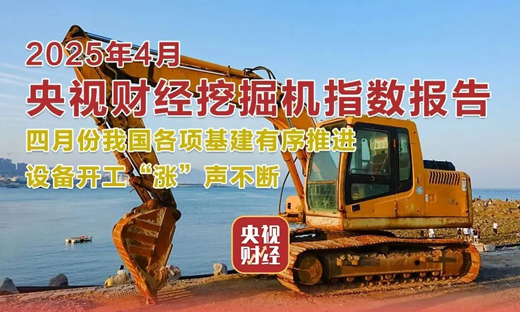
CCTV Finance × Sany Heavy Industry: Infrastructure results are released! Anhui is soaring, and the equipment of the western port has become a "dark horse"
2025.05.19
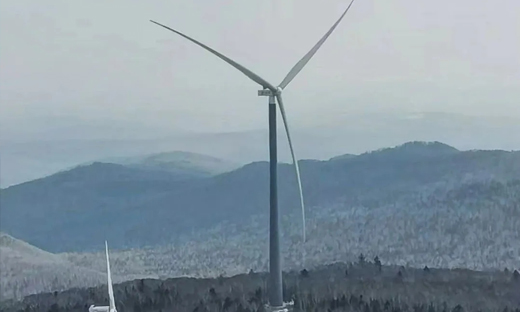
China's installed wind and solar capacity has historically surpassed that of thermal power
2025.04.28
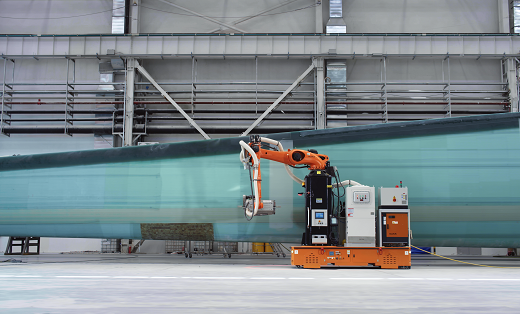
Breakthroughs have been made in the challenges of customization and high precision, and new progress has been made in the intelligent production of high-end equipment
2025.03.24




0 comments