

Big economy and trade: He Dongdong: Why does Sany Heavy Industry deploy in Germany?
2011.10.27
Source: "Big Economy"
Bedburg, North Rhine-Westphalia, Germany, December 2010. With the champagne glass falling from the roof of the factory, the main factory of Sany Germany was topped out. At the same time, it also means that Sany Heavy Industry (600031) has taken another solid step on the road to advancing into the hinterland of Europe.
Rewind the clock to January 29, 2009. Premier Wen Jiabao, who is on a visit to Germany, and German Chancellor Angela Merkel witnessed the signing ceremony between the Sany Group and the German side in Berlin. As the *5655 project invested by Chinese enterprises in Europe so far, Sany Heavy Industry will invest 100 million euros to set up a European R&D center and machinery manufacturing base in Germany. This is also the third R&D and manufacturing base set up overseas by Sany Heavy Industry after India and the United States, and is regarded as one of the four overseas deployment strategies of Sany Heavy Industry's internationalization.
"Sany Germany is positioned in three aspects: *5656, which is a global R&D and manufacturing technology center of Sany Group, which develops and produces products for European customers in accordance with European standards; Second, it is our business headquarters in Europe, which is responsible for the operation of Sany products in the core countries of Europe; Thirdly, yesConcrete machineryThe global management headquarters (outside of China). On September 9, 2011, during the Asia-Pacific Week in Berlin, He Dongdong, chairman of Sany Heavy Industry Germany, said in an interview with the reporter of "Great Economic and Trade".
In fact, it took Sany three years to finally make the decision to invest in Germany. "In the 2008 financial crisis, we suspended all investment activities and reorganized and discussed. In fact, aside from this special factor, the decision this time was quite fast. He Dongdong said.
While other Chinese companies have "bought" local companies through mergers and acquisitions to enter the markets of developed countries, Sany has chosen another way - greenfield investment. To start from scratch is somewhat surprising and even puzzling. However, He Dongdong believes that this is the strategy of Sany Heavy Industry after many analyses.
Although direct investment is carried out at a slower pace upfront, the problem of cultural and technological integration can be avoided. What makes Sany more important is that the know-how gradually formed through research and development in Germany can enable them to master intellectual property rights thoroughly.
Up to now, Sany Germany has completed the first phase of fixed asset investment of more than 40 million euros as planned, and the second phase is also in the process of bidding. Of the more than 160 employees, more than 80 percent of the current employees, including senior executives from R&D, marketing, production and human resources, are from Germany. By the end of this year, Sany Germany will have at least 200 employees.
According to He Dongdong, the third phase of Sany Germany is also being planned, and it is expected that the investment will be increased.
Just 10 days after the interview with Mr. He, on September 19, Sany held an investor presentation to raise HK$26 billion by offering 1.34 billion shares, which will be used to expand its local production capacity in China and expand overseas.
Undoubtedly, Trinity Germany will benefit from this.
From Made in China to Made in Germany
Big Economy: Sany's exports to Europe were not very large before, but why did you decide to come to Europe to establish such a R&D and manufacturing center?
He Dongdong: First of all, Europe itself is a big market, and its market share of construction machinery accounts for about 1/4 of the global share. If you want to become a global company, you have to come to Europe and occupy this market.
Moreover, some of the main competitors of global construction machinery are in Europe, and talents are also gathered here, which represents a high level of development and manufacturing capabilities.
Also, Sany has a lot of suppliers here. In fact, Sany has been purchasing the world's best parts since *5656 days, and a large proportion of them come from Europe.
Therefore, it is necessary to be close to customers, suppliers, and talents, which is why Sany will invest in Europe.
Big Trade: As far as you know, what is the brand recognition of Sany in Europe? Is there a need to reinvent the strategy when it comes to marketing?
He Dongdong: Because the threshold in Europe is *5661, especially the technical barriers, so if you don't meet this standard, it is difficult for you to sell here, and this is one of the reasons why we build a factory here. As for brand recognition, we are in the European counterparts like thunder, everyone knows it, no one knows it. Moreover, this is the *5656th time that a Chinese company has come directly to the doorstep to invest and set up a factory, which is a big contrast compared to before, so it has also caused a very big shock.
Big Trade: Did you choose to settle in Germany from the beginning?
DH: There were a few countries that I had considered before, but to a certain extent, it was a natural thing to end up in Germany. In the whole of Europe, Germany should be the capital of construction machinery, itself one of the markets for *5655, and it is easier to find talent here. In addition, Made in Germany is not a brand, but a strength.
Big Economy: What are the specific challenges encountered by Sany in investing in Germany?
He Dongdong: *5656 is the challenge of "Made in China", after all, Europe is still a little prejudiced against Chinese brands. But building a factory in Germany, doing R&D in Germany, manufacturing by German workers, and managing by German managers is an answer in itself. Our slogan when we opened was "Made in Germany", so that customers could really feel the high quality of Sany products, and we hope that this will break the brand discrimination.
The second is cultural integration, the working habits of China and Germany are not the same, how to integrate the Chinese and German mixed teams into an integrated team, everyone can accept the same corporate culture, this is a big challenge.
The third is the cost, the cost in Germany is really high, the salary is about 7~10 times that of China. Although the cost is much higher than in China, because we develop and manufacture in Germany, we are able to sell European products at a price that is 50% higher. This should maintain a good level of profitability.
Localization strategy
Big Economy: Many companies invest in Germany through mergers and acquisitions, why does Sany choose to build itself? How does Sany consider this cost and benefit?
He Dongdong: Direct investment is a strategy developed by Sany after many analyses. We are direct investments in India, the United States and Brazil. Direct investment may seem slow, but it's actually fast. Why? Because of the early stage of buying land, building factories, and recruiting personnel, this process may last two years, but the final success will be faster. M&A is actually very simple, spend a sum of money to merge it, but then you will encounter some big difficulties, such as cultural integration, strategic matching, including how to manage the team, how to integrate technology. It is easier to form a unified corporate culture in an enterprise established by one, one by one. In addition, all of our know-how are independent intellectual property rights, which we have developed here little by little. From this point of view, we think it will be relatively easier to invest directly.
Actually, I don't deny the path of mergers and acquisitions, but relatively speaking, this is a risky one. Unless you know what to do after the acquisition, and you know what means you can do better than the original. In addition to having cost advantages, it is also necessary to be clear and manageable. So I'm not saying that mergers and acquisitions are not a road, mergers and acquisitions are always a road, but the question is whether the company is ready for mergers and acquisitions, except for money, the strategy is not clear, whether the team can control the company, whether the strategy can be effectively implemented, these are clear, the result is definitely very good. Otherwise, you can't do sand table deduction, so where are the ingredients for your success?
Big Trade: How does it work in terms of recruitment? Recruit yourself or find a headhunter?
He Dongdong: On the one hand, we are looking for headhunters, and on the other hand, we have exhausted all our channels. It's hard to recruit at first, because the German is more conservative and cautious, and he will spend hours asking you very detailed questions, including your brand strategy and company strategy.
Big Trade: You have become the target of selection.
He Dongdong: Yes, he had to pass his pass before he considered whether to join the company. I always joke that when I go to interview people, I mainly get interviewed, and every time I go to interview people, I say that I went out to be interviewed.
Big Economic and Trade: Will the cycle be longer when recruiting people in the early stage?
DH: Yes, it's basically like the concept of airport runway takeoff, which is very difficult at first. One is, you have to show him, in fact, these people are watching us all the time. In the process of building our factory, almost all the candidates will run around in advance and go on a field trip, and he wants to see your performance. Secondly, they do a lot of research to gather our background information and understand our customers. But because we are recruiting mainly peers, they know more or less about Sany's industry status and development, so there is still a certain foundation in this regard. Until he was convinced that Sany had really invested here, the speed was fast.
On the other hand, those who have been recruited before should be treated well, which will have an exemplary effect on future recruitment.
Big Economy: On the issue of company localization, you also talked about it just now, are there any other measures besides what you just said? And you also mentioned that the top management in Europe is basically German, what is the communication between them and the top management in China?
DH: I feel like I'm like a transformer, turning 220V into 110V, that's the concept. I will translate the company's philosophy and characteristics into a way that Europeans are accustomed to or acceptable, and then manage the global business through this German team. It's a transition, a process of transforming. I myself feel a lot of pressure, two different cultures, and the feeling of those of us caught in the middle is the strongest.
This clash of cultures and differences is present all the time. In general, Chinese companies place a strong emphasis on the culture of execution, and there are strict regulations on the process of work meetings, including strict regulations on the completion time of each link. Europeans, on the other hand, don't like this, they will discuss the goals in detail first, but they will ask for no interference in the implementation process, and then just hand over the results. This is a big cultural difference.
The second difference, simply put, is that China's working model is "parallel". In China, basically all enterprises are entrepreneurs, and in the process of starting a business, recruitment, factory construction, and development all need to be promoted in parallel. But in Europe, the enterprise is very mature, it is used to tandem, that is, to do it step by step. For example, I will recruit all positions at the same time, including marketing managers, marketing CEOs, and service engineers. However, according to German standard thinking, the marketing boss should be recruited first, and then the marketing boss should recruit the department manager, and then the department manager should select the subordinates. One in parallel, one in series, in parallel, it takes about a year to build a team, and if it is in series, it will definitely not be able to get up in three years. Of course, if you recruit one level at a time, relatively speaking, the team integration is stronger, but time is a big sacrifice. So it's hard to say whether it's good or bad, but you have to keep weighing it, and it often becomes a synthetic, integrated thing.
I have been communicating with my German colleagues, including ourselves, in fact, now in the world is a relatively successful manufacturer, Germany is one, China is certainly also one, but the two are like two schools, one is the inner boxing, the other is the outer boxing, these two boxing methods are different, if it is well integrated, it will be invincible in the world, and if it is not well integrated, it will be Handan toddler, and it will become four different. In it, actually, you're communicating all the time, you're weighing, you're making concessions, you're combining, so it's a lot of work, and almost everything involves something like that.
What is China lacking? Brand!
Big Economic and Trade Cooperation: Everyone has noticed that the investment of Chinese enterprises in Germany was originally mainly trade-oriented, and now there is a production-oriented enterprise represented by Sany, and this kind of change in investment structure is not a trend from the perspective of Chinese enterprises going out?
He Dongdong: Let me put it another way, China's industrial upgrading. In fact, in terms of manufacturing capacity, including high-quality manufacturing capacity, China has long had. What's missing? There is a lack of brand, and the real added value is in the brand. In fact, the quality of the copycat machine is almost the same, but there is no independent brand, so the profit is very thin, and the company can't come out.
Therefore, don't pay attention to the fact that we are building a factory here, you should pay attention to the fact that we sell the Sany brand in Europe. The real way out for Chinese enterprises is made in China, what do I want to call for? It is to boldly develop its own brand, because there is no problem with the ability, and now it only needs to spend a little energy, spend some time, and bravely play its own brand to the world. As long as you have patience, step by step, step by step, you will definitely be able to do it. China's manufacturing industry, or "Made in China", is truly global, which is a key.
Great Economic and Trade: Do you think the path Sany is taking now can be used as an example worth promoting for Chinese enterprises to go global?
DH: At least that's what I think. We play our own brand, although in Germany, my cost is 30% higher, but my selling price can be increased by 50%, which means that my investment in talent and R&D can be recovered through the market. But if it is an OEM, the increased value is all taken away by foreign brands, and the profit obtained after * is still very meager. With such a thin profit, there is no way to support you to do R&D and branding, you will always work for others in the downstream of the industrial chain, this model will not work, and it will not work. Later, China's labor costs increased, and countries such as Vietnam, Mongolia, and Thailand had lower costs, and the hollowing out became more serious. In fact, this trend has been around for a long time, and there has been a hollowing out of southeastern China. From this point of view, as long as you do a good job in management, don't try to save trouble, bravely stick up a brand of your own, even if it is called a cottage, and then use the manufacturing capacity and strong cost control ability formed over the years, China can completely manufacture its own high-quality products. For the development of China's manufacturing industry as a whole, we must do this.
Related testimonials
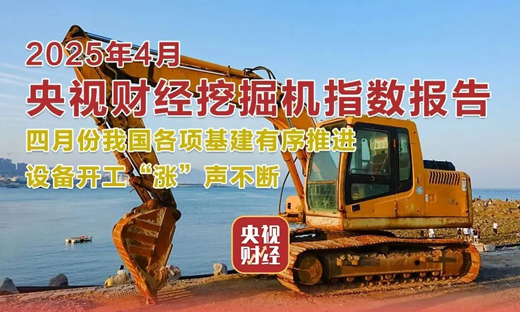
CCTV Finance × Sany Heavy Industry: Infrastructure results are released! Anhui is soaring, and the equipment of the western port has become a "dark horse"
2025.05.19
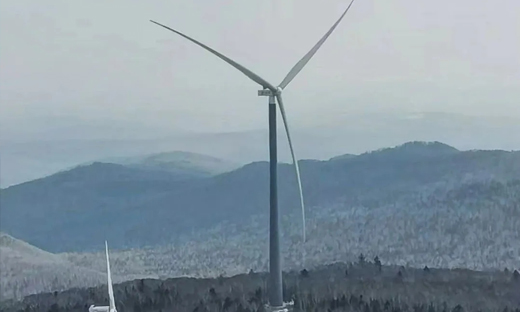
China's installed wind and solar capacity has historically surpassed that of thermal power
2025.04.28
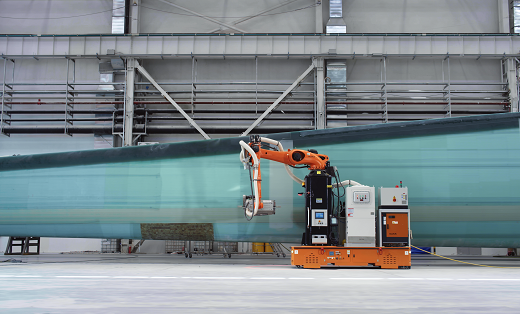
Breakthroughs have been made in the challenges of customization and high precision, and new progress has been made in the intelligent production of high-end equipment
2025.03.24




0 comments