

Chinese and foreign management: Sany "iron-blooded DNA": Liang Wengen * "no opinion" careful person
2012.05.09
Source: Chinese and Foreign Management 2012 No. 5 Author: Sun Chunyan
"Five years ago, I wouldn't have decided to sell Elephant to Sany, but now I realize that there is no hope of competing with a Chinese company like Sany in the future."
At the beginning of 2012, Schlechter, the founder of Putzmeister in Germany, was so emotional after visiting Sany's production workshop and R&D base. Soon after, Sany acquired Putzmeister, known as the "German Elephant", which made Sany even more famous in the international market, where the two sides fought to the death in November 2011 over India's *5656 high-rise, and are now a family.
From that small material workshop 26 years ago to today's international company with a market value ranking 431st among the world's top 500, Sany relies on its fast-chess thinking - clear thinking, bold decision-making, and slow as hatred, occupying the strategic commanding heights again and again with lightning speed. The strong execution of the leadership team behind it, the increasingly perfect management and excellent R&D capabilities make it possible to make everything "fast", and the "fast" is not speculative, but more solid.
Now Sany is accompanied by overseas efforts, and this year it is still in full swing for "sales to break through the 100 billion mark": the company's talent recruitment after the expansion is speeding up, the marketing service department is full of energy, and the senior management meeting is full.
Sany has a dream of "entering the world's top 500", what is it that makes it closer and closer to the dream?
If it is classified as a spirit, it may be called "iron will". Straightforward expression of the mind and personality of publicity; Tolerate mistakes and avoid repeating mistakes; Slow as hatred, the pursuit of the more ...... These are reflected in Sany's corporate culture, management methods, and strategic choices.
However, there is another thing outside the door: the real estate austerity will continue, exports will continue to be sluggish, and the hollowing out of the real industry is becoming more serious. In the construction machinery industry, which is greatly affected by the economic cycle, Sany, which is moving fast, will continue to write more "one"?
China and Chinese companies have paid a huge price for the "impetuous", "speculative", "short-lived" and even "harmful" speed, so in the future, can Chinese enterprises come up with a quality and sustainable speed model?
Internationalization has made many Chinese enterprises fail. Now that Sany, which has obtained *5656 in the domestic market, how to sing this international anthem?
The Internationale, sung on a strong note
At the beginning of April 2012, two months after Sany Heavy Industry acquired Putzmeister in Germany, Sany's headquarters in Changsha was still immersed in joy. Sany employees, who are envied by Changsha people, have more face in front of relatives and friends because of this overseas acquisition. "Sany has become an international company", which is more glorious than "working in a foreign company, and we are more motivated". An employee told the reporter of "Chinese and Foreign Management".
However, in the consideration of founder Liang Wengen, the acquisition is certainly not to save face, but is directly linked to the long-term strategic goals of Sany Group. In Liang's view, if there is no internationalization, Sany is more than a larger self-employed person. In the medium-term planning of Sany Group, the goal of sales of 100 billion yuan should be achieved in 2012, and the overseas market should account for about 30% in 2015 - before Sany's overseas sales accounted for only about 5% of the total, strictly speaking, Sany is not an international company. The acquisition of the German "elephant" at the beginning of the year gave Sany people hope.
Strategy determines the survival of a business. Sany's senior management regards internationalization as an uphill battle that must be fought, and calls it the third venture after its start-up in 1989 and its IPO in 2003. Sany, which has always focused on endogenous growth overseas, why did it make a quick move this time? Internationalization has made many Chinese enterprises dream of other countries, can Sany's overseas strategy be surprisingly successful?
Stand on the shoulders of the German "elephants".
In fact, Sany has been internationalizing for 10 years, and it has not been smooth.
The numbers don't lie: Sany Group's sales reached 10 billion yuan in 2007 and jumped to 80.2 billion yuan in 2011, while the business performance in overseas markets has been declining. After the outbreak of the global financial crisis, Sany Heavy Industry's overseas business revenue fell from 3.464 billion yuan in 2008 to 2.131 billion yuan in 2010. It was not until 2011 that it rebounded against the trend, and the international business achieved operating income of 3.425 billion yuan, a year-on-year increase of 60.72%.
Xiang Wenbo, president of Sany Heavy Industry, explained that after the crisis in 2008, foreign demand was sluggish, and the growth of China's construction machinery market has exceeded that of overseas markets in recent years.
While this reason is obvious, investment is not always for the sake of waste. Since 2003, Sany has established nearly 170 sales branches around the world, and from 2006 to 2011, Sany has successively invested in the construction of overseas industrial bases in India, the United States, Germany, Brazil and Indonesia.
For Sany, which has been exploring for many years, it is in urgent need of a breakthrough in the overseas market at this time.
Opportunity is merciful. Sany, which has been struggling to find a suitable merger and acquisition target, finally waited for the news of Putzmeister's intention to sell at the end of 2011, which of course also attracted the attention of domestic and foreign construction machinery industry giants including Zoomlion, Caterpillar and Komatsu Manufacturing.
* In the end, Schlechter, the founder of "Elephant", and Norbert Xiao Yi, the CEO of "Elephant", subverted their previous impression of China's world factory after communicating and visiting Sany, and dropped the hammer on Sany.
Schlechter believes that the cooperation between our two companies is 'an inevitable event.'" Tang Xiuguo, president of Sany Group, proudly told Sino-Foreign Management, "During the whole process, Norbert Xiao Yi, CEO of 'Elephant', said that he would only negotiate with Sany and not with anyone else, and that's it." ”
In fact, for Sany, the acquisition of the German "elephant" has deeper strategic considerations.
Around 2005, Sany Group has made some progress in internationalization, but it is concentrated in South Asia, the Middle East and North Africa, and its market share is still small. At this time, out of strategic considerations, Chairman Liang Wengen and President of Sany Heavy Industry Xiang Wenbo decided to export products to Europe, after all, Europe is the source and heart of construction machinery, and its market share of construction machinery accounts for more than 1/4 of the global share.
However, Europe has formed a situation of Putzmeister, Komatsu Manufacturing and Caterpillar, compared with these competitors, Sany Heavy Industry still has a big gap in terms of first-end technology and research and development, international operation and management experience, and understanding of the European business environment.
But in order to achieve internationalization, the European market must be won. Therefore, in 2008, Sany chose to build a factory in Germany, the capital of construction machinery. The challenge of advancing into Germany and setting up a new factory was enormous, and as Dongdong He, Managing Director of Sany Germany GmbH explains, even the recruitment process became "an interview with the candidate for several hours". Eliminating local people's prejudice against Chinese brands has become a *5655 challenge.
Now, the situation is completely different.
"In the construction machinery industry, Sany Heavy Industry is like a young man under the age of 20, but compared with Putzmeister, who is in his 50s, Sany lacks rich experience, global brand influence, high quality and long-term accumulation of advanced technology." Xiang Wenbo said. According to the data, Putzmeister has set up production bases in the United States, Brazil, India, Spain, Russia, South Korea and other countries, and has set up marketing outlets in more than 50 countries such as Italy, Canada, Argentina and Malaysia. The acquisition of Putzmeister is equivalent to changing Sany's position in the construction machinery competition pattern. Some analysts pointed out that Sany Heavy Industry's first overseas acquisition will increase its overseas sales by about three times.
"With this acquisition, Sany owns or becomes a *5653 brand without dispute." Xiang Wenbo said about this.
This merger and acquisition will speed up Sany's internationalization process by 5 to 10 years.
Strategy first
"Corporate strategy needs to follow the general trend, and Sany, which focuses on endogenous growth, will not give up such a good M&A opportunity." Talking about the new merger and acquisition that caused a sensation in the industry, Tang Xiuguo, president of Sany Group, said to "Sino-foreign Management".
Of course, it is not just a merger and acquisition case, perhaps you can understand it as the starting point of Sany's new strategy.
In fact, the first two start-ups in Sany's history, whether they were start-up in 1989 or listed in 2003, all benefited from the correctness of strategic choices.
In 1986, Sany's predecessor was just a welding material factory located in a small mountain village in Lianyuan, Hunan, which started by manufacturing synthetic diamond and special materials. Although the profits were very high, Liang Wengen, the founder of "ambition", was very distressed: both Hunan private enterprises, Sany and Yuanda Air Conditioning started almost at the same time, why Yuanda was able to achieve 2 billion yuan at once, while Sany was less than 100 million yuan? Even if the national diamond market is monopolized, it is only 1 billion yuan. The reason is that the industrial expansion space chosen by Sany is limited, coupled with the relatively remote location of Lianyuan, the transportation is inconvenient, and the business environment of the enterprise is restricted, so it is impossible to give birth to *5653 enterprises.
In 1991, Xiang Wenbo joined the Sany team, and he and Liang Wengen's ideas coincided, and they both believed that it was urgent to adjust the strategy. After more than two years of research and many user demonstration meetings, Liang Wengen agreed to Xiang Wenbo's "double entry" strategy: enter the central city - Changsha; Enter the big industry - construction machinery industry.
The site selection was also strategically considered. Liang Wengen* finally decided to set the headquarters of Sany in Xingsha Town, Changsha, which was inconspicuous at that time, "This position can be seen by the planes flying overhead, and the trains driving under my feet can be seen, and I want everyone who passes by here to see Sany." Liang Wengen said at a class reunion that year. At present, Changsha Economic and Technological Development Zone in Xingsha Town has developed into a modern industrial base because of the drive of Sany Industrial City. Looking back today, the "double-entry strategy" is a strong support force for the stride to China's construction machinery field after 31 days.
Subsequently, the reform of listing and equity division has become a new starting point for Sany to start a new business. In order for an enterprise to develop and grow, it must have a strong capital market and more financial support, and listing is a good way, and it can even reverse the fate of the enterprise.
The strong three began to try to take the road of listing and financing. On July 3, 2003, in the Shanghai Stock Exchange, Liang Wengen, chairman of Sany Heavy Industry, sounded the gong for the listing of Sany Heavy Industry, and Sany Heavy Industry became a listed company in the construction machinery industry. In 2005, coinciding with the reform of equity division in China's capital market, at that time, the voice of market doubts arose, and Xiang Wenbo made a clear statement to the securities regulatory department: "When Sany was founded, it expressed its desire to make first-class contributions, and we are willing to be the 'experimental field' of China's securities market reform!" On June 10, 2005, Sany's share reform plan - taking the initiative to raise the threshold for reducing shareholdings and making commitments to increase two important shareholding reduction conditions was approved by a high vote, and Sany officially became "China Share Reform * 5656 shares".
Facts have proved that the reform of Sany has greatly promoted Sany to a new level, and the market value has increased by 38 times in 8 years since its listing in 2011, and the stock price has risen more than ten times. In the 2011 Financial Times Global 500 Ranking, Sany Heavy Industry's market value was listed in the world's top 500 for the first time, ranking 431st, becoming the first company in China's construction machinery industry and China's machinery industry to enter the world's top 500 enterprises. "To some extent, the market capitalization ranking can better reflect the competitiveness and brand status of the enterprise than the sales ranking alone." Tang Xiuguo, president of Sany Group, said.
Sany, which has gone through many tests, has now come to its most important node - internationalization. Internationalization has made many Chinese enterprises fail. For a long time, Sany has adhered to the principle of "singing the national anthem first and then singing the internationale". Now Sany, which has achieved the *5656 position in the domestic market, how to sing this international anthem?
After the break
Following the announcement of the acquisition of Germany's Putzmeister at the end of January, Sany made another move in its overseas layout. On February 28, Sany and the international crane giant PALFINGER Group of Austria established two joint ventures, one of the joint ventures - Sany PALFINGER Special Vehicle Equipment Co., Ltd. is located in Changsha, with a total investment of 900 million yuan and a registered capital of 300 million yuan. Another joint venture is located in Austria with a total investment of 4 million euros and a registered capital of 2 million euros. The two joint ventures, each with a 50% stake.
"Sany's overseas strategy has a troika of independent factory construction, overseas mergers and acquisitions, and the establishment of joint ventures." Tang Xiuguo said. Previously, in January 2009, Sany spent 100 million euros to establish a European R&D center and machinery manufacturing base in Cologne, Germany, and in 2012, Sany had two major events: overseas joint ventures and mergers and acquisitions. In the future, Sany will have more products with Made in Germany, Made in USA, and Made in Austria all over the world.
Those who are familiar with Sany know that Sany has a complete set of corporate culture concepts and management models. Will Sany promote it overseas?" Not really, the key is to do a good job of localization. Sany senior management said this. In fact, when Sany built a factory in Germany, it encountered more adaptations: distrust of "Chinese" brands, language barriers, cultural differences in "mixed-race" teams, and so on.
"After we acquired 'Elephant', we basically maintained the original team and overseas marketing channels, and only sent a few managers to enter at the beginning." Sany senior management told the media.
However, in order to avoid the competition between the two brands, in the overseas market, the sales of concrete pumps are given priority to the "Elephant" brand. In addition, although "Elephant" has a perfect global marketing network, but the product is single, Sany will have a rich product line with the "Elephant" pump truck, packaged to the world's major markets, and with a high incentive mechanism and a complete range of products, to promote the sales of "Elephant" marketing personnel. In addition, Sany takes advantage of China's low cost manufacturing to deliver its own parts to the "elephant" to reduce costs.
At the very least, it looks like a very complementary combination. One global*5656 plus one China*5656, the advantages of the two are seamlessly connected. At present, the integration work after the merger and acquisition is in the plan, how to realize the profit of this acquisition *5655, Sany senior management is looking for the *5654 plan.
Maybe don't worry too much about it. "We still have to do it, correct mistakes in a timely manner in implementation, and the same is true for overseas strategies." A senior executive said. This is also an important part of Sany Heavy Industry's "slow as hate" management mechanism, Sany people are prepared to make mistakes, and quickly learn from mistakes and take corrective measures.
"First there is corporate culture, then there is a corporate entity", which is the special place of Sany.
Iron-blooded "DNA"
At half past seven o'clock in the morning, at 5654 o'clock in the morning, the crowd at the gate of Sany Group was already rubbing shoulders. Private cars outside the door are a kilometer away. In addition to the fact that there are many people in the car, there are many handsome guys, and the smiling faces are full of vigor and enthusiasm.
Just an ordinary day, a tide of work.
"Sanyi is a place to do things, and heroes are judged by achievements", "Sany is a big stage, you can play to your heart's content", similar words are almost "everyone's words" in the mouth of Trinity. What impresses "Sino-Foreign Management" even more is that even young employees who have worked in Sany for one or two years can have a good understanding of the company's growth history, leadership style, corporate culture, management methods, etc.
"It turns out that some companies poached Sany's employees, but they didn't do anything big, and the root cause was Sany's corporate culture. I often say that even if someone digs me Yi Xiaogang away, without soil like Sany, I may not be able to achieve a career. Yi Xiaogang, executive president of Sany Heavy Industry, said.
Corporate culture is undoubtedly an important core of enterprise success. However, unlike most enterprises that develop first and keep up with culture, "there is corporate culture first, and then there is a corporate entity", which is what makes Sany special.
Slow as an enemy
While the employees were still bustling at the gate of the group, the directors of Sany were already sitting at the table. "The plan of the day is in the morning", and the best working time of the day is in the morning. Liang moved the executive meeting to the breakfast table.
Sitting here, it is an honor, but also a pressure. If there is a problem with the work you are responsible for, you will be carefully "interrogated" by Liang Wengen, so that you "don't even dare to stretch your chopsticks" at the half-hour breakfast meeting. Therefore, it is said that many people go there after breakfast.
Sany requires "things not to be overnight", and the problems to be solved today are proposed at the breakfast meeting, and we must go back to the meeting to organize discussions and arrange relevant personnel to implement them. Therefore, not only is it not good to eat breakfast, but if things cannot be done, it is not safe to sleep. Not everyone can withstand such pressure. A Sany executive told Sino-Foreign Management that he has been working for Sany for more than two years, which is more than the total workload of the seven years in the original fast-paced foreign-funded company.
For the breakfast meeting, Sany also has a special "Dong character policy". The directors will throw out various crux problems for the development of the enterprise or problems that need to be solved urgently at the front end of the industry, and the relevant departments will record them and implement them specifically, and the implementation will be followed up by special personnel. The "Dong Zi Policy" ensures that the wisdom of the board of directors can be truly implemented and transformed into results.
Slow as hatred, has become Sany's "DNA". In the eyes of Liang Wengen and others, "missing opportunities" without paying attention to speed and efficiency is simply a crime.
Take Sany Heavy Industry as the "*5656 shares" of China's equity division reform, after the decision-makers made a decision, the action of "Sany Heavy Industry" can be described as fast. On April 29, 2005, the China Securities Regulatory Commission (CSRC) issued a notice that the pilot project of equity reform was officially launched. The next day, "Sany Group," the major shareholder of "Sany Heavy Industry," and other shareholders of non-tradable shares submitted a share reform plan to the China Securities Regulatory Commission. On May 8, the China Securities Regulatory Commission determined the pilot list of the first batch of four companies, including "Sany Heavy Industry", and on May 10, "Sany Heavy Industry" took the lead in announcing the equity division reform plan.
There are always two sides to the coin, as the saying goes, "if you want to hurry, you can't reach it", how does Sany solve the contradiction between "slow as hate" and correct decision-making? The answer is, fight hard beforehand, and do it hard afterwards.
Whenever there is a major matter, Trinity will have a heated discussion within it, and it can be debated, quarreled, and argued on the basis of reason...... However, once the matter is made by Liang Wengen, it is necessary to strictly follow the decision plan, because it is better to have a plan than no plan, and the market opportunity is "fleeting", and time is not waiting. Even if it turns out wrong in hindsight, "hindsight" is not allowed, complaining and nagging. If there is a problem, discuss it and adjust it again.
When Sany Heavy Industry opened up overseas markets in the early years, it just began to copy the successful experience in China, such as directly translating Chinese product catalogs into English. However, the products sold are standardized products designed according to the characteristics of the Chinese market, and are not produced to meet European needs, such as the adoption of higher safety standards.
Hold your horses. After just 5 months, they reworked the catalogue in the way Europeans are used to, signing contracts with a number of partners, including agents and joint ventures. In order to improve the efficiency of delivery, Sany Heavy Industry has also created two logistics centers.
This is also an important mechanism of Sany Heavy Industry Management, which is to quickly learn from mistakes and take corrective measures. And when employees make mistakes, they are exempt from severe penalties if they show that they can quickly find a solution to the problem and correct it.
In Sany's corporate culture, there are two concise aphorisms with profound meaning: "express your mind directly and publicize your personality; Tolerate mistakes and avoid repeating mistakes". For example, Yi Xiaogang, executive president of Sany Heavy Industry, who is in charge of research and development, believes that "innovation is a kind of spirit, a kind of culture, and a kind of change. He has also said on many occasions that innovation needs to be "bold" and "whimsical". In the research institutes of Sany Group, the risks and possible failures in technological innovation are treated rationally, and "tolerating failures and not allowing mistakes" is also considered to be the essence of "Trinity innovation".
Quality changes the world
The "torture" at the breakfast party ended with a shout. Everyone stood up, stood upright, and followed Liang Wengen to shout: quality changes the world!
In fact, this almost paranoid practice is none other than Trinity's *5656 culture.
The word "quality" has many connotations. Character, products, and enterprise products are included. In terms of character, Sany requires "being a man first, then doing things", "being slow as hatred, being grateful", emphasizing honesty and a high degree of professionalism. In the pursuit of product quality, it is even more unambiguous, and even destroyed the entire batch of unqualified pump trucks that have just come off the production line. In 2009, Sany also invested 2 million yuan to set up a national inspection team to inspect the products sold one by one. As for the quality of the enterprise, it is natural to require a first-class management team and a management system that meets the requirements of modern production.
According to user research, Sany's corporate culture is based on "Huxiang culture". "Huxiang culture" is called "hard-working, brutal, and patient" in the words of a Hunan celebrity, Li Guyi.
Tang Xiuguo also deeply agrees with this. Back then, Liang Wengen, Yuan Jinhua, Mao Zhongwu, and Tang Xiuguo started in poverty with a dream, and later sold sheep, and finally scraped together enough money of 60,000 yuan to rent a few small houses in the village committee...... Later, when faced with many important choices, such as entering Changsha and the construction machinery industry, listing, and equity division reform, it also showed a domineering and heroic side. And "patience" is also reflected in the management and operation of the enterprise, tireless, diligent and diligent.
Among them, the management team of *Yue is really the treasure of Sany. Until today, the entrepreneurial team of Liang, Yuan, Mao and Tang has never given up. At present, Yuan Jinhua is responsible for the development of markets such as Brazil, and Mao Zhongwu is responsible for the management and operation of Sany Electric. Later, Sany "strategy*5656 people" Xiang Wenbo, Sany "technology*5656 people" Yi Xiaogang and other industry "cattle people" also played an irreplaceable role in Sany's team, they always shared weal and woe, treated each other with all sincerity, and closely united around the founder Liang Wengen.
In the research and introduction of the management system, Tang Xiuguo, who is known as Sany's "management * 5656 people", is the best of the best. Toyota's production mode, Six Sigma management, etc. were all introduced by Tang Xiuguo according to the production situation at that time, and Sany's current management system is also the Sany model internalized in a variety of introduction models. As long as there are management books worth reading, Tang Xiuguo will give a copy to each relevant manager, and will organize corresponding discussions and examinations.
On the desk of Hu Tiejun, deputy director of the quality management department of the lean quality headquarters of Sany Group, there are stacks of books, almost all of which are management: Peter Dulac's "The Practice of Management", "Illustrating the Toyota Production Method (TPS)", James Kuzes's "Leadership", "The Autobiography of Jack Welch", "Lean Thinking", etc. These are all things that Tang Xiuguo led everyone to learn in more than two years.
"Managers pay special attention to the introduction of new management knowledge in the enterprise, and we ourselves have benefited a lot." Hu Tiejun said to "Chinese and Foreign Management". The lean quality headquarters where he works was established in 2008 by Tang Xiuguo when he introduced "lean management".
At that time, on the eve of the 2008 economic crisis, Tang Xiuguo and others had realized that "large waste, chaotic processes, and unreasonable resource allocation" of manufacturing enterprises was not a long-term solution. In that year, on the basis of Sany's sales of more than 10 billion yuan, Tang Xiuguo began to carry out lean reform of the manufacturing system with the support of Liang Wengen. The change of production organization mode has strengthened Sany's on-site management ability, reduced inventory, and improved Sany's fine management level in design, manufacturing, quality, service and other aspects.
Helping employees succeed
In 2011, in the Financial Times Global 500 list, Sany Heavy Industry's market value was listed in the world's top 500 for the first time, ranking 431st. That night, Sany gave 518 yuan to each employee, a total of tens of millions of yuan.
For employees, Sany has always been stingy with incentives.
However, they are more interested in "helping employees succeed".
In 1989, after 4 years of entrepreneurship, Sany, which had only about 20 people, got together and held its own *5656 New Year's Day party. For these 20 people, the *5655 mark left by this party is Liang Wengen's "create a first-class enterprise and create first-class talents" written in their work notebook.
It can be said that in Liang Wengen's view, "helping employees succeed" is the only choice to achieve "first-class". Because, "Sany is not a person's Trinity, it is a team formed by a person who gathers to achieve great goals that cannot be achieved by individuals, and as a team leader, we must strive to build a career platform for employees."
Zhang Jie, deputy general manager and director of human resources of Sany Group, has been focusing on Sany human resources for many years, "To help employees succeed, Sany has a characteristic approach, which is to use talents without sticking to one pattern. He said to "Sino-Foreign Management".
Sany has established a strong talent flow system internally. By carrying out employee vision management, designing career development and ability improvement plans for employees, and cultivating them in a targeted manner, the talent flow is more targeted. Through the perfect internal rotation, transfer and competition system, more important and more challenging positions will be the first to let internal employees compete for posts, and thousands of employees have been recommended by the human resources department every year to get new development opportunities.
Matching with the employment mechanism is the promotion system of Sany. Whether it is a manager, a technician, or a marketer, there is a clearly visible career path. Promotion subdivision is the characteristics of Sany, through the subdivision to increase the staff development space, job titles and so on are selected once a year, there are promotion opportunities every year, and the treatment of employees is closely linked, known as "small steps and jogging".
"It's all going to be done in the sun, to avoid 'nepotism'." Zhang explained. Sany does not object to the appointment of relatives, but it has strict inspection rules in the appointment of relatives. For the immediate family members of in-service employees within three generations, the introduction needs to be reported to the company's leaders for approval, this measure, the purpose is to fundamentally eliminate the possibility of nepotism in the recruitment process of supervisors at all levels.
In fact, "helping employees succeed" has become an important assessment content for the promotion of Sany cadres. In the evaluation criteria for leading cadres of Sany, personnel training has always been placed in the same important position as the creation of performance. Sany managers are often instilled with the idea that a team leader with insight does not wait until employees have various abilities to use him, but as long as he has basic qualities, he will be given positions, responsibilities and pressure, so that he can hone in practice, explore potential and improve skills in training.
Liang Wengen went up in person. Every month, he will spend one or two days to hold a meeting with all kinds of core talents, interview with the cadres to be appointed, and key employees, and select the best leaders for key training, and many young backbones of the post-80s generation are through this opportunity to become managers in their departments. All the senior leaders of the group, such as Tang Xiuguo and Xiang Wenbo, have also served as lecturers in employee training courses for a long time, teaching key employees the core content of Sany cultural values and strategic orientation.
Vice President of the Post-80s, Director of the Post-80s, and Minister of the Post-80s...... Young cadres have grown up like mushrooms after a rain in Sany. In the Sany Group, which has nearly 70,000 people, the post-80s generation accounts for nearly 75%, and the proportion of the total number of cadres in the group also reaches more than 60%.
How does Sany practice R&D internal strength?
Even in the field of construction machinery in the world, Sany has become a heavyweight. Not only are German competitors feeling the pressure, but even the American machinery giant Caterpillar and Japan's Komatsu Manufacturing are among the top competitors in the next five years.
At the end of the day, in this space, the threat comes from R&D strength.
From the "China Pump King" to the "Global *5656 Crane" 3600-ton crawler crane, and then to the world's * long boom 86-meter pump truck...... In many important areas of the world's construction machinery, Sany Technology relies on R&D and independent innovation, from a follower to a leader. There are two sentences that are expressly forbidden within Trinity: "Because foreign countries design like this, I also design like this", "Foreign countries don't do this, so I don't do it." "Sany, which prohibits following and imitation, is now transforming from a single army to a capable player in research and development.
"In fact, when mechanical enterprises develop to a certain scale, R&D and design will face huge standardization problems, and we already have a way to solve them." Liu Yonghong, assistant to the president of Sany Group and executive vice president of the General Research Institute, told "Sino-foreign Management".
Plant the flag and occupy the mountain
In Sany, there is a special festival that has lasted for 7 years - the August 8th Science and Technology Festival. Every year, this day is also a happy day for scientific and technological personnel, and many R&D talents will be commended and rewarded.
The emphasis on research and development has actually been deeply rooted in the bone marrow of Sany.
As early as the early days of its establishment, Sany established the "New Materials Research Institute" and established cooperative relations with some scientific research institutes, employing more than 10 users to participate in the research and development of new products. This was very rare in the private sector in the 1980s.
* In the beginning, they also tried to introduce technology, after all, at that time, foreign products accounted for 95% of the market share, but "others looked down on us." Yi Xiaogang, director of Sany Group and executive president of Sany Heavy Industry, recalled.
In this way, it is forced out of independent innovation.
In 1995, Yi Xiaogang, a hydraulic user who gave up Beijing's preferential treatment and came to Sany Heavy Industry, was concreteTow pumpBoldly designed a high and low pressure switching valve that can rotate 90 degrees, and he ushered in the unanimous opposition from the workers to the workshop director: foreign countries are used like this, and customers have no opinions, why change it?
But Chairman Liang Wengen chose to support him. A hydraulic manifold with a completely different working principle from the original product was designed. Sany Group's *5656 patents were born.
With the accumulation of long-term innovation in more single technology fields, Sany has built a complete patent strategy analysis system and established *5656 intellectual property strategy platforms in the construction machinery industry. The perfect patent strategy analysis mechanism enables Sany to pay attention to the technical fields related to the company's business in a timely manner, collect and analyze patent information in this field, and use patent information to develop innovation points and avoid product patent risks.
"The layout of the patent application is like a war to occupy the mountain, I put on my flag, for the future competition to occupy the commanding heights of the market and the right to win, which is Sany in the field of construction machinery, driven by Sany, the patent level of the entire industry is higher than the overall level of the country." Liu Yonghong, who is in charge of this work, said to "Chinese and Foreign Management".
In fact, Sany's patent strategy is also unavoidable, because it is necessary to move forward quickly and prevent stepping on other people's landmines, "We can't afford the consequences of infringing on the patents of any enterprise, especially foreign companies." Liu Yonghong said. Fortunately, because of the patent strategy, Sany has never had a patent infringement dispute in the domestic and foreign markets.
Sany's patent strategy began around 2002 and gradually reached a peak of patent applications in 2008. As of the end of March 2012, Sany Group has applied for 4,586 patents in China, and 2,733 have been authorized. There were 192 international applications and 89 foreign national applications. In China's construction machinery industry, Sany Group's patent application is *5656.
Not only that, the conversion rate of Sany patents into scientific and technological achievements is 20%~30%, which is much higher than the domestic level of 5% and higher than the conversion rate of about 15% in Europe. At present, Sany has also grown significantly in terms of international patent layout, and this "patent pool" has become a large number of intangible assets, providing important support for the steady advancement of Sany's internationalization.
The annual R&D expenditure invested by Sany is basically 5%~7% of the company's annual sales, which is about 3 to 5 times the average market level of the same industry. In 2011, Sany's R&D investment was nearly 5 billion yuan.
"We spend millions of yuan on patents every year, as long as the patent application is completed, there will be a reward of 1,000 yuan, and after authorization, the reward will be increased by 4,000 yuan, and R&D personnel can report one or two thousand patents every year." Liu Yonghong said. Moreover, patent application is an important part of Sany professional title promotion system, which is closely linked to the treatment of employees. In 2010, an employee was rewarded with more than 16 million yuan for transforming patents into product results and bringing huge profits to the company.
In fact, patent application is only one part of Sany's R&D system. Importantly, there are many opportunities for R&D personnel to be promoted. Most of the R&D personnel, including the dean and vice president of the research institute, as well as the vice president and general manager of the company, are from the R&D system. In Sany, there is a limit to the number of people in the management team, but there is no number of professional and technical personnel. As long as you reach a certain level, you can evaluate the corresponding job title, and you can also be equipped with secretaries, cars, and even rooms like managers. "Sany's evaluation of everyone is fair, and everything is based on performance." Liu Yonghong said.
Fight a beautiful battle of "standardization".
When the enterprise develops to a certain scale, the disadvantages of extensive management will naturally appear. In the construction machinery industry, embodied in research and development, it is disorderly material procurement, logistics supply and other wasteful phenomena. One of Liu Yonghong's tasks is to be responsible for the implementation of the unified standardization strategy.
For example, since the original product business units were separated, there was nothing wrong with using 20 or even 30 different types of engines for 10 models. But in fact, this has caused a huge waste to procurement, inventory and other links. Standardization is to let 10 models of products use the same power system.
Take the hydraulic valve used in Sany hydraulic pump as an example, there were many kinds of original use, but now it has been reduced by 2/3. Originally, there were many types of engines required for the product, but now there is only one type, which greatly saves costs such as procurement and inventory.
Promoting standardization has always been a difficult problem. One of the prerequisites for the realization of this campaign led by the Trinity Research Institute is that the Trinity Research Institute has strengthened its control over nearly 40 research branches, got rid of the previous pattern of working independently, and established a complete set of technical system platforms, set up processes and rules. The General Institute has established a strong team to reflect the unreasonable phenomena in a timely and serious manner, and cooperate with the design engineers to complete it. "As long as it is beneficial to the company, we will unswervingly implement it." Liu Yonghong said. The economic benefits of standardization are clear. Since Sany carried out the work of material standardization and integration, it has integrated more than 60 projects. A total of more than 11,000 kinds of stagnant and redundant materials have been reduced, more than 300 suppliers have been reduced, and procurement and management costs have been reduced by more than 300 million yuan.
However, "reducing waste and reducing costs is only one of them, and the fundamental purpose of standardization is to develop the most diversified products with fewer parts and components to meet the personalized needs of customers." Liu Yonghong said. As far as standardization is concerned, Apple has done the most successful, and its different products, the chips, cameras, batteries, displays, etc. used are the same, but they are made into different appearances according to user needs. Because users don't really pay attention to the internal design, only the external diversity.
But for manufacturers, this is not a trivial task. Imagine, Sany has nearly 1,000 suppliers, and if it is reduced to 200 through standardization. How much impact will that have on the supply of logistics, the design of parts, and the improvement of quality?
Liu Yonghong's team has done it, and although he now often receives complaints about standardization from other departments, it is also a good countermeasure to establish an effective standard in a company that is "slow as hatred", and then mature and improve it in the process of practice.
The original intention of unified standardization is still closely related to the group's strategy. Sany is a global company, and if subsidiaries around the world can use the same components, it is easy to unify design and communication. Once the standardization is perfected, it will definitely contribute to its future internationalization strategy.
Solve the dilemma of talent pool
However, for an enterprise like Sany, which has a compound growth rate of more than 50% since its establishment, the cultivation and reserve of R&D talents is still an unavoidable problem.
The strategy adopted by Sany is to "reserve talents forward-looking". Sany carries out school-enterprise joint education and order-based training. After more than 10 years of development since 1999, the scale of Sany Group's joint education has expanded from more than 100 students at the beginning of the school to 5,000 students in 2011. In 2010~2011, Sany recruited more than 5,000 students in major universities in China, ranking first in the construction machinery industry.
"We have 10,000 R&D personnel, of which 4,000 are talent reserves." Liu Yonghong said. The total number of talents in the construction machinery industry itself is limited, and the industry still can't meet the needs of digging people, and because Sany's cultural genes are different from other related enterprises, the talents who dig up often appear to be unadaptable. Therefore, Sany attaches great importance to self-cultivation. In Sany, MBA, EMBA, and engineering masters abound, and Sany itself also has a complete internal training system, and R&D personnel sometimes complain about whether there is too much training. In 2011, Sany also launched the "World *5660 University Training and Learning" program, which selects some potential employees from the group's manufacturing and process systems to study in the world's *5660 universities for 1 to 2 years with projects.
However, as the executive vice president of Trinity Research Institute, Liu Yonghong* is still worried about the lack of overseas talents, because he knows that the future internationalization strategy will be an easy challenge, and talent reserves are really necessary. At present, Sany has initially established a global industrial park layout, and has established recruitment platforms in the United States, Japan and Germany, which are rich in high-end talents, and expects to introduce high-end talents in R&D, technology and international management that are in short supply.
In fact, in addition to the talent pool, the management of the R&D team is also a challenge. Sany has always insisted on managing the R&D team with managers with R&D talents. "R&D is not like other departments, leaders can produce results under pressure, which requires a gradual process." Liu Yonghong's understanding is that it is necessary to use a flexible mechanism to stimulate the enthusiasm of R&D personnel, and under the protection of the system, there is enough time to "let professional people do professional things".
Trinity did it, China's 41st, 5st, 61st...... can do it, everyone flocked to it, and the enlightenment effect of Trinity has been achieved.
Tang Xiuguo: Management is to lead troops to fight
Within Sany, Tang Xiu is known as the "master of the house" and is also recognized by Sany as "5656 people in management". Whether it is the early ERP management, Toyota production mode, or the later Six Sigma, Yue performance, lean management, etc., all come from Tang Xiuguo's first promotion.
From classmates, colleagues, to a small welding material factory at the beginning, and then to Sany, which entered the top 500 in the world by market capitalization, Tang Xiuguo accompanied the founder Liang Wengen along the way and has always been a staunch supporter. Twenty-six years ago, they created a test field together, "which wants to be a product of real marketization". And today's result made him happy.
"The important thing is that Trinity has a lot of inspiration for everyone." He told "Sino-Foreign Management".
In 2005, Sany took the lead in realizing full circulation in the reform of equity division. In 2006, Carlyle planned to buy XCMG for $265 million, but Sany's participation successfully prevented the acquisition, retaining the Chinese machinery giant for the country, and now XCMG has an annual profit of about 3 billion yuan. In 2011, in the field of excavators, which is known as "the crown jewel in the field of construction machinery", Sany surpassed Japan's Komatsu and became the world leader. "Trinity has done it, China's April 1st, May 1st, June 1st...... can do it, everyone flocks to it, and the enlightenment effect of Trinity has been achieved. Tang Xiuguo had a smile on his face.
M&A: 1+1>2
"Chinese and Foreign Management": At the end of January, Sany Heavy Industry acquired Putzmeister of Germany, which ushered in applause at home and abroad. Has Sany Heavy Industry, which has always adhered to the principle of "investing and building factories overseas", made a strategic shift this time?
Tang Xiuguo: It's not a strategic shift.
In fact, I don't think any company will just choose endogenous development and give up mergers and acquisitions. The key is to look at the object, which we are always looking for. Putzmeister is a good object, it has the global *5656 brand, once achieved the position of the world's *5656, and today it is still *5656 in the market outside of China. At its peak, its sales exceeded one billion euros, and even now that the international economic situation is not good, it can still reach 570 million euros and maintain a profit of 60 million euros.
Therefore, if we acquire it, it is equivalent to the marriage of China*5656 and the world*5656, and it will definitely be 1+1>2. In the future, a more powerful Putzmeister will appear in the global market beyond the Chinese market, with the help of Sany's innovative vitality and components from "Made in China" to reduce costs. In the Chinese market, Sany will also use Putzmeister's more mature technology and experience to improve our product level. This kind of cooperation can obviously achieve a win-win situation.
"Sino-foreign Management": In this bidding, Zoomlion first got the "road" of the National Development and Reform Commission, why did the German "elephant" choose Sany?
Tang Xiuguo: Schlechter, the founder of the German "Elephant", is over 80 years old, and he and his wife went to Trinity in China to see most of the factories, and after that, he personally told me that he was very happy to be able to make such a correct decision at the age of 80. Trinity's cooperation with the "elephant", he believes, "is an inevitable event". He said that he only realized after watching Trinity that it was actually a mistake to continue to compete with Sany, which was his exact words. Norbert Xiao Yi, CEO of Elephant, also said that he has a certain understanding of Chinese companies, and he believes that cooperation with Sany is the only choice. And throughout the process, he said that he only negotiated with Trinity and did not negotiate with anyone else, and that's it.
Three, one is suitable for hot-blooded strivers
"Chinese and Foreign Management": Sany Heavy Industry is bigger and stronger in the field monopolized by state-owned enterprises, does it rely on the cultivation of leadership or a unique management model? How to achieve the docking of the management model and the development model of Sany?
Tang Xiuguo: There's a joke here: Sany emphasizes R&D, service and manufacturing, which are also Sany's three core competencies. But some of us say that this is not the core, the core is Liang Wengen's generosity! He really wants to make a career and can share it with everyone. Many of our businesses are similar, almost giving a person a flag, a number, a fund, and then building a branch.
For example, the Shenyang heavy equipment team, we gave him shares, gave him the trust of *5655, and now their coal machinery is already the national *5656. Many of our nation's *5656 are doing this, and this is the development model of Sany. The team culture we advocate is not empty, in today's era when material determines spirit, money is only tempting, career cohesion, there are many people who use the platform of Sany to change their fate. Some people once had the opportunity, but did not make a bold choice, and now regret it.
"Chinese and Foreign Management": Many people attribute Sany's overcoming all the way to the strong execution, how is this practiced?
Tang Xiuguo: Sany's execution comes from the common integrity of leaders and employees. You can't tell lies here, you can't do it in vain, you have to work hard, otherwise there is no so-called speed. Everyone has a position and a set of work standards, just like gymnastic movements, and points can be added on top of the standard movements. This is what we emphasize: "Reactive power is over, creation is energy." ”
In addition, Sany "tolerates mistakes, does not allow repeated mistakes", we are not afraid of mistakes, what we are afraid of is repeated mistakes, do not fall twice in the same place.
"Chinese and Foreign Management": We know that emphasizing the strongest execution is often inevitable to be cold-blooded, at the same time, how does Sany solve the problem of improving employee satisfaction?
Tang Xiuguo: We have a saying, "Let employees live a rich and dignified life". In order to achieve this, our leaders take the lead in setting an example, and at the same time, we must help employees succeed. Of course, there were people who left the team in the process. There is a movie called "Big Waves and Sands", what is left is real gold, Sany is an enterprise with personality and culture, and what is left is a hot-blooded struggler.
Trinity* adapts to the struggler, he is not suitable for everyone. Therefore, Sany is not to improve the satisfaction of all people, but to improve the satisfaction of key employees as our work goal, and Sany's practice of "helping employees succeed" is to increase the proportion of key employees in the group. Like fighting with the army, Sany is also leading troops to fight, and we have to lead a team with combat effectiveness.
Management is the art of improvement
"Chinese and Foreign Management": Sany always claims to "create the world's * 5656 quality" and strive to do so. That's why you set up the Lean Quality Headquarters in 2008? How is this different from previous quality management?
Tang Xiuguo: Sany has experienced almost all stages of quality management since the reform and opening up.
Lean quality management was introduced and implemented by me in 2008, when the production and operation of the enterprise was in an extensive state, and there was no plant to build, lack of equipment to buy, lack of people to recruit. At that time, the economic situation was good, the enterprise developed rapidly, and the profitability was strong. But we're wondering, can this pattern be sustainable? The waste is so great that the employees don't know how much hydraulic fluid, knives (equivalent to the price of 1,000 kitchen knives) and so on are and don't care. I first read "The Machine That Changed the World", then "Lean Thinking"* and then I started to implement lean manufacturing, not to reduce input, but to eliminate waste and continuously improve quality.
Sino-foreign Management: If we don't take the step of lean quality before the economic crisis in 2008, will Sany face risks in the future?
Tang Xiuguo: We have never become a banner in the world, and our so-called corporate success today is just taking advantage of the opportunities of national development. Chinese companies should be compared with the best companies in the United States and Japan, if we put ourselves in their own countries, can we survive? Can we be profitable? Therefore, we cannot surpass them, and we can never be a banner.
Sino-Foreign Management: At present, China's real estate regulation will continue, and the scale of infrastructure such as railways has declined compared with previous years.
Tang Xiuguo: Today, the overall level of our economic development is at best equivalent to the level of Japan in the early 50s of the last century, and the level of the ROK and Taiwan in the early 70s. There is still a lot of room for China's economic growth, and its GDP can maintain a growth rate of more than 8% for 20 years. Even if the macroeconomic downturn, there is still a shortage of lean quality enterprises, and only extensive enterprises are surplus and easy to be eliminated. It's like a girl buys clothes, and always buys the most beautiful one. It's not about the crisis, it's about the management of the business itself. And management is like building a pyramid, accumulated little by little, it is not reformary, but a kind of improvement, and the goal is "perfection".
If he achieves the world*5656, he will return to his hometown and retire to the countryside, and now, he can only choose to continue to live a "7-to-9" ascetic life.
Liang Wengen, before retreating
In addition to business trips, I eat and live in the unit every day, work from 7:30 in the morning to 9 o'clock in the evening, and listen to the work report of the main person in charge while "walking" after work. Throughout the year, every day is filled with various meetings...... If you have such a boss, do you dare to slack off at work?
This ascetic-like figure is Liang Wengen, the former richest man in China on the Forbes and Hurun rich list, the founder and chairman of Sany Group, who enjoys the "reputation" of "a man who only likes walking, climbing and meetings" among the people around him. Sitting on 58% of the shares of Sany Group and worth more than 70 billion yuan, why is he so desperate? Hurun, an Englishman, also wanted to know this question, but over the years he came to Sany several times to explore the answer, but to no avail. What he wanted to ask Liang was: "What motivates you to continue to grow the company?"
Let's try to find out.
Stability can't suppress ideals
In fact, before becoming "a man who only likes walking, climbing mountains and meetings", Liang Wengen also received a variety of titles, such as "the fourth child". His hometown, Daotong Village, Maotang Town, is located in an inconspicuous small ravine in Lianyuan City, Hunan, when the Liang family was also the poorest family in the local area, his parents and grandparents were all craftsmen, because he himself had been a craftsman for many years, and he was the fourth in the family, known as "the fourth child". Perhaps, it was the poor rural life that left a deep imprint on his psyche that made the search for change his primordial motivation.
However, another more influential title is what Liang Wengen harvested during his college years - "factory director". More than 30 years ago, in the Central South Institute of Mining and Metallurgy (now "Central South University"), the "factory director" actually belonged to the "non-mainstream person", and he was the "most unknown" one in the class. However, the reason why he got the name "factory director" is because the students found that Liang Wengen was obsessed with the study of enterprise management knowledge. The school only opened the business management course in his senior year, and his classmates felt that it was useless and did not fall in love with it, but Liang Wengen began to "hold the book of management" from the beginning of his enrollment. In the era of "learning mathematics, physics and chemistry well and traveling all over the world", this really puzzled many people.
"Only now do I realize that people are prophets, and the key to doing a good job in the enterprise is management." A college classmate of Liang Wengen told Sino-Foreign Management.
Because of poor health, Liang Wengen, the "old third" who enrolled in 1978, repeated a year of grading, and finally graduated with the 1979 students, and was assigned to the Hongyuan Machinery Factory of the Ministry of Ordnance Industry in 1983. When he left the university, he wrote his graduation speech: "Human beings are great because of dreams", which deeply touched his classmate Tang Xiuguo, "There is a sense of 'heroes know heroes'". Years later, Don recalled.
Benefiting from the accumulation of previous knowledge of business management, the young Liang Wengen soon emerged. In the third year after graduation, his innovative ideas impressed the managers of Hongyuan Machinery Factory at that time, and he was soon promoted to deputy director of the factory planning department and director of the system reform office. However, he then returned to his hometown to build a small welding material factory, which would grow into the *5653 brand in the future, and even many of his college classmates called it "unexpected". "China is not so much lacking in technology as it is lacking in management," Liang Wengen said, and to explore management, it is necessary to establish a small experimental field, which is the reason for the birth of Sany's predecessor.
In 1988, two years after starting his business, Liang Wengen changed the "Yong" in the original name "Liang Yonggen" to "stable", which is said to have two meanings, one is to have a stable career, and the other is to be a stable person.
But it was this steady entrepreneur who said at the 20th anniversary party of his college classmates in 2003 that he would "enter the world's top 500". As soon as the words came out, it immediately attracted more than 100 students present to "burst into laughter", and everyone said that he was "bragging to the sky". Although Sany at that time had become a world leader. But "the world's top 500 companies are not so easy to do, don't even think about it." For many students, the scene at that time is still vivid in their minds.
However, there was a bystander at the scene, who did not laugh but smiled, and that was Tang Xiuguo. Accompanying Liang from university to graduation assignment and then to the establishment of Sany, he has always believed that Liang Wengen's dream of "serving the country by industry" and "entering the world's top 500" will definitely be realized. There are even many students who admire Tang Xiuguo's belief and perseverance even more, because there is nothing more exciting in a person's life than finding like-minded friends.
In the 1980s, when the industrial foundation was weak, Liang Wengen, Yuan Jinhua, Mao Zhongwu, and Tang Xiuguo often sat on the big machine of Hongyuan Machinery Factory and talked freely about the ideal of "serving the country through industry". They also became the early entrepreneurial team of Sany*. When they resigned in 1985 to start a business, they burned incense and kowtowed on a mountain, and pricked their middle fingers to write an oath: "In this life and this life, we will take care of each other, share weal and bene, and vow to strive for the revitalization of the national industry......"
Don't doubt their sincerity back then. In fact, it is the cornerstone of the ideal that rises after the three days. The common pursuit and value orientation have become the unbreakable cohesion of Sany.
Valuing That "Belief"
There is a sentence in Sany corporate culture that "industry serves the country and is grateful". This seemingly slogan has extraordinary significance in Liang Wengen's life. Liang Wengen is very filial to his parents, he took his parents, who are both 86 years old, to live with him many years ago in Changsha County, the headquarters of Sany Heavy Industry, and washed his elderly parents' feet and trimmed their nails when he had time.
"Thank you Mom! Because it was my mother who taught me how to behave!" In 2011, when he topped the Forbes list of China's richest people, Liang Wengen said this. Liang Wengen's mother, Xiao Guiyuan, is an ordinary housewife, but on the day Sany Group went public in 2003, her elderly mother asked Liang Wengen to call him back and said, "There is a person you can't forget!" Liang Wengen understood that his mother was referring to his mentor Zhai Dengke. During the entrepreneurial period, Liang Wengen invited his mentor, Professor Zhai Dengke, to give on-site guidance. After many experiments and failures, the sampling inspection of various indicators of 105 copper-based solder finally met the national quality requirements and filled a gap in the province. In September 1986, they received *5,656 payments of $8,000. However, a year before the listing of Sany Group, Mr. Zhai died of illness.
After listening to his mother's words, Liang Wengen took out about 0.97% of the total shares of Sany Group from his own shares and gave them to Zhai Dengke's heirs. And this 0.97% stake is worth more than 1 billion yuan today.
Throughout the ages, it has been easy for entrepreneurial teams to "share hardships" and difficult to "share joys". However, the cohesion of Sany's entrepreneurial team even surpasses the family cohesion of "blood is thicker than water". This is closely related to the personality charm and wise guidance of Liang Wengen, a leading figure. At present, as the decision-making level of Sany Group*5661, the board of directors composed of 11 people, in addition to the earliest "Liang Yuan Mao Tang" combination, Wang Zuochun, Xiang Wenbo, Zhou Fugui, Yi Xiaogang, Zhao Xiangzhang, Liang Zhizhong (Liang Wengen's son) and others have joined one after another in the development process.
In the industry, Liang Wengen is known for his generosity. "The right talent is the most important asset", many entrepreneurs only pay lip service despite admitting it, while Liang Wengen directly puts it into action. In 1994, Liang Wengen announced the "equity sharing" plan, which was passed before 10 minutes. The details of the plan are: the equity of Lianyuan Material Factory, Liang and Tang each account for 21%, Mao and Yuan each 20%, Zhai Dengke 11%, Wang Zuochun 5%, Xiang Wenbo and Zhou Fugui 1%; Changsha Sany was still negative equity at that time, with Liang Wengen accounting for 56%, Tang, Yuan, and Mao accounting for 8% respectively, Xiang Wenbo accounting for 7%, Zhou Fugui 12%, and Wang Zuochun 1%.
In September 2011, when Forbes Asia announced the list of China's richest people that year, Sany was even called a wealthy factory, and Tang Xiuguo, president of the group, Xiang Wenbo, president of heavy industry, Mao Zhongwu, chairman of heavy equipment, Yuan Jinhua, vice president of heavy industry, Yi Xiaogang, executive president of heavy industry, and Zhou Fugui, vice president of heavy industry, were collectively on the list.
In addition to generosity, Liang Wengen also attaches great importance to integrity, the so-called "promise of a thousand gold". In 1998, Li Bing, an associate professor at Chang'an University, accepted Liang Wengen's invitation to join Sany. Liang Wengen promised that if Li Bing could work at Sany for 10 years, he would be given a heavy reward. Li Bing has presided over the development of a series of road machine products, and has made great contributions to the development of Sanyi Road Machine. Unfortunately, after only 7 years of work, Li Bing died of illness in 2005. The trustworthy Liang Wengen rewarded 35 million yuan to Li Bing's family at the 2008 "Crossing 10 Billion and Climbing 100 Billion" party.
He clearly cherishes that "belief", not only for the senior team, but also for the grassroots. In Sany, those who joined the company before 1995 and have been sticking to their posts are called "* brand employees". The origin is:
As early as March 1, 1995, at the commencement ceremony of the Sany plant, Liang Wengen gave each of the more than 200 people present a "* card" (because Sany was not rich in financial resources at that time, Liang Wengen replaced the * card with a note), in 1996, the ordinary paper was replaced by a bronze medal, and in 2003, Sany Heavy Industry was listed in China, and the bronze medal was replaced by a 24K gold "* card" and 10,000 yuan in cash. In 2007, Sany's sales revenue exceeded 10 billion yuan, and employees who held * cards received a bonus of 100,000 yuan. According to Liang Wengen's plan, Sany Group will exceed 100 billion yuan in 2012, and the bonus will increase to 1 million yuan.
* Attentive people who are "not assertive".
At the foot of Yuelu Mountain, near the Aiwan Pavilion, there is a white villa, where Liang Wengen and the directors discuss important matters. Liang Zhizhong, the only son, was arranged by his father to sit on the company's board of directors in 2000 when he was 16 years old.
"Some large companies have board meetings, and everyone has to listen. But anyone can interrupt the chairman's words here, anyone can argue, and anyone can quarrel. Such a good business atmosphere and a long-lasting team is what I envy my dad. They spend more time together than they spend with their wives. I also expect to have such a team. Liang Zhizhong once said.
Even his classmates and colleagues who have followed Liang for 30 years also said that Liang Wengen often ridiculed himself as "* no assertive person", when everyone was arguing about a decision, he often listened to the opinions of the majority, and sometimes his * initial ideas were different from everyone.
This "*unassertive" person is also a "*meticulous person" of Trinity. He seems to think about his executive team everywhere he goes. In 2011, Liang Wengen accompanied President Hu Jintao on a visit to the United States, and one day he had breakfast in the restaurant opposite the White House.
During an inspection of the Beijing Heavy Machinery Restaurant, he saw that there were more than 60 employees in line, and he immediately asked the person in charge to severely criticize him. In Sany, there are regulations on the queue of employees to eat, and each team must not exceed 15 people, otherwise another window must be opened. "Everyone needs to have a good rest at noon, and we must not let the employees who have worked hard all morning stand for so long......" He often keeps the person in charge of human resources by his side, nagging about these little things, "everything is in the interests of employees".
Liang Zhizhong is also like his father in the eyes of Trinity, belonging to the "career type". He graduated from the University of Warwick with a major in computer science, and is currently the vice president of Sany Group Co., Ltd., the director of the financial headquarters, and a member of the board of directors of the company. As the future successor of Sany, he has less arrogance and more fate, as he said: "My life goals are more often designed by my parents, and I can only surpass my parents as my own responsibility."
The roots are in Trinity
Low-key and unassuming, even within Sany, Liang Wengen has always been like this. He called Xiang Wenbo "Sany Strategy * 5656 people", Tang Xiuguo "Sany Management * 5656 people", Yi Xiaogang "Sany Technology * 5656 people", he always let these "professional people do professional things" behind the scenes, so that Sany becomes a big stage for these talents.
Others see his low profile as a sign of greater political ambitions. It is reported that the organization department recently conducted a "strict preliminary investigation" on 57-year-old Liang Wengen, and he may become the boss of a private enterprise and enter the top level of the party and government*5,656 people.
Politics may be attractive to Mr. Liang, but if he does, he will no longer be a senior executive at Sany and will have to give up his 58% stake in Sany Heavy Industry. A person concerned about Sany said: "For the inspection of the organization department, the chairman is very grateful for this weight, but his foundation is in Sany, and he will not leave Sany, and Sany's goal of becoming one of the world's top 500 has not yet been achieved."
And Liang's own statement is: "Sany will achieve sales of 300 billion yuan in 2017, surpassing Japan's Komatsu to become the world's second, and strive to surpass Caterpillar in the United States in 2022 to become the world's *5656, when the time comes, I will return to my hometown to retire to the countryside." ”
To achieve this goal, he worked from 7:30 a.m. to 9 p.m. every day for many years, and monthly meetings were scheduled from the beginning of the month to the end of the month. Even his hobbies, hiking and walking, are all work-related things. Climbing a mountain is a discussion with several directors while climbing a mountain, and it is called a "mobile meeting". And the walk every evening is similar to a "trot", most of them are a person in charge who "trots" with him while discussing work, "the physical strength is not good at all, and they can't keep up".
Before the dream of developing Sany into a Fortune 500 company has not been finally realized, Liang Wengen remains silent to the outside world, because he believes that it is still too early to evaluate him.
At a time when the domestic upstream industry is "advancing and the people are retreating" and the international financial tsunami is raging, if Sany, which originated in the 1980s, can realize the dream of "entering the world's top 500", it is equivalent to fulfilling the "Chinese dream" of countless private enterprises.
How far can Sany's "Chinese Dream" go?Text/Deng Di
Many people believe that the 1980s was the real "golden age" of China's private economy: the focus of the country's economic reform was tilted towards the countryside, self-employed and private enterprises, and the air was full of vigor brought by freedom and openness, providing a kind of life dream for the young generation who had gone through the turbulent years.
The entrepreneurs of that era, it seems that as long as you dare to do it, there is no unsuccessful one. Whether it is Liu Yonghao, who is tinkering with pig feed in rural Sichuan, or Ren Zhengfei, who sells program-controlled switches on the streets of Shenzhen, of course, also includes the Sany "Brothers" who concoct welding electrodes in a simple factory in Lianyuan, Hunan.
By the late 1990s, the engine of China's economic growth had gradually shifted to export-oriented manufacturing, while multinational corporations had entered the domestic market in large numbers, and private enterprises had begun to rely heavily on China's low factor cost advantage. Although the scale of "Made in China" is expanding, the profits are gradually thinning and beginning to be confused.
Later, with the toss of the previous real estate boom and macro-control, the "national advance and retreat" of the upstream industry, coupled with the cleansing of the financial tsunami in 2008, the "Chinese dream" of a large number of private enterprises began to disillusion one by one - some because of bad luck, some because of excessive expansion, and some because of unintentional war. It is rare for a private company to always be able to grasp the rhythm of the macroeconomy with excellent strategic judgment and grasp the rhythm with rapid growth and flexible management ability, and it is even rarer to be able to achieve the success of *5653 company. From this point of view, Sany's acquisition of Putzmeister in 2012 may be a memorable milestone for the development of China's private enterprises. In an in-depth press release by Reuters in March this year, the author was quoted as saying: "In terms of market performance and core technology, this may be the first time that Chinese manufacturing companies can occupy a relatively dominant position in a global market." ”
At this time and space node, it is of special enlightening significance to sort out the strategic history of Sany in the past 26 years.
From choosing to do, to choosing what to do
In 1986, when the predecessor of Sany, Lianyuan Welding Materials Factory, was established, the entrepreneurs did not seem to have any far-sighted vision. Because several people are majoring in materials in college, it is logical to choose the materials industry. Although it was not all smooth sailing, with the help of the university teacher (that is, the entrepreneurial veteran Zhai Dengke), he finally made a *5656 batch of welding electrodes that customers were willing to pay. The story of 5656 pots of gold is not complicated, perhaps for the strategy at this stage, the most important thing is not what products they choose, but their choice to start a business in this era when everything is waiting to be rebuilt and "cuttings can also blossom". As Liu Chuanzhi later said, "If I had been doing something else instead of making computers, I think I would have succeeded." ”
But in 1994, when the company decided to change its main business to equipment manufacturing and moved its headquarters to Changsha, the significance of strategic vision began to emerge. The new company is named "Sany Heavy Industry", which also reveals the company's lofty ambitions.
If Sany*5656's strategic choice is mainly based on the consideration of its own capabilities, then this time it is almost entirely based on the judgment of future market opportunities and potential. Policymakers foresee a huge demand for construction machinery for China's large-scale infrastructure construction in the future. And despite their lack of industry experience, they did not choose basic products with relatively simple technology, but started from the high-end products of the niche market of concrete machinery - concrete pumps. At that time, 80% of Chinese construction companies were still using manual or relatively backward tower cranes for concrete transportation. Due to the existence of certain technical barriers, domestic manufacturers have almost no production capacity. The entire market is largely dominated by expensive imported brands such as Putzmeister. Such a market structure leaves a lot of room for local manufacturers who have the potential to achieve technological breakthroughs.
Stand firm on the high-end of the real material
This practice of focusing on the high-end market has run through the development process of Sany since then. Basically, when Sany enters every market segment of construction machinery, it will choose the most profitable product type. For example, when entering the roller market, the choice is a large-tonnage, tandem vibratory roller. Such a strategic orientation is very different from the way of thinking that relies on economies of scale to gain price advantages that are common in Chinese manufacturing*. Hermann Simon, a German management scientist and the father of the "invisible* army", visited Sany for the first time in 2009 and was amazed: the core components used in Sany pump trucks are all high-priced European brands. In fact, as early as 1999, Sany Heavy Industry was still very weak, and the *5656 generation pump truck produced was a Mercedes-Benz chassis and a Deutz diesel engine. Focusing on the competitive orientation of value rather than price lays a good foundation for the sustainable development ability and brand image of the enterprise.
However, to gain a foothold in the high-end market, it takes real materials. In terms of Sany's most important product category concrete pump, if the technical strength is relatively high, German Putzmeister is still the world's first leader until today; In terms of price, the products of some domestic small and medium-sized enterprises are obviously more advantageous. So where is the competitive advantage of a company like Sany? The mystery seems to lie in between: on the one hand, they are closer to their customers and better understand the needs of Chinese customers, which the former has not done well; On the other hand, they have the technological innovation ability and service ability to quickly meet the needs of customers. This is something that is difficult for the latter to do.
For example, Sany continues to introduce products with longer arm lengths and higher pumping efficiency and constantly advertise them, which on the surface seems to be a great success for the company, but in fact it caters to the efficiency needs of China's rapid urbanization in the past 10 years.
Another example is that Sany places a large number of advertisements in mass media (such as Phoenix TV) where high-end audiences are concentrated. Such an approach is almost unreasonable in the eyes of counterparts in developed countries, because the construction machinery customers in mature markets are mainly leasers or professional construction companies, and the purchase decision is very rational. However, a large number of domestic customers are small and medium-sized owners who have newly entered the construction industry, and their understanding of construction machinery is not much stronger than that of ordinary consumers, so there will be a "halo effect" on the so-called big brands.
Another option for internationalization
In Simon's description of Germany's stealth* strategy, the core elements are focus and globalization.
For more than 20 years, Sany has generally been a company with a clear strategy and a focus on its main business (the change in 1994 was a firm shift in its main business). Sany's ambition is now well known: it wants to become a Caterpillar-style *5653 construction machinery giant. However, in an emerging economy like China, where there are many opportunities, it is almost impossible to sit idly by and be completely free from the temptation of diversification. Especially during the period from the late 1990s to 2003, when Sany Heavy Industry was listed on the A-share market, Sany Optoelectronics and Sany Bus, two non-related diversified projects, were once pinned on by the decision-makers, but the operating results were not ideal. Fortunately, the company's main business growth was strong, and the non-performing diversified business units were able to exit in time, which did not have a serious impact on the overall development of the company.
It is worth mentioning that Sany's diversified experience warns latecomers: whether an industry has potential and prospects, and whether it is worth investing in are two different things. Sany, which began to pay attention to more than 10 years ago in optoelectronics (the current mainstream product is LED) and three-dimensional parking garages, now seems to be admirable for the market insight of entrepreneurs. However, these projects have nothing to do with Sany's main business in terms of technology, channels, talents and other aspects, making it impossible for enterprises to establish competitive advantages with the achievements of the main enterprises.
When it comes to globalization, for Simon's ambitious, fast-growing Chinese counterparts, globalization is also an important theme in corporate strategy, but the implementation method and trajectory are very different. Simon used Kacher, the world's 5655 manufacturer of high-pressure cleaning equipment, as an example to illustrate the two key characteristics of German companies in internationalization: self-reliance and step-by-step operation. This is the case with Putzmeister's internationalization. But China's * military companies like Sany like to go big.
In the first few years of this century, Sany began to lay out its global strategy, and in 2002 set up *5656 overseas subsidiaries in India, and has now owned dozens of subsidiaries and 6 factories. However, "with the exception of Indian companies, which have basically reached breakeven, the rest are in the red". This also includes a plant in North Rhine-Westphalia, Germany. All these investments, so far like Sany has fallen overseas, the company does not seem to be in a hurry to wait for them to make money, but to prepare cotton clothes for the future when the domestic market encounters a cold winter.
The difference in the path of internationalization between Sany and German invisible military companies is closely related to the domestic market situation in which they have been in for a long time. The rapid development of China's infrastructure construction has made Sany profitable in the domestic market, and the huge investment of the state and local governments after the financial turmoil in 2008 has made China a unique star market in the global construction machinery industry. Taking concrete machinery as an example, the Chinese market consumed 60% of the world's cement in 2011. As long as a company "handles" this market, it can find its place in the global market pattern. Sany and Zoomlion have a market share of 50% and 30% respectively, so they are also the two concrete machinery manufacturers with global sales* of 5655.
In turn, from this point of view, the strategic shortcomings of the Putzmeisters can be seen. If a military enterprise cannot accurately predict the important market of the industry in the future and resolutely and thoroughly occupy it, then its military throne will be in jeopardy. The author remembers that in Putzmeister's 2004 annual report, the European and North American markets contributed 3/4 of the company's sales, the Far East contributed very little, and the Chinese market was the only market in the world that was declining, and the rest of the regions were all red. I didn't expect to find out just a few years later, "If you lose, you will lose the whole world".
Where is the main battlefield of the confrontation?
Sany successfully acquired Putzmeister and became the world's leading concrete machinery company. Although Sany's market capitalization is only 1/4 of Caterpillar's, Reuters' in-depth commentary has deliberately compared them. It can be said that Sany is only a few steps away from its Fortune 500 dream.
What will happen in 2012? Will the severe macro-control stop the progress of this enterprise? The author believes that despite the short-term pressure on the domestic market, China's irreversible urbanization process is the fundamental guarantee for the future confidence of the construction machinery industry. It will take at least another 10 years for the urbanization rate to go from the current 50% to the tipping point of 70%.
In the distant future, those developing countries that are more latecomers than China may be the main battlefield of the confrontation between Sany and Caterpillar. Although it is difficult for the rational and mature developed country market to have explosive growth, the improvement demand with a huge base will still occupy a significant share. Whether Sany can really make a big difference in these markets determines how far the "Chinese dream" of the entrepreneurs 26 years ago can go.
At this stage of the development of the plot, does the advantage of "Chinese cost" still exist? Will Sany be able to gain insight into new markets as well as its Chinese customers? Can Sany's management ability and corporate culture control and cohesion of a truly global organization? For these "brutal and patient" Hunan people, the back is even more exciting.
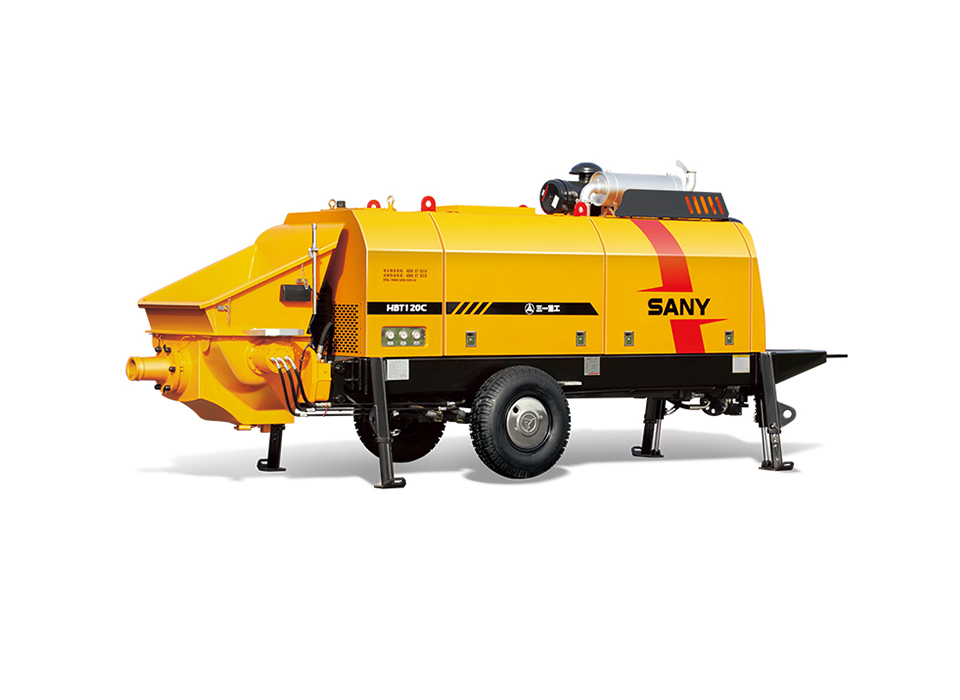
Recommended products
HBT12020C-5M
Trailer pump HBT12020C-5MRelated testimonials
CCTV Finance × Sany Heavy Industry: Infrastructure results are released! Anhui is soaring, and the equipment of the western port has become a "dark horse"
2025.05.19

China's installed wind and solar capacity has historically surpassed that of thermal power
2025.04.28
Breakthroughs have been made in the challenges of customization and high precision, and new progress has been made in the intelligent production of high-end equipment
2025.03.24




0 comments