

Sany He Dongdong: Industry 4.0 is the "dry" of reform
2015.05.28
Source: China Entrepreneur Network
Sany Group is a sample of the development of China's manufacturing industry. Since the 90s of the last century, Chairman Liang Wengen led his "Liang Jiajun" to start from 3 million yuan and build Sany Group into a heavyweight player in the global heavy industry kingdom. However, like other manufacturing giants, cyclical economic fluctuations, slowing investment, rising costs, overcapacity and other "curses" are all obstacles in the development process of Sany.
* The new proposition is how to strengthen yourself with Industry 4.0. In a more general sense, this is also a common topic in China's manufacturing industry. A few days ago, China's implementation of the manufacturing power strategy of the *5656 ten-year action plan "Made in China 2025" has been signed and approved by Premier Li Keqiang and issued by the State Council. Miao Wei, Minister of Industry and Information Technology, said that Made in China 2025 is similar to German Industry 4.0 and is a programmatic document for the layout of the industrial Internet.
He Dongdong is the vice president of Sany Heavy Industry*. Since 2013, he has added a new role, namely the * process information officer. As the direct operator of Sany Group's process informatization, how does he view the new opportunities and challenges?
The following is a summary of the interview with He Dongdong in an exclusive interview with this magazine:
In fact, we look at the history, I have some feelings, Sany was founded in 1989, entered the construction machinery industry in 1990, in fact, the development process of Sany is also a sample of China's industry. When we started our business in 1989, we were in a mountain village in the countryside, and according to the words of Chairman Liang, we actually have some concepts about how to do industry, but we still lack practical experience in all aspects. Just kidding, everyone is barefoot in the field, and when they go ashore, they engage in industry. The industrial situation of China as a whole is still relatively low.
Now that we are talking about Industry 4.0, looking back, we have basically opened up 1.0, 2.0, 3.0, and 4.0 in just a few decades. A *5655 challenge faced by China's manufacturing industry comes from here first, and we have to run the course of others for hundreds of years in a few decades. Everybody is talking about how to do Industry 4.0 right now, and we're basically working from 1.0 to 4.0 at the same time.
A lot of people talk about overtaking in corners, I personally think it's more of a challenge, you have to run to about the same time when you overtake in a corner, and you overtake when a corner comes. In fact, we still have a lot of lessons to make up before 4.0, 3.0 and 2.0.
In fact, Sany still started relatively early in this regard, and began to do this in the 90s of the last century. For example, CAD (computer-aided design) is used to draw drawings, and the ERP system is financed, and since 2005, we have reached the second stage to do informatization in the internal industrial chain. The third stage should start from 2013, not just look at IT from the perspective of IT, and start to do process reengineering and process optimization.
The "Dryness" of Dry Reform
In fact, every stage is a very big challenge.
Because the manufacturing industry is different from consumer goods, there is a very long industrial chain, to joke about it, from the beginning of steelmaking to cutting, processing, assembly, assembly to finished products, to logistics, to the use of equipment, after-sales service, this is a very, very long product life cycle, involving almost every link of the entire manufacturing industry. It is a great challenge to open up the industrial chain within the enterprise, and the pressure is very high.
When we talk about Industry 4.0 or whatever, my own understanding is that it is a dry word, and the dry of reform is two horizontal and one vertical. Let me first say that the small one is horizontal and one vertical, and the horizontal line is that we should open up the industrial chain of R&D, manufacturing, procurement, service, etc., which is the informatization within the enterprise that we usually talk about. The vertical line is that I want to start from the customer's needs, and a customer order can be dismantled into specific processes and equipment processing instructions, including procurement, which is vertical integration. Another big horizontal line is actually across the boundaries of the enterprise, how to integrate customer needs to the manufacturing and procurement links of the enterprise, to the downstream supply chain, and the resources of the whole society.
This big horizontal line is the most reverie-inducing. The consumer goods industry has given us a lot of models, but of course there are great challenges for industrial products, and the degree of standardization of products is not so high. In addition, there will be more offline technical communication needed, and there is no very mature or successful model like retail products. In the field of procurement, there have been some partial practices, similar to Zhaogang, in the industrial field, this is also a subversion of the model, which is equivalent to a group purchase in our industrial industry. In addition, in the field of manufacturing, it may be the most difficult, that is, to break the boundaries of enterprises. For example, I build my own industrial line, which cannot meet the demand during peak hours, and I have overcapacity during low peak hours.
If the manufacturing resources of the whole society can be shared, this is efficient*5661, which can solve the problem of overcapacity in China, and the manufacturing cost can also be greatly reduced, and the response speed is faster. But this one is *hard. How to coordinate between enterprises? How to distribute benefits? How do people share their cheats? In fact, this involves a great adjustment of the pattern of interests.
Now there is definitely excess capacity. Realistically, on the one hand, we want to improve operational efficiency, which means that my costs will go down. The reflection brought about by this is that after the market declines, our industrial chain should be more agile and respond faster to the market.
We also want to make the industrial chain more agile, more efficient and lower cost through process informatization, which is a direct motivation. Another motivation is that after the market pressure increases, enterprises are still competing for differentiated competitiveness, which means that you can better meet the needs of customers. To put it bluntly, process informatization is to increase the insight into customers and markets through process optimization and informatization.
We have already done something now, in the digital factory, factory 18, in the manufacturing process we have achieved personalized batch manufacturing by starting from ERP (Enterprise Resource Planning) orders, to MES (Manufacturing Execution System), one production line can produce different products.
Compared to mass production, we belong to discrete manufacturing, that is, multi-variety, small batches. You see that Sany has made tens of billions, but there are many varieties, maybe a variety is only a few hundred or thousands a year, and there may be only a few dozens. Unlike cars, there are hundreds of thousands of vehicles for any model. It is more difficult for discrete manufacturing to be intelligent.
But this demand is the demand of the entire industrial chain, and you will find that your inventory increases, and the inventory of agents also increases, and everyone in the entire industrial chain is very miserable. The current competition is actually the competition of the industrial chain, not the competition of a single enterprise, which ultimately depends on the common efficiency of the industrial chain and the overall efficiency. No matter who loses, the ecosystem is actually very difficult to play. Squeeze suppliers, and you can't press it to a certain extent. The better way is to improve the efficiency of the entire industrial chain.
This brings us back to Industry 4.0. The leader of every industrial chain, that is, the enterprise with end customers, should take responsibility. Like Sany, it is the leader in my industrial chain. The entire industrial chain should be improved, and the insight into customers and markets should be increased. The *5656 priority of Industry 4.0 is to improve the understanding of users. If you can share big data or information in the industrial chain, the efficiency of the entire industrial chain will be improved. This data, this information, cannot be overused.
Starting with R&D, the more you share with your suppliers, the more responsive and efficient they will be. First of all, the responsibility lies with the OEM. From the supplier's point of view, it has to keep up with the degree of informatization. Because we have a lot of multinational enterprises with a higher degree of informatization than us, and there are also many very small manufacturing enterprises, the degree of informatization cannot keep up with our rhythm, and its internal system has not reached the level of docking with you. We are first of all to help, or to see your final supply efficiency, your product quality and price.
One 5 billion, or ten 5 billion?
The reason why I was sent here to manage the process informatization department is because I am not a person with a pure IT technical background, which also reflects the company's philosophy, and it is more from the perspective of business change to look at the work of process informatization.
I was not very reluctant at the time, I had been in charge of international business and business department at Sany before, and the performance of the business was more direct, the sense of achievement would be stronger, and it was clear at a glance whether I was doing well or not. Later, the chairman and president gave me a job. I described to them that my business unit can form 5 billion sales for the company, and the president said that you are only 5 billion, and if the process information is managed well, 10 5 billion will come out, so you have to do this.
Each of the directors of our group will be in charge of one or two areas, Mr. Xiao Liang returned from studying at Harvard in 2014, and has a very strong understanding of informatization, and he took the initiative to ask to manage this area after he came back. At that time, the overall planning of process informatization was completed, and a series of large projects had not yet been substantially launched. He realized that from a strategic point of view, this is an important area, and the promotion is very strong, such as the investment source start-up project, the Internet strategy as the company's *5656 strategy, and the internal clearly put forward to embrace the Internet. The cooperation with SAP and IBM came after he came (*finalized).
The cooperation with SAP runs through the entire industry chain, and we hope to create an end-to-end process, break the structure of functional departments, and truly transform the entire business process from the perspective of quickly responding to customer needs. On this basis, we also hope to have a unified and mature business platform. SAP's solutions are relatively comprehensive, including ERP, CRM, BPM (business process management software), etc., as a large-scale software platform has the advantage of intensification.
In the past, many of our systems were relatively siloed, and it was still difficult to integrate them everywhere. In fact, China's manufacturing industry has such a process, at the beginning of IT is a pure tool, to solve some local problems, generally in the early stage will be some, for example, the research institute on a PDM (product data management) system, finance to UFIDA system, to later realize that this isolated system will bring a problem - your data is isolated, the overall efficiency is relatively low, at this time we will tend to break the island as much as possible, with a unified platform to do this thing. We are now working backwards, opening up the big process from marketing to manufacturing and service, and opening up the entire industrial chain.
ECC (Enterprise Control Center) was done by us 8 years ago, when we didn't know what IoT and big data were. Now, what we did 8 years ago was the Internet of Things, which is big data. We've had 200,000 devices connected to the Internet for years, and we've had dozens of terabytes of data here, and we've done a lot with that data. At present, around the ECC center, big data is being used to predict failures and prevent the occurrence of customer equipment failures in advance. We can also do sales forecasting, and we have also initially established a big data platform. It's a gold mine, and there's a lot of applications we can do.
Whether the enterprise realizes informatization is a prerequisite for whether you can do Industry 4.0. I have a standard for the so-called informatization, that is, business data must be digital. If it is not digital, it cannot be calculated by computers, and then there is no big data or the Internet. However, to achieve informatization, an enterprise of our type cannot turn its operations into data without investing hundreds of millions of dollars and making people turn their backs on their backs. It's a chasm that requires a lot of investment. We have now done this preliminarily, digitalizing in the main areas of manufacturing, R&D management and marketing.
Now we are fighting on two fronts, on the one hand, we have to do a great deal of informatization, and on the other hand, we have to deal with the subversion of the Internet business model. Chinese enterprises are also facing this kind of internal and external attack or left and right attack.
Balance between headquarters and overseas
Once the demand for informatization is put into the international market, it will become more urgent, and the front line will be longer. *5656, customer needs are more diversified, different national regulations are different, and the degree of product diversification is higher. Second, the supply chain is longer, and the host and accessories need to be sent to different countries, so how to quickly respond to differentiated customer needs and meet the supply in such a long distance, and the delivery time is much longer than that in China. We can send individuals to domestic services immediately, but it is too late to send people abroad, which is more demanding for Internet-based digital management.
From the perspective of internationalization, the demand for informatization is more urgent, the pressure is greater, and conversely, the motivation is also sufficient. The Chinese market is now declining, and the foreign market is a huge stage, which can get a lot of room for growth through the international market.
Overseas markets are also very different. In some small countries in Africa, shoes are not worn much, but in industrially developed countries such as Germany or the United States, the information foundation is very good, and the quality of people is also very high. In some places, the internet speed is so slow that it is almost impossible to use the old dial-up. These are all physical obstacles.
An even bigger obstacle is the multilingual system. It turned out to be to solve domestic problems, and a lot of the underlying information was Chinese, such as drawings, graphics and texts were Chinese labels. But if you want to develop globally, and Americans can't understand it, you have to add English marks to the drawings, and your system needs to be able to handle multiple languages.
There are also regulations. When we started ERP in Germany, we wanted to centralize HR information on a server at our domestic headquarters. I was in Germany, and Germany has privacy laws that don't allow you to put your employees' information outside of Germany, not outside the EU. It's against the law. However, the headquarters did not understand and thought that Germany was engaged in independence, but in fact it was not at all. Later, I looked for regulations, lawyers, cases, and a lot of things. Chinese fill out the form to write about beliefs and political outlook, which are not allowed in Europe, and religious beliefs are not allowed to be asked, for fear of discrimination.
But there are also convenient places, SAP headquarters in Germany, the German is very accustomed to this, better than the Chinese, because he is used to using planning, using processes to do things.
A first-class project
This change is painful and involves a change in the way things are done. Some people may be surplus and unwanted, and some parts are very needed, but the skills are not enough, which is also a very painful thing. This change, especially some disruptive ways of doing things, may make some businesses obsolete, or some people out. As an internal enterprise, it is quite painful to change the way of doing things and change one's own life.
In the past two years, I have also been under a lot of pressure, and change is a difficult thing to manage. From top to bottom, everyone's way of thinking and doing things has to change. Process change is more about looking at the problem from the perspective of the whole industry chain, and the management cannot only stand from the perspective of the original position. This is easy to say, all people are in command of the head, because your performance system, personal sense of achievement, etc. are all realized within the scope of their own responsibility, but what you ask everyone to look at the problem from the perspective of the overall interest.
It's quite difficult, but it's impossible for you to design a beautiful performance system. This kind of big change is not something that can be effective in a short period of time, but involves the relationship between departmental interests and overall interests, and the conflict between short-term interests and long-term interests. It's very hard, very hard. Why is it emphasized that it must be a first-class project? Because if you don't do it in the first place, it will be difficult to cross the relationship between short-term and long-term interests, partial and overall interests.
Any enterprise must have a performance appraisal, and the performance appraisal* works on an annual basis. Projects with long-term benefits are difficult to measure in the short term, and only the boss himself can overcome this. He knew it was a long-term benefit.
When the process informatization project team was established in 2013, the process of planning was actually a process of communication, and almost all the management was repeatedly communicated. At that time, there was a common doubt, if you focus on long-term interests and open up the industrial chain, it is difficult to see obvious results in a short period of time, but the resources spent are very large. It is tens of millions of dollars to do this kind of project, and some foreign counterparts claim to spend hundreds of millions of dollars in a few years. You need a lot of resources, and you have to mobilize a lot of people to do a change that seems to be logically beneficial, but doesn't necessarily see benefits in a short period of time.
At this time, it is to see whether the leaders of the enterprise are pushing forward in a way of firm faith, thinking that I am going to bet on this. At present, the relatively successful reform is due to the fact that the top leaders are very determined to do this thing.
Industry 4.0 is not a product, not an off-the-shelf solution, not a software, it is a direction. In the process of China's manufacturing industry moving in this direction, the ultimate goal is two: 5656 is to better meet the individual needs of customers, and the second is to be more efficient, more cost-effective, and more flexible.
But Chinese manufacturing companies should reach a consensus that no matter how much Industry 4.0 is talked about, if you capture the customer, you can dominate. From this point of view, China's manufacturing enterprises will have a great competitive advantage in the future.
Related testimonials
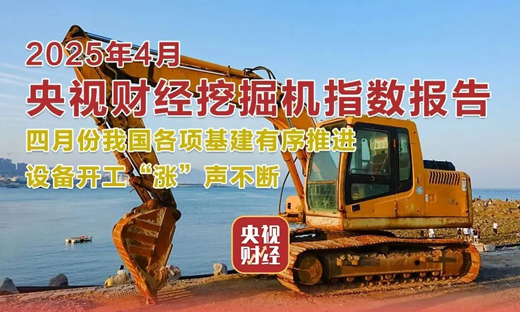
CCTV Finance × Sany Heavy Industry: Infrastructure results are released! Anhui is soaring, and the equipment of the western port has become a "dark horse"
2025.05.19

China's installed wind and solar capacity has historically surpassed that of thermal power
2025.04.28
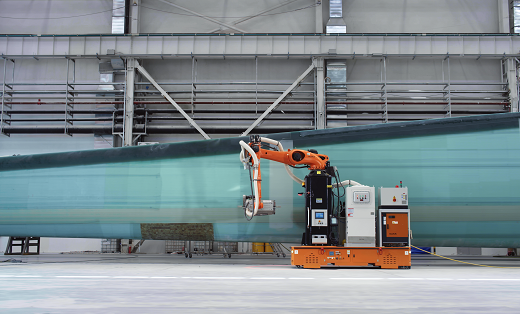
Breakthroughs have been made in the challenges of customization and high precision, and new progress has been made in the intelligent production of high-end equipment
2025.03.24




0 comments