

People's Daily丨Sany Heavy Industry Goes to Sea: The "Third Entrepreneurship" under the Policy Dividend
2017.06.20
Facilities are connected, and all industries are prosperous. In recent years, thanks to the "Belt and Road" initiative, the infrastructure construction of countries and regions along the route has shown a trend of rapid development. Data show that in 2015, domestic enterprises signed 3,971 new engineering contracts with countries and regions along the "Belt and Road", accounting for a new high of 46% of the total number of overseas contracts, with a contract amount of 92.6 billion US dollars, an increase of 9% year-on-year, and it is expected that overseas contracts will bring more than 150 billion yuan of construction machinery demand in the next 3-5 years.
In the geographical map of the "Belt and Road", China's major construction machinery enterprises have actively and comprehensively laid out and tapped the potential market relying on their own accumulated international experience. At present, Sany Heavy Industry and other construction machinery enterprises are vying to seize the "Belt and Road" market and establish a relatively complete marketing network along the route.
Taking Sany Heavy Industry as an example, according to its 2016 annual report, the company has basically completed the industrial layout along the "Belt and Road", with factories in Turkey, Russia, Belgium, France and other places, and its own industrial park in India, and is now planning to establish an industrial park in Ethiopia, Africa.
Since 2006, Sany has become a representative of China's construction machinery enterprises in terms of production capacity layout, business model transformation and localized operation.
70% of overseas revenue comes from the Belt and Road Initiative

According to the newly released annual report, in 2016, Sany Heavy Industry achieved international sales revenue of 9.286 billion yuan, accounting for 40% of revenue. When it comes to the Belt and Road Initiative, it is worth noting that 70% of international revenue comes from countries and regions along the Belt and Road. On the basis of Sany Heavy Industry's international revenue in 2016, in the first quarter of this year, Sany Group's entire overseas sales increased by 30% year-on-year, and the sales of the ten overseas regions increased by 90% year-on-year, of which Russia increased by more than 400%, Latin America increased by more than 300%, the Middle East increased by more than 200%, Southeast Asia increased by nearly 30%, and Asia and Australia increased by more than 10%.
"Sany Heavy Industry has been promoting 'internationalization' for more than 10 years. In recent years, Sany's overseas sales and proportion have been growing, which is inseparable from the role of the Belt and Road Initiative in business expansion. At the same time, it also stems from the fact that Sany is highly compatible with the 'Belt and Road' in terms of production capacity layout. When it comes to how Sany Heavy Industry responds to the "Belt and Road" initiative in the process of internationalization, Duan Dawei said frankly.
According to Duan Dawei, whether in China or in the world, Sany has many factories, and most of them are concentrated in countries and regions along the 'Belt and Road'. "These factories integrate product manufacturing and R&D, and this capacity layout provides unique advantages for adapting to local market demand, exploring industrial transformation and localizing the team." Speaking of this, Duan Dawei made a special mention.
According to a research report by the Development Research Center of the State Council, the consensus investment demand for infrastructure in countries along the "Belt and Road" from 2016 to 2020 is estimated to be more than 10.6 trillion US dollars. In view of this, in the view of the industry, the construction machinery industry, as the backbone of infrastructure construction, will become the vanguard of "Made in China" overseas in the tide of "Belt and Road" construction.
Duan Dawei believes that "in the 'Belt and Road' initiative, facility connectivity is an important foundation, and it has a significant driving role. The construction machinery mainly serves the construction of infrastructure, and developing countries have huge needs in infrastructure construction and urbanization, and the development potential can also be expected. ”
The 65 countries along the "Belt and Road" have a large population base and a low level of infrastructure, and are in a period of rapid growth with huge development potential. However, prior to the Belt and Road Initiative, the process of realizing these needs was relatively long due to the lack of local technology and capacity. The Belt and Road Initiative (BRI) has provided a good mechanism for international economic cooperation to support these needs and accelerate the process of realizing them.
As a leading enterprise in the field of construction machinery manufacturing in China, Sany has accumulated certain experience in customers, products and services in the process of participating in China's reform and opening up to accelerate urbanization. This enables Sany to respond quickly after the "Belt and Road" initiative is proposed, promote these accumulations to the "Belt and Road", and participate in the urbanization construction of countries along the route.
Quality is a non-negotiable thing

Data show that since the "Belt and Road" initiative was proposed more than three years ago, Chinese enterprises have built 56 economic and trade cooperation zones in more than 20 countries, creating 1.1 billion US dollars in tax revenue and 180,000 jobs for relevant countries. This not only creates direct sales revenue for enterprises, but more importantly, it has more opportunities for countries along the "Belt and Road" to re-understand Chinese brands.
It is undeniable that relying on the original international layout and leveraging the "Belt and Road", Sany Heavy Industry has given priority to sharing the huge dividends of "Made in China" going overseas. It is understood that now Sany Heavy Industry's products have covered more than 120 countries and regions around the world, and a relatively complete sales network and after-sales service system have been established in these countries.
Talking about the current global competitiveness of Sany Heavy Industry in overseas markets, Duan Dawei said frankly in an interview that it is mainly due to the fact that Sany has always run through the "craftsman spirit" in the process of developing the international market. "My personal understanding of the 'craftsman spirit' is innovation, the other is quality awareness, and in general, it is to keep improving. At Trinity, I think these two points are more fully reflected," Duan Dawei pointed out.
It is reported that Sany will invest more than 5%-10% of its sales revenue in product research and development every year. Whether in the field of traditional products or in the field of new products, every year Sany will have new technology applications and new product models updated and researched.
"From the perspective of quality control, there is a saying in Sany called 'quality is a thing that cannot be compromised', and we have a very strict quality control system. In addition, the whole process of quality control system is implemented from the supply chain to the sales end. Duan Dawei mentioned, "Innovation and quality are important factors for Sany to make its products globally competitive, and both are indispensable. ”
In the process of "going out", it is inevitable to encounter an underestimation of the quality of "Made in China". Previously, Zhou Wanchun, vice president of Sany Heavy Industry, mentioned in other interviews that in many countries and regions along the "Belt and Road", the local elite received European and American education, and more identified with European and American brands.
Duan Dawei told us, "In the face of such inevitable doubts, when we implemented international promotion in the early days, we first promoted the brand through product leasing. When overseas customers don't know about our brand, they rent the product to them first, and when they feel reliable, they will build confidence in 'Made in China', which is also a process. ”
In addition to strictly controlling product innovation and R&D and quality, Sany has also actively participated in some major events in the process of internationalization, assuming corresponding social responsibilities with China's high-end industrial level and shaping the world image of "Made in China". According to Duan Dawei, whether it was the 2010 Chile mine disaster rescue or the 2011 Fukushima nuclear crisis relief, Sany has always adhered to the humanitarian spirit to participate in it, which has also laid a solid foundation for the "people-to-people bond" in the "five links" advocated by the "Belt and Road".
When talking about Sany's participation in the 2010 Chile mine disaster rescue, Duan Dawei also shared a small episode with us, "In fact, we participated in this rescue activity by chance, this equipment is a piece of equipment that has been sold to Chilean customers a year or two ago. In the process of this rescue, the Chilean government requisitioned equipment in the country, and in addition to Sany, many other internationally renowned similar enterprises participated in this solicitation work. The relevant departments of the intellectual government have comprehensively evaluated the specific projects, use and construction quality of these equipment, and determined the use of this equipment. ”
The "International Style" of the Third Venture

In the field of manufacturing, political, economic and other historical factors determine that European and American countries have long held the "right to speak" in the international market. As a latecomer, Chinese companies will inevitably be blocked by other competitors and barriers to existing rules.
In order to fight a "bloody road" in the fiercely competitive overseas market, in addition to strict quality control, Sany strives to upgrade from the traditional sales product model to provide overall solutions and services, explore new needs, and broaden the transformation path.
Sany Heavy Industry is keenly aware that the countries and regions along the "Belt and Road" have rapid population development growth and a relatively high degree of youth, and housing construction is a great demand. However, the local community itself lacks the basis to realize the demand quickly. In response to this situation, in addition to providing equipment and services, we should also provide overall solutions.
Speaking of this, Duan Dawei specifically mentioned the concept of "residential industrialization". "Housing industrialization, simply put, is like producing cars in a factory, producing housing parts, and then assembling them to form end products and delivering them. This is a great way to improve efficiency and quality, while reducing costs and environmental pollution. Duan Dawei analyzed. It is reported that this new technology has not only been applied in China, but is also gradually being promoted to overseas housing construction.
Localization is another powerful tool to expand into overseas markets.
Referring to the difficulties encountered by Sany in the process of promoting internationalization and practicing the "Belt and Road" initiative, Duan Dawei said frankly, "When challenges occur, in addition to focusing on providing customers with high-quality products and services and abiding by laws and regulations, we must also carry out various tasks with a cooperative attitude, increase efforts to localize construction, and promote the process of internationalization." ”
"Localization construction is a systematic project, which requires a process." Talking about this, Duan Dawei said with a smile, "In the early years, when the internationalization began, 80%-90% of the employees were sent from China, and even in many places we had to send chefs, because many colleagues in Hunan could not eat chili peppers and it would affect their work, so our chefs carried chili peppers overseas at that time." "It is reported that through localization, this ratio has now been adjusted, and 80%-90% of employees are local employees.
In addition, it is understood that Sany acquired the famous German oneConcrete machineryThe company Putzmanst has been in existence for 5 years, and so far Sany has not sent any executives. From the CEO to the junior staff, they basically rely on the original local work team to carry out their daily operations.
To this end, Duan Dawei also listed several sets of data to share with overseas network finance. He mentioned that Sany now has more than 30,000 employees, of which more than 5,000 are working outside of China. Of the more than 5,000 employees, more than 90% are localized expatriates. "In the core executive team of less than 20 vice presidents and above, about 3-4 are foreigners. A vice president who joined the company last year was Tunisia's diplomatic ambassador to China. According to the older generation of the Ministry of Foreign Affairs, this ambassador is one of the 5,656 ambassadors to China who resigned from their posts as ambassadors to join Chinese enterprises after the founding of the People's Republic of China. Duan Dawei told Overseas Network Finance.
70% of overseas revenue comes from the Belt and Road Initiative

It is reported that there is still a saying of "three ventures" in Sany. Liang Wengen, Tang Xiuguo and other four people raised funds to establish the Lianyuan Welding Materials Factory in Hunan Province in 1989, which is "*5656 times of entrepreneurship"; After the enterprise has a certain scale, it entered the "base camp" of Sany from the small mountain village of that year, and the establishment of Sany Heavy Industry Group Co., Ltd. in 1994 was the "second venture"; The third venture refers to Sany's journey from China to the world and its internationalization.
When Sany made efforts to "start a new business for the third time", it was catching up with a new round of technological reform represented by "intelligent manufacturing" and "Internet of Things". Domestic construction machinery enterprises have tested the water of "intelligent manufacturing" on the basis of the original information production and management, and Sany Heavy Industry has also seized the opportunity to vigorously promote "intelligence" and "informatization".
"Whether it is in enterprise management or product application, the level of informatization has always been an aspect that we pay more attention to, and we have also invested a lot of resources." Duan Dawei mentioned. According to reports, Sany currently has a product remote monitoring system. This integrated Internet system can use GPS positioning, long-range sensing, and big data analysis in the background to locate products sold around the world in real time, and understand and monitor the operation of equipment. When the amount of data accumulates to a certain extent, the macro department sometimes needs these data as a reference index for judging the macroeconomic situation.
"In the future, we still need to strengthen the innovation and investment in 'informatization' and 'intelligence', and make our products become the most intelligent products in the field of construction machinery." Duan Da emphasized.
* Later, Duan Dawei mentioned, "The development of our future enterprise is to be in line with the 'Belt and Road' to a greater extent." We should continue to integrate 'internationalization' and 'the Belt and Road' to form a core strategy in the future, so that the pace of 'third entrepreneurship' will be more stable." ”
Duan Dawei proposed, "In the future, in addition to continuing to uphold the 'craftsman spirit' and consolidate the original foundation in high-end equipment manufacturing, including construction machinery, housing industrialization, etc., Sany will also continue to make efforts in the fields of new energy and port logistics equipment." In this process, we will always insist on putting the customer's reputation and the international image of 'Made in China' in the *5656 position. ”
Related testimonials
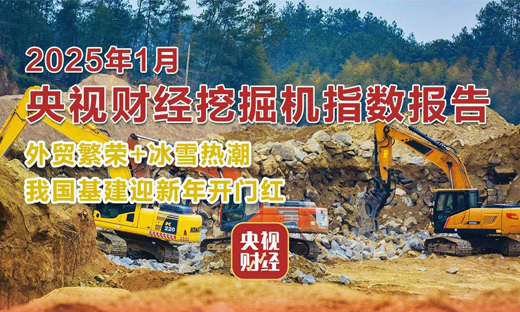
CCTV Finance × Sany Heavy Industry: Foreign Trade Boom + Ice and Snow Boom, China's Infrastructure Welcomes a "Good Start"
2025.02.19
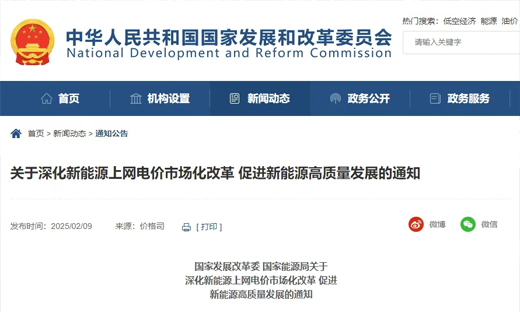
The market-oriented reform policy of new energy feed-in tariff has been released
2025.02.18
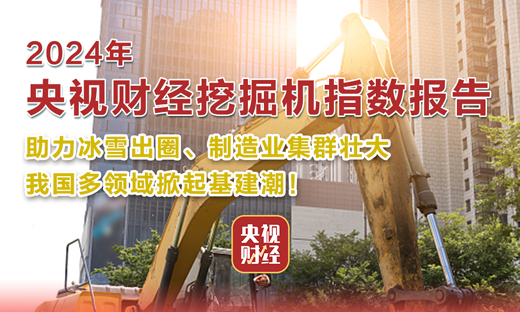
CCTV Finance × Sany Heavy Industry: 2024 Infrastructure Annual Report Released!
2025.01.17




0 comments