

The State Council issued a document and the People's Daily shouted, the development of new energy is a major benefit!
2021.02.09
1. On February 2, the State Council issued guidance on accelerating the establishment and improvement of a green, low-carbon and circular economic system, which proposed:Increase the proportion of renewable energy utilization, vigorously promote the development of wind power and photovoltaic power generation, and develop hydropower, geothermal energy, marine energy, hydrogen energy, biomass energy, and solar thermal power generation in accordance with local conditions.Accelerate the R&D and promotion of large-capacity energy storage technology, and improve the collection and transmission capacity of the power grid. Increase the supply of clean energy in rural areas and promote the development of biomass energy in rural areas. Promote the clean and efficient development, transformation and utilization of coal-fired power, and continue to increase the proportion of large-capacity, high-parameter, and low-pollution coal-fired power units in the installed capacity of coal-fired power plants。 In the northern region, counties are actively developing clean cogeneration central heating, and steadily promoting biomass coupled heating. Strictly control the installed capacity of new coal-fired power plants. Improve the efficiency of energy transmission and distribution. Implement the construction and intelligent upgrading plan of urban and rural distribution networks, and promote the upgrading and transformation of rural power grids. Accelerate the construction and interconnection of natural gas infrastructure.Carry out carbon dioxide capture, utilization and storage test demonstrations.
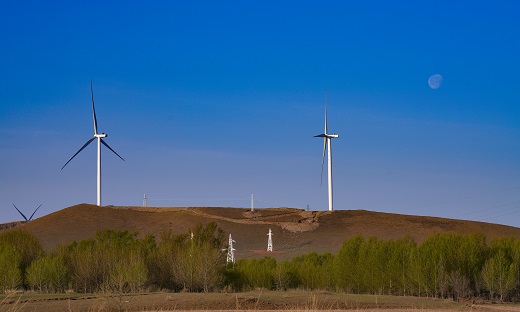
3. Not long ago, the 2020 "report card" of China's wind power industry was released, which has attracted widespread attention from the industry. The newly installed grid-connected capacity was 71.67 million kilowatts, a record high; Wind power generation was 466.5 billion kilowatt hours, a year-on-year increase of about 15%, almost equivalent to the power generation of the four Three Gorges power stations in 2020...... The "windmills" stand neatly to provide power guarantee and inject surging kinetic energy into the high-quality development of the economy. By the end of 2020, China's cumulative installed capacity of wind power has reached 281 million kilowatts, ranking first in the world.
To understand the development process of China's wind power industry, we might as well take a look at a set of cumulative hoisting data: in 2005, it entered the million kilowatt level, in 2008 it entered the 10 million level, in 2014 it entered the 100 million level, and in 2018 it entered the 200 million level...... From the once little-known wind turbines that rely almost entirely on imports to today's world-leading scale technology, the development of the wind power industry has achieved a great leap.
The wind power industry is not only bigger, but also stronger. From the perspective of layout structure, in the past, wind power development was mainly concentrated in the "three norths" area with good wind resources, and with the application and promotion of large megawatt units, long blades, and ultra-high towers in recent years, plain areas and low wind speed areas also have development conditions. In 2020, the central, eastern and southern regions accounted for about 40% of the new installed wind power capacity. Looking at the development cost, from many years ago, wind power generation was the cheapest to eight cents a time, and some even cost about two yuan, to now most areas of China, especially new wind power onshore projects, no longer need subsidies, and some places with good wind resources are even lower than coal power, which has changed the stereotype that new energy sources such as wind power are "expensive and difficult to be accepted by the market".
Under the impact of the new crown pneumonia epidemic, it is not easy for the wind power industry to overcome the adverse effects of insufficient supply of upstream parts and raw materials, blocked transportation, and delayed construction progress, and obtain new installed capacity data that far exceeds industry expectations. In fact, not only wind power, but also the development of the photovoltaic industry last year can also be said to be "swimming against the current", with 48.2 million kilowatts of new installed capacity hitting a new high in the past three years, a year-on-year increase of about 60%. In 2020, the newly installed capacity of wind power and photovoltaic power will be close to 120 million kilowatts, accounting for about 62.8% of the country's new installed power generation capacity, and the installed capacity of hydropower, wind power, photovoltaic power generation and biomass power generation will rank first in the world. All of these demonstrate the strong resilience and vigorous vitality of the clean energy industry, and reflect the speed and success of the high-quality development of China's energy industry.
Why can the scale of clean energy such as wind power and photovoltaic power be steadily expanded? The root cause lies in the fact that since the 18th National Congress of the Communist Party of China, we have unswervingly promoted the energy revolution The white paper "China's Energy Development in the New Era", published at the end of last year, comprehensively elaborated on China's main policies and major measures to promote the energy revolution, one of which is to adhere to a clean and low-carbon orientation. Focusing on the future, we will fulfill the commitment of "striving to peak carbon dioxide emissions before 2030 and strive to achieve carbon neutrality before 2060", and achieve the goal of "the total installed capacity of wind power and solar power generation will reach more than 1.2 billion kilowatts" by 2030, further clarifying the market expectations for the development of wind power and photovoltaics, and fully mobilizing the investment enthusiasm of market players.
The broader development prospects depend on continuing to promote the high-quality development of the industry. Wind power, photovoltaic and other new energy sources are intermittent and fluctuating, and in the future, large-scale and high-proportion access to the power system will require efforts to accelerate the flexible transformation of coal power, the commercial application of energy storage, and the upgrading and transformation of power grids. At present, the non-technical costs of land and financing for wind power and photovoltaic construction are still high, and it is necessary to further promote the improvement of land use, taxes and other related policies to enhance industrial competitiveness. At the same time, wind power and photovoltaic have ushered in an investment boom, and in the context of rapid technology iteration and increasingly fierce competition, how to do a good job in scientific demonstration, prevent rushing, and maintain the healthy development of the industry are also exam questions that need to be answered.
Low-carbon energy development is related to the future of mankind. We look forward to the joint efforts of the government, enterprises, society and other parties to make the "wind and solar" industry develop better, and contribute more Chinese strength to the challenge of climate change and the construction of a clean and beautiful world.
Next article:"News Network" special report! Sany Heavy Industry has run out of industry acceleration
Related testimonials
Start with the Red Sea! Wind power retirement market pains
2025.06.25
CCTV Finance × Sany Heavy Industry: Transportation construction continues to heat up! In May, the infrastructure was full of bright spots →
2025.06.17
CCTV Finance × Sany Heavy Industry: Infrastructure results are released! Anhui is soaring, and the equipment of the western port has become a "dark horse"
2025.05.19




0 comments