In the first quarter of 2021, 5.26 million kilowatts of new grid-connected wind power capacity was added across the country, including 4.03 million kilowatts of onshore wind power and 1.23 million kilowatts of offshore wind power. By the end of the first quarter of 2021, the cumulative installed capacity of wind power in China was 287 million kilowatts, including 276 million kilowatts of onshore wind power and 10.22 million kilowatts of offshore wind power. National wind power utilization hoursAfter 619 hours, the national wind curtailment rate was 4%, a year-on-year decrease of 0.7 percentage points. The following is the transcript:
In the first quarter, energy supply and demand were generally balanced, and the development of the clean energy industry accelerated
The National Energy Administration has thoroughly implemented the decisions and arrangements of the CPC Central Committee and the State Council, done everything possible to ensure the stable supply of coal, electricity, oil and gas, and the overall balance of energy supply and demand in the first quarter, and the acceleration of the development of the clean energy industry, which has effectively supported the comprehensive recovery and high-quality development of the economy and society. Energy development mainly presents the following three characteristics:
First, energy consumption has increased significantlyThe electricity consumption of the whole society is growing rapidly. In the first quarter, the electricity consumption of the whole society increased by 21.2% year-on-year, driving the annual electricity consumption to increase by 4.5 percentage points year-on-year, and an increase of 14.4% over the same period in 2019. In terms of industries, the secondary industry electricity consumption is the main driving force for the growth of electricity consumption in the whole society, with a year-on-year increase of 24.1%, an increase of 15.4% over the same period in 2019, and a contribution rate of 72.8% to the growth of electricity consumption in the whole society; The electricity consumption of the tertiary industry has rebounded significantly, and the growth rate has increased month by month since January, with a cumulative growth rate of 28.2% in the first quarter, a significant increase of 16.5% over the same period in 2019; The electricity consumption of primary production continued to grow rapidly, with a growth rate of 26.4% in the first quarter, an increase of 31.4% over the same period in 2019.The demand for thermal coal is growing rapidly. In the first quarter, coal consumption increased by 15.8% year-on-year and 8.4% from the same period in 2019. Among them, thermal coal consumption increased by 20.6% year-on-year, contributing 72.6% to the growth of coal consumption; Coal used for building materials increased by 39.7% year-on-year, contributing 17%.The contribution rate of industrial gas has reached a new high. In the first quarter, apparent natural gas consumption increased by 16.1% year-on-year and 15.3% compared to the same period in 2019. Among them, industrial gas consumption increased by 27.7% year-on-year, far exceeding the average level of previous years, and the contribution rate reached 48.8%; City gas increased by 17.7% year-on-year, showing a rapid growth trend.Consumption of refined oil products decreased month-on-month. In the fourth quarter of last year, domestic refined oil consumption has recovered to the level of the same period in 2019. Affected by the "Chinese New Year in place" factor, the flow of people and vehicles decreased compared with previous years, and the consumption of refined oil in the first quarter fell by 15% quarter-on-quarter and 12.5% compared with the same period in 2019.
Second, the energy supply is generally stableThe National Energy Administration has done a solid job in the work of "six stability" and "six guarantees", strengthened overall coordination, gave full play to the role of the daily dispatch mechanism for guaranteeing supply, made every effort to ensure energy supply, and achieved varying degrees of growth in the supply of major energy varieties.The power supply is generally stable, and orderly electricity consumption is implemented in some areas. Affected by factors such as cold wave weather and economic recovery, the country's largest electricity load appeared for the first time during the peak winter, reaching 1.19 billion kilowatts, an increase of 25.9% over the same period last year, North China, Central China, Northeast China, Northwest China four regional power grid loads have reached a record high, Hunan, Jiangxi, Sichuan and other places have taken orderly electricity consumption measures. Jilin, Yunnan, Guizhou, Guangdong, and Guangxi power lines are seriously covered with ice, and the reliable supply of power in the "peak winter" is effectively guaranteed by optimizing the operation mode of the power grid and inter-regional and inter-provincial power dispatching. In the first quarter, the country's power generation increased by 19% year-on-year.Oil and gas supply grew steadily, and crude oil processing increased. Vigorously enhance the intensity of oil and gas exploration and development, pay close attention to increasing reserves and imports, ensure the stable supply of oil and gas, continue to promote the transformation and upgrading of the refining industry, and achieve initial results in "reducing oil and increasing investment". In the first quarter, crude oil production, imports, and processing volume increased by 1.4%, 9.5%, and 16.5% year-on-year respectively, while refined oil exports decreased by 15.3%; Natural gas production and imports increased by 13.1% and 19.6% year-on-year respectively.The coal supply is relatively sufficient, and the coal supply is generally stable in the peak winter. The coal industry has conscientiously implemented various measures to ensure energy supply, and has taken measures such as not stopping production, not taking holidays, expanding coal sources, grasping transportation capacity, and increasing reserves, so that the operating rate of coal mines has remained high, fully released high-quality production capacity, and actively played the role of increasing production, ensuring supply and stabilizing prices, and the coal supply is relatively sufficient during the peak winter and Spring Festival. In the first quarter, raw coal production increased by 16% year-on-year.
Third, the clean energy industry continues to growThe National Energy Administration (NEA) has continuously improved its clean energy industry policies, issued a series of policy documents to promote the integration of power source, grid, load and storage, the complementary development of multiple energy sources, and clean heating of renewable energy, and strived to improve the level of clean energy utilization and the operational efficiency of the power system. At the same time, the construction of major projects was accelerated, Fuqing Nuclear Power Unit 5 (the world's first Hualong No. 1 reactor) was put into operation, the first phase of Zhejiang Sanao Nuclear Power Project, the second phase of Hainan Changjiang Nuclear Power Project, and the Mengdigou Hydropower Station of Sichuan Yalong River started construction, and the Baihetan-Jiangsu ± 800 kV DC transmission project was approved.In the first quarter, the total installed capacity of wind power, solar power generation, hydropower and nuclear power was 12.83 million kilowatts, accounting for 43.4% of the total installed power capacity, an increase of 2.8 percentage points over the same period last year.
In the first quarter of 2021, renewable energy continued to maintain high-quality developmentIn the first quarter of 2021, the National Energy Administration (NEA) thoroughly implemented the decisions and arrangements of the CPC Central Committee and the State Council on coordinating epidemic prevention and control and economic and social development, closely focused on the new energy security strategy of "four revolutions and one cooperation" and the realization of the goal of carbon peak and carbon neutrality, focused on strengthening the clean energy industry, focused on strengthening industry management, focused on giving full play to the role of market mechanisms, continuously optimized the development layout of the renewable energy industry, and strived to promote the high-quality development of renewable energy.The installed capacity of renewable energy has steadily expanded. By the end of the first quarter of 2021, China's installed renewable energy power generation capacity reached 948 million kilowatts. Among them, the installed capacity of hydropower is 371 million kilowatts (including 31.79 million kilowatts of pumped storage), 287 million kilowatts of wind power, 259 million kilowatts of photovoltaic power generation, and 31.485 million kilowatts of biomass power generation.Renewable energy generation continues to grow. In the first quarter of 2021, according to industry statistics, the country's renewable energy generation reached 475.47 billion kWh. Among them, hydropower is 195.9 billion kWh, wind power is 173.7 billion kWh, photovoltaic power generation is 68.8 billion kWh, and biomass power generation is 38.08 billion kWh.Renewable energy remains at a high level of utilization. In the first quarter of 2021, about 1.249 billion kWh of hydropower was curtailed in major river basins across the country, with an average utilization rate of 98.95%, down 0.79 percentage points from the same period last year, with an average utilization rate of 96%, an increase of 0.7 percentage points over the same period of last year, and 1.7 billion kWh of solar power curtailed, with an average utilization rate of 97.5%, an increase of 0.75 percentage points over the same period of last year.
1. Hydropower construction and operationIn the first quarter of 2021, 1.09 million kilowatts of new hydropower capacity was added to the grid across the country, with 330,000 kilowatts in Anhui, 250,000 kilowatts in Sichuan and 160,000 kilowatts in Xinjiang, accounting for 68% of all new installed capacity. As of the end of March 2021, the installed hydropower capacity in the country was about 371 million kilowatts (including 31.79 million kilowatts of pumped storage). The top five provinces (regions) in terms of hydropower generation are Sichuan (51.6 billion kWh), Yunnan (43.1 billion kWh), Hubei (22.2 billion kWh), Guizhou (15.7 billion kWh) and Hunan (10.8 billion kWh), accounting for 73.2% of the country's hydropower generation. The amount of hydropower curtailed in major river basins across the country increased by 914 million kWh over the same period last year. On March 1, the Xigou Reservoir upstream of Xigou on the left bank of Xiaolangdi overflowed, causing the shutdown of the reservoir water into the underground plant of the Xiaolangdi Hydropower Station, resulting in 1.036 billion kWh of hydropower curtailment, while the curtailment of hydropower in other major river basins remained at a low level.
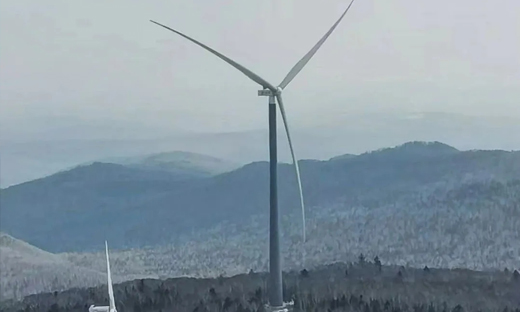
2. Wind power construction and operationIn the first quarter of 2021, 5.26 million kilowatts of new grid-connected wind power capacity was added across the country, including 4.03 million kilowatts of onshore wind power and 1.23 million kilowatts of offshore wind power. In terms of the distribution of newly installed capacity, the central, eastern and southern regions accounted for about 54%, and the "three north" regions accounted for 46%, and the wind power development layout was further optimized. By the end of the first quarter of 2021, the cumulative installed capacity of wind power in China was 287 million kilowatts, including 276 million kilowatts of onshore wind power and 10.22 million kilowatts of offshore wind power. The utilization hours of wind power in China are 619 hours, and among the provinces and regions with high utilization hours, Yunnan has 920 hours, Sichuan has 742 hours, and Jiangsu has 739 hours. The national wind curtailment rate was 4%, down 0.7 percentage points year-on-year, especially in Hunan and Xinjiang, where the curtailment rate decreased significantly year-on-year, and the curtailment rate in Hunan and Xinjiang was 6.5%, down 6.7 and 5.7 percentage points year-on-year, respectively.
3. Construction and operation of photovoltaic power generationIn the first quarter of 2021, the country's newly installed photovoltaic capacity was 5.33 million kilowatts, including 2.52 million kilowatts of photovoltaic power stations and 2.81 million kilowatts of distributed photovoltaics. By the end of the first quarter of 2021, the cumulative installed capacity of photovoltaic power generation was 259 million kilowatts. From the perspective of the layout of new installed capacity, the regions with a high proportion of installed capacity are North China, East China and Northwest China, accounting for 33%, 25% and 16% of the country's new installed capacity respectively. The utilization hours of photovoltaic power generation in the country were 300 hours, an increase of 10 hours year-on-year; The regions with the highest utilization hours were 356 hours in Northeast China and 289 hours in Northwest China, including 392 hours in Mengdong, 363 hours in Jilin and 363 hours in Heilongjiang. The national curtailment rate was 2.5%, down 0.75 percentage points year-on-year. The curtailment rates in Northwest China and North China, where the problem of photovoltaic consumption is more prominent, dropped to 5.1% and 3.1% respectively, down 0.6 and 1.8 percentage points year-on-year, respectively.
Fourth, the construction and operation of biomass power generationIn the first quarter of 2021, 1.966 million kilowatts of new biomass power generation capacity was added, and the cumulative installed capacity reached 31.485 million kilowatts. The top five provinces in terms of cumulative installed capacity are Shandong, Guangdong, Zhejiang, Jiangsu and Anhui, with 3.688 million kW, 2.997 million kW, 2.704 million kW, 2.436 million kW and 2.152 million kW respectively, the top five provinces in terms of new installed capacity are Zhejiang, Henan, Sichuan, Guangdong and Jiangxi, with 304,000 kW, 230,000 kW, 210,000 kW, 172,000 kW and 146,000 kW, respectively. Jiangsu and Anhui, 4.42 billion kWh, 4.34 billion kWh, 3.34 billion kWh, 3.14 billion kWh and 2.66 billion kWh, respectively.
In the first quarter of 2021, it was supplied to users in 50 major cities across the countryElectrical reliability continues to be at a high levelIn the first quarter of 2021, the reliability of power supply for power supply enterprises in 50 major cities across the country continued to maintain a high level, with an average power supply reliability rate of 99.971%, an average power outage time of 0.63 hours per household, and an average number of power outages of 0.22 times per household. There have been no widespread power outages nationwide.
1. The average power outage time of users increased by 0.04 hours per household year-on-yearIn the first quarter, the average power outage time of power supply enterprises in 50 major cities across the country was 0.63 hours per household, an increase of 0.04 hours per household year-on-year. Among them, the five cities with the shortest average power outage time are Shenzhen, Xiamen, Guangzhou, Foshan, and Beijing, which are 0.06, 0.07, 0.07, 0.07, and 0.08 hours per household, respectively; Lhasa, Taiyuan, Kunming, Changchun, and Chongqing had the longest average power outage duration, with 3.46, 2.56, 2.40, 2.35, and 1.86 hours per household, respectively.
2. The average number of power outages increased by 0.01 times per household year-on-yearIn the first quarter, the average number of power outages for power supply enterprises in 50 major cities across the country was 0.22 times per household, an increase of 0.01 times per household year-on-year. Among them, the five cities with the lowest average number of power outages were Xiamen, Shenzhen, Foshan, Nanjing, and Guangzhou, which were 0.03, 0.04, 0.04, 0.05, and 0.05 times per household, respectively; Lhasa, Changchun, Taiyuan, Urumqi, and Lanzhou were the five cities with the highest average number of power outages, with 1.23, 0.97, 0.66, 0.51, and 0.48 times per household, respectively.3. Fault power outage is the main cause of power outageIn the first quarter, the main reason for the power outage of power supply enterprises in 50 major cities across the country was fault power outage, resulting in an average power outage time of 0.34 hours per household, accounting for 54.38% of the total power outage time. In the fault and power outage, equipment causes accounted for 27.46%, external factors such as foreign body short circuit and external force damage accounted for 26.39%, and user influence accounted for 13.94%.The secondary cause of power outages in power supply enterprises in 50 major cities across the country is planned power outages, resulting in an average power outage time of 0.29 hours per household, accounting for 45.62% of the total power outage time. Among the planned power outages, the planned maintenance and temporary maintenance of power supply and distribution facilities accounted for 63.28%, and the power outage factors of internal and external construction of the power grid accounted for 32.66%.
Promote the integrated development of intelligent technology and the coal industryIn order to implement the spirit of the CPC Central Committee and the State Council on accelerating the deep integration of the Internet, big data, artificial intelligence and the real economy, promote the integrated development of intelligent technology and the coal industry, and in view of the characteristics of the industry with high risk of coal production, high labor intensity and poor working environment, the National Energy Administration, together with relevant departments, will vigorously promote the intelligent construction of coal mines, and promote the reform of coal mining methods and the high-quality development of the industry. The following work has been carried out:The first is to strengthen the top-level design. In order to promote the intelligent development of coal mines as a whole, in February 2020, our bureau, together with the National Development and Reform Commission, the Ministry of Emergency Response and other 8 departments, issued the "Guiding Opinions on Accelerating the Intelligent Development of Coal Mines" (Fagai Energy [2020] No. 283), making systematic arrangements and deployments for the intelligent construction of coal mines across the country, and clearly proposing that by 2021, various types and different modes of intelligent demonstration coal mines will be built, and by 2025, large-scale coal mines and coal mines with serious disasters will be basically intelligent. By 2035, all kinds of coal mines will basically achieve the work task objectives of the three stages of intelligence, and guide local and relevant central enterprises to accelerate the intelligent construction of coal mines.The second is to improve systems and regulations. In order to carry out the intelligent construction of coal mines in accordance with laws and regulations, in terms of legal planning, the scientific and technological innovation and intelligent development of coal are included in the legal norms, written into the revised draft of the "Coal Law", and the intelligent development of coal mines is included in the national coal "14th Five-Year Plan", and major coal-producing provinces and regions are required to take it as an important part of local planning. In terms of the operating system, the Joint Mine Safety Supervision Bureau issued the "Interim Measures for the Construction and Management of Intelligent Demonstration Coal Mines" and the "Interim Measures for the Management of Intelligent Coal Mine Expert Database" to clarify the management process of intelligent demonstration coal mines and expert consultation. Organize the compilation of the "Guidelines for Intelligent Construction of Coal Mines (2021 Edition)" and the "Administrative Measures for Intelligent Acceptance of Coal Mines (2021 Edition)", which are planned to be issued and implemented in the near future to provide a basis for the construction of intelligent coal mines for local and relevant enterprises. At the same time, together with the Mine Safety Supervision Bureau, a coordination mechanism for the intelligent development of coal mines and a special class for intelligent construction work composed of 8 departments have been established to coordinate and promote the construction and management of intelligent coal mines.The third is to promote the construction of intelligent coal mines. The relevant leaders of the State Council attended and delivered important speeches, emphasizing the importance of intelligent coal mine construction, affirming the achievements of the work, and putting forward clear requirements and directions for the next step. Organize local and relevant central enterprises to recommend and report intelligent demonstration construction coal mines, prepare intelligent construction plans one by one, and determine 71 coal mines as the first batch of intelligent demonstration coal mines in the country to be announced to the public after expert review and safety verification, leading the construction of a number of intelligent coal mines of various types and different modes.Fourth, guide the development of the industry. At present, the intelligent construction of coal mines has become the consensus of the industry, key coal-producing provinces and regions have successively introduced policies and measures, relevant enterprises have formulated implementation plans, industry associations have issued standards and specifications, and cross-border cooperation has been continuously strengthened, Huawei, Shanxi Province and China Coal Science and Industry Group have established intelligent mine innovation laboratories, China Energy Group and China Coal Science and Industry Group have established intelligent collaborative innovation centers for coal mines, and Shandong Energy Group and the Coal Industry Association have released the world's first high-reliability 5G private network system for mining on CCTV. It has created a good atmosphere for the construction of intelligent coal mines.At present, the intelligent construction of coal mines has become an innovative work in the industry with a high degree of consensus, market vitality and active support of enterprises. In the next step, the National Energy Administration will thoroughly implement the spirit of the Fifth Plenary Session of the 19th Central Committee of the Communist Party of China, work with relevant parties to speed up the construction of the standard system, introduce acceptance management measures, and carry out the selection, promotion and application of the second batch of demonstration coal mine construction and technical equipment on the basis of summarizing the experience of the first batch of intelligent demonstration coal mine construction, and continuously improve the high-end, intelligent and green level of the coal industry.Transcript of answering reporters' questionsQuestion 1: In the first quarter of this year, China's economy achieved a "good start", with GDP increasing by 18.3% year-on-year, and the domestic economy showing a sustained and stable recovery trend, driving the electricity consumption of the whole society to increase by 21.2%. Could you please tell us about the electricity consumption of the whole society since the beginning of this year?In the first quarter of this year, the electricity consumption of the whole society increased significantly, with the growth rate increasing by 27.7 and 15.7 percentage points compared with 2020 and 2019 respectively.First, the acceleration of industrial production has become the main driving force for the growth of electricity consumption in the whole society. In the first quarter, industrial electricity consumption increased by 23.9% year-on-year, contributing 71% to the growth of electricity consumption in the whole society, an increase of 15.3% over the same period in 2019. The electricity consumption of the manufacturing industry increased by 26.6% year-on-year, and the contribution rate reached 58.2%, and the growth rate of electricity consumption in 31 sub-industries exceeded 10%, especially the electricity consumption of electrical equipment manufacturing, automobile manufacturing, general equipment manufacturing, furniture manufacturing, and comprehensive utilization of waste resources increased by more than 50% year-on-year.Second, extreme weather is frequent, driving the rapid growth of residents' electricity consumption. In the first quarter, multiple rounds of cold air affected our country, the minimum temperature in many places broke through or reached the historical extreme value since the establishment of the observation station, and there was a wide range of cold wave weather in the northern region, and the maximum electricity load in the country hit a new high on January 7, reaching 1.19 billion kilowatts, and the load of the four regional power grids in North China, Central China, Northeast China and Northwest China reached a record high. The domestic electricity consumption of urban and rural residents increased by 4.7% year-on-year, and increased by 7.9% over the same period in 2019.Third, under the initiative of "celebrating the New Year in place", the consumer market was active during the Spring Festival, and the demand for electricity increased significantly year-on-year. The Spring Festival Golden Week in 2021 strongly drove the rapid growth of electricity consumption, with an average daily electricity consumption of 14.7 billion kWh, an increase of 700 million, 1.4 billion and 2.4 billion kWh compared with 2020, 2019 and 2018, respectively. The minimum daily electricity consumption was 13.9 billion kWh, an increase of 500 million, 1.6 billion and 2.3 billion kWh compared with 2020, 2019 and 2018, respectively. Electricity consumption in the tertiary industry increased by 28.2% year-on-year and 16.5% over the same period in 2019.Question 2: This year is the 100th anniversary of the founding of the Communist Party of China, what arrangements does the National Energy Administration have for the celebration of the 100th anniversary of the founding of the Communist Party of China?This year marks the 100th anniversary of the founding of the Communist Party of China, and the CPC Central Committee will hold a series of celebrations. The party group of the National Energy Administration regards the celebration of the 100th anniversary of the founding of the party as the top political task to ensure the safety of power supply and use in key areas such as the capital Beijing celebration conference, ensure the safe and stable operation of the power system and reliable power supply, and ensure the stability of the national power safety production situation "three guarantees" as the work goal, strengthen the organization and leadership, strengthen responsibility, plan and deploy in advance, and make a series of work arrangements in a solid and meticulous manner, the relevant situation is as follows.The first is to set up a leading group for power protection. The National Energy Administration has set up a leading group for power safety and security to strengthen overall coordination, improve the working mechanism, follow up supervision and inspection, and ensure that various power protection measures are in place.The second is to convene a mobilization and deployment meeting for power protection. On March 31, the National Energy Administration organized a video and telephone conference to celebrate the 100th anniversary of the founding of the Communist Party of China and the mobilization and deployment of power security work, requiring all relevant units to deeply understand the great significance of the 100th anniversary of the founding of the party.The third is to promote the implementation of power protection measures in stages. In accordance with the four stages of mobilization and deployment, supervision and inspection, implementation of power protection, and summary and evaluation, all relevant units in the power industry have further refined the hard power protection work measures such as strengthening the control of power safety production, the operation of full wiring and full protection mode, and the implementation of "dual control" measures for risks and hidden dangers, so as to comprehensively strengthen safe production, do a good job in power protection in an all-round way, and make every effort to ensure reliable power supply.Fourth, carry out in-depth supervision and research on power protection. According to the progress of the power protection work of each unit, the National Energy Administration will combine the three-year action of special rectification of power safety production, the special supervision of power emergency capacity building, and the peak summer of the power grid, and timely send a working group to carry out supervision and investigation of power protection in important areas and key units, hold symposiums, inspect power protection measures, coordinate contradictions and difficulties, put forward work requirements, and do a good job in the final sprint before the implementation stage of power protection.Fifth, make every effort to do a good job in power protection and emergency duty. Entering the implementation stage of power protection, the leading group for power protection work will coordinate all member units to strengthen power emergency duty at all times, equip important areas and key units with emergency power generation vehicles and generators, maintain the power emergency team and power protection personnel on full-time and full-time duty, and do a good job in emergency response to power emergencies at the first time, and make every effort to ensure the electricity consumption of important activities, important users and people's livelihood.Question 3: In the first quarter of 2021, renewable energy continued to maintain a steady development trend, what support measures will the National Energy Administration introduce to ensure the high-quality development of renewable energy during the 14th Five-Year Plan?In order to achieve the goals of carbon peak and carbon neutrality, we will adhere to the goal orientation, strengthen all-round policy guarantees in accordance with the market-oriented direction, and promote the high-quality development of renewable energy in the new era.The first is to strengthen the guidance mechanism for the weight of responsibility for renewable electricity consumption, and guide all localities to strengthen the development and utilization of renewable energy through the weight of consumption responsibility in accordance with the principle of goal orientation and shared responsibility, and promote cross-provincial renewable electricity trading。The second is to improve the "dual control" system of energy, and establish an incentive mechanism to encourage the use and priority use of renewable energy.The third is to improve the system of guaranteed purchase of renewable energy, do a good job of connecting with market-oriented transactions, and encourage renewable energy to participate in the market in an orderly manner to achieve full consumption。Fourth, improve the price formation mechanism of renewable energy, stabilize investment expectations, and mobilize the enthusiasm of all parties to develop and build renewable energy.Fifth, improve the green energy consumption mechanism, improve the green power certificate mechanism, establish a green energy consumption certification and labeling system, and actively guide green energy consumption.Sixth, strengthen policy coordination, focusing on strengthening policy support for renewable energy land and sea use, finance, taxation and finance, investment and financing, etc., and jointly promote the sustained, healthy and high-quality development of renewable energy.Question 4: At present, the intelligent development of coal mines has become the vanguard in this wave of energy digitalization, and some high-tech enterprises such as Huawei are actively participating in it, using high-end technologies such as 5G to promote the intelligent construction of coal mines. Excuse me, what do you guys think? How do you consider the intelligent transformation of coal mines?The coal industry is not only a traditional industry, but also a high-risk industry, we welcome high-tech enterprises to actively participate in the intelligent construction of coal mines, and encourage the deep integration of high-end technologies such as 5G with the coal industry. In this round of intelligent construction of coal mines, we mainly consider:First, the need for high-quality development of the coal industry. The CPC Central Committee and the State Council proposed to implement intelligent manufacturing and green manufacturing projects in depth and accelerate the construction of intelligent coal mines, which is an important way to promote the integration and development of a new generation of information technology and traditional industries, and to promote the coal mining industry to move towards high-end, intelligent and green.The second is the need to reduce the number of people in coal mines and improve efficiency. Coal production has a high degree of danger, high labor intensity, poor working environment, and dense operators, and intelligent construction is a concrete embodiment of the implementation of the people-centered development idea, which can liberate miners from heavy underground labor, fundamentally improve the level of safety production, and promote the reform of coal mining methods.The third is the need to improve the efficiency of governance. China's coal mines are multifaceted and wide, the scale is different, the production conditions are complex and diverse, the safety control is difficult, and the risks and hidden dangers are many, and the implementation of intelligent construction is an important measure to conform to the characteristics and development trends of the industry and improve the quality of the supply system of safety management level.Generally speaking, the intelligent construction of coal mines is a major and good thing for the whole industry, and has become the consensus of the industry. We will unite the efforts of all parties, adapt measures to local conditions and implement policies according to enterprises, coordinate and grasp the relationship between the current and long-term, overall and partial, development and safety, unswervingly promote the intelligent development of coal mines, and lay a solid foundation for the "new infrastructure" in the energy field.
Source: National Energy Administration





0 comments