
Earth-moving machineryConcrete machinerycraneRoad machineryPiling machineryCoal machineryPort machineryWind power equipmentSany heavy truckTrinity ConstructionPetroleum equipmentTrinity EnvironmentEnvironmental engineeringEmergency rescue equipmentMining dump truckstip truckAerial work machineryLithium battery equipmentWarehousing and logisticsPhotovoltaic productsHydrogen equipmentCrushing equipment
Micro-diggingSmall diggingMedium diggingBig diggingWheeled excavatorsLoaderDiversify your productsAttachments
Pump trucksMixer trucksConcrete batching plantOn-board pumpsElectric vehicle on-board pumpsTow pumpMortar pumpsWet sprayerFilling pumpsNew energy mixer truckDry mix mortar mixing plantMortar/concrete dual-purpose batching plant
Truck cranesAll-terrain cranesTruss boom crawler craneTelescopic crawler craneMultifunctional crawler craneFlat-top tower craneTruck-mounted cranes
Reach stackerContainer empty container handlersforkliftGrab steel (material) machinePure electric port tractorTelehandlersShore-to-shore container cranesRail-mounted container gantry craneRubber-tyred container gantry craneGantry crane
3.X Medium and low wind speed wind turbines4.X Medium and high wind speed / all-weather / customized product platform5.X-6. X MW customized product platform
Smart PC equipmentIntelligent AAC equipmentIntelligent steel processing equipmentMobile crushing and screening equipmentMould fixturesCategory 2 standards3 soft 1 platform
Mechanical fracturingElectric fracturingOil-connected equipmentWellhead automationOilfield machineryFracturing pumps
Pure electric road cleaning vehiclePure electric solid waste collection and transfer vehicleMunicipal maintenance vehicles
Compressed air foam fire truckdroneSpecial-duty fire trucksCombat logistics support fire trucksRaise jet fire trucksAscending platform fire truck
High-speed homogenization systemDouble-layer extrusion coaterRoller pressing and slitting machineZ-type cutting and stacking machineWinding machinePrimary and secondary injection machinesCompound capacity needle bedModule PACK line

Earth-moving machineryConcrete machinerycraneRoad machineryPiling machineryCoal machineryPort machineryWind power equipmentSany heavy truckTrinity ConstructionPetroleum equipmentTrinity EnvironmentEnvironmental engineeringEmergency rescue equipmentMining dump truckstip truckAerial work machineryLithium battery equipmentWarehousing and logisticsPhotovoltaic productsHydrogen equipmentCrushing equipment
Micro-diggingSmall diggingMedium diggingBig diggingWheeled excavatorsLoaderDiversify your productsAttachments
Pump trucksMixer trucksConcrete batching plantOn-board pumpsElectric vehicle on-board pumpsTow pumpMortar pumpsWet sprayerFilling pumpsNew energy mixer truckDry mix mortar mixing plantMortar/concrete dual-purpose batching plant
Truck cranesAll-terrain cranesTruss boom crawler craneTelescopic crawler craneMultifunctional crawler craneFlat-top tower craneTruck-mounted cranes
Reach stackerContainer empty container handlersforkliftGrab steel (material) machinePure electric port tractorTelehandlersShore-to-shore container cranesRail-mounted container gantry craneRubber-tyred container gantry craneGantry crane
3.X Medium and low wind speed wind turbines4.X Medium and high wind speed / all-weather / customized product platform5.X-6. X MW customized product platform
Smart PC equipmentIntelligent AAC equipmentIntelligent steel processing equipmentMobile crushing and screening equipmentMould fixturesCategory 2 standards3 soft 1 platform
Mechanical fracturingElectric fracturingOil-connected equipmentWellhead automationOilfield machineryFracturing pumps
Pure electric road cleaning vehiclePure electric solid waste collection and transfer vehicleMunicipal maintenance vehicles
Compressed air foam fire truckdroneSpecial-duty fire trucksCombat logistics support fire trucksRaise jet fire trucksAscending platform fire truck
High-speed homogenization systemDouble-layer extrusion coaterRoller pressing and slitting machineZ-type cutting and stacking machineWinding machinePrimary and secondary injection machinesCompound capacity needle bedModule PACK line
Sany Heavy Industry Sany Heavy Industry Co., Ltd. (SH:600031)
Trinity International Sany International (HK:00631)
Sany Renewable Energy Sany Renewable Energy (SH:688349)
Home > Industry information > "Shenhai No. 1" is fully put into production, how can the green gas field go further?
"Shenhai No. 1" is fully put into production, how can the green gas field go further?
2021.09.06
Carbonhopper Lab
Good news!
The "Shenhai No. 1" gas field was fully put into operation in Hainan
China's offshore oil and gas has entered the world's advanced ranks
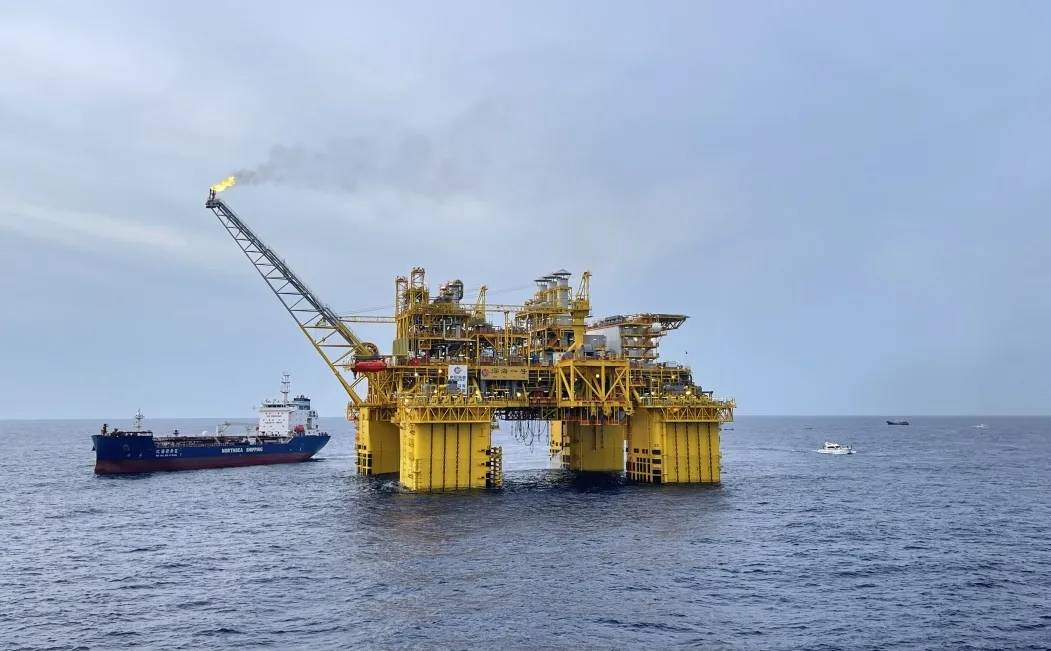
On September 6, with the successful opening of the last production well in the eastern area, China's first self-operated ultra-deepwater gas field, the "Shenhai No. 1" ultra-deepwater gas field, was fully put into operation.
"Shenhai No. 1" is an offshore ultra-deepwater gas field with the deepest water depth and the most difficult exploration and development independently discovered by China so far. After the gas field is put into operation, it will supply more than 3 billion cubic meters of deep-sea natural gas to the Guangdong-Hong Kong-Macao Greater Bay Area and Hainan every year, which is of great significance for ensuring national energy security, driving the economic development of surrounding regions and the transformation and upgrading of energy structure.
Although "Deep Sea One" is so huge
But the province is not wasted
There is not a single place left that should be cleaned
Optimized design for steel savings
The maximum oil storage capacity of the "Shenhai No. 1" column is nearly 20,000 cubic meters, saving about 550 tons of steel for the construction of storage tanks of the same volume; The saving of nearly 2,000 square meters of floor space means a reduction of 1,400 tons of steel used on the platform. The platform column oil storage alone reduces steel consumption by nearly 2,000 tons and reduces carbon dioxide emissions by about 4,000 tons.
Electric heating is efficient and fuel-efficient
Shenhai No. 1 uses natural gas to generate electricity, and the combined heat and power unit provides electricity and heat for the entire energy station, and the comprehensive thermal efficiency of the whole set of combined heat and power units can reach 85%. Three waste heat conduction oil furnaces make full use of the flue gas of the main gas turbine power station, and the heat medium furnace no longer needs to consume natural gas alone, saving 31.5 million cubic meters of fuel gas and reducing carbon dioxide emissions by 62,000 tons per year.
Smooth operation saves energy consumption
Shenhai 1 uses inverter compressors to ensure that the machine continues to run at the optimal frequency, reducing natural gas consumption by 3.6 million cubic meters per year.
Even offshore oil and gas field production has been relatively green and low-carbon
In the general trend of energy transition
There is still a long way to go
With more low-carbon and environmentally friendly new energy put into use
Some countries have started to collect carbon taxes
The carbon trading market is open
Even offshore gas fields face the challenge of a low-carbon transition
Can we achieve a win-win situation of "low carbon + low cost"?
How does the break-even oil price of $10/barrel VS the carbon emission of 0.1kg/barrel be achieved?
In the North Sea, on August 27, the third phase of the Troll oil and gas field, which belongs to Equinor, was officially put into production. Troll Phase 3 consists of two subsea production systems, eight production wells, and new pipelines and cables located in the western part of the Troll field, which are connected to the existing Troll A platform. The recoverable reserves of Troll Phase III are as high as 347 billion cubic meters, extending the development cycle of the entire Troll oil and gas field beyond 2050.
The Troll oil and gas field is one of the largest oil and gas fields on the Norwegian continental shelf. The Troll Phase 3 project further develops the previously unused Troll West subsea natural gas resources and makes full use of the completed Troll A platform to increase the natural gas production of the entire project in an efficient and low-cost manner.
Despite high carbon taxes in the Nordic region, Troll III remains the most profitable project in the company's history, with a breakeven oil price of less than $10/bbl. In addition to excellent economic benefits, Troll Phase 3 has also achieved remarkable results in low-carbon environmental protection.
According to official Equinor data
CO2 emissions from Troll Phase III
Less than 0.1 kg/barrel of oil equivalent
How does Troll Phase 3 work?
Open source + throttling to obtain carbon credits
The direct purchase of carbon credits, as well as the construction of its own CCUS projects to create carbon credits, enabled Equinor to significantly reduce carbon emissions in Troll III.
Shore power + wind power Adhere to electrification
A committed electrification path is the key to achieving low carbon emissions.
Offshore oil and gas installations on the Norwegian continental shelf emit around 13 million tonnes of CO2 per year, so Equinor takes its upstream carbon emissions very seriously. To reduce carbon emissions in the upstream sector, Troll Phase III has two tricks:
Increase the proportion of shore power supply
84.6% of the CO2 emissions from the Equinor offshore platform come from the platform's gas-fired power generation equipment, so shore power is the best solution to reduce the carbon emissions of offshore oil and gas fields.
In 1996, Equinor tested shore power for the first time on the Troll A platform. The Troll A platform is also the first offshore oil and gas platform in Europe to use shore power. Since 1996, Equinor has been reducing the number of gas generators per platform and gradually increasing the proportion of shore power.
Currently, Equinor has two major electrification retrofit projects underway.
The first is the joint electrification project of the Utsira High block and the Sleipner block. Equinor plans to use a subsea transmission line to connect the three platforms on the Utsira High block with the three platforms on the Sleipner block. The six offshore oil and gas fields will be powered by shore power from 2022 onwards. It is worth mentioning that Johan Sverdrup, the world's first declared carbon neutral oil field, is located in the Utsira High block and is one of the six platforms involved in the renovation project. In addition, the Sleipner block is home to Equinor's CCUS project, which further reduces emissions across the region.
Another large-scale electrification project is the Troll oil and gas field electrification project. Although the Troll A platform was connected to shore power very early, due to technical limitations, the Troll B and Troll C platforms, which are further offshore than the platform, have been powered by gas turbine generators on the platform. Equinor plans to invest NOK 7.9 billion (about USD 900 million) to build two subsea transmission lines, one 15 km long to connect Troll B to Troll C and the other 77 km long to connect Troll B to shore power supply in Kollsnes. The line is expected to be completed in 2026, when the Troll C will be fully shore powered and the Troll B will be partially shore powered. When completed, the renovation project will reduce carbon emissions by 466,000 tonnes per year, accounting for 1% of Norway's total carbon emissions in 2021.
Layout of offshore wind power generation
Many deep-sea oil and gas fields are located far from land, and it is not technically and economically feasible to use submarine cables to connect land power supply equipment. As a leader in offshore wind, Equinor has plans to build offshore wind turbines around the platform to power the platform directly. The Hywind Tampen offshore wind project currently under construction has 11 wind turbines with a total power generation capacity of 88 MW. When completed, Hywind Tampen will be able to meet 35% of the annual electricity demand of the five surrounding offshore platforms, which will reduce carbon emissions by 200,000 tons per year.
What should be done to reduce the carbon emissions of offshore gas fields?
Equinor's practice shows that there is a feasible way to reduce carbon emissions or even achieve carbon neutrality in offshore oil and gas fields. Taking the gas fields around Hainan Island as an example, Equinor's experience includes:
Upgrading shore power transmission technology
The offshore distance of the platform is a key factor restricting the promotion of shore power. The three platforms of the Troll oil and gas field are located 80 kilometers from land. At present, the Valhall offshore platform in the Norwegian sea has achieved 300 kilometers of 150 kV shore power HVDC transmission. The Valhall platform's shore power system replaces the offshore platform's original 78 MW natural gas turbine power platform. With the advancement of technology, the transmission distance of shore power will continue to expand.
"Greening" the source of shore power in gas fields
Carbon emissions from purchased electricity are the main source of Scope 2 carbon emissions. The source of shore power is not low-carbon and environmentally friendly, which directly affects the low-carbon and environmental protection level of offshore gas fields. 98% of the electricity in Norway's electricity mix comes from hydropower. The vast majority of shore power from the Troll offshore platform comes from clean energy generation.
In 2020, Hainan Province accounted for 47%, 31%, 9% and 13% of coal, nuclear, natural gas and renewable energy power generation, respectively. The gas fields around Hainan Island are switching to shore power, and it is necessary to assess the degree of "greening" of shore power.
Try wind and photovoltaic power
Hainan Island is rich in wind energy resources, and offshore wind power is also a potential direction for achieving clean and low-carbon offshore gas fields. At the same time, Hainan Island is located south of the Tropic of Cancer and has long sunshine hours, which is suitable for the development of offshore photovoltaics. At present, offshore PV projects are still a blue ocean, and the feasibility of building offshore PV experimental platforms on or around offshore gas field platforms can be explored.
Development of offshore CCUS technology
Research on the carbon dioxide generated in the development of oil and gas fields or generated by other enterprises into the seabed formation for oil displacement or storage, so as to reduce carbon dioxide emissions or exchange carbon emission indicators. On August 28, CNOOC launched China's first offshore CCUS project, which is expected to store more than 1.46 million tons of carbon dioxide.
Improve the efficiency of gas production in gas fields
Through the innovation of gas production technology, more efficient energy-consuming equipment will be upgraded, so that the energy consumption per unit of natural gas production will reach the world's leading level.
0 comments
Related testimonials
CCTV Finance × Sany Heavy Industry: Transportation construction continues to heat up! In May, the infrastructure was full of bright spots →
2025.06.17
CCTV Finance × Sany Heavy Industry: Infrastructure results are released! Anhui is soaring, and the equipment of the western port has become a "dark horse"
2025.05.19
China's installed wind and solar capacity has historically surpassed that of thermal power
2025.04.28




0 comments