Global wind power capacity is expected to fall to 88GW in 2021, slightly lower than in 2020 and the second highest level in history, largely driven by the "rush to install" offshore wind power in China and onshore wind power in the United States. Over the next five years, the compound annual growth rate (GAGR) of new wind power capacity is expected to reach 4% globally, and offshore wind power will reach 31.5%.In 2025, the new installed capacity of global wind power will exceed 110GW, bringing the total new installed capacity from 2021 to 2025 to 470GW, close to 2/3 of the current cumulative installed capacity of global wind power.While providing affordable, clean, and zero-carbon electricity, wind power can also create significant economic and social benefits for local communities and drive industrial development. For large-scale onshore and offshore wind projects, there will be many stable jobs across the value chain.The Global Wind Energy Council (GWEC) predicts that by 2025, the cumulative installed capacity of global wind power will exceed 1,210GW. Policymakers should recognize the enormous, direct value creation capacity of the global wind power market if they want to maximize the economic and social benefits of economic recovery stimulus packages.There are many benefits to developing renewable energy
Previous peer-reviewed studies have found that renewables generate far more jobs than fossil fuels for the same scale of investment.In 2017, an article published in the authoritative journal Economic Modelling calculated that with an investment of US$1 million (about 6.37 million yuan), renewable energy would bring 7.49 full-time equivalent (FTE) jobs, more than three times that of fossil fuels (2.66), which means that for every US$1 million spent in the transition from "brown" to "green". There will be a net increase of about 5 jobs.In March 2021, the International Renewable Energy Agency (IRENA) released a report aligned with the goals of the Paris Agreement on an energy transition scenario to achieve carbon neutrality globally by 2050. Under this scenario, $1.14 trillion will need to be invested in renewable energy annually from 2021 to 2050. By 2050, wind power will account for one-third of the world's total electricity generation.These inputs, in addition to helping to limit global temperature rise to 1.5°C above pre-industrial levels, are expected to quadruple renewable energy employment to millions.In a roadmap for energy transition scenarios published in 2020, the International Renewable Energy Agency (IRENA) analysed the geographical distribution of energy transition-related jobs in the renewable energy sector. Southeast Asia and Latin America will have a very high share, and the wind power industry in these two regions is growing rapidly. In the longer term, the job market in East Asia and Latin America is expected to expand by 20 percent, while in Oceania it will grow by 380 percent, through an effective policy system to drive an ambitious energy transition.The economic benefits of wind power also extend to the massive reduction of energy-related CO2 emissions. By 2050, the global installed 6TW of wind power is expected to reduce CO2 emissions by 6.3 billion tonnes per year, more than any other renewable energy technology, energy efficiency or electrification option. At the national level, this will result in significant cost savings in terms of health, infrastructure, social welfare, and system resilience, as carbon reductions can help significantly reduce the harm caused by climate change, including pollution-related diseases and the frequency/intensity of natural disasters.
Global wind power has the potential to drive jobs
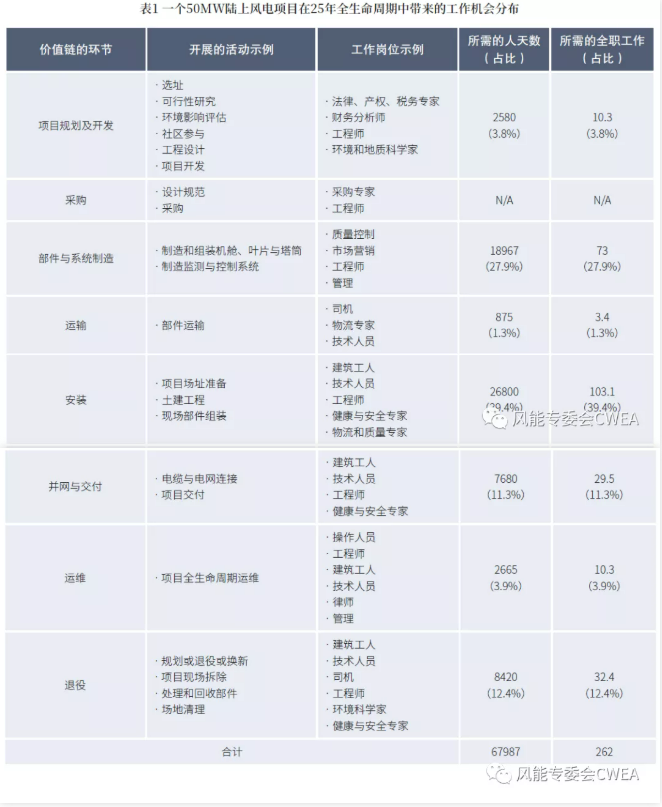
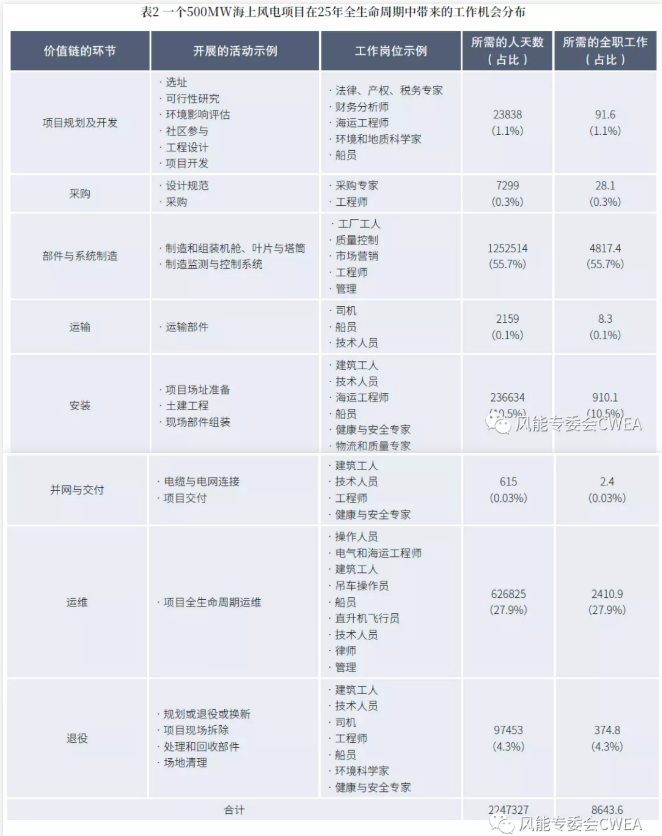
At present, the total number of direct employees in wind power in the world's top countries in terms of installed wind power capacity has reached hundreds of thousands.According to the Global Wind Energy Council Market Intelligence (GWEC MarketIntelligence) as of 2020The number of wind power practitioners in China is about55million, Brazil for26million, the United States for11.5million, India for6.3Ten thousand.If the 470GW of new wind capacity from 2021 to 2025 is delivered on time, the Global Wind Energy Council (GWEC) expects these installations to generate more than 3.3 million jobs over their lifetime. The estimate is based on the International Renewable Energy Agency's (IRENA) calculations on the job creation capacity of onshore and offshore wind projects (2017 and 2018) and the Global Wind Energy Council's (GWEC) forecast for future wind market growth.It is important to note that these estimates do not take into account some of the factors that may affect job creation, such as technological advances, local health and safety requirements, domestic labor productivity, and economies of scale.Research by the International Renewable Energy Agency (IRENA) shows that a typical 50MW onshore wind project will generate 5.24 jobs per megawatt of installed capacity over its 25-year life cycle. Over the 25-year life cycle of a typical 500MW offshore wind project, MW per MW will generate 17.29 person-years.Such studies reflect the good performance of wind power in creating jobs so far. For example, the Hull region in the UK has created more than 1,000 direct local jobs through the development of wind turbine assembly operations. In 2020, a report by the Economic Council of the Labour Movement in Denmark and the United Federation of Danish Workers found that offshore wind development creates the most permanent jobs than building biorefineries and replacing oil-fired boilers.Offshore wind can play a special role in driving the development of coastal communities, which are often far from urban economic centers. Expanding local employment and accelerating industrial development can help drive economic prosperity in these regions. According to a study by the New York State Energy Research and Development Authority (NYSERDA) on the job creation of offshore wind in the United States, two-thirds of the work required for the entire life cycle of an offshore wind project can be done by American workers.Even so, due to the lack of local production facilities and a trained workforce, not all markets place a high value on sourcing and manufacturing in the value chain.For markets where the development of such chains is still in its early stages, it is crucial to highlight the path by leveraging existing capabilities, expertise and industries to maximize local value creation. In markets that rely on imported components, the installation, grid connection, operation and maintenance and decommissioning of wind power still need to be done by domestic workers.In order to maximise the short-term job creation potential in these regions, it is critical to identify "shovel-ready" projects in the domestic market, such as those that have received planning permission and are in the pre-construction stage. Once production and operational capacity is restored, development activities for these projects can be rapidly advanced and construction workers, drivers, technicians, engineers, etc. can be hired locally.In order to maximize the value of wind development in markets with low domestic manufacturing levels, it is essential to maintain a stable and consistent pipeline of "well-prepared" projects, which requires an efficient and transparent approval process. As a result, green recovery actions that help streamline the permitting process for wind power projects can unlock job creation across transportation, installation, and delivery. These three components account for more than half of the labor resources required for an onshore wind project.
The role of wind power in driving a just and inclusive transition
2020The oil and gas market was in turmoil due to the fluctuation of electricity demand...... The impact of the pandemic has been widespread and far-reaching, prompting cost dynamics (cost dynamics) is constantly changing, further increasing the acceptance of renewable energy.These events have also made the energy transition even more urgent, requiring proactive changes to allow the system to embrace a high proportion of renewables and accelerate the phase-out of coal power. Since the start of the pandemic, only about one-third of the energy stimulus spending pledged by G20 countries has been earmarked to support clean energy.The pandemic and the resulting recession have exacerbated systemic imbalances around the world and fueled a greater desire for sustainability. As policymakers seek to sustain short-term economic benefits, it is extremely important to remain people-centered. Stimulus spending and policy support for economic recovery must be consistent with achieving a just and inclusive energy transition, including mainstreaming diversity and taking responsibility for the transfer of labour from other traditional industries.These pursuits are mutually reinforcing. There is plenty of evidence that the economic recovery can help build more resilient systems and a future-ready workforce.Renewables offer a strong investment proposition for a green recovery. The Global Wind Energy Council (GWEC) expects 470GW of new wind capacity to be installed globally over the next five years, with millions of jobs created, but this will require enablers such as ambitious renewable energy targets, long-term thinking about climate action, and a regulatory environment to ensure that project development stays on track.
The development of offshore wind power will help stabilize the global job market
Compared to onshore wind power, due to the higher requirements of the manufacturing, installation, grid connection and O&M phases, coupled with the project timeline (project timeline) In the longer term, investment in offshore wind power can undoubtedly generate compound value in terms of employment (compound value), and in turn mitigate the impact of the energy transition on the global labor market, such as offshore oil and gas jobs and offshore mechanic jobs.The US, UK, and North Africa markets have invested heavily in retraining practitioners in traditional offshore industries to make the most of their skills and knowledge in production platforms, oceanographic surveying, offshore hoisting and construction, and other overlapping segments. For example, in Scotland, the 14 million pounds (about 126.47 million yuan) oil and gas transformation training fund has provided more than 4,200 workers with retraining services for green jobs, and 89% of them have obtained new jobs after completing the training.To fully activate local economic activity, policymakers must make strategic choices about how to leverage existing capacity and workers to drive high-growth industries. Retraining offshore oil and gas workers with the expertise to construct and install in offshore environments in accordance with the requirements of wind power should be a priority in promoting the growth and competitiveness of a low-carbon economy.Offshore wind creates jobs in the manufacture of steel for foundations, booster stations and installation vessels, submarine cables, vehicles and vessels. These links can make full use of the supply chain and labor of the offshore oil and gas industry.According to a study published by the American Wind Energy Association (AWEA) in 2020, offshore wind power is a high-paying profession that requires a diverse range of skilled labor, involving about 74 types of work, including electricians, welders, crew technicians, dock workers, truck drivers, crane drivers, steelworkers, plumbers, pilers, engineers, machinists, scientific researchers, offshore equipment and vessel operators.Potential short-term investment areas include targeted education and training programs, investment programs, industrial upgrading, and the promotion of public-private partnerships and joint ventures. Long-term investment areas include supplier development programs.






0 comments