
Earth-moving machineryConcrete machinerycraneRoad machineryPiling machineryCoal machineryPort machineryWind power equipmentSany heavy truckTrinity ConstructionPetroleum equipmentTrinity EnvironmentEnvironmental engineeringEmergency rescue equipmentMining dump truckstip truckAerial work machineryLithium battery equipmentWarehousing and logisticsPhotovoltaic productsHydrogen equipmentCrushing equipment
Micro-diggingSmall diggingMedium diggingBig diggingWheeled excavatorsLoaderDiversify your productsAttachments
Pump trucksMixer trucksConcrete batching plantOn-board pumpsElectric vehicle on-board pumpsTow pumpMortar pumpsWet sprayerFilling pumpsNew energy mixer truckDry mix mortar mixing plantMortar/concrete dual-purpose batching plant
Truck cranesAll-terrain cranesTruss boom crawler craneTelescopic crawler craneMultifunctional crawler craneFlat-top tower craneTruck-mounted cranes
Reach stackerContainer empty container handlersforkliftGrab steel (material) machinePure electric port tractorTelehandlersShore-to-shore container cranesRail-mounted container gantry craneRubber-tyred container gantry craneGantry crane
3.X Medium and low wind speed wind turbines4.X Medium and high wind speed / all-weather / customized product platform5.X-6. X MW customized product platform
Smart PC equipmentIntelligent AAC equipmentIntelligent steel processing equipmentMobile crushing and screening equipmentMould fixturesCategory 2 standards3 soft 1 platform
Mechanical fracturingElectric fracturingOil-connected equipmentWellhead automationOilfield machineryFracturing pumps
Pure electric road cleaning vehiclePure electric solid waste collection and transfer vehicleMunicipal maintenance vehicles
Compressed air foam fire truckdroneSpecial-duty fire trucksCombat logistics support fire trucksRaise jet fire trucksAscending platform fire truck
High-speed homogenization systemDouble-layer extrusion coaterRoller pressing and slitting machineZ-type cutting and stacking machineWinding machinePrimary and secondary injection machinesCompound capacity needle bedModule PACK line

Earth-moving machineryConcrete machinerycraneRoad machineryPiling machineryCoal machineryPort machineryWind power equipmentSany heavy truckTrinity ConstructionPetroleum equipmentTrinity EnvironmentEnvironmental engineeringEmergency rescue equipmentMining dump truckstip truckAerial work machineryLithium battery equipmentWarehousing and logisticsPhotovoltaic productsHydrogen equipmentCrushing equipment
Micro-diggingSmall diggingMedium diggingBig diggingWheeled excavatorsLoaderDiversify your productsAttachments
Pump trucksMixer trucksConcrete batching plantOn-board pumpsElectric vehicle on-board pumpsTow pumpMortar pumpsWet sprayerFilling pumpsNew energy mixer truckDry mix mortar mixing plantMortar/concrete dual-purpose batching plant
Truck cranesAll-terrain cranesTruss boom crawler craneTelescopic crawler craneMultifunctional crawler craneFlat-top tower craneTruck-mounted cranes
Reach stackerContainer empty container handlersforkliftGrab steel (material) machinePure electric port tractorTelehandlersShore-to-shore container cranesRail-mounted container gantry craneRubber-tyred container gantry craneGantry crane
3.X Medium and low wind speed wind turbines4.X Medium and high wind speed / all-weather / customized product platform5.X-6. X MW customized product platform
Smart PC equipmentIntelligent AAC equipmentIntelligent steel processing equipmentMobile crushing and screening equipmentMould fixturesCategory 2 standards3 soft 1 platform
Mechanical fracturingElectric fracturingOil-connected equipmentWellhead automationOilfield machineryFracturing pumps
Pure electric road cleaning vehiclePure electric solid waste collection and transfer vehicleMunicipal maintenance vehicles
Compressed air foam fire truckdroneSpecial-duty fire trucksCombat logistics support fire trucksRaise jet fire trucksAscending platform fire truck
High-speed homogenization systemDouble-layer extrusion coaterRoller pressing and slitting machineZ-type cutting and stacking machineWinding machinePrimary and secondary injection machinesCompound capacity needle bedModule PACK line
Sany Heavy Industry Sany Heavy Industry Co., Ltd. (SH:600031)
Trinity International Sany International (HK:00631)
Sany Renewable Energy Sany Renewable Energy (SH:688349)
Home > Industry information > 100 million kilowatts have started! Xi Jinping delivered an important speech, once again emphasizing that China will fulfill its "dual carbon" commitment!
100 million kilowatts have started! Xi Jinping delivered an important speech, once again emphasizing that China will fulfill its "dual carbon" commitment!
2021.11.01
CWEA
On October 30, President Xi Jinping attended the first phase of the 16th G20 Summit in Beijing via video link and delivered an important speech.
Xi Jinping pointed out that China has always taken the initiative to assume international responsibilities in line with its national conditions, actively promoted the green transformation of the economy, and continuously improved its efforts to address climate change, and eliminated 120 million kilowatts of coal-fired power in the past 10 years, and the first batch of large-scale wind power and photovoltaic base projects with an installed capacity of about 100 million kilowatts have started in an orderly manner in the near future. China will strive to peak carbon emissions by 2030 and achieve carbon neutrality by 2060. We will keep our promises and work with other countries on a green, low-carbon and sustainable path.
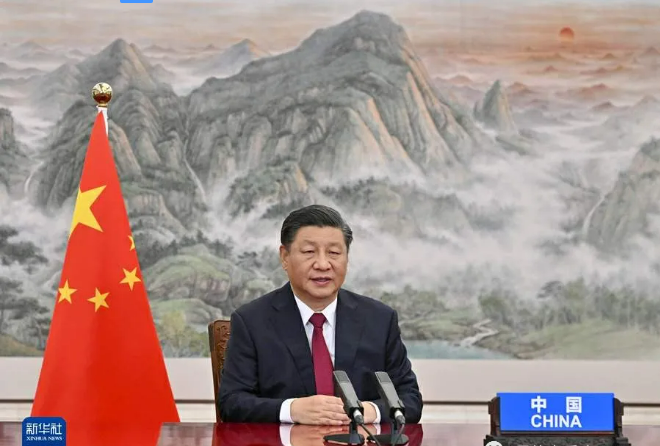
On October 30, President Xi Jinping attended the first phase of the 16th G20 Summit in Beijing via video link and delivered an important speech.
Xi Jinping pointed out that at present, the new crown pneumonia epidemic continues to recur, the world economic recovery is fragile, the challenge of climate change is prominent, and regional hotspot issues are frequent. In the face of major changes in the world unseen in a century and the pandemic of the century, the G20, as the main forum for international economic cooperation, should shoulder its due responsibilities, adhere to openness, inclusiveness and win-win cooperation for the future of mankind and the well-being of the people, practice true multilateralism, and promote the building of a community with a shared future for mankind.
Xi Jinping put forward a five-point proposal.
First, we need to work together to fight the pandemic. The international community should make concerted efforts to respond to and defeat the novel coronavirus pneumonia epidemic in a scientific manner, strengthen cooperation in prevention and control, diagnosis and treatment, and improve its ability to respond to major public health emergencies. The G20 should play a leading role in building consensus, mobilizing resources and promoting cooperation.
I would like to further put forward the following initiatives for global vaccine cooperation: First, strengthen cooperation in vaccine scientific research and support joint R&D and production between vaccine companies and developing countries. Second, we need to uphold fairness and justice, step up the provision of vaccines to developing countries, and implement the 2022 global vaccination target set by the World Health Organization. The third is to support the World Trade Organization to make an early decision on the waiver of intellectual property rights for vaccines, and encourage vaccine companies to transfer technology to developing countries. Fourth, strengthen cross-border trade cooperation to ensure smooth trade in vaccines and raw materials. Fifth, we need to treat all vaccines fairly and promote mutual recognition of vaccines based on the World Health Organization's vaccine emergency use list. Sixth, we need to provide financial support for global vaccine cooperation, especially for developing countries to obtain vaccines.
So far, China has provided more than 1.6 billion doses of vaccines to more than 100 countries and international organizations, and will provide more than 2 billion doses this year. China is carrying out joint vaccine production with 16 countries, and has launched the Belt and Road Vaccine Partnership Initiative with 30 countries. China stands ready to work with all parties to improve the accessibility and affordability of vaccines in developing countries and make positive contributions to building a global vaccine line of defense.
Second, strengthen coordination to promote recovery. Macroeconomic policy coordination should be strengthened to maintain policy continuity, stability and sustainability. Major economies should adopt responsible macroeconomic policies, avoid negative spillover effects on developing countries, and maintain the sound functioning of the international economic and financial system.
At the same time, we should take a long-term view, improve the global economic governance system and rules, effectively reflect the changes in the international economic landscape, and enhance the voice of developing countries. China welcomes the International Monetary Fund's issuance of additional SDRs and is willing to lend them to low-income countries that have been severely affected by the pandemic.
It is necessary to safeguard the multilateral trading system with the World Trade Organization at its core, build an open world economy, and safeguard the rights and interests of developing countries and their development space. It is necessary to restore the normal operation of the dispute settlement mechanism as soon as possible and maintain the security and stability of industrial and supply chains. China proposes to hold an international forum on the resilience and stability of industrial and supply chains, and welcomes the active participation of G20 members and relevant international organizations. China stands ready to work with all parties to achieve more fruitful results in high-quality Belt and Road cooperation.
Third, inclusiveness and common development. We should put people at the center, make global development more equitable, effective and inclusive, and strive to leave no country behind. The G20 should give prominence to development in macroeconomic policy coordination and implement initiatives to support the industrialization of Africa and the least developed countries. The developed economies need to honour their ODA commitments and provide more resources to developing countries. The Global Development Initiative (GDI) launched at the United Nations is highly consistent with the G20's goals and priorities for promoting global development, and all countries are welcome to actively participate in it.
Fourth, innovation-driven, mining power. The G20 should work together to tap the potential of innovation growth, formulate rules based on full participation and broad consensus, and create a sound ecosystem for innovation-driven development. Artificially creating small circles, or even drawing ideological lines, will only create estrangement and increase obstacles, and will do all kinds of harm to scientific and technological innovation but not any good.
It is necessary to share the responsibilities of the digital era, accelerate the construction of new digital infrastructure, promote the deep integration of digital technology with the real economy, and help developing countries bridge the "digital divide". China has proposed the Global Initiative on Data Security, and we can jointly explore the formulation of international rules for digital governance that reflect the will of all parties and respect the interests of all parties, and actively create an open, fair, just and non-discriminatory environment for digital development. China attaches great importance to international cooperation in the digital economy, has decided to apply for accession to the Digital Economy Partnership Agreement, and is ready to work with all parties to promote the healthy and orderly development of the digital economy.
Fifth, harmonious coexistence and green sustainability. The G20 should uphold the principle of common but differentiated responsibilities, promote the full implementation of the Paris Agreement on climate change, and support the success of the 26th Conference of the Parties to the United Nations Framework Convention on Climate Change and the 15th Conference of the Parties to the Convention on Biological Diversity. Developed countries should set an example on emission reduction, fully take into account the special difficulties and concerns of developing countries, implement their climate finance commitments, and provide support to developing countries in terms of technology and capacity building.
China has always taken the initiative to shoulder international responsibilities in line with its national conditions, actively promoted the green transformation of its economy, and continuously strengthened its actions to address climate change. China will strive to peak carbon emissions by 2030 and achieve carbon neutrality by 2060. We will keep our promises and work with other countries on a green, low-carbon and sustainable path.
Xi Jinping pointed out that the ancient Chinese said: "Those who are honest are the knot of the world." That is to say, honesty is the foundation of making friends with the world. China will adhere to the basic national policy of opening up to the outside world, give full play to the advantages of a super-large-scale market and the potential of domestic demand, strive to promote institutional opening-up in terms of rules, regulations, management and standards, continuously strengthen the protection of intellectual property rights, and continue to create a market-oriented, law-based and international business environment, so as to provide a fair and just market order for Chinese and foreign enterprises. I believe that China's development will bring more new opportunities to other countries and inject more new impetus into the world economy.
In conclusion, Xi Jinping stressed that building a community with a shared future for mankind requires the unremitting efforts of all countries in the world. The road is long and resistant, the line is coming, and the future can be expected if the line is not stopped. Let us unite to dispel the haze of the epidemic as soon as possible and work together to build a better future.
The summit was chaired by Italian Prime Minister Mario Draghi, who holds this year's G20 presidency. Leaders of G20 member countries, leaders of guest countries and heads of relevant international organizations attended the meeting through a combination of online and offline methods.
State Councilor and Foreign Minister Wang Yi attended the meeting in Italy as President Xi Jinping's Special Representative.
0 comments
Related testimonials
CCTV Finance × Sany Heavy Industry: Transportation construction continues to heat up! In May, the infrastructure was full of bright spots →
2025.06.17
CCTV Finance × Sany Heavy Industry: Infrastructure results are released! Anhui is soaring, and the equipment of the western port has become a "dark horse"
2025.05.19
China's installed wind and solar capacity has historically surpassed that of thermal power
2025.04.28




0 comments