

Under the "dual carbon" goal, where will fossil fuels go?
2021.11.02
China Industrial and Economic Information Network
Energy diversification is not about zero fossil fuels
Recently, the Central Committee of the Communist Party of China and the State Council have put forward programmatic opinions and action plans to further improve the work of carbon peak and carbon neutrality, requiring all localities and departments to establish a national awareness of a game of chess, be steady and orderly, and promote it as a whole. This also puts forward further requirements for the low-carbon development of energy and petrochemical enterprises.
China Industrial Economic Net said on November 2 that at present, the energy and petrochemical industries are facing great challenges in reducing emissions. First, the energy structure is not diversified enough, facing the dual challenges of energy security and emission reduction; Second, although some enterprises have acted quickly, they have not yet thought deeply about the "dual carbon", and some places or units have seen a campaign to reduce carbon emissions; Third, the sense of innovation is not strong, blindly chasing hot spots, and insufficient investment in key core technology research; Fourth, the overall awareness is insufficient, and the development of industrial coordination and recycling needs to be improved.
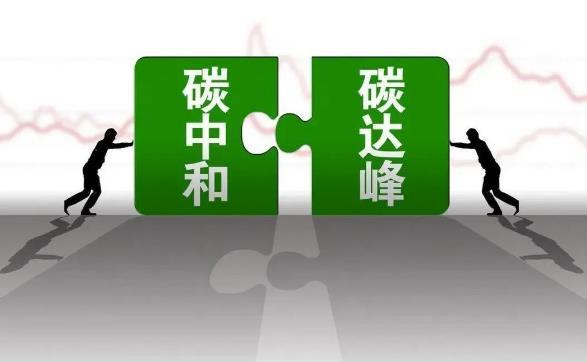
In fact, the energy and petrochemical industry is a key area to achieve the goal of carbon peak and carbon neutrality, and fossil energy combustion accounts for about 84% of China's carbon emission sources. It is necessary to promote industrial transformation and upgrading, innovate and lead technological development, seize new opportunities for industrial development, scientifically co-ordinate, and orderly promote carbon peak and carbon neutrality.
First, accelerate energy transformation and upgrading. China has made great progress in the technological upgrading and economics of renewable energy, increasing the proportion of clean energy such as renewable energy, and in-depth development of electrification combined with energy storage, which is an important measure for energy and petrochemical enterprises to reduce emissions in the production process, and it is expected that by 2060, the proportion of non-fossil energy consumption in China will increase to more than 80%. At the same time, it should be noted that the diversification of the energy structure is not blindly reducing the proportion of fossil fuels to zero, which is not conducive to national energy security, nor is it in line with China's current national conditions. Therefore, energy and petrochemical enterprises should do a good job in systematic and strategic work layout, formulate "dual carbon" plans and action plans as soon as possible, balance the relationship between traditional energy and new energy transformation, and deal with energy security and low-carbon coordinated development.
The second is to insist on innovation-driven first. Under the "dual carbon" goal, China's energy and petrochemical companies should strive to solve the "bottleneck" problem. First, on the raw material side, while maintaining the growth of high-value chemical output, we will strive to realize the transformation of petrochemical raw materials to low-carbon, lightweight and diversified. Second, on the product side, functional and high-end materials will have explosive growth, and the breakthrough development of emerging materials is conducive to the realization of China's scientific and technological independence. Third, on the energy utilization side and technology carbon reduction route, the realization of carbon neutrality also needs to rely on disruptive technologies that do not currently exist or are immature, and technologies in the fields of low-cost and high-efficiency energy storage, nuclear fusion, biomass utilization and hydrogen energy utilization may fundamentally change the future energy structure and make important contributions to the net-zero goal.
The third is to shape a new pattern of the industry. The production process of energy and petrochemical enterprises is complex, and the internal vertical and horizontal are closely linked, if the decentralized layout will also increase the difficulty of reducing resource consumption and improving pollution emissions, the cluster layout can make the upstream and downstream enterprises rational layout, product connection into a chain, and related products into a composite network, which will help to achieve green, low-carbon and circular development. The development of cluster layout requires more digital empowerment of green and low-carbon. According to the World Economic Forum, digital technology is expected to reduce global carbon emissions by 15%, and technologies such as the Internet of Things, big data, cloud computing, mobile Internet, artificial intelligence and digital twins will effectively promote the energy and petrochemical industries to effectively reduce energy consumption and emissions across the entire industrial chain. If supplemented by infrared camera technology, satellites,drone, digital sensors and other high-tech to strengthen the detection and repair of leaks, will also effectively ensure the cluster layout of energy and petrochemical safety production.
Fourth, implement corporate responsibility. The "14th Five-Year Plan" and the "15th Five-Year Plan" are critical periods for China to achieve the "double carbon" goal, and enterprises should focus on the goals of non-fossil energy consumption, improving energy efficiency, and reducing carbon dioxide emissions, implement green and low-carbon energy transformation actions, and increase efforts in comprehensive energy management, petrochemical raw material lightweight, product structure optimization, carbon emission reduction and recycling, and carbon asset operation and management, so as to face difficulties and achieve green and low-carbon development.
Related testimonials
CCTV Finance × Sany Heavy Industry: Transportation construction continues to heat up! In May, the infrastructure was full of bright spots →
2025.06.17
CCTV Finance × Sany Heavy Industry: Infrastructure results are released! Anhui is soaring, and the equipment of the western port has become a "dark horse"
2025.05.19
China's installed wind and solar capacity has historically surpassed that of thermal power
2025.04.28




0 comments