

McKinsey & Company talks to Yi Xiaogang: Made in China, the walker has no borders, and the creator has no fear!
2023.12.12
McKinsey
Recently, McKinsey & Company published an article titled "Interview with Yi Xiaogang, CEO of Sany Group: Made in China, Walkers Without Borders, Creators Without Fear", and Yi Xiaogang, Director, Executive President and Chief Engineer of Sany Group, had a dialogue on Sany's digital and intelligent transformation and the construction of lighthouse factories.
Original report
In this issue of "Interview with Senior Executives of Lighthouse Enterprises", Hou Wenhao, Global Managing Partner of McKinsey & Company, interviewed Mr. Yi Xiaogang, Director, Executive President and Chief Engineer of Sany Group, and walked into the "smartest" Changsha factory. In the context of the digital and intelligent transformation of the manufacturing industry, the two sides conducted an in-depth discussion on the "original intention, ingenuity and perseverance" of Sany Group.
As a leading enterprise in smart manufacturing, Sany Group has 46 digital factories and is further drawing the blueprint of China's smart factories with the help of the Fourth Industrial Revolution technology. Among them, two of Sany Group's factories have been selected for the Global Lighthouse Network initiative led by the World Economic Forum and jointly established by McKinsey, and are the only two lighthouse factories in the world's heavy industry. The newly selected Changsha No. 18 factory in October 2022 has achieved remarkable transformation results in a 123% increase in production capacity, a 98% increase in personnel efficiency, and a 29% reduction in unit manufacturing costs compared with before the transformation.
As the helmsman of Sany Group's intelligent manufacturing, Mr. Yi Xiaogang is a staunch continuous innovator. From the research and development of a number of world-leading gradesPump trucksTo build Changsha No. 18 lighthouse factory, his pace of innovation and entrepreneurship has never stopped. In order to actively respond to the global sustainable development and the domestic "double carbon" goal, he led the team into the new energy track.
In the critical period of Industrial Revolution 4.0, we have seen the wisdom and courage of China's manufacturing industry in the great changes from their dialogues. The following is an edited transcript of the interview.
Original intention: to be a wise steel tailor
"Behind the steel tailor is not only flexible automation, but also smart brains, these systems are our independent intellectual property rights"
QHou Wenhao: I also interviewed you in 2016, can you ask what are the major changes in Changsha from 2016 to 2023?
Yi Xiaogang: The period from 2016 to 2023 is a critical stage for our company's digital transformation and intelligent manufacturing transformation. Prior to 2016, our main focus was on product innovation. Since 2016, the overall domestic situation and basic background have changed, China's industrial base has reached a high level, but at the same time, the homogenization of the field of construction machinery is serious. Therefore, in this period, we must think about how to further enhance the core competitiveness of the entire Sany Group. First of all, our chairman emphasizes digital intelligence, that is, digitalization and intelligence.
The product should be intelligent, which means that our entire management system should be informatized, decision-making should be intelligent, and most importantly, the workshop should be intelligent. Before 2016, we mainly focused on labor-intensive manual work, and now we are basically based on robot operations under information management, supplemented by manual operations. For example, in Factory No. 18, there are currently more than 300 workers, but most of them are engaged in mental work, mainly operating machine programs.
QHou Wenhao: As the person in charge of the planning and implementation of intelligent manufacturing, what is your original intention to build the No. 18 lighthouse factory?
Yi Xiaogang: In fact, Sany Group wanted to develop smart factories and intelligent manufacturing very early, but it didn't know how to implement it at that time. One day, we suddenly discovered that the World Economic Forum had a lighthouse standard that pointed us in the right direction. The enhancement of Lighthouse 18 is based on two main historical contexts. First of all, China's industrial base has been greatly improved, including information technology, computer means and robot technology, and the surrounding industrial technology has also been greatly improved. In this way, the construction of the lighthouse factory was possible.
The second historical background is that the knowledge structure of China's labor force has changed greatly. Over the years, the labor force population has decreased, but the knowledge level of the labor force population has been continuously improved, which has laid a good foundation for intelligent manufacturing. In these two historical contexts, this is a once-in-a-lifetime opportunity.
QHou Wenhao: What are the difficult and highlight moments in this process?
Yi Xiaogang: We belong to the heavy equipment manufacturing industry. It has several characteristics, the first of which is that each part is particularly heavy, often weighing several tons. Secondly, the heavy equipment manufacturing industry is a multi-variety, low-volume production industry. Our largest variety is only tens of thousands, usually thousands or hundreds. Therefore, in the heavy equipment manufacturing industry, which is a multi-variety, small-batch industry, it is quite difficult to achieve unmanned intelligent manufacturing.
According to our chairman, our entire manufacturing industry is like a "steel tailor". "Steel tailoring" is to cut the steel plates pulled from the steel mill into small pieces of small materials, and then weld them together, and then after precision machining, form a giant machine to solve problems and carry out complex operations. Behind the steel tailor is not only flexible automation, but also smart brains. Its "soul" is still our MOM system and IoT Internet of Things. Without IoT, MOM, and WMS on the shop floor, all the machines won't be able to function. These systems are our own intellectual property and are developed by ourselves.
There are many subtleties in this that we call "the devil in the details". For example, you may think that visual recognition is simple, but there are many practical problems in real-world engineering applications. Visual recognition is greatly affected by ambient light, pixel accuracy, and part size. If the part size is large, then the accuracy will decrease. And when we do welding, the accuracy of all edge positions should be within 0.1 mm. If it is not within 0.1 mm, the dimensional accuracy of the whole component cannot be achieved after the welding is completed. Our welding manipulator is very accurate in positioning, when a contact point is close, an arc signal will be generated, and after the system detects the signal, the manipulator will record its own spatial position and make automatic corrections.
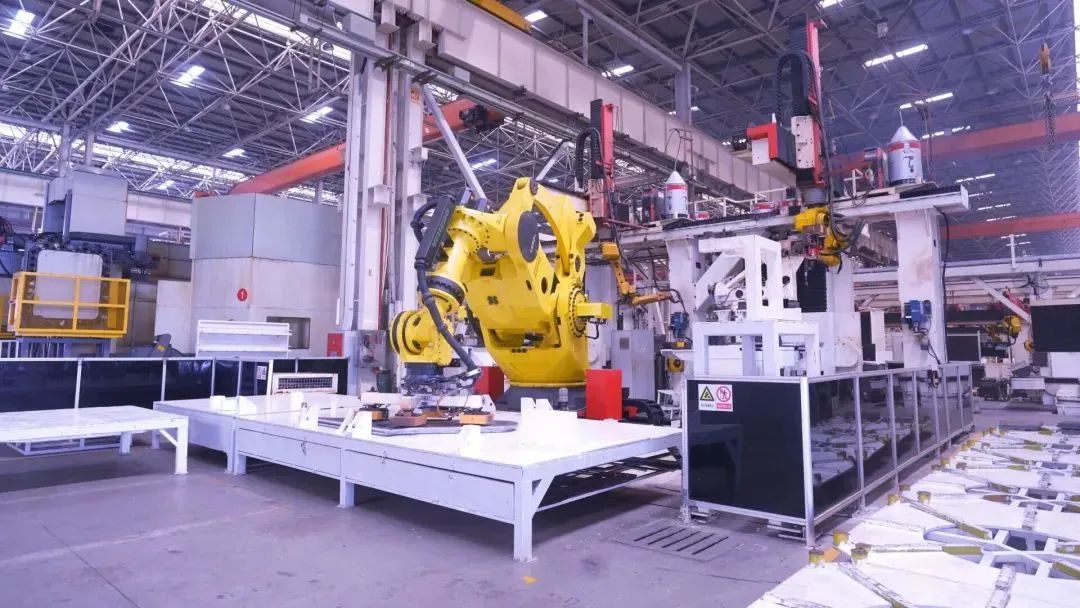
Sany Changsha No. 18 factory in the positioning of the precise positioning of the welding workstation
Ingenuity: Be a craftsman with digital intelligence skills
"The 'workers' of the future will be 'process engineers' and 'high-skilled workers', and they will not be unemployed"
QHou Wenhao: I heard that you lived and ate at Sany during the project, and you worked hard for a long time. Can you tell us the story of the people behind it?
Yi Xiaogang: Technical problems are not the biggest problem in the implementation of the entire lighthouse factory. The biggest problem comes from the habits of our workers, who are used to manual operations. For example, the machining of components can be fully automated without human intervention. But some workers are not used to it and are worried that the parts will be scrapped, so he always works for a while and has to open the equipment door to take a look. In fact, this disrupts the fully automated operation rhythm of the entire machine.
So it's about a change in mindset. Now if you go to factory 18, you will find that workers are no longer accustomed to paying attention to a certain part, but are used to looking at electronic screens, understanding anomalies and changes. If an alarm occurs, the exception is handled. In the past, a worker could only be responsible for one piece of equipment, but now a worker can be responsible for 10 or even 20 units. The working environment of workers is better, the labor intensity is lower, and the wage income is also higher. This is a win-win situation for businesses and workers.
QHou Wenhao: In the future, Sany Group will achieve the goal of "three threes", that is, 3,000 industrial workers, 30,000 engineers and annual sales of 300 billion yuan. From your perspective, which of these three goals is more difficult? How should this be achieved?
Yi Xiaogang: I think the most difficult thing is the industrial workers. Someone once asked me a sensitive question about whether there would be a lot of unemployment when there were only 3,000 industrial workers. In fact, the "workers" of the future will become "process engineers" and "high-level skilled workers". They work in an office and are responsible for computer control, optimization of parameters, and scheduling, among other things. As a result, the overall number of employees will not decrease, and employees will not lose their jobs. We now have sales of nearly 200 billion yuan and nearly 50,000 employees. I think when it gets to 300 billion, we still need these employees to do more innovative things.
We need to "upgrade" existing industrial workers, and a big part of our job at Trinity Institute of Technology is to train them in this area. In the "Trinity Institute of Technology", we can see many robots that simulate intelligent manufacturing factories. Therefore, training workers and upgrading their technology is one of the most important tasks. On the other hand, when the intelligence of field equipment is improved, it is a great challenge to ensure the normal operation, fault prevention and maintenance of equipment. That's why we also attach great importance to the training of our maintenance and repair personnel. Enterprises are developing in the process of continuous improvement, and everyone is constantly improving themselves.
QHou Wenhao: Intelligent manufacturing can indeed improve efficiency, but there are still some tasks that are quite difficult to do on the production line, such as the automation of the assembly line. How can we improve the automation rate in the frontline?
Yi Xiaogang: At present, the biggest challenge we have encountered in the heavy equipment manufacturing industry and the intelligent manufacturing of lighthouse factories is the assembly process. So, when it comes to smart manufacturing and smart assembly, what we are able to do is minimize the manual labor of assembly workers. As a small example, we currently have indicative instructions for each station. When workers are assembling, our information system will prompt some operations and processes through voice and other methods. We have a closed-loop inspection system, when the installation is completed, the system will detect the completion of various processes and assembly tasks. Of course, it is still difficult to achieve complete unmanned. The main bottleneck is the absence of giant manipulators, but I believe that this can be achieved in the future.
Perseverance: To be a joyful walker of continuous innovation
"My happiness actually comes from technological achievements, invention patents and new products, and this kind of happiness from the heart has always been my goal."
QHou Wenhao: You once said that your two least favorite sentences are, "others do it this way" and "others don't do it". Sany's innovation has always been reflected in the company's DNA. In the field of intelligent manufacturing, how do you interpret these two sentences?
Yi Xiaogang: "Because others have done this, I have done it too" and "Because others have not done this, I have not done it either". The reason why I object to these two sentences is that it specifically affects the innovation culture of a company. We must learn from others, but we must innovate on the basis of learning, not imitate. If you just imitate, then the company will stagnate and will not be able to achieve transcendence.
In order to innovate, we propose to "break fear and innovate boldly". Why Break the Fear? Sometimes innovation isn't complicated, it's a sudden burst of thought and inspiration. Why encourage bold innovation? Innovation is risky, sometimes it fails, it brings losses, but once it succeeds, it brings huge benefits. Therefore, we encourage R&D personnel to be bold and innovative.
Employees may be penalized if they do something wrong. But if an employee fails to innovate and causes losses to the company, the company will never penalize it. In the past, when we innovated high-strength materials, it took nearly two years to fail many times, from the heat treatment of raw materials, the adjustment of the ratio of boron and carbon to the heat treatment equipment. It is this encouragement of innovation that has enabled Sany Group to make a series of achievements in technological innovation, product innovation, intelligent manufacturing and informatization in recent years.
QHou Wenhao: You have worked hard for Sany all your life, you are still moving forward on the road of innovation, and now you are fully committed to the new energy industry, haven't you thought about taking a break?
Yi Xiaogang: My happiness actually comes from making achievements in technology, obtaining invention patents and launching new products, and this kind of happiness from the bottom of my heart has always been my goal. We have advantages in the field of equipment manufacturing. The development of battery equipment production lines is our strength. We will strive to make battery production equipment more advanced, more automated, and better quality, which is also the goal I pursue.
In addition, since we know our own construction machinery and construction vehicles very well, the promotion of electrification in this area is our strength and my personal goal. The electrification of construction machinery still has some way to go, and we are worth working on. But I believe that in less than 3~5 years, the electrification of construction machinery will definitely emerge.
QHou Wenhao: Can you send a message to those manufacturers who are struggling in the process of intelligent manufacturing?
Yi Xiaogang: Intelligent manufacturing technology has matured, and every manufacturing industry peer should pursue the future of intelligent manufacturing.
Hou Wenhao: You have also been innovating and starting a business, although it has been difficult along the way, but it is precisely because of this difficulty that you have finally gained something. It's like when you climb to the top and look back, the past is worth it.
Source: McKinsey
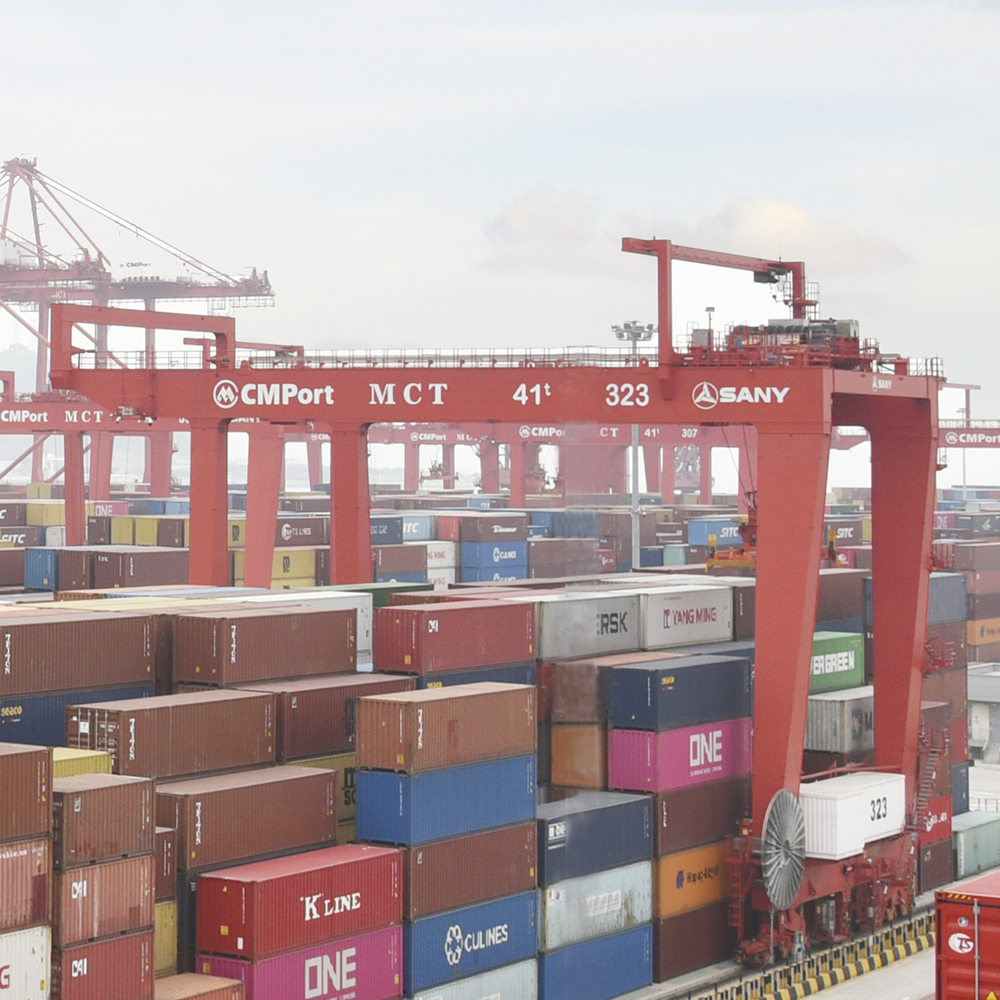
Rail-mounted container gantry crane automation
Rail-mounted container gantry craneRecommended products





0 comments