

Sany big data has changed more than just services
2016.09.12
In the camp of traditional industries, Sany always seems to reveal a temperament of "living in the future". Overseas factory construction, e-commerce platforms, and cross-border insurance industry, innovation has become the norm for this company. In 2014, Sany began to start the construction of a big data platform to achieve low-cost massive equipment data access and analysis. Based on this, Sany not only plugs in the wings of intelligence for its services, but also gives the design side a powerful way to understand equipment performance defects and risks.
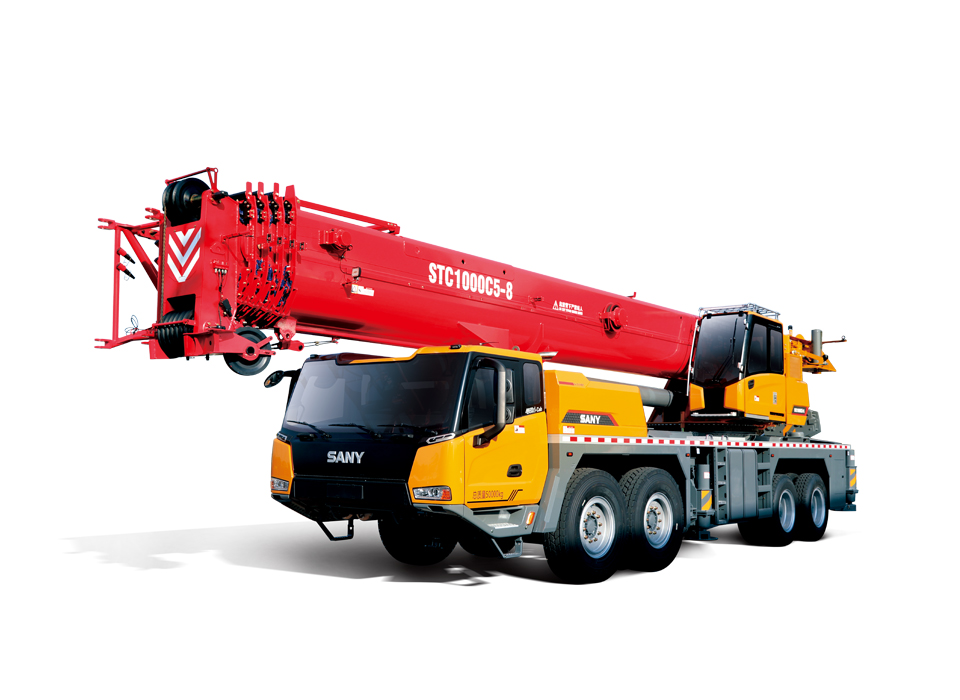
Based on big data, improvetruck craneinsurance coefficient
Robustness and efficiency are important for lifting equipment. In order to ensure strength, the insurance factor needs to be sufficient, however, this value is positively correlated with the use of materials. This also means that if you want to have a large coefficient, you need to increase the use of materials, and the more materials are used, the higher the manufacturing cost of the product, and correspondingly, the customer's purchase cost will also increase. If the material is blindly increased in order to be strong, the crane's own weight will be increased, which will affect its work efficiency. So, how much * is appropriate? With the help of big data, Sany Midea solved this problem.
Through the collection of data, Sany not only learned about the real-time operation of the crane and the information of the equipment itself, but also grasped the common problem of a customer in the process of using the crane: overload. With this information, Sany can design a *5654 mild coefficient in the product development stage, so that it can still maintain reliability and work efficiency under the premise of customer overload.

If there is no big data
Before big data, it was a common method to obtain data by sampling surveys or soliciting some customers for conference research, but this operation had disadvantages. Taking the above-mentioned improvement of the crane insurance coefficient as an example, whether it is sampling or conference research, the data that can be obtained is limited, and even if a crane driver personally participates in the research, it is unknown whether he has the habit of overloading, and even if he has the habit of overloading, it is also unknown whether he can be 100% accurate in his overload value. In other words, the data obtained in this way, both in terms of quantity and quality, seems to be inherently insufficient.
The data tends to be full sample, and it is recommended that customers be accurate
Under the monitoring of big data, the data samples obtained will tend to be full samples with high accuracy. This accuracy can not only provide information for the design side, but also give accurate suggestions when customers intend to purchase a machine. For example, if a customer intends to buy an excavator for rent, then he needs to first understand which type of excavator is easier to rent under the current market conditions, is it a big digging, a medium digging or a small excavation? If the customer asks by himself, he is limited by his personal circle, and the information he gets is one-sided. Relying on the information provided by big data, Sany can not only know which excavator market is better at present, but also foresee the future market situation, so as to give customers accurate suggestions to facilitate customers to obtain better profits.
"Walking at the forefront of the industry", this sentence is used to describe Sany Just right, as a leader in the traditional industry, Sany has never stopped exploring, I believe that its exploration and practice of big data will also bring some new thinking and enlightenment to the industry, guiding the industry into a new era!
Recommended products
Related recommendations
Sany exploded the audience! The 2025 Indonesia Mining Exhibition came to an end, with a signing amount of more than 2 billion
2025.09.22
From tradition to future: Sany Heavy Industry interprets new quality productivity with digital intelligence
2025.09.19

From products going overseas to globalization: Sany Heavy Industry leads the world with new quality productivity!
2025.09.18




0 comments