Recently, the National Energy Administration released the electricity consumption data of the whole society in January ~ May, and the National Bureau of Statistics released the energy production data. Jiang Debin, deputy director of the statistics and data center of the China Electricity Council, analyzed and interpreted the released power-related data. Jiang Debin believes that the biggest highlight of energy and power data is that the installed capacity of renewable energy power generation has reached 1.31 billion kilowatts, accounting for 48.9% of the total installed capacity.
The electricity consumption of the three major industries all achieved positive growth
"In addition to the year-on-year increase in electricity consumption of the whole society in January ~ February this year (2.3%), the year-on-year increase in electricity consumption of the whole society in March, April and May (5.9%, 8.3% and 7.4% respectively) was faster." Jiang Debin summarized the characteristics of electricity consumption in the whole society in January ~ May this year and analyzed the reasons, "The low base formed by the epidemic in East China and other parts of the same period last year is an important reason for the rapid growth of electricity consumption in April and May. ”
According to the data, in January ~ May, the electricity consumption of the primary industry was 45.6 billion kWh, a year-on-year increase of 11.6%; Among them, animal husbandry increased by 18.5% year-on-year, and fishery increased by 11.2% year-on-year. The electricity consumption of the secondary industry was 2.36 trillion kWh, a year-on-year increase of 4.9%. The electricity consumption of the tertiary industry was 613.6 billion kWh, a year-on-year increase of 9.8%.
"In 1~5 months, except for a few provinces, the electricity consumption of the rest of the provinces in the country increased positively year-on-year, which indicates that the economy affected by the new crown epidemic in the previous years is fully recovering." Jiang Debin thinks.
The data shows that in 1~5 months, the electricity consumption of the rest of the provinces except Guizhou in the country increased positively year-on-year. Among them, Hainan (15.2%), Qinghai (11.2%), Shanghai (11.0%), Guangxi (10.7%), Inner Mongolia (10.0%) and Tibet (10.0%) have a growth rate of 10% or more. In May, there were 26 provinces in the country with positive growth in electricity consumption, of which Shanghai (33.0%), Hainan (27.1%), Guangxi (17.1%), Guangdong (14.5%), Anhui (11.7%), Jiangsu (11.7%), Jilin (11.4%), Zhejiang (11.4%), Beijing (11.3%), Sichuan (10.9%), Hunan (10.5%), Inner Mongolia (10.2%) electricity consumption growth rate of more than 10%.
"In 1~5 months, the increase in domestic electricity consumption of urban and rural residents was not large, but the growth rate of urban and rural residents' domestic electricity consumption in May rebounded significantly, and the power industry sounded the alarm for the peak summer, and the power industry should respond as soon as possible." Jiang Debin said.
According to the data, in January ~ May, the domestic electricity consumption of urban and rural residents was 509 billion kilowatt hours, a year-on-year increase of 1.1%. In May, the domestic electricity consumption of urban and rural residents was 87.6 billion kilowatt hours, a year-on-year increase of 8.2%, and the growth rate was 7.3 percentage points higher than that of the previous month. Among them, the domestic electricity consumption of urban residents increased by 8.9% year-on-year, and the domestic electricity consumption of rural residents increased by 7.3%.
The growth rate of electricity consumption in the high-tech and equipment manufacturing industry is gratifying
"In 1~5 months, among the three major industries, the growth rate of electricity consumption in the secondary industry is relatively low, but the year-on-year growth rate of electricity consumption in high-tech and equipment manufacturing industry is relatively rapid, which is gratifying." Jiang Debin said.
The data shows that in 1~5 months, the total electricity consumption of the four high-energy industries increased by 3.0% year-on-year. Among them, the non-metallic mineral products industry, non-ferrous metal smelting and rolling processing industry, chemical raw materials and chemical products manufacturing industry increased by 8.1%, 3.7% and 3.2% respectively year-on-year; The electricity consumption of the ferrous metal smelting and rolling processing industry decreased by 0.9% year-on-year. Electricity consumption in the consumer goods manufacturing industry increased by 2.8% year-on-year. Among them, the electricity consumption of wine, beverage and refined tea manufacturing, food manufacturing, paper and paper products increased by 6.4%, 6.2% and 5.9% year-on-year respectively, while the electricity consumption of cultural, educational, arts, crafts, sports and recreational goods manufacturing, tobacco products, wood processing and wood, bamboo, rattan, palm and grass products decreased by 3.1%, 2.8% and 1.2% respectively year-on-year. The total electricity consumption of the high-tech and equipment manufacturing industry increased by 7.7% year-on-year. Among them, the electricity consumption of the electrical machinery and equipment manufacturing industry increased by 26.1% year-on-year, the electricity consumption of the automobile manufacturing industry increased by 15.0% year-on-year, and the electricity consumption of the pharmaceutical manufacturing industry increased by 10.5% year-on-year.
"Although the growth rate of electricity consumption in the secondary industry in May fell from the previous month, the year-on-year growth of electricity consumption in the high-tech and equipment manufacturing industry continued to increase." Jiang Debin pointed out.
According to the data, in May, the electricity consumption of the secondary industry was 495.8 billion kilowatt hours, a year-on-year increase of 4.1%, and the growth rate fell by 3.5 percentage points from the previous month. The electricity consumption of the four major high-energy industries decreased by 0.6% year-on-year, and the growth rate fell by 4.1 percentage points from the previous month. Electricity consumption in the consumer goods manufacturing industry increased by 7.7% year-on-year. The electricity consumption of the high-tech and equipment manufacturing industry increased by 11.8% year-on-year. Among them, the electricity consumption of five industries, namely electrical machinery and equipment manufacturing, automobile manufacturing, pharmaceutical manufacturing, railway/shipbuilding/aerospace and other transportation equipment manufacturing, and computer/communication and other electronic equipment manufacturing, all increased by more than 10% year-on-year.
More than 80% of new renewable energy generation
"While China's installed power generation capacity continues to grow, new renewable energy power generation accounts for more than 80%, indicating that China's power production has continued the trend of green development." Jiang Debin said.
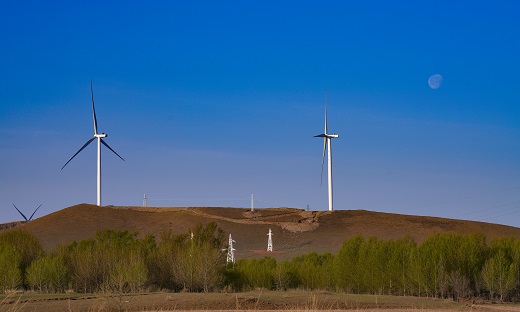
According to the data, as of the end of May 2023, the country's full-caliber power generation capacity was 2.67 billion kilowatts, a year-on-year increase of 10.3%. Among them, the installed capacity of renewable energy power generation was 1.31 billion kilowatts, an increase of 18.5% year-on-year, accounting for 48.9% of the total installed capacity, accounting for an increase of 3.4 percentage points year-on-year, and it was the main force of China's power supply growth. Hydropower was 420 million kilowatts, a year-on-year increase of 5.2%, and wind power was 380 million kilowatts (of which, onshore wind power and offshore wind power were 35,145 and 31.15 million kilowatts, respectively), a year-on-year increase of 12.7%. Solar power generation was 450 million kilowatts (of which, photovoltaic power generation and solar thermal power generation were 45,325 and 670,000 kilowatts respectively), a year-on-year increase of 38.4%. Biomass power generation was 42.64 million kilowatts, a year-on-year increase of 9.0%. From January to May, the new power generation production capacity of the country's infrastructure was 110.54 million kilowatts, 57.56 million kilowatts more than the same period last year. Among them, the new power generation capacity of renewable energy in infrastructure is 88.65 million kilowatts, accounting for more than 80% of the total new power generation capacity of infrastructure.
"In 1~5 months, the cumulative power generation of industrial enterprises above designated size increased year-on-year, while the cumulative power generation of hydropower decreased significantly year-on-year, indicating that this year's water situation is still not optimistic." Jiang Debin pointed out.
According to the data, in 1~5 months, the cumulative power generation of industrial enterprises above designated size was 3,421.6 billion kWh, a year-on-year increase of 3.9%; Among them, the cumulative power generation of hydropower was 352.3 billion kWh, a year-on-year decrease of 19.2% (down 13.7% in January ~ April), a growth rate of 36.7 percentage points lower than the same period last year, and thermal power, nuclear power, wind power, and solar power generation all increased year-on-year. In May, the power generation capacity of industrial enterprises above designated size was 688.6 billion kilowatt hours, a year-on-year increase of 5.6%, and the growth rate was 0.5 percentage points lower than that of the previous month. In terms of types, in May, the growth rate of thermal power and nuclear power accelerated, and the decline in hydropower expanded, with thermal power generation of 471.3 billion kilowatt hours, a year-on-year increase of 15.9%, nuclear power generation of 36.9 billion kilowatt hours, a year-on-year increase of 6.3%, and hydropower generation of 82 billion kilowatt hours, a year-on-year decrease of 32.9% (down 25.9% in April).








0 comments