

The introduction of the 13th Five-Year Plan for Intelligent Manufacturing will promote the technological transformation of tens of millions of enterprises
2017.03.24
The Ministry of Industry and Information Technology issued the "Intelligent Manufacturing Development Plan (2016~2020)" (hereinafter referred to as the "Plan") on December 7, proposing that by 2020, the key areas of China's traditional manufacturing industry will basically realize digital manufacturing. By 2025, key industries will initially achieve intelligent transformation.

The long-awaited "13th Five-Year Plan for the Development of Intelligent Manufacturing" has finally been released, and the "Plan" proposes to promote the implementation of the "two-step" strategy of intelligent manufacturing by 2025, and at the same time proposes to accelerate the development of key technologies and equipment, strengthen common technological innovation, increase pilot promotion efforts, build an industrial Internet foundation, and cultivate ten key tasks such as intelligent manufacturing ecosystem. The implementation of policies is in line with expectations, and innovation-driven and classified promotion have become the main theme.
"Roadmap" to explore the development path with Chinese characteristics
Xin Guobin, Vice Minister of the Ministry of Industry and Information Technology, said that China's manufacturing industry is developing day by day, and by 2015 it has become a large country in the manufacturing industry * 5656, but there is still a large gap between the brand building and innovation ability and other countries. At present, the domestic economy is declining and the growth rate of investment is slowing down, so we must promote intelligent manufacturing as a new driving force for cultivating the manufacturing industry.
Accelerating the development of intelligent manufacturing has been the only way to cultivate new momentum for China's economic growth, and is a strategic choice to seize the commanding heights of future economic and technological development, which is of great strategic significance for promoting the structural reform of the supply side of China's manufacturing industry, creating new competitive advantages in China's manufacturing industry, and realizing a manufacturing power.
Li Dong, director of the Equipment Industry Department of the Ministry of Industry and Information Technology, said that intelligent manufacturing has become an important development trend in the world's manufacturing industry. The new generation of information technology represented by the Internet has accelerated the integration and development of the manufacturing industry, and countries around the world are formulating relevant policies for intelligent manufacturing, taking intelligent manufacturing as the direction of industrial transformation and development.
Li Dong believes that promoting intelligent manufacturing can effectively shorten the product development cycle, improve production efficiency and product quality, reduce operating costs and resource and energy consumption, and promote the development of new formats and models such as crowd creation, crowdsourcing and crowdfunding based on the Internet. Starting from the production end, accelerating the development of intelligent manufacturing is of great significance for improving the adaptability and flexibility of the supply structure of the manufacturing industry and cultivating new momentum for economic growth.
However, at present, China's manufacturing industry is still in the development stage of mechanization, electrification, automation and digitalization, and the development of different regions, different industries and different enterprises is unbalanced. The development of intelligent manufacturing faces outstanding challenges such as the restriction of key common technologies and core equipment, the weak foundation of intelligent manufacturing standards/software/network/information security, the low maturity of new intelligent manufacturing models, the insufficient supply capacity of overall system solutions, and the lack of international industry giants and cross-border integration of intelligent manufacturing talents. "Compared with industrially developed countries, to promote the intelligent transformation of China's manufacturing industry, the environment is more complex, the situation is more severe, and the task is more arduous." So is the plan.
To this end, the plan clarifies the "roadmap" for the demonstration and promotion of intelligent manufacturing, including: increasing the pilot demonstration and promotion of intelligent manufacturing, carrying out pilot demonstrations of new models of intelligent manufacturing, selecting intelligent manufacturing benchmarking enterprises, and constantly summarizing experience and models, transplanting and promoting in related industries. At the same time, we will promote the intelligent transformation of key areas, pilot the construction of digital workshops or smart factories in the ten key areas of "Made in China 2025", and promote the application of digital technology, system integration technology and intelligent manufacturing equipment in the traditional manufacturing industry.
Qu Xianming, a member of the National Manufacturing Power Strategy Advisory Committee, said that the initial intelligent manufacturing may not be suitable for all industries, and should be based on technology, good market prospects, and insufficient production capacity.
Qu Xianming believes that intelligent manufacturing does not need to blindly pursue a high level of intelligence, not the pursuit of unmanned, to the economic benefit * 5655 as the goal, in accordance with the single-point - production line - workshop - factory path step by step.
"Two steps", intelligent manufacturing is not achieved overnight
The "13th Five-Year Plan for the Development of Intelligent Manufacturing" is a strong supplement to the "Outline of the 13th Five-Year Plan for National Economic and Social Development of the People's Republic of China", "Made in China 2025" and "Guiding Opinions of the State Council on Deepening the Integrated Development of Manufacturing and the Internet".
Wang Ying, deputy director of the Equipment Industry Research Institute of CCID Research Institute of the Ministry of Industry and Information Technology, who participated in the formulation of the "plan", introduced that as the main direction of "Made in China 2025", many policies have been introduced around intelligent manufacturing, such as the "Intelligent Manufacturing Engineering Implementation Guide", intelligent manufacturing special, pilot demonstration, and relevant standards are being formulated.
Different from the above policies, the "plan" focuses on providing a programmatic guidance for intelligent manufacturing in the medium and long term. Wang Ying believes that the *5655 highlight of the "Planning" is the first time that the "two-step" strategy is proposed.
Li Dong introduced that the "plan" proposes to promote the implementation of the "two-step" strategy of intelligent manufacturing before 2025:
*5656 steps means that by 2020, the foundation and support capacity of intelligent manufacturing development will be significantly enhanced, digital manufacturing will be realized in key areas of traditional manufacturing, and significant progress will be made in the intelligent transformation of key industries with conditions and foundations.
The second step is to establish a basic intelligent manufacturing support system by 2025, and initially realize the intelligent transformation of key industries. In order to achieve these goals, the plan puts forward 10 key tasks, including accelerating the development of equipment for key technologies; second, strengthen the innovation of key common technologies; the third is to build a standard system for intelligent manufacturing; The fourth is to build the foundation of the industrial Internet, a total of 10 measures.
"Planning" also proposed, the development of intelligent manufacturing as a long-term strategic task, classification and hierarchical guidance, industry, step by step to continue to advance, in the "13th Five-Year Plan" period of synchronous implementation of digital manufacturing popularization, intelligent manufacturing demonstration guidance, to build a new manufacturing system as the goal, to implement intelligent manufacturing engineering as an important starting point, focus on improving the safety and controllability of key technology and equipment, focus on enhancing the basic support capacity, focus on improving the level of integrated application, focus on exploring and cultivating new models, and strive to create a good development environment, It lays a solid foundation for cultivating new momentum for economic growth, creating new competitive advantages in China's manufacturing industry, and building a manufacturing power.
You Zheng, academician of the Chinese Academy of Engineering and vice president of Tsinghua University, believes that the "two-step" and "long-term persistence" reflect the scientific nature of the plan, indicating that it will be a long-term development process from the current Made in China to the future of intelligent manufacturing. The government's planning points out the direction, and enterprises need to play the main role, according to their own conditions and the market demand of products, and gradually promote the digitalization, informatization and personalization of production, and finally realize intelligent manufacturing. Enterprises should adhere to the demand-oriented promotion, and the huge market demand makes China's intelligent manufacturing have a bright future.
Xin Guobin, Vice Minister of the Ministry of Industry and Information Technology, also emphasized that in view of the development characteristics of China's manufacturing industry at this stage, the promotion of intelligent manufacturing is destined to continue to explore and repeat trial and error.
"Top Ten Tasks" to face the pain points of the industry
Xin Guobin introduced that in the past two years, 109 intelligent manufacturing pilot demonstration projects have been selected, covering 63 industries, and five new intelligent manufacturing models have been initially cultivated, including discrete intelligent manufacturing, process-based intelligent manufacturing, network collaborative manufacturing, large-scale personalized customization, and remote operation and maintenance services.
However, at present, the problem of China's manufacturing industry *5655 is still big but not strong, and there are many weak links in the field of intelligent manufacturing, and the fields of software, control systems, core technologies, and key components are seriously controlled by others. The ten key tasks proposed in the plan are precisely to these bottlenecks and pain points.
In view of the bottlenecks and industry "pain points" faced by intelligent manufacturing, the "Planning" put forward ten key tasks: the "Planning" put forward ten key tasks: first, accelerate the development of intelligent manufacturing equipment; the second is to strengthen the innovation of key common technologies; the third is to build an intelligent manufacturing standard system; the fourth is to build the foundation of the industrial Internet; Fifth, increase the demonstration and promotion of intelligent manufacturing pilots; Sixth, promote intelligent transformation in key areas; Seventh, promote the intelligent transformation of small and medium-sized enterprises; Eighth, cultivate an intelligent manufacturing ecosystem; Nine is to promote the coordinated development of regional intelligent manufacturing; Ten is to build an intelligent manufacturing talent team.
Industry insiders believe that with the deep integration of a new generation of information technology and manufacturing, the development of intelligent manufacturing in China has achieved remarkable results, and positive progress has been made in key technologies and equipment represented by high-end CNC machine tools, industrial robots, and intelligent instrumentation. However, the industry generally reflects that the current key common technologies and core equipment are still subject to the problem of being controlled by others, which is the urgent challenge faced by the development of intelligent manufacturing in China.
Wang Ying pointed out that the intelligent transformation of China's manufacturing has brought huge opportunities for intelligent equipment, "intelligent manufacturing is a big market, involving thousands of enterprises in technological transformation, they will also use software, systems, key components and complete sets of equipment when upgrading equipment, we want to drive these industries in the development process; At the same time, it should be noted that there is still a big gap between China and other countries."
An important reason for the gap is China's shortcomings in core technologies. The plan calls for strengthening the innovation of key common technologies, breaking through a number of key common technologies, and laying out and accumulating a number of core intellectual property rights.
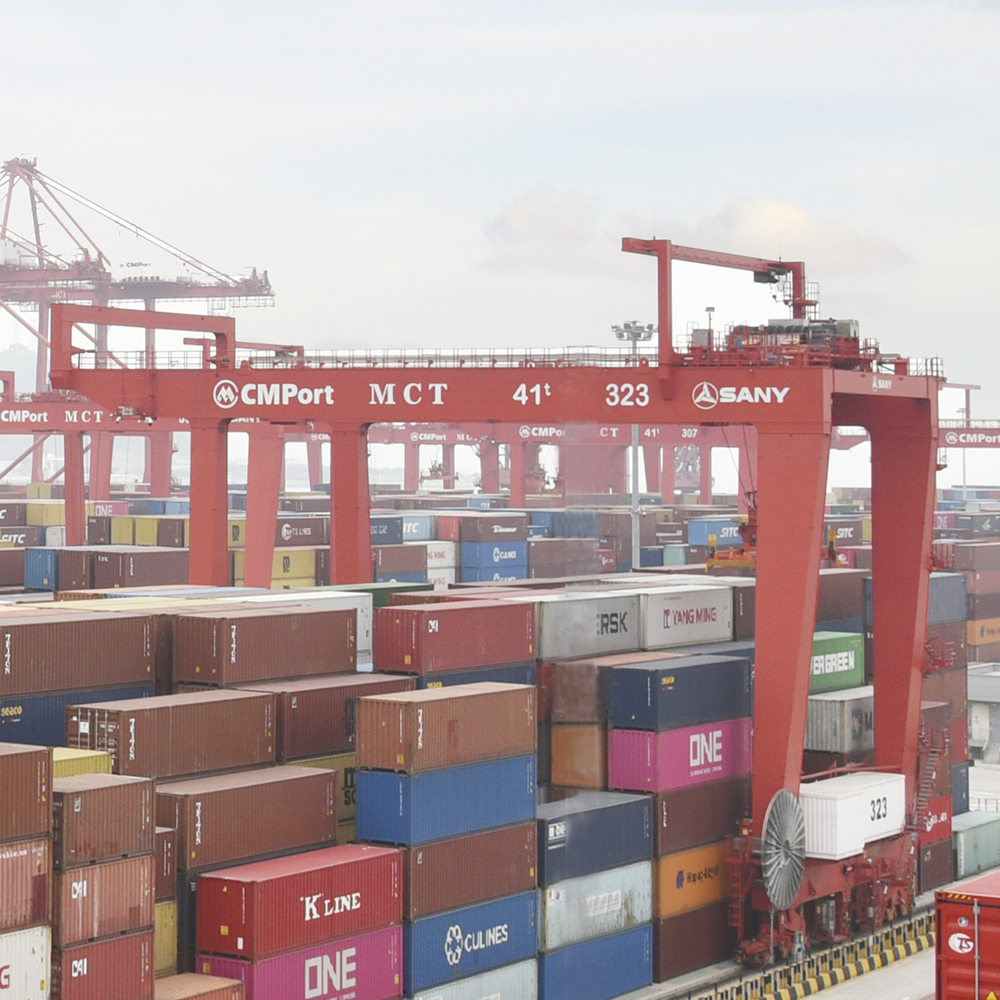
Rail-mounted container gantry crane automation
Rail-mounted container gantry craneRecommended products
automation
Rail-mounted container gantry crane automationRelated testimonials
CCTV Finance × Sany Heavy Industry: Infrastructure results are released! Anhui is soaring, and the equipment of the western port has become a "dark horse"
2025.05.19
China's installed wind and solar capacity has historically surpassed that of thermal power
2025.04.28
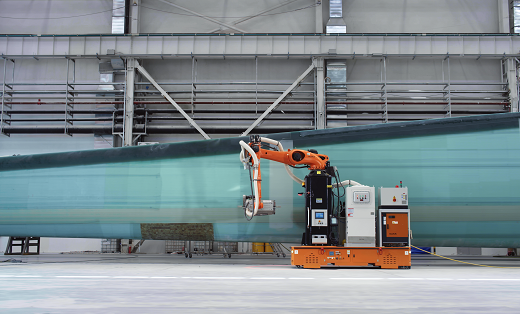
Breakthroughs have been made in the challenges of customization and high precision, and new progress has been made in the intelligent production of high-end equipment
2025.03.24




0 comments