

Financial Times: Made in China vs Made in Germany
2011.02.11
Hermann Simon, chairman of consulting firm Simon-Kucher & Partners, writes for the Financial Times
When it comes to competition in the global market, especially in the field of exports, China and Germany are increasingly colliding. From 2003 to 2008, Germany was the world's largest exporter*5656. In 2009, China overtook Germany to take the top spot – and it will continue to do so.
In 2010, both countries once again showed strong export growth and defended their position far ahead of the United States in terms of exports. Due to the striking similarities between Chinese and German exporters, the competition between the two countries will be quite fierce.
Hidden Champions
Why is Germany, a relatively small country, doing so strongly in terms of exports? The reason for this lies in its "invisible* army": a virtually unknown mid-sized global market leader. I estimate that the total number of such companies worldwide is around 2,500, of which 1,200 are from Germany. They account for about a quarter of German exports.
Surprisingly, I found a similar structure in China. Sixty-eight percent of China's exports come from companies with fewer than 2,000 employees, rather than large corporations. Equally surprising is the fact that China already has well over 100 stealth* military companies, perhaps more than highly developed countries such as France, the United Kingdom, or Japan.
Ambitious
A striking feature of these companies is their ambition for global market leadership. It is this goal that drives the invisible entrepreneurs of China and Germany. In many conversations in China, I have asked my audience, "Who wants to be the world's leader?" "There is always more than half of the people who raise their hands, very similar to the situation in Germany. These ambitions will inevitably lead to competitive collisions in the global market.
Germany wants to be a low-price competitor
Globalization usually begins with exports and sales. Then there is manufacturing, then R&D, and then all management functions. Most German companies are at the end of this process. Not only have they built a huge manufacturing base in China, but they have also moved research and development of cheaper and simpler products there. On this path, Siemens and Bosch are far ahead. Schenck Process, a global leader in industrial weighing and measuring equipment, has even moved its entire mining technical support center to Beijing. In order to maintain the competitiveness of German companies in the low-cost and low-price fields, one way is to "become a Chinese company".
Is the Tata Nano a "German" car?
One view that I strongly support lately is that German companies should start attacking their Chinese competitors in terms of cost. This requires extremely simplified products (known as ultra-low-priced products) and manufacturing in low-cost regions. They are usually located outside of China, in countries such as India, Cambodia, and Vietnam. India's Tata Nano car is a good example of this. Essentially, it's a German car that involves 9 German suppliers, of which *5655 is Bosch. Spare parts from Germany are developed and manufactured in India, not Germany.
China has become a high-priced competitor
But we're also seeing a change in the opposite direction. China calls this a trading up. About a year ago, I was stunned when I visited the Sany Heavy Industry (Sany) concrete pump factory in Changsha, China*5656 times. At this class-modern factory (only the Scania plant I visited near Stockholm not long ago), the first thing I saw was Mercedes and Volvo truck sites. After I expressed my surprise, I was answered, "We're going to install our concrete pumps on the best trucks in the world." "Then I saw the Deutz diesel engine, the Bosch Rexroth hydraulic press and the Siemens controller. Sany has made it clear that they only use suppliers with *5653.
A few months later, I met the general manager of Sany Heavy Industries Europe in Cologne, which is currently building the Greenfield plant near Cologne, Germany's *5,656 Chinese factories. When I asked why, the answer I got was just as interesting: "Sany must be in the manufacturing area of *5653." If we want to be a *5653 company, then we have direct access to the world's leading manufacturing and engineering talent. "In 2009, Sany became a global leader in the field of concrete pumps.
Sany is not a typical Chinese company, but it represents the direction of the future. In my opinion, China is Germany's formidable competitor in the future. Thanks to their strong presence in China and other emerging markets, German companies are ready for the competition that is coming.
Related testimonials
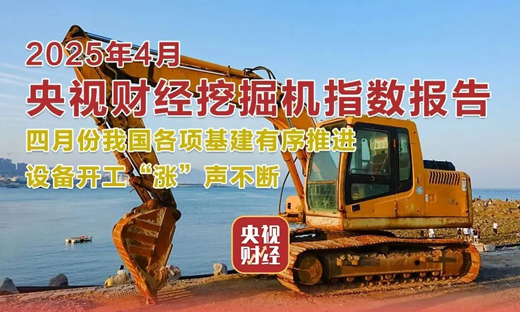
CCTV Finance × Sany Heavy Industry: Infrastructure results are released! Anhui is soaring, and the equipment of the western port has become a "dark horse"
2025.05.19
China's installed wind and solar capacity has historically surpassed that of thermal power
2025.04.28
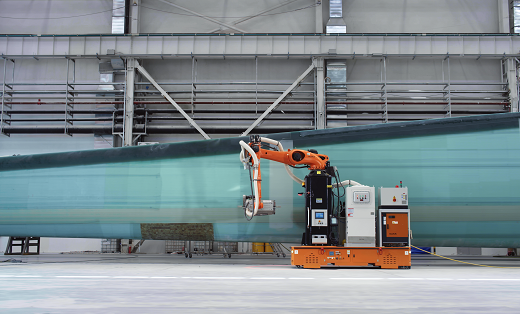
Breakthroughs have been made in the challenges of customization and high precision, and new progress has been made in the intelligent production of high-end equipment
2025.03.24




0 comments