

Xinhuanet Special Article: Independent innovation does not miss out on historical opportunities
2011.05.09
Source: Xinhuanet Reporter: Yang Jun, Li Xuemei, Liu Hong
With the technological monopoly of Europe and the United States and the fierce competition of emerging countries, where will "Made in China" go?
The global growth momentum, industrial form, and competition mode are all changing, how can "Made in China" stand at the forefront of the trend?
The times are calling, and "Made in China" answers with action: independent innovation, not missing out on historical opportunities.
Independent innovation, competition in technology, Chinese enterprises have tasted the first results
From making up for mistakes with diligence to winning with "intelligence", Chinese companies have become aware of the changes in their environment.
Processing, OEM, small profits, such as Japan and South Korea in the initial stage, "Made in China" to show diligence, products all over the world. Winning by quantity, making up for clumsiness by diligence, and even winning by diligence was once the magic weapon for the development of Chinese enterprises.
In the face of the challenge that the low-cost advantage of labor and other factors has begun to weaken, and in the face of the opportunity of the gradual establishment of "intelligent" elements such as modern science and technology, management, and informatization, a group of enterprises that dare to try are not bound by past achievements, do not sit and wait for opportunities to come to the door, and vow to create a new image of "Made in China" with independent innovation.
In October 2010, at the rescue site of the Chilean mining disaster, a red oversized machinecraneParticularly eye-catching. The heavy-duty crane manufactured by China Sany Heavy Industry Co., Ltd. was designated as disaster relief equipment by the disaster relief department, providing important technical support for this first-class rescue. In April this year, in Japan, a construction machinery manufacturing powerhouse, Sany Heavy Industry Co., Ltd. relied on a 62-meter-long boom pump truck to show its strength in the Fukushima nuclear leakage rescue and became the focus of global attention.
"Made in China" began to impress the world. With its own technology, CSR Group has obtained a large number of overseas train orders, and Lenovo, Haier, Huawei, and ZTE dare to compete with European and American industry giants. With the courage of "daring to be the first in the world", a number of large enterprises began to invest in the construction of R&D and manufacturing bases in India, the United States, France, Germany and other countries, and their thinking and horizons were greatly opened.
"You won't see change in a day, but you can see the pace of China's progress." On the issue of China's competitiveness, Zakaria, editor-in-chief of the international edition of Newsweek, wrote in an article last October.
In recent years, China has "vigorously encouraged scientific and technological innovation, carried out human resource building, and various industries have gradually entered the upper reaches of the value chain", which Zakaria left a deep impression on.
Mu Rongping, one of the authors of the 2010 UNESCO Science Report, said that in 2006, China adopted the Outline of the National Medium- and Long-Term Science and Technology Development Plan, and introduced a series of supporting policies to encourage independent innovation. Since then, China's investment in science and technology has increased significantly. "These measures have stimulated the enthusiasm of enterprises to innovate."
In the context of global competition, the transformation of Chinese enterprises is also forced by the situation. In the post-crisis era, large-scale and aspiring enterprises must consider the research and development of core technologies, so as to improve their ability to control the industrial chain, otherwise they will be passive in the fierce global market competition.
"With core technology research and development and domestic market verification, overseas expansion is more confident." Zhang Xinning, chief engineer of China South Locomotive and Rolling Force, has a deep feeling about the benefits of independent research and development. He believes that having core technology is the "hard currency" for CSR to participate in market competition.
Adapt to the times, focus on innovation, and "create in China" will have opportunities
Seize the opportunity and adapt to the times to achieve great things.
With the emergence of regional economic circles, the lack of adaptation of Western technologies, and the looming battle for a low-carbon economy, all these trends can create good opportunities for Chinese enterprises to use independent innovation to achieve leapfrogging.
In the process of modernization, China is a late-developing country, the railway science and technology foundation is poor, completely relying on the introduction of advanced technology, the high cost is unbearable, but with the emergence of the domestic regional economic circle, as well as the revival of the world's railways and the promotion of the global high-speed rail wave, China is facing an urgent need to catch up.
Historical opportunities cannot be passed by. In terms of how to mobilize self-accumulation and introduce foreign technology, China's high-speed rail has made effective explorations, and after digesting foreign technology, it has carried out many innovations, and finally landed on high-speed rail technology. In just 4 years, the operating mileage of China's high-speed rail has risen from zero to 5656 in the world*, becoming a contemporary model of "last mover first come". The British Broadcasting Corporation (BBC) recently published an article entitled "China's New Industrial Reform", which regards the construction of high-speed railways as a sign that China is carrying out new industrial reform.
Buying technology and engaging in joint ventures is not a good way. In the initial stage, Sany Heavy Industry found that all the core technologies of construction machinery were in the hands of European and American giants, and the giants did not bother to cooperate with Sany Heavy Industry at that time. However, Sany found that Western technology is not fully suitable for the Chinese market, and its self-developed products are more suitable for the local market. As a result, independent research and development has become the best choice.
Since 1994, a large number of construction machinery products with independent intellectual property rights have been launched in Sany Heavy Industry. Sany Heavy Industry challenged foreign brands in the Chinese market and defended the national industry, which finally reversed the situation in China's construction machinery market, and the market share of Chinese brands and foreign brands changed from 1:9 to 9:1.
Internationally, developed countries such as Europe, the United States and Japan are vigorously promoting the reform of low-carbon technologies with high energy efficiency and low emissions as the core. A battle for a low-carbon economy is looming in China.
Challenges are also opportunities. The development of strategic emerging industries has obvious innovation-driven characteristics, while the dominant position of developed countries in this new field has not yet been fully established.
* Don't miss out on historical opportunities. To this end, China and enterprises have made extraordinary efforts.
New York Times columnist Thomas Friedman called China's "Great Green Leap Forward" "the most important event" at the end of the 21st century's 5,656 decade. In recent years, China has invested more in green energy production and technology research and development than other countries. In 2010, China produced nearly half of the world's solar panels; China's total installed capacity of wind power generation has ranked 5656 in the world*. At the same time, a large number of new energy enterprises such as Huangming, Suntech, and Huaneng seized the opportunity, innovated independently, and achieved a leap, and their products have *5653 competitiveness.
Facing up to the gap and forging ahead, Chinese companies can catch up
The wise are not confused, the benevolent are not worried, and the brave are not afraid.
With each passing day, China should not only learn wisdom from the sages, but also look at the world, have the courage to find gaps, and learn from successful experiences.
Where are our gaps? Dr. Zeng Jun, a deep scientist at Hewlett-Packard Laboratories in the United States, believes that the level of applied technology research and development in China has been significantly improved in recent years, but the overall layout of China's applied technology research focuses on breakthroughs in points, and the gap between China's domestic enterprises and Western enterprises is more obvious in terms of creating commercial services through system integration, especially compared with old technology companies such as Hewlett-Packard, International Business Machines Corporation (IBM) and Xerox.
Specific to some enterprises that have become leaders in the domestic industry, they also have growing pains.
At the beginning of last year, Yang Yuanqing, executive officer of Lenovo Group, participated in the International Consumer Electronics Show in Las Vegas, USA. He said that compared with some consumer electronics giants in Europe, America, Japan and South Korea, the brand awareness and reputation of Chinese manufacturers such as Lenovo are indeed slightly inferior. "Our disadvantage is the brand problem, and this must be made up slowly and smartly. Our strategy is to innovate and impress the market and customers through innovation, so that they can help Lenovo increase its visibility and reputation. ”
Zhou Houjian, chairman of Hisense Group, who also participated in the exhibition, told reporters: "(We)*5655 The disadvantage is that our accumulation time is short, and the accumulation time of our technology and talents is short, which is at a disadvantage in the competition." ”
The gap may not be bridged overnight, but for the future of China's independent innovation, everyone from scholars to entrepreneurs is confident.
"I firmly believe that China's science and technology will reach the world's leading level in the future, whether it is the number of papers, corporate research and development, or patent applications. And I'm sure that day will come sooner than we thought. Zete, another author of the 2010 UNESCO Science Report, said. He said that the wide range of research fields and state funding for Chinese scientists has enabled China to make progress not only in traditional fields, but also in emerging fields such as nano and green technologies, and China can catch up.
Zhou Houjian, chairman of Hisense Group, believes that after recognizing the gap, Chinese enterprises should seize the opportunity to accelerate the pace of scientific and technological innovation. At the same time, enterprises must effectively improve product quality and establish the company's credit among overseas dealers and consumers, so as to enhance the reputation of the brand.
Zhou Houjian believes that with the development of China's economy and the increase of independent and innovative enterprises, in the next 10 years, a large number of Chinese enterprises will jump from "China's M* brand" to "the world's M* brand".
Next article:International Herald Leader - Sany Heavy Industry: Being concerned is because of dreams
Related testimonials
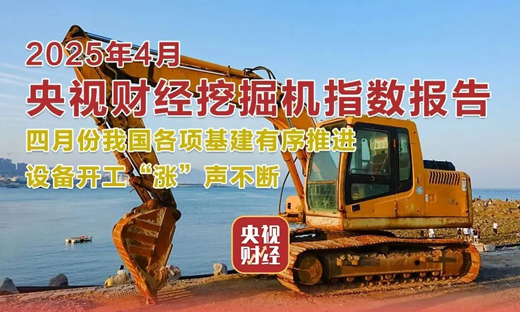
CCTV Finance × Sany Heavy Industry: Infrastructure results are released! Anhui is soaring, and the equipment of the western port has become a "dark horse"
2025.05.19
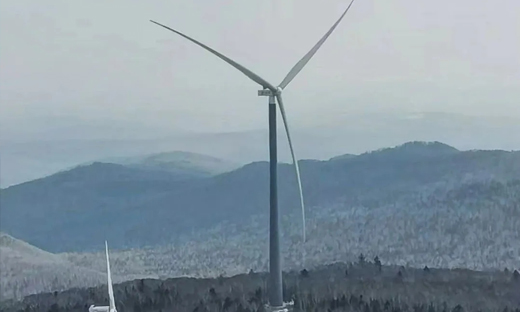
China's installed wind and solar capacity has historically surpassed that of thermal power
2025.04.28
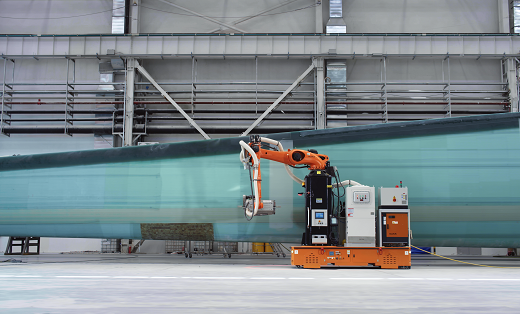
Breakthroughs have been made in the challenges of customization and high precision, and new progress has been made in the intelligent production of high-end equipment
2025.03.24




0 comments