

Reference news: Xiang Wenbo: Contribute a first-class brand to the Chinese nation
2014.05.05
Source: Reference News
Reference News Network reported on April 30 that Maya, the author of the book "Road Confidence: Why China Can", recently interviewed Xiang Wenbo, president of Sany Heavy Industry. It reads as follows:
Maya: Trinity sues Obama and CFIUS, *what are the main ideas?
Xiang Wenbo: Our direct idea is to resort to law to protect our rights and interests. We believe that Obama and CFIUS' handling of this matter is in violation of U.S. law. The indirect idea is that it would be better if China's policy could be changed, as happened in the XCMG incident. I believe that China should have a body like the Foreign Investment Committee to manage national security issues in the process of globalization. In particular, we hope to educate our people through this event so that Chinese can understand what the real United States is and what is the "globalization" advocated by the United States.
Maya: The United States still does not recognize China's market economy status and wants China to be completely marketized and privatized. China's private enterprises are the products of the market economy, and according to the logic of the Americans, the private enterprises of Sany are "upright and sprouts of redness."
Xiang Wenbo: Americans have painted a very beautiful picture for us in the past: in the era of globalization, complete marketization and full market competition; Countries can exchange their comparative advantages, and everyone benefits. Is that really the case? No. In my view, the March 1 incident marks the end of the honeymoon period in economic and trade relations between China and the developed countries in the West. When is the honeymoon phase? It is 30 years after China's reform and opening up. During this period, China's development was in line with the value orientation and interests of the West, because China produced products for them that they were no longer willing to do and could not do, that is, those low-end products with high energy consumption, high pollution, low labor costs, and low added value. Now, after more than 30 years of development, we have shown competitiveness in some high-tech and high-end manufacturing fields, and have begun to challenge it, and there is a conflict with the core interests of the West, and the West has changed its face. Begin to impose containment, use national security clauses to stop you, and reneg on the principles of free trade that have been instilled in us for so long.
Maya: You mentioned the 2005 XCMG merger, and you wrote a letter to General Secretary Hu Jintao when you heard about it. What is the main reason for your opposition to XCMG being annexed by the Americans?
Xiang Wenbo: First of all, the selling price of XCMG is too low, and I can't watch the country suffer. XCMG sold 85 percent of its stake for 2 billion yuan, a deal that was too low. At that time, it was said that XCMG would be finished if it was not sold, and it would be a dead end. But now you see, XCMG is worth tens of billions of dollars today! Not only was it not swallowed up, but it also bought a German company and came back, and the development was very good.
In addition, I think, not to mention selling cheaply, XCMG can't be sold no matter how expensive it is. The equipment manufacturing industry is a national strategic industry, and Xu Gong is the leader of the equipment manufacturing industry, and it is not possible to be controlled by foreign capital. The core technology of the equipment manufacturing industry is blocked by foreigners to China, if we hand over our equipment industry leader to others, then who does China's technological innovation rely on? If this reform idea can be accepted and replicated, there will be no way to talk about China's industrial security. The United States, Japan, Canada, and Europe all have their own industrial security mechanisms, but China does not. How serious do you think this problem is? Therefore, I also want to draw everyone's attention to the issue of establishing a national industrial safety management mechanism through the discussion of the XCMG merger and acquisition case.
Maya: After the collapse of the Soviet Union, when Russia was in economic difficulty, the basic backbone manufacturing industry was not lost. In 2004, Putin signed an order that none of the 1,000 large and medium-sized state-owned manufacturing enterprises should be sold. That's his lifeline.
Xiang Wenbo: This is the awareness of national security and industrial security. Unfortunately, the Chinese's awareness of this is still very weak. China is a political power, and a political power must have a strong military industry, and a strong military industry is built on the basis of a strong manufacturing industry. Now we can't buy China's military, the world's advanced weapons, and we can't buy the advanced technology and machine tools that manufacture the most advanced weapons, so what does China's strength depend on? If we also sell our equipment manufacturing enterprises, it can be said that we will lose hope forever.
Maya: Some people have commented that your active involvement in the XCMG incident reflects the social responsibility of a Chinese entrepreneur.
Xiang Wenbo: I would like to correct a point of view on this issue. Many of the ideas of the Chinese people have been distorted, and they always think that private enterprises are selfish. This perception is wrong. I don't talk about any advanced theories or lofty ideals, but national self-esteem and patriotism have always existed in the Chinese nation for thousands of years, and have always flowed in our blood. Today's Chinese private entrepreneurs also have such blood flowing in their bodies. We all have a common pursuit, that is, we hope that the country will be strong, the people will live a prosperous life, and China will have dignity, status and influence in the world. We are not Americans, we are not Japanese, we are Chinese, and we want China to be strong.
Related testimonials
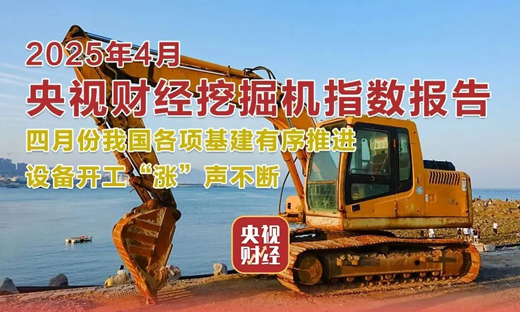
CCTV Finance × Sany Heavy Industry: Infrastructure results are released! Anhui is soaring, and the equipment of the western port has become a "dark horse"
2025.05.19

China's installed wind and solar capacity has historically surpassed that of thermal power
2025.04.28
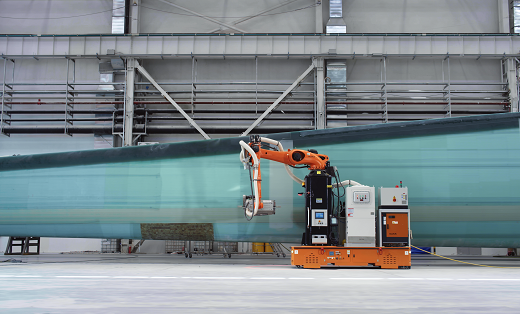
Breakthroughs have been made in the challenges of customization and high precision, and new progress has been made in the intelligent production of high-end equipment
2025.03.24




0 comments