

Economic Information Daily: Sany Heavy Industry has achieved localized operation in Brazil
2014.02.24
Source: Economic Information Daily Reporter: Chen Weihua, Wang Zhengrun, Sao Paulo report
Not long after the car left the busy Dutra Expressway, the eye-catching logo of Sany Heavy Industry appeared in front of me. In recent years, Chinese construction machinery companies have begun to enter Brazil for development, and their performance has been remarkable. Sany is close to the Brazilian market, pays attention to after-sales service, adapts to different cultures, and has accumulated a lot of experience in localization construction.
Walking into the factory of Sany Brazil Co., Ltd. located in the suburbs of São José dos Campos, under the blue sky and white clouds, the crane with yellow body and red boom is very eye-catching. Yuan Jinhua, chairman of the company who accompanied the reporter to visit, explained: "Sany was originally used yellow as the logo color, but after entering the Brazilian market, some Brazilian customers proposed to change the boom to red, which is more in line with the aesthetics of Brazilians. The company made an attempt, and found that the yellow and red construction machinery vehicles were indeed eye-catching. ”
Changing the color of the boom because it respects the needs of our customers is just one example of Sany Brazil's proximity to the Brazilian market. Since entering the Brazilian market in 2007, Sany has done its homework around the four words of "close to the market", and even established a construction machinery R&D and production base in Brazil.
Brazil's forestry industry is developed, and there is a considerable demand for forestry engineering vehicles, so Sany Heavy Industry has introduced forest excavators to the Brazilian market. The excavator navigates dense forests, and its sharp cutting arm can instantly cut cut down trees into several pieces of equal length for easy transport. The product has just been launched in Brazil and has received numerous orders.
In November last year, Sanyi's BL70C backhoe loader was successfully rolled off the assembly line in Kunshan Industrial Park. This construction machinery vehicle, commonly known as "busy at both ends", integrates the functions of excavator and loader, which is equivalent to a 7-ton excavator and a 2-ton loader. "Busy at both ends" is not widely used in China, but for the Brazilian market, it is a very practical earthwork construction machinery, and the market growth space is huge.
In the warehouse of Sany Brazil, a striking red container caught the attention of reporters. Yuan Jinhua said that this is Sany Brazil's mobile parts supply station, which will be transported by trucks to important construction sites, with the aim of speeding up the replacement of construction machinery parts and avoiding the shutdown of construction sites due to lack of spare parts.
Yuan Jinhua said that at the beginning of Sany Brazil's development in Brazil, it attached great importance to the reserve of spare parts, and invested tens of millions of dollars to set up a spare parts center in the dealer to better maintain and repair the operating machinery and ensure the normal operation of the machinery.
Perfect after-sales service has won a broad market space for Sany Brazil. Yuan Jinhua revealed that the turnover of the three series of products has grown steadily in recent years, and it is expected to reach 1.5 billion yuan this year. The Maracanã Stadium, which was the venue for the 2014 World Cup finals and the main venue for the 2016 Olympic Games, was rebuilt with equipment including Sany Heavy Industry products. In addition, large projects such as the Rio Olympic Sports Center, the Rio Olympic Village, Vale Iron Mine, São Paulo Airport and the São Paulo Ring Road are using Sany cranes, excavators androad roller。
In order to better understand this difference, Yuan Jinhua found many books on cultural differences to study, and began to look at the performance of Brazilian employees with an appreciative eye. "For example, we have a finance person who has studied in France, and I asked her to estimate where the company can save money, and I thought she was providing some simple ideas, but I didn't expect her to submit a very detailed report, the data is accurate, and it has a strong reference value." He told reporters.
In just a few years, Sany Brazil has gradually grown from a foreign company with a large proportion of Chinese employees to an international company with a strong sense of localization. At present, the number of local employees in Brazil has accounted for about 70% of the total number of employees in Sany Brazil. Three of the company's five senior deputy general managers are native Brazilians.
Yuan Jinhua later concluded that the implementation of the localization strategy of the enterprise is not an overnight thing, but a process of gradually understanding the market, entering the market and finally integrating into the market.
Related testimonials
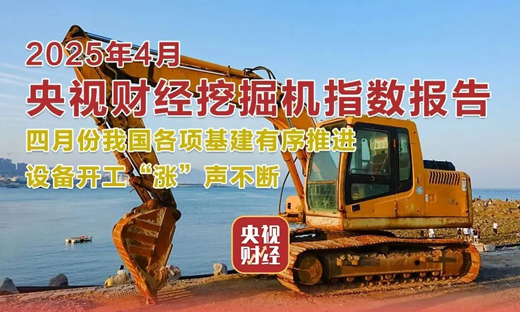
CCTV Finance × Sany Heavy Industry: Infrastructure results are released! Anhui is soaring, and the equipment of the western port has become a "dark horse"
2025.05.19
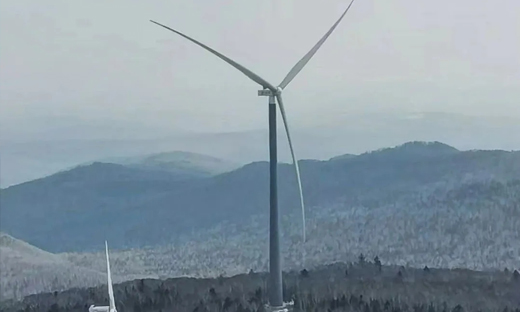
China's installed wind and solar capacity has historically surpassed that of thermal power
2025.04.28
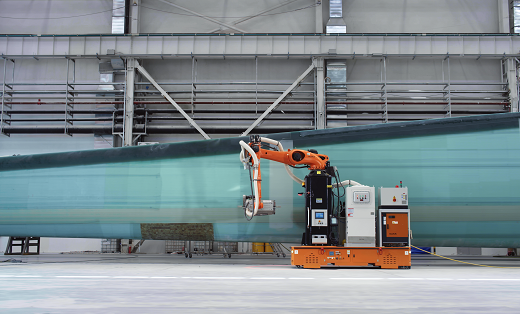
Breakthroughs have been made in the challenges of customization and high precision, and new progress has been made in the intelligent production of high-end equipment
2025.03.24




0 comments