

Legal Daily: Sany Heavy Industry uses the spirit of contract to create a brand myth
2015.05.12
Source: Legal Daily
This is a company with a story: on the one hand, as the leader of China's construction machinery industry, she continues to conquer cities at home and abroad, opens up a large number of new markets, and creates many industry myths; On the one hand, she actively adapts to the legal rules of various places, makes good use of legal weapons, and has won a series of major legal activities.
"Whether at home or abroad, Sany emphasizes the spirit of contract, reverence for the law, respect for justice, and the power of the law." Recently, the reporter of "Legal Daily" walked into Sany Group and heard the wonderful legal stories that happened here in this huge construction machinery empire.
The first victory of the prosecution of the President of the United States
On the afternoon of April 20, 2015, Xiang Wenbo, president of Sany Heavy Industry, announced that Sany Heavy Industry won another judicial rights protection in the United States! The U.S. Section 337 investigation review has the most new results, and the ITC (United States International Trade Commission) has ruled: the U.S. Manitowoc company vs. Sany Heavy Industry TrackcraneThe two allegations of infringement of the company's patents 928 and 158 were not substantiated.
In 2010, Sany Group entered the field of wind power in the United States and registered and established Rolls Corporation in the United States. In 2012, the company acquired four wind farm projects in Oregon, USA. In July 2012, the project was outright banned by the Committee on Foreign Investment in the United States (CFIUS) for "threatening U.S. national security." On September 28, 2012, U.S. President Barack Obama issued a presidential order requiring Rolls to remove all property and installations from the site within 14 days and all investments in the wind power project within 90 days, citing an alleged threat to U.S. national security.
"This kind of intervention in foreign investment by the United States directly violates the principles of the WTO, is a manifestation of the trade protectionism it has pursued under the pressure of the financial crisis in recent years, and also directly violates the provisions and legal procedures of the US Constitution to protect property ownership." On October 1, 2012, Rolls filed a complaint in the U.S. District Court for the District of Columbia, seeking that CFIUS's ruling be ultra vires and violate procedural law. The President's order overstepped his authority and granted Rolls the procedural justice and equal protections it deserved.
The President of the United States has been taken to court, which is still *5656 times in the international legal community. At the time, although the move attracted widespread social attention, this groundbreaking lawsuit itself was extremely difficult, because Sany needed to find a legal basis in its favor from the vast US law, and it was facing the world's most powerful national power.
On July 16, 2014, the U.S. Court of Appeals for the District of Columbia Circuit held that the Obama administration had violated its legitimate rights and deprived it of due process rights when it banned Chinese companies from investing in wind farm projects in the United States on the grounds of threatening national security. This means that Sany Group has become a Chinese-funded enterprise that has won the *5658 lawsuit against the President of the United States.
"Whether at home or abroad, Sany emphasizes the spirit of contract, and it can be said that this victory is the result of our awe and respect for the judiciary, and it is also the result of us facing up to the spirit of contract." Afterwards, Xiang Wenbo, president of Sany Heavy Industry, said so in an interview with the media.
Suing Obama in the United States is to "seek fairness and justice and clear the name." In this regard, Liang Wengen, chairman of Sany Group, said more bluntly.
Responding to the lawsuit, Mercedes-Benz successfully defended its rights
"In the process of Sany's development and growth, there are constantly some legal risks and challenges. As legal staff, our main task is to make accurate and comprehensive analysis and judgment in advance, inform the economic and legal risks, and remind the existence of the 'legal ceiling'. Cao Lixia, legal director of Sany Group Co., Ltd., told reporters that at different stages, the legal risks and challenges faced by Sany are different: in the past, there were more labor and personnel disputes and debt disputes, and now there are more non-litigation businesses such as intellectual property infringement, investment, environmental protection and mergers and acquisitions.
In 2006, when Sany applied for the registration of the company's figurative trademark and the word "SANY" trademark in the United Kingdom, Daimler-Benz AG pushed Sany to the dock of the High Court in London on the grounds that the Sany trademark infringed its registered trademark rights. In response to the sued incident, Sany actively responded and began a three-year difficult road to rights protection.
In the face of detailed evidence, on October 23, 2009, the High Court of London ruled in a judgment rejecting Daimler-Benz's lawsuit against the Sany trademark for infringing its Trident Star trademark. Since then, the trademark battle between Sany and Mercedes-Benz has achieved a substantial victory, and this case is also known as the "China Intellectual Property International Victory*5656 Case", and some media commentators and analysts believe that this international litigation case is a model in the field of trademark protection between Sany and even China.
Take the initiative to fight in the face of infringement
In China, in response to the infringement of Sany's trademark rights, Sany has also dealt with it in accordance with the law.
In July 2010, Sany marketing personnel discovered that a company called "Ma'anshan Sany Heavy Industry Machinery Manufacturing Co., Ltd." was operating publicly, but it was not a subsidiary of Sany. Sany Legal Department immediately launched an investigation after receiving a report from a marketing officer. The investigation showed that Ma'anshan Sany Company had nothing to do with Sany, but it sold and advertised its machine tools and other mechanical products nationwide in the name of "Sany" and "Sany Heavy Industry", and its Internet website, company plant and promotional materials were very similar to Sany, and there were serious infringements.
After collecting a large amount of evidence, Sany sued it to the Changsha Intermediate People's Court. In the face of sufficient evidence, the Changsha Intermediate People's Court ruled in the first instance that the "Sany" Chinese character trademark was China's first trademark, and ordered Ma'anshan Sany Company to stop all infringement and compensate Sany for economic losses of 400,000 yuan. After the first-instance judgment, Ma'anshan Sany Company was dissatisfied and appealed to the Hunan Provincial High * People's Court, but in the face of detailed evidence, the second-instance court rejected the appeal and upheld the original judgment.
In July 2012, Sany discovered that a company named "China Sany Heavy Industry (Hong Kong) Co., Ltd." had been registered with the Hong Kong Registry. Under Hong Kong law, if the company has not raised objections to them after one year of registration in Hong Kong, it can sell their products in Hong Kong and the mainland. At that time, Sany will only be able to litigate through the Hong Kong judicial process and hire Hong Kong lawyers, and will face huge costs and a very high risk of losing the case. Pressed for time, the Legal Department immediately collected a large amount of evidence and sent a complaint email to the Hong Kong Companies Registry. After receiving the complaint from the three parties, the Hong Kong Companies Registry also attached great importance to it and dispatched a special lawyer to conduct an assessment and investigation.
On December 17 of that year, the Hong Kong Companies Registry sent a letter to Sany, determining that the name of the other party's enterprise was "excessively similar" to Sany, and limiting the other party to change its name within six weeks. This rights protection case not only protects Sany's market environment in Hong Kong and the mainland, but also leaves a record of protection for Sany's intellectual property rights in Hong Kong for the first time, which is of great significance.
"In the process of expanding at home and abroad, in the face of different legal environments and legal backgrounds, Sany has always taken the initiative to respond to various challenges and insisted on using the weapon of law to safeguard its legitimate rights and interests." Cao Lixia told reporters that in the process of Sany's marketization and internationalization, in many important core businesses such as joint ventures, bidding, and international sales, the in-house counsel has reduced and controlled risks for the development and growth of the corporate brand and released the productivity dividend contained in the rule of law by conducting risk assessments in advance, formulating standard processes, and participating in the whole process.
Related testimonials
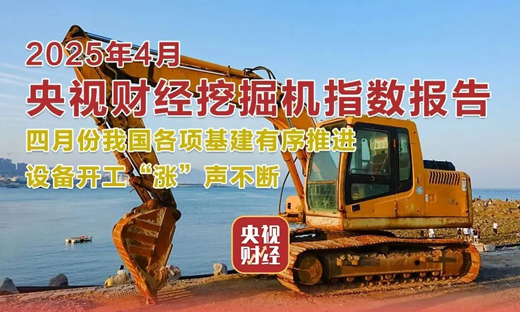
CCTV Finance × Sany Heavy Industry: Infrastructure results are released! Anhui is soaring, and the equipment of the western port has become a "dark horse"
2025.05.19

China's installed wind and solar capacity has historically surpassed that of thermal power
2025.04.28
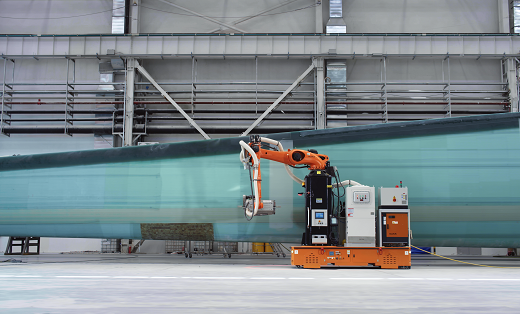
Breakthroughs have been made in the challenges of customization and high precision, and new progress has been made in the intelligent production of high-end equipment
2025.03.24




0 comments