

2021: The beginning and end of the "price increase" in the global energy market
2022.01.10
China Petroleum News Network
In 2021, with the improvement of the global epidemic, the recovery of demand, the tightening of supply and the continuous decline of inventories, international oil prices rebounded from their lows and exceeded $80 per barrel all the way. Since the fourth quarter of 2021, the contradiction between energy supply and demand has been intensifying around the world, with China's power shortage, the UK's oil shortage, Europe's gas shortage, India's coal shortage, etc. LNG freight prices have soared, and the refining industry has recovered, with refining product prices and gross margins approaching pre-pandemic levels in 2019.
Natural gas, coal, and oil led the global commodity prices, with natural gas and coal prices hitting record highs, crude oil prices hitting a new high in nearly seven years, and the annual average Brent price was $70.95 per barrel, and the U.S. West Texas Light Crude Oil (WTI) was $68.11 per barrel
In the oil market, due to the resumption of global economic activities and the strong recovery of oil demand, the average price of Brent in the first, second, third and fourth quarters was US$61.32, US$69.08, US$73.23 and US$79.66 per barrel, respectively, and the average price of Brent for the whole year was US$70.95 per barrel, up 64.2% from the previous year. Brent's low for the year was $51.09/b on January 4, 2021, and its highest was $86.40/b on October 26, 2021, the highest since October 2018. The annual average price of West Texas Light crude oil (WTI) in the United States was $68.11 per barrel, up 73.1% from the previous year and hitting a new high in nearly seven years in October 2021; The average annual price of Dubai crude oil was $69.39 per barrel, up 64.1% from the previous year.
Pek+ still maintains a large-scale production cut policy, the US shale oil production has recovered slowly throughout the year, and the oil market has generally maintained a situation of short supply, pushing international oil prices all the way up, from $50 per barrel at the beginning of the year to above $80.
There is a difference between "light and heavy".
The spread between light and heavy crude oil has widened significantly, with the spread between Brent and Platts Dubai averaging $3.18/b in 2021, well above the 2020 level of $0.02/b
For the whole of 2021, the monthly spread of benchmark oil basically showed a structure of high before and then low, with Brent's first and second bank spreads widening from $0.1/b at the beginning of 2021 to more than $1/b in November 2021. For the whole of 2021, Brent's first and second line spreads averaged $0.54/bbl, widening $1.07/b from 2020.
The spread between the first and second lines of WTI crude oil averaged $0.33/bbl, $1.29/b widened from 2020. At the end of November 2021, the benchmark oil price structure was significantly narrowed due to various factors such as the rapid spread of the Omicron variant, the gradual tightening of monetary policy by the Federal Reserve, the release of the Strategic Petroleum Reserve by the United States, and the resumption of negotiations on the Iranian nuclear program. Due to the continuous digestion of U.S. inventories and the continued low level of inventory in Cushing, the spread between WTI and Brent narrowed to -$1.5 per barrel from nearly -$4 per barrel at the beginning of the year. At the end of 2021, the spread between the two was around -$3 per barrel. For the whole of 2021, the average spread between WTI and Brent was -$3.03/bbl, essentially unchanged from 2020. In 2021, OPEC+ gradually increased production, the Atlantic Basin supply continued to tighten, and the spread between light and heavy crude oil widened significantly, with the spread between Brent and Platts Dubai paper (EFS) gradually widening from $1/b at the beginning of 2021 to more than $5/b in November 2021. Throughout 2021, Brent and Platts DubaiPaper spreads averaged $3.18/b, well above the 2020 level of $0.02/bbl.
In addition, since 2021, crude oil from China's Shanghai crude oil futures (SC) delivery warehouse has continued to be shipped out of the warehouse, and the delivery warehouse inventory has dropped from 30 million barrels at the beginning of the year to about 6 million barrels, which has pushed the spread between the main contract of Shanghai crude oil futures and the first contract of Brent to narrow overall, with an average of -3.14 US dollars / barrel for the whole year.
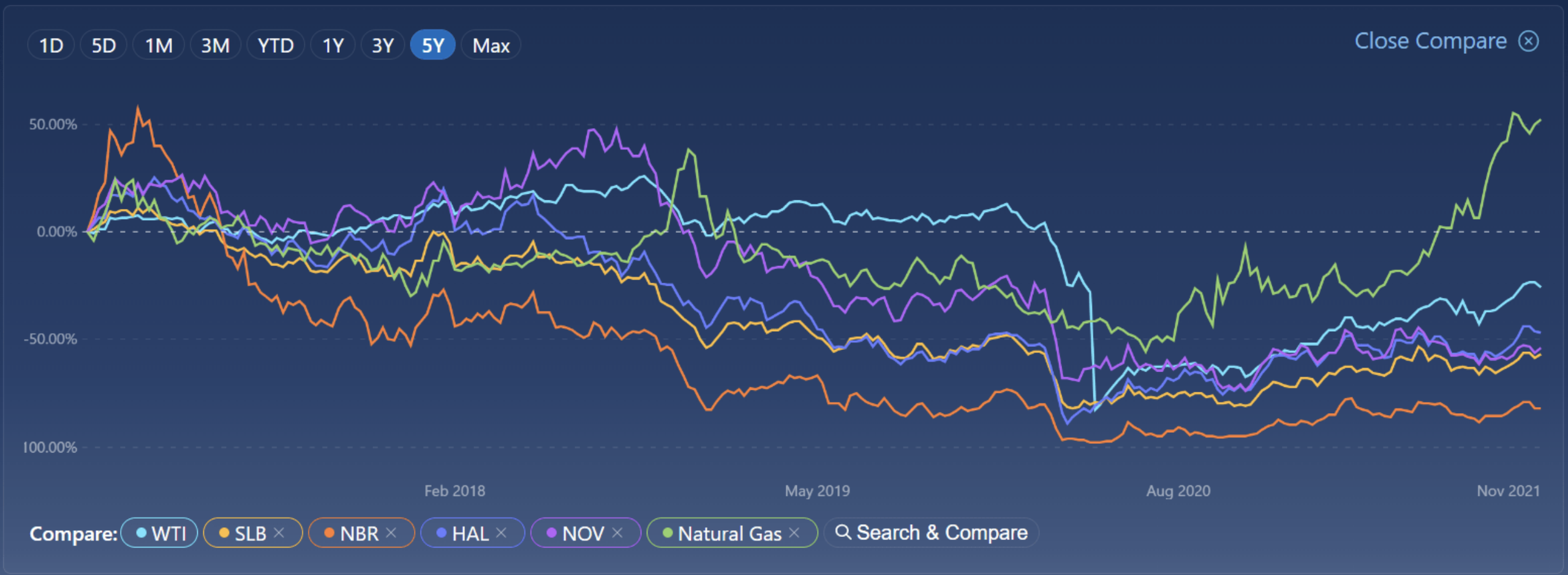
Judging from the above information, the development of Sany Petroleum after 2022, the operating conditions and fluctuations of oilfield technical services and equipment providers are strongly correlated with crude oil prices, and the business recovery of production increase and comprehensive oil service enterprises is better than that of drilling contractors, considering the global dual carbon goal, the production capacity demand of the oil and gas industry will continue to rise until at least 2030, and the development prospects are good.
Next article:China's annual power generation of new energy exceeded 1 trillion kWh for the first time
Related testimonials

CCTV Finance × Sany Heavy Industry: Infrastructure results are released! Anhui is soaring, and the equipment of the western port has become a "dark horse"
2025.05.19
China's installed wind and solar capacity has historically surpassed that of thermal power
2025.04.28
Breakthroughs have been made in the challenges of customization and high precision, and new progress has been made in the intelligent production of high-end equipment
2025.03.24




0 comments