

Achieve economies of scale in unconventional oil and gas
2022.10.26
PetroChina
Unconventional oil and gas refers to the continuous or quasi-continuous accumulation of oil and gas resources that cannot be obtained by traditional technology and can only be economically exploited by improving reservoir permeability or fluid viscosity by using new technologies. Unconventional oil and gas mainly include shale oil (gas), coalbed methane and natural gas hydrate. In 2021, the remaining proven technically recoverable reserves of unconventional oil and gas in the world were 113.626 billion tons of oil equivalent, accounting for 26.11% of the world's total reserves. On April 2, 2022, the "14th Five-Year Plan for Scientific and Technological Innovation in the Energy Field" (hereinafter referred to as the "Plan") jointly issued by the National Energy Administration and the Ministry of Science and Technology was officially announced. The plan points out that it is necessary to promote the exploration and development of deep shale gas, non-marine unconventional natural gas, shale oil and oil shale, and develop natural gas hydrate test production and dehydration and purification technology and equipment.
In recent years, the exploitation of oil and gas resources at home and abroad has gradually shifted from conventional areas to unconventional areas, and shale gas and tight oil have become important sources of oil and gas supply. The potential of unconventional oil and gas resources is undoubtedly huge, but its exploration and development are also difficult. How to promote the efficient development of unconventional oil and gas resources has become a topic of general concern in the industry.
On October 25, China Petroleum News "International Energy", the reporter connected with He Aiguo, a senior expert of China Petroleum Engineering Technology Research Institute, to discuss the challenges of global unconventional oil and gas development and future development trends.
Shale oil and gas, tight oil and gas and coalbed methane play an increasingly prominent role in global oil and gas production, shouldering the three major missions of global energy security, oil and gas stabilization, and green and low-carbon in the future. The large-scale development of unconventional oil and gas resources is of great significance to the development of China's national economy. China has made a strategic breakthrough in the exploration and development of unconventional oil and gas, becoming the second largest area in the world for the development and utilization of unconventional oil and gas resources after North America.
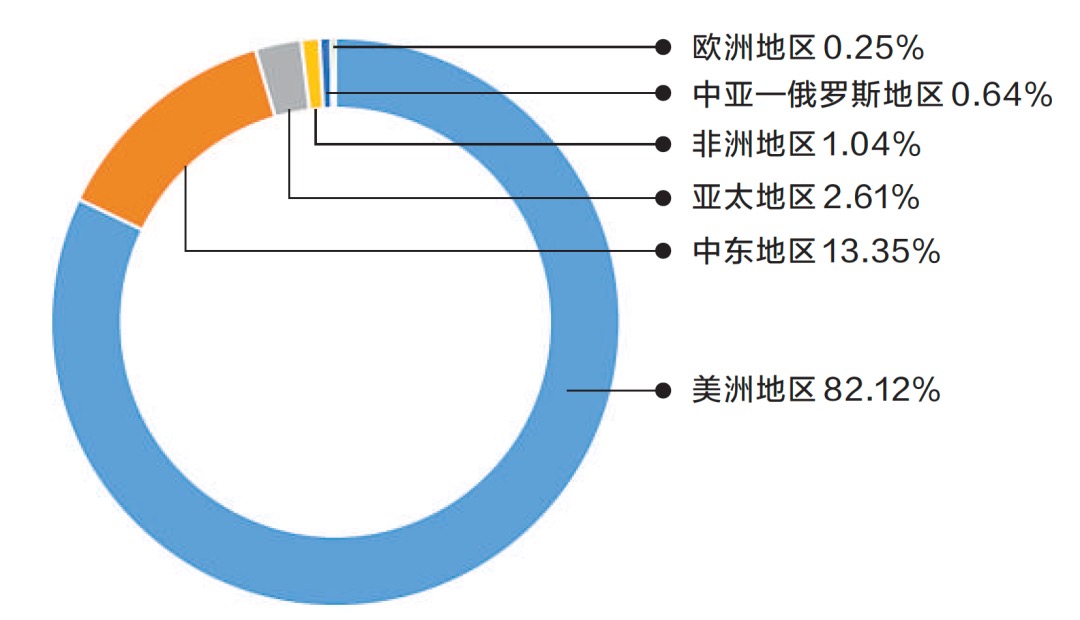
Regional distribution of global unconventional oil and gas reserves in 2021
The current state of unconventional oil and gas
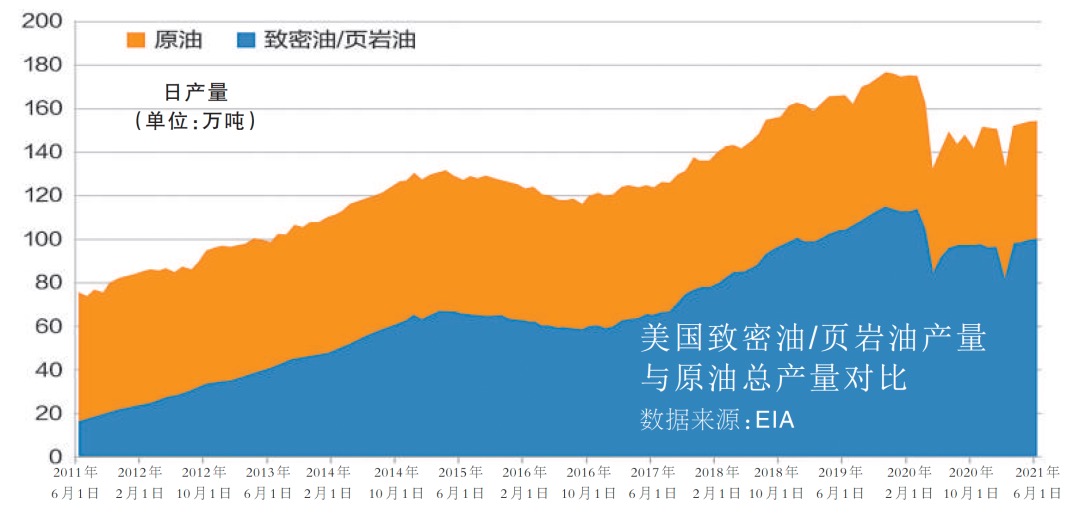
At present, the world's high-grade conventional oil and gas resources are facing a trend of depletion, and unconventional oil and gas has become a strategic replacement field for oil and gas resources. Shale oil and gas, tight oil and gas and coalbed methane play an increasingly prominent role in global oil and gas production, and in the future, it will shoulder the three major missions of global energy security, oil and gas stabilization, and green and low-carbon. Driven by many factors such as environment and climate change, a new round of scientific and technological revolution, the current energy structure system is transforming to green and low-carbon. In 2020, global oil, coal and natural gas consumption accounted for 31%, 27% and 25% of primary energy consumption respectively, and it is expected that by 2050, the global supply of oil, coal, natural gas and non-fossil energy will account for 22%, 4%, 27% and 47% respectively, and oil and natural gas will still account for half of the world's primary energy consumption and are the "ballast stone" of energy security supply. The United States relied on the shale oil and gas revolution to achieve energy independence, transforming it from a major oil and gas importer to a net oil and gas exporter. In 2020, U.S. shale oil and gas production accounted for 50% and 80% of total oil and gas production, respectively. In 2021, China's unconventional oil and gas production accounted for 20% of the total oil and gas production, and it showed a rapid upward trend. It is predicted that by 2035, China's unconventional oil production will exceed 50 million tons, accounting for about 25% of the country's total oil production; Unconventional natural gas production is expected to reach 130 billion cubic meters, accounting for about 50% of the country's total natural gas production.
The significance of developing unconventional oil and gas
In 2020, China's total energy consumption was 4.98 billion tons of standard coal, of which coal, oil, natural gas, and non-fossil energy accounted for 56.8%, 18.9%, 8.6%, and 15.7%, respectively, and fossil energy still dominates energy consumption. Most of the onshore conventional oil fields in eastern China have entered the middle and late stages of development, and the production capacity has seriously declined, and with the continuous development of oil and gas exploration and development, unconventional oil and gas have shown great potential. In order to meet the needs of China's rapid economic development, the large-scale development of unconventional oil and gas resources is of great significance to the development of China's national economy.
First, the development of unconventional oil and gas resources can accelerate the realization of the "dual carbon" goal.
China's energy structure is characterized by "rich coal, poor oil and low gas", and carbon emissions from coal combustion account for 79% of carbon dioxide emissions. Coal has high carbon attributes, and in the same calorific value unit, natural gas emits carbon dioxide at 1, oil at 1.24, and coal at 1.54. "Coal reduction" is regarded as an important measure for the green and low-carbon transformation of energy. Unconventional resources such as coalbed methane, shale gas and natural gas hydrate have the characteristics of low carbon, clean, green and low pollution, which are more in line with the requirements of environmental protection and sustainable development. Therefore, the development of unconventional resources is one of the inevitable choices to achieve the "dual carbon" goal.
Second, the development of unconventional oil and gas resources can solve the contradiction between energy supply and demand.
With the deepening of economic and social development and reform and opening up, the growth rate of China's oil and gas demand is much greater than the growth rate of oil and gas production, and it has become the world's largest energy importer, and the contradiction between supply and demand is becoming increasingly prominent. Conventional oil and gas resources are facing depletion, and finding strategic replacement energy is an important way for China to alleviate the contradiction between energy supply and demand. Unconventional oil and gas resources have become an important part of the replacement energy source due to their large reserves and wide distribution. Therefore, it is necessary to intensify the exploration and development of unconventional fields, study new theories and new processes, and realize the low-cost and efficient development of unconventional oil and gas resources, so as to take the energy job in their own hands.
Global development status of unconventional oil and gas resources
Unconventional oil and gas usually include shale oil and gas, tight oil and gas, coalbed methane and other resources. In 2020, the world produced 540 million tons of unconventional oil, accounting for about 13% of total crude oil production. Among them, the production of tight oil and shale oil was 380 million tons, and the production of oil sands oil was 160 million tons. In 2020, global unconventional natural gas production exceeded 110 billion cubic meters, accounting for about 29% of global natural gas production. Among them, shale gas production is 770 billion cubic meters, tight gas production is 302 billion cubic meters, and coalbed methane production is 75 billion cubic meters. Unconventional oil and gas development has shown a significant upward trend. The United States has made a revolutionary breakthrough in unconventional oil and gas exploration and development, leading the global development of unconventional oil and gas resources. In 2020, the United States produced 733 billion cubic meters of shale gas, 20 billion cubic meters of coalbed methane and 350 million tons of shale oil, while Canada produced 5.5 billion cubic meters of shale gas, 4 billion cubic meters of coalbed methane and 160 million tons of shale oil, and Australia produced more than 45 billion cubic meters of coalbed methane. Drawing on the experience of unconventional oil and gas development in North America, China has made a strategic breakthrough in unconventional oil and gas exploration and development, becoming the second largest area in the world for the development and utilization of unconventional oil and gas resources after North America. In 2021, China's total oil production was 199 million tons, natural gas production was 207.58 billion cubic meters, and unconventional oil and gas production accounted for more than 20% of the total oil and gas production. Among them, the output of tight gas is 52.6 billion cubic meters, the output of coalbed methane is 8.3 billion cubic meters, the output of shale gas is 22.8 billion cubic meters, and the output of tight oil is 3 million tons. Unconventional oil and gas has become a strategic succession field for oil and gas exploration and increasing reserves and production in China. In terms of shale gas, Fuling, Changning, Weiyuan and Zhaotong shale gas fields have been built in China. In terms of shale oil, the national shale oil demonstration zones of Jimusar, Daqing Gulong and Shengli Jiyang have been built in Xinjiang; In terms of coalbed methane, two national coalbed methane demonstration zones in Qinshui and Eastern Hubei have been built successively.
Unconventional oil and gas development faces challenges
Compared with the development of unconventional oil and gas in North America, China's shale oil and gas resources are difficult to produce and achieve economic and efficient development.
From a technical point of view, in recent years, through continuous innovation in engineering technology, China's unconventional oil and gas development has basically formed the main process technology of "horizontal well + segmented volume fracturing", among which the technical indicators of Longdong shale oil drilling engineering have been comparable to foreign advanced technology. However, there are still some outstanding problems in the drilling and production engineering technology, such as the weak basic theoretical research of continental shale oil, the dependence of key tools such as rotary steering on foreign products, the fact that the drilling and production technology mainly imitates the experience of North America, and the large difference in the engineering technology level of different unconventional oil and gas blocks in China.
From the perspective of cost, compared with North America, the geological conditions of unconventional oil and gas reservoirs in China are complex, and the development technology and management mode are still being explored and improved, and the development cost of unconventional oil and gas in China is generally higher than that in North America at this stage. Taking shale oil as an example, the complete cost of China's main shale oil is 60-90 US dollars per barrel, which is higher than the average development cost of 30 US dollars per barrel of Bakken shale oil in the United States.
In terms of management, the practice of shale oil and gas in North America has proved that the integrated management mode of exploration and development and geology and engineering is an effective management method for unconventional oil and gas, while China still follows the traditional oil "relay" exploration and development model, which cannot meet the needs of unconventional oil and gas development. In addition, when China develops unconventional oil and gas, all parties involved in the construction have not yet formed a systematic management model of the whole industry chain, which also restricts the development of the shale oil and gas industry to a certain extent.
Future developments in unconventional oil and gas development
The large-scale development of unconventional oil and gas must make breakthroughs in the following four aspects. First, with the goal of reducing the cost of unconventional oil and gas development, we should improve the ability of independent innovation in engineering technology, innovate and establish a theoretical and technical system for the development of unconventional oil and gas benefit development mode, intensive well layout mode, high-yield fracturing mechanism, high-efficiency oil flooding/gas recovery mechanism, and in-situ conversion mechanism of low-maturity shale oil, so as to form a theoretical system of unconventional oil and gas engineering with Chinese characteristics. At the same time, we will speed up the research and popularize a number of engineering technologies that restrict the efficient production of unconventional oil and gas, and promote the development of scale and efficiency of unconventional oil and gas. The second is to actively implement the "whole industry chain" and "integration" management model, promote the construction of unconventional oil and gas demonstration zones in accordance with the idea of "multi-layer, three-dimensional, large well cluster, and factory", establish technical standards for the construction of the factory "batch pressure and batch production" mode, and improve the fracturing efficiency of unconventional oil and gas drilling. The third is to accelerate digital transformation and intelligent development, comprehensively improve the intelligent level of unconventional oil and gas engineering operations, risk management and control capabilities, project quality and operational efficiency, and improve the modernization level of the unconventional oil and gas industry chain. Fourth, we should effectively promote market-oriented operation and socialized support, and reasonably formulate support policies for unconventional oil and gas development.
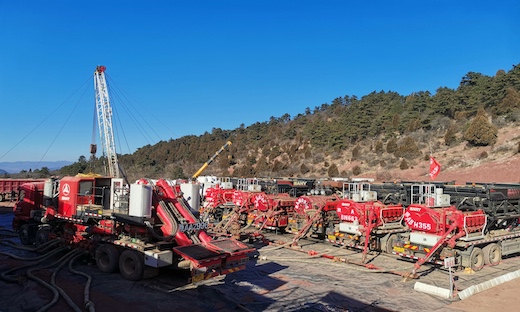
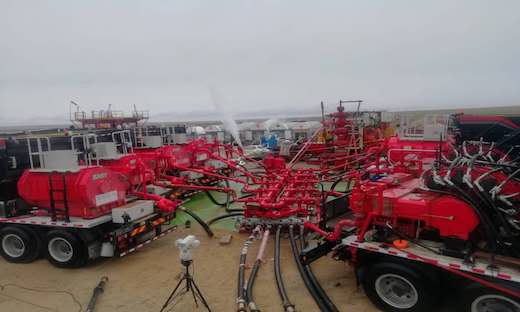
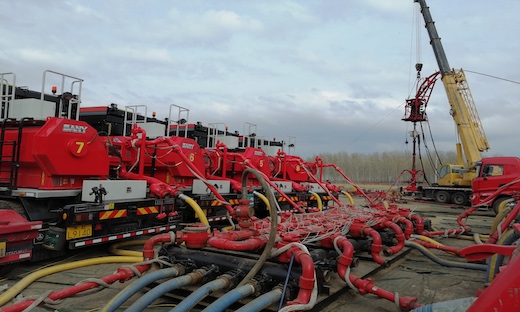
As a global leader in high-end energy equipment solutions, Sany Petroleum will continue to deepen the oil and gas market, continuously promote the innovation of oil and gas development methods, help the domestic oil and gas market reduce costs and increase efficiency, low-carbon and environmental protection, and contribute to the development of China's unconventional oil and gas resources and the green and sustainable development of the oil and gas industry!




0 comments