

The real driving force of the global manufacturing migration: technological innovation and cost dividends
2017.02.06
The trend of manufacturing transfer has a great relationship with the future and destiny of the country. There have been four large-scale manufacturing migrations around the world, and innovation is an important driving force for the manufacturing migration. At present, the *5655 reality faced by the upgrading and relocation of the manufacturing industry is the decline in total factor productivity.
It is generally accepted that there have been four large-scale manufacturing migrations around the world: *5,656 in the early 20th century, when the United Kingdom shifted some of its "excess capacity" to the United States; Second, in the 50s of the 20th century, the United States transferred traditional industries such as steel and textiles to Japan and Germany, which were defeated countries; Thirdly, in the 60s and 70s of the 20th century, Japan and Germany transferred labor-intensive processing industries such as light industry and textiles to the "Four Little Tigers" in Asia and some Latin American countries; Fourthly, in the early 80s of the 20th century, developed countries such as Europe, the United States and Japan, as well as newly industrialized countries such as the "Four Little Tigers" in Asia, transferred labor-intensive industries and low-tech and high-consumption industries to developing countries, so that China has gradually become the recipient and beneficiary of the third world industrial transfer for more than 30 years*5655.
Professional institutions such as McKinsey & Company and the Boston Consulting Group, as well as various economists and media, analyze the transfer of global manufacturing from the perspective of "cost structure" (including comprehensive costs such as manpower, land, energy, and institutional transaction costs), and then determine whether the future manufacturing industry will flow to low-cost countries such as India and Vietnam, or whether China will return to Europe and the United States. The important role of innovation factors in the migration of global manufacturing has not received enough attention.
The United States: Undertake the world with manufacturing process innovation and transfer the manufacturing industry
Even if around 1850, the United States already had 7 of the world's 565,510 industrial enterprises, it does not mean that the United States has truly become a manufacturing power. In the industrial and technological competition, it was not until around 1920 that the American manufacturing industry completely stood on the top of the undisputed world, which was mainly due to the comprehensive innovation of the United States in manufacturing and products.
In the early 20th century, great inventions and great enterprises flashed everywhere in the United States, Ford's Model T and Cadillac's electronic starter ushered in the age of human automobiles, Warner Bros.'s "Jazz Singer" led to the boom of sound films, stainless steel and artificial gum reshaped American manufacturing, and telephones and electrification comprehensively upgraded America's industrial infrastructure.
In particular, the large-scale promotion and large-scale mass production of assembly line production methods can not only dilute fixed costs, but also enable a large number of engineers to gather together to engage in technology research and development, which greatly promotes scientific and technological innovation. At that time, the organizational form of British factories was relatively traditional, and small and medium-sized workshops were the best love of British society, but such enterprises could not achieve economies of scale and systematic R&D and innovation.
By the 20s of the 20th century, the gap between Britain and the United States in the field of manufacturing was very large. At the time, official figures showed that R&D spending in the United States accounted for 2.5% of GDP, compared with 2% in the United Kingdom. Civil engineers account for 13% of total employment in the United States, significantly ahead of 5% in the United Kingdom. In 1929, the three pillar industries of the British economy were railroad shipping, tobacco and alcohol, and textiles, while the top three dominant industries in the United States were agricultural equipment and construction machinery, vehicles and aircraft, iron and steel, and non-ferrous metals. Britain, an industrial power that aspires to compete in the world, has sunk to rely on tobacco and alcohol to survive.
Japan and Germany: Undertake the transfer of global manufacturing industry with collaborative system innovation
After the end of World War II, the United States gave priority to the development of traditional industries such as iron and steel, textiles and light industry in the implementation of the industrial plan for the revival of Europe and Japan. However, Germany and Japan are unwilling to accept this industrial arrangement, and if they passively accept the transfer of low-end manufacturing, they will always lose to the United States in the future industrial competition. Since then, Germany and Japan have not only focused on the development of high-value export industries such as automobiles, machinery, and electronics, but more importantly, they have undertaken the transfer of global manufacturing with an efficient and complete national industrial cooperation system.
Why do Germany and Japan have the strongest SME clusters in the world? Germany calls this an "invisible military enterprise", and Japan calls it a "tiny world's leading enterprise". The industrial structure of Germany and Japan is becoming more and more refined, and many companies have only researched one kind of part and only one product for decades, so that they are world-famous and have very good benefits. The products they manufacture are based on their own unique technology honed in the market, and these "invisible * military enterprises" do not pursue to become bigger, but strive to become a "* * enterprise" with a certain world * 5656. So far, if many of China's high-end manufacturing industries do not use key materials and core components from Germany and Japan, such as aviation glass, chips, bearings, optoelectronic products, etc., their competitiveness will be greatly reduced.
Germany and Japan are the world's leading in basic industrial technology, which is a major foundation for the two countries to always maintain their winning position in the global manufacturing migration. To give two examples, China's rare earth reserves are 5656 in the world, but it lacks the technology to turn it into a material. These material technologies are all researched with decades of accumulation, and these materials can be nano-scale and rest in mobile phone chips. These require specialized machine tools, which are not available in the United States, but are available in Germany and Japan.
Semiconductors are known as the "food of informatization", and high-quality lithography machines are used to manufacture semiconductor chips, and 70% of the world's semiconductor lithography machines are made in Japan, and Germany supplies the core optical components. The lithography machine is the most precise, the most critical, and the most expensive equipment in all the machinery that human beings have been able to manufacture so far, and the positioning accuracy of the wafer is 0.01 microns, which is equivalent to 1/100,000 of a hair.
South Korea: Undertake the transfer of global manufacturing industry with industrial chain integration and innovation
Taiwan and South Korea have played an important role in the transfer of manufacturing capacity to the Asia-Pacific region, with Taiwan being good at foundry and South Korea being strong at industrial chain integration, but don't ignore the role of innovation. Taiwan's semiconductor manufacturing level is *5653, Hon Hai Precision (called Foxconn in China) assembles almost all Apple iPhones and iPads, and TSMC and MediaTek are *5653 giants in the field of chip manufacturing.
Started in the early 90s of the 20th century, the American company is responsible for the design, and Taiwan, China is responsible for the foundry of the wafer factory, with huge investment, from 4 inches, 6 inches, 8 inches to the current 12 inches, from wafer manufacturing to cutting, packaging, testing, all of which are done by different companies in Taiwan, forming a huge industrial chain in the past, accounting for more than half of the market share of the global chip manufacturing link. At present, TSMC has achieved the 16nm process, and Huawei's HiSilicon and Spreadtrum in mainland China must use TSMC's process to achieve mass manufacturing of the designed high-end mobile phone chips.
The iPhone and iPad are only "laboratory products" at Apple, and there is a big gap between whether they can be turned into mass consumer goods - whether anyone can produce this product on a large scale. It's not too difficult to design a product in the lab and then take a long time to make a sample. However, manufacturing on a large scale, and with workers without technical background, requires a very rational planning process and a very precise design of the mold. There are a lot of patented technologies involved, and these molds are designed by Hon Hai itself, and the relationship with Apple is "cross-licensing". In other words, in order for a product to achieve mass production, these patents on the production process must be used.
Samsung Electronics is the backbone of South Korea's manufacturing industry, and its international competitiveness is based on the "whole industry chain" model, that is, all-round investment in chips, flash memory, LCD panels, flat-screen TVs, mobile phones, etc. Samsung's "whole industry chain" model pursues not only cost advantages, but more importantly, technology accumulation and innovation breakthroughs.
The "whole industry chain" model enables Samsung Korea to have an in-depth understanding of technology and achieve efficient technological innovation and product innovation. Samsung Electronics has successfully mastered the technology of memory and non-memory chips, and has successively mastered core technologies such as TFT-LCD, PDP, organic light-emitting display (OLED), mobile chips, and flash memory chips. These technologies are actually fundamentally semiconductor technologies, and these semiconductor chip technologies largely benefit from the previous in-depth mastery of memory chip technology, and it is much easier to expand to other chip technologies.
China: Undertake the transfer of global manufacturing with system strength
Chinese mainland really began to undertake the transfer of global manufacturing, which should be after 2000. At present, the well-known BAT (Baidu, Tencent, Alibaba), as well as hardware manufacturing-related manufacturers and brands such as Haier, Lenovo, Huawei, ZTE, Xiaomi, Foxconn, etc., have gradually matured, and China's manufacturing industry has formed a self-sufficient system that can OEM for overseas brands and launch its own products. This system was first collectively referred to as the "red supply chain" in the September 2013 issue of the Financial Times. At present, the profit margin of China's manufacturing industry is still relatively low as a whole, but the system advantage has been formed.
Many of China's smartphones, home appliances and PCs export less than 5% of their profits, and people take it for granted that 95% of the profits are made by others, entrepreneurs worry about it all the time, workers are tired and tired, and the country consumes resources and leaves pollution, and then only makes a small amount of money from it. Many people don't understand that behind this profit margin is China's strong industrial system and market system.
In addition to the introduction of some core and high-end electronic components, the 95% part is more that enterprises need to pay workers a certain amount of wages, pay a certain amount of factory rent, pay a certain amount of water and electricity bills, pay a certain amount of taxes and fees, pay a certain amount of commissions to agents, pay a number of yuan in logistics costs, and pay a certain amount of yuan to accessories suppliers...... This is the *5655 part that makes up the cost of the product.
After that, the cost will not disappear for no reason, it will only represent the transfer of the yuan from some to others. If an accessories supplier wants to supply accessories, it undoubtedly needs its own labor, management, factory rent, water and electricity, logistics, warehousing, etc.; If the power supply bureau wants to supply power, it needs power grid construction, power station construction, and even coal mining and power equipment manufacturing; If a logistics company wants to provide efficient logistics, it needs vehicles, it needs drivers, and it needs to pay for highways; So in the next step, we need to build roads, we need reinforced concrete, and we need to ...... On the surface, the profit margin is less than 5%, but in the bones, it needs the strong support of the entire country's raw material industry, energy industry, infrastructure, logistics network, supporting industries, and market system.
The reliability and speed of the manufacturing industry are more important than the price, and the out-of-stock ratio brings more losses than the high price. Relying on China's investment in large and complete supply chains and infrastructure, Chinese suppliers are seen by foreign companies as faster and more reliable.
For manufacturing powers such as Europe, America, Japan and South Korea, the "red supply chain" is a system that is both friend and foe. Without it, many emerging products such as the iPhone may not be available in a short period of time and would not be at the price they are now. However, the products launched by Chinese mainland through this system also carry on speed, flexibility, low cost and some creativity, making it difficult for traditional industrial powers to compete with them in certain markets because they lack this system and conditions.
Innovation-driven*5655 obstacles
In today's world, the *5655 reality faced by the upgrading and migration of manufacturing industries is the decline in "total factor productivity". The media and economists pay more attention to the changes in domestic labor conditions, such as the implementation of the "five insurances and one housing fund" system, the increase in wages and prices due to the increase in travel capital, and the replacement of the market and industrial structure, resulting in Chinese mainland gradually losing its early cost advantage. For example, in the 10 years since 2006, domestic labor costs have risen nearly fivefold, which does not mean that cost competitiveness will inevitably weaken, if the degree of automation and organizational efficiency are improved.
In the past, we used to think of Latin America, Eastern Europe, and much of Asia as low-cost regions, while the United States, Western Europe, and Japan were high-cost regions. Today, this is an outdated worldview, with subtle changes in wages, technological efficiency, energy costs, interest rates and exchange rates, and other factors from year to year, quietly but dramatically influencing the "global manufacturing cost competitiveness" map.
In the past decade, the global factor prices have risen to varying degrees, but the number is not the key, the important thing is whether it is linked to performance, and whether the increase in factor prices is reasonable compared with profits? Unfortunately, the decline in "total factor productivity" has led (and continues to lead) to a pessimistic return on investment in manufacturing. Coupled with the glass wall between technological innovation and market returns, the global manufacturing industry will continue to face a pessimistic outlook.
Nowadays, the mainstream society in the United States has paid little attention to the competition from China, believing that China cannot win with the new generation of manufacturing, and has gradually formed a complete discourse on "why China cannot have the next generation of manufacturing". As technologies such as smart robotics and 3D printing mature, China has no advantage, and multinationals are looking for ways to relocate their high-value-added manufacturing back to the United States and Europe.
China has launched a 10-year plan called "Made in China 2025", which aims to use advanced manufacturing technologies, such as robotics, 3D printing and the industrial Internet, to achieve efficient and reliable intelligent manufacturing. At the same time, China has launched another national plan, "Internet+", which seeks to combine mobile Internet, cloud computing, big data and the Internet of Things with modern manufacturing. Even if the transformation and upgrading of China's manufacturing industry in hardware has been successfully realized, it still faces three practical challenges:
*5,656 challenges: Robots in Europe, the United States, and China consume the same amount of power, work exactly as they are told, and don't complain or join a union. Is it necessary for European and American industrial companies to transport raw materials and electronic components from all over the world to China, let the robots complete the assembly of the finished products, and then ship them back to the United States? This makes no economic sense at all. European and American companies can produce locally at about the same cost, eliminating transportation.
The second challenge: most of China's robots are not produced domestically, and even if some are assembled domestically, they still rely heavily on imported core components from abroad.
The third challenge: European and American industrial companies are already having great difficulty recruiting technical talent in China, because of the management and communication skills required to enter the manufacturing industry and the ability to operate factories based on complex information. The lack of professional and technical personnel has been the weakness of China's promotion of the manufacturing and service industries. What's more, China's manufacturing industry has faced extraordinary competitive pressure from its main rivals.
China's economy, which is supported by manufacturing, has reached a critical moment, and every step taken now will have an extremely profound impact on the future.
The "Made in China 2025 Blue Book (2016)" issued by the official agency in September pointed out that under the influence of factors such as the application of intelligent manufacturing technology and the comprehensive cost of manufacturing, the layout of the global manufacturing industry has gradually adjusted: the manufacturing production of multinational companies has shown a trend of accelerating the return to developed countries, and at the same time, the global manufacturing industry is accelerating the transfer to Southeast Asia, South Asia, Africa and other regions with lower costs. The former is the cost dividend derived from technological innovation in developed countries, and the latter is the advantage of cheap labor in low-cost countries that is becoming attractive. Sandwiched between the two, China's manufacturing industry is losing its labor cost advantage, while technology and industrial upgrading are facing many challenges.
The trend of the global manufacturing industry is moving
China has been seeking to reduce the comprehensive costs of Chinese enterprises, that is, factor costs, transaction costs and institutional costs, and keep as much manufacturing capacity as possible in China. At the same time, the national innovation system is being stepped up, and the change in cost structure is not the core of the problem, because the real driving force behind the global manufacturing migration is technological innovation and industrial upgrading.
In the past, traditional industrial powers generally tended to outsource manufacturing to low-cost regions, not to withdraw from manufacturing, but to strengthen control over the industrial chain. Google's acquisition of Motorola, its high-profile entry into robotics and the development of self-driving cars, is that it can establish a dominant position as Internet technology continues to be integrated into manufacturing. Once all aspects of the manufacturing industry are taken over by "cloud computing", it will be able to exert enough influence and even control over the manufacturing industry.
The trend of manufacturing transfer has a lot to do with the future and destiny of the country, and the United States has now withdrawn from many manufacturing fields, but has not withdrawn from the industrial chain, but specializes in standards and technologies. Japan is also following this path, with technologies such as 3D, 4k, and quantum dots being developed by Japan and carried forward by Chinese companies. Today, Sharp, Panasonic, Toshiba and other transformations are medical equipment, energy, and Tesla's TV is provided by Panasonic.
Cutting-edge technology and key innovation are still the main battlefield of traditional industrial powers, and Chinese manufacturers still need to keep track of their technological roadmaps. China's "demographic dividend" is disappearing, while the "technological dividend" has just begun. China's manufacturing industry as a whole is still under-equipped with technology and capital accumulation, and original innovation faces high costs and unpredictable risks.
The real driving force of industrial innovation is the market, China's manufacturing industry still needs to start from small things, small innovations, many small innovations may inadvertently pry the big market. China's manufacturing industry can rely on the market and supplier system to create advantages in the process of global manufacturing migration, and master a complete ecosystem from manufacturing materials to sales channels.
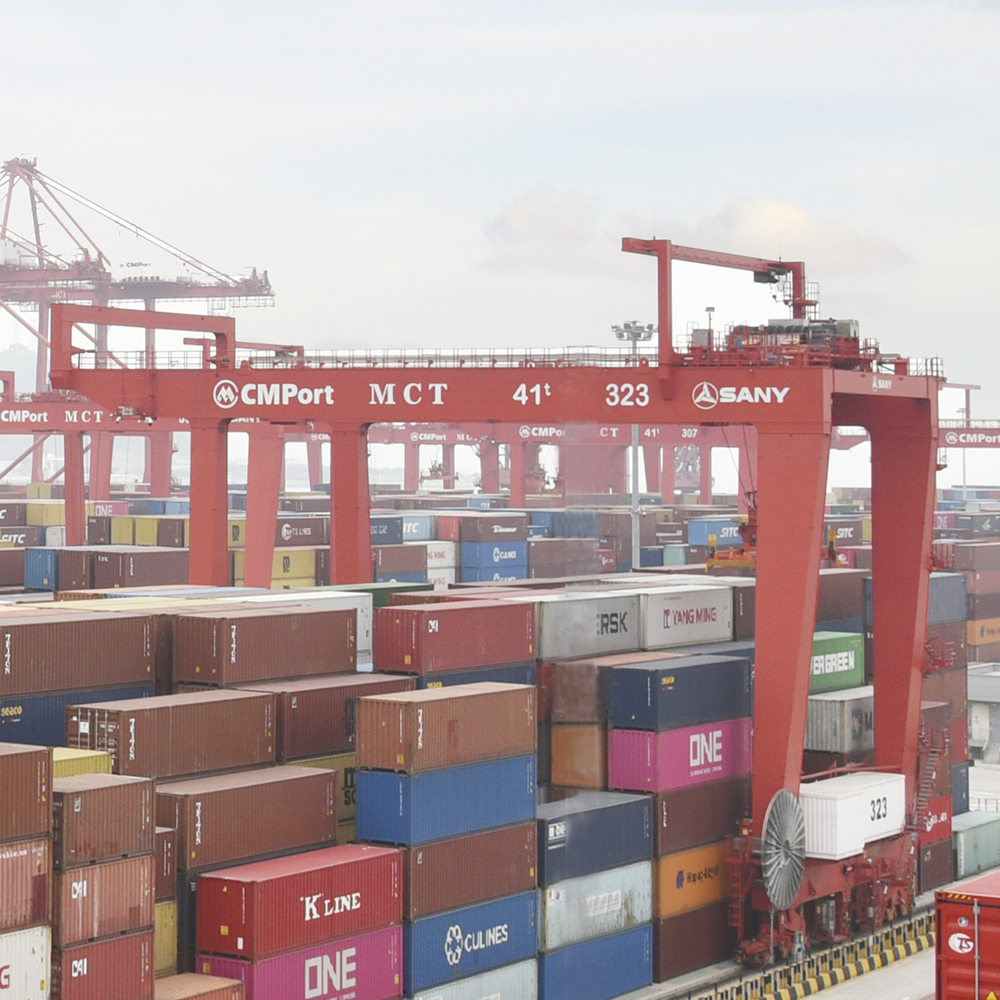
Rail-mounted container gantry crane automation
Rail-mounted container gantry craneRecommended products






0 comments