

Dagong.com: Sany Heavy Industry: Facing the unfair treatment in internationalization
2012.12.24
Source: Dagong Finance
According to the "Securities Daily", He Dongdong, vice president of Sany Heavy Industry, said at the annual meeting of Chinese CEOs that the success of enterprises is based to a certain extent on a deep understanding of the needs of local customers, so only by establishing a global localization R & D and manufacturing system can we provide localized products and services, so in-depth localization has become an indispensable part of globalization. At the meeting, He Dongdong also said that from a certain point of view, Sany Heavy Industry is a "good student" of Herman Simon, the father of the *5653 management master "Invisible * Army".
However, the rise of China is inevitably accompanied by the rise of Chinese enterprises, such as Huawei, ZTE, Sany Heavy Industry and other "going out" enterprises, but also can pose a competitive threat to foreign enterprises, often encounter many unfair treatment of trade or non-trade barriers.
Although the speculation about the outcome is that the voice of the lawsuit is the majority of the voices, Sany believes that this is the first time that Sany has used the U.S. legal system to protect its rights and interests, and it is a reflection of the courage of Chinese companies to face the unfair treatment on the road to internationalization.
Deep localization has become a key part of globalization
He Dongdong, vice president of Sany Heavy Industry, said that Sany was founded in 1989 and is currently the world's *5655Concrete machineryManufacturer, China*5655, the world's sixth largest construction machinery manufacturer. At the same time, according to the statistical report released by Boston in 2010, from 2005 to 2009, the average return to shareholders of Sany Heavy Industry was 67.4%, ranking first in the world*.
According to public information, according to the statistics of Yellow Table, one of the industry's international authoritative rankings, Sany Heavy Industry ranked 43rd when it was first selected into the list in 2004, and in less than ten years, it has become the sixth largest construction machinery manufacturer in the world.
He Dongdong said that the internationalization process of Sany Heavy Industry has gone through 10 years from 2002 to the present, and has successively gone through three stages: the export of China's manufacturing engineering equipment, overseas investment and production, and localized operation.
He Dongdong believes that in the stage of internationalization, Chinese enterprises also face many challenges, including the hard requirements for products, services and brands, as well as the soft power requirements for management and culture.
From the perspective of products and services, Sany Heavy Industry's success in China is to a certain extent based on a deep understanding of the needs of local customers, and based on this understanding, it is able to provide products and services for Chinese customers.
However, after going out of the Chinese market and looking at the world, if Sany has no way to deeply understand the needs of overseas customers, it will be difficult to meet the needs of overseas customers, then only by establishing a global localization R&D and manufacturing system can it provide localized products and services, so in-depth localization has become an indispensable part of globalization. In the first half of the year, Sany Germany, a subsidiary of Sany Heavy Industry, spent 324 million euros to acquire 90% of the shares of Putzmeister in Germany, which is a reflection of deep localization, He Dongdong said.
In terms of brand, for a long time, if Chinese companies operate their own brands abroad, they often start from the image of "Made in China".
Regarding the challenges of culture and management, He Dongdong believes that the management style and cultural differences between Chinese enterprises and Western enterprises are quite different, which is very easy to cause management and cultural conflicts, which have brought difficulties to internationalization.
However, He Dongdong also emphasized that Sany Heavy Industry focuses on improving the level of products and customer service, and pays attention to the cost of the customer life cycle, although the price is often 15%-20% higher than that of the opponent, but the market share of the latter is the first, so it can be said that Sany Heavy Industry is the father of the "invisible army" Herman? Simon's "good student," and Sany Heavy Industry also believes that enterprises that pursue value will eventually win customers.
Threats and challenges posed by globalization
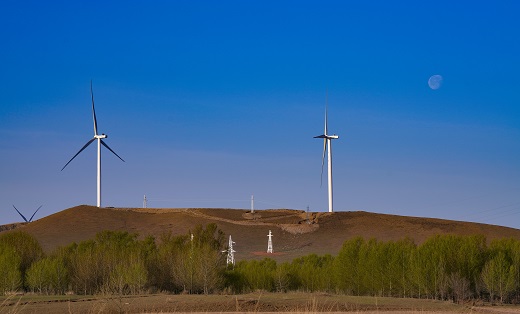
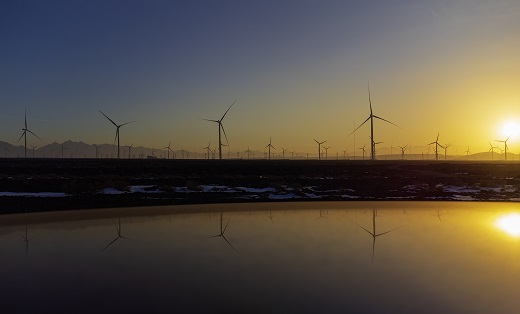
In the second half of 2012, Sany Heavy Industry once again became a hot topic of public discussion for suing the current U.S. President Oba because Ralls, an affiliate of Sany Group, acquired four wind farms in Oregon in March 2012, hoping to explore the way for its wind turbine products to enter the U.S. market by building wind farms and equipping them with wind turbines produced by Sany.
However, between July and September, the U.S. Committee on Foreign Investment Review (CFIUS) issued an injunction requiring Rolls to halt wind power projects near a U.S. military base. Later, Obama issued an executive order banning the project again on the grounds that it threatened U.S. national security. On October 1, Ralls, an affiliate of Sany Heavy Industry, sued US President Barack Obama in addition to the CFIUS lawsuit in September, which attracted widespread attention from the market.
After Sany began to invest in the project, the U.S. Committee on Foreign Investment Review (CFIUS) asked the project to be stopped, the equipment to be evacuated, and even personnel not to be able to approach the project area, He Dongdong said. However, according to Sany Heavy Industry, this wind power plant is based in India and Denmark, and Sany is the only one who suffers from this treatment, which is already discrimination.
He Dongdong said that the rise of China will inevitably be accompanied by the rise of Chinese enterprises, at present, such as Huawei, ZTE, Sany Heavy Industry, these "going out" enterprises, but also can have a competitive threat to foreign enterprises, often encounter many trade or non-trade barriers unfair treatment, the Sany Heavy Industry for the first time to use the United States legal system to protect their own rights and interests, is the embodiment of Chinese enterprises have the courage to face the unfair treatment in the road of internationalization.
When asked about his views on this matter, Herman Simon, who was also present, also mentioned that the process of internationalization of enterprises is difficult, and legal means should be used to fight back.




0 comments